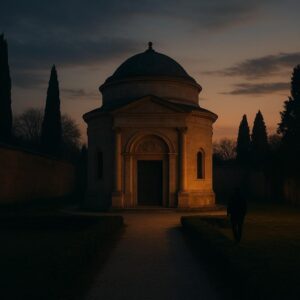
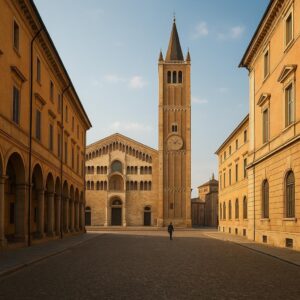
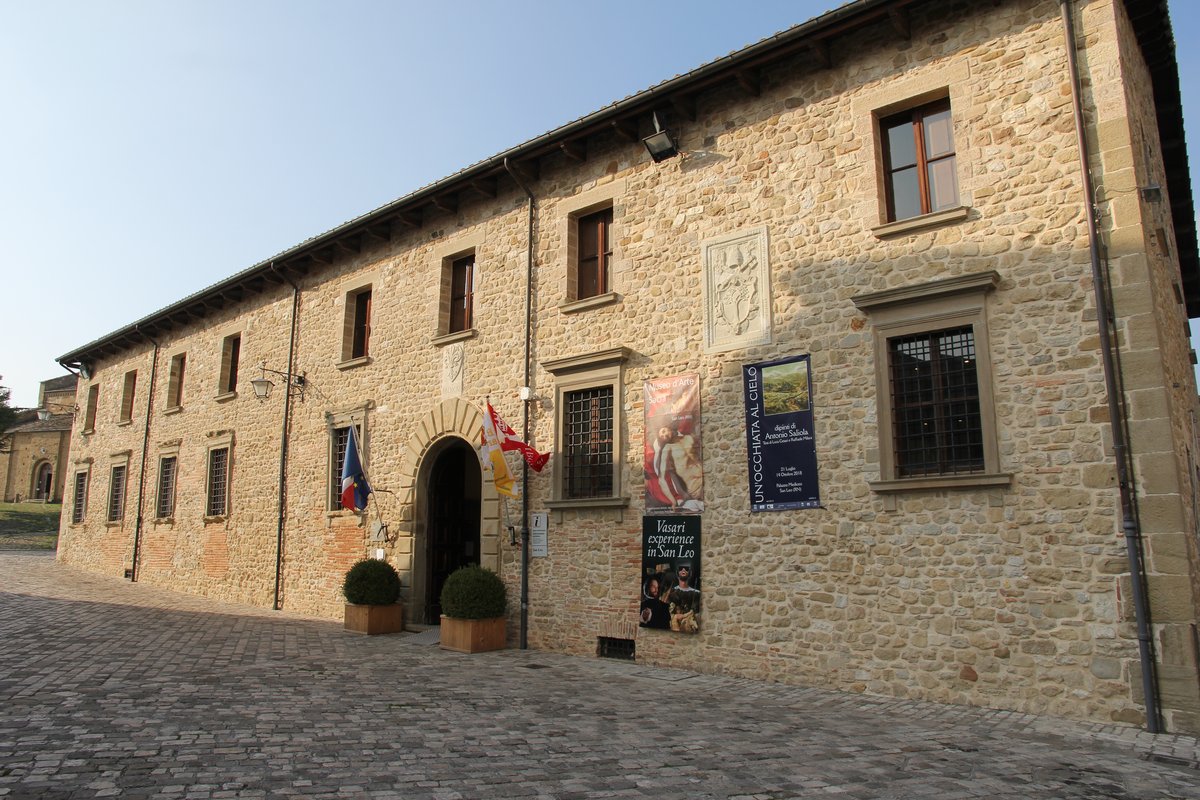
The San Leo Sacred Art Museum, housed in the former Church of Santa Maria Assunta next to the Cathedral, offers a well-curated collection including works from the Middle Ages to the 18th century. The visit integrates perfectly with those to the Romanesque Cathedral and Baptistery, creating a coherent journey into medieval spirituality in the heart of one of Italy’s most beautiful villages.
- 12th-century altar frontals and medieval wooden sculptures
- Collection housed in the Fortress with views over the Valmarecchia valley
- Unique dialogue between sacred art and Renaissance military architecture
- Works from local churches preserved from dispersal
A Treasure in the Rock
Reaching San Leo is an experience in itself, with that hilltop village that looks like it’s stepped out of a medieval painting. But the Sacred Art Museum, nestled within the Fortress, will leave you speechless. This isn’t your typical dusty museum: here, sacred art breathes within the walls of a fortress, with a breathtaking view over the Valmarecchia that alone is worth the ticket. The feeling is of stepping into a place suspended in time, where every artwork tells stories of devotion and power. Personally, I was struck by how the fortress’s austere spaces highlight the delicacy of the exhibited works, creating an unexpected contrast. When you think of sacred museums, you might imagine intimate settings; here, instead, there’s a grandeur that envelops you, and perhaps that is its most authentic charm.
A Tale of Sacred and Fortress
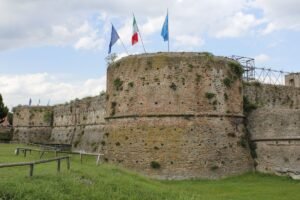
The museum was established in 2004, but its history is much older. The Rocca di San Leo, where it is housed, has Roman origins and was long a strategic military stronghold, contested by Byzantines, Lombards, and the Papacy. During the Renaissance, Federico da Montefeltro transformed it into an impregnable fortress, entrusting the project to Francesco di Giorgio Martini.
The museum collects works from churches in the area, saved from dispersal and decay, creating a journey from the Middle Ages to the 18th century. Among the highlights are wooden sculptures, sacred vestments, and paintings that testify to the artistic vibrancy of this border region. It is not just a collection: it is the material memory of a community, preserved in a place that has seen armies and saints pass through.
- Roman era: first fortifications on the hill
- Middle Ages: development of the village and churches
- Renaissance: transformation into a fortress under the Montefeltro
- 2004: inauguration of the Museum of Sacred Art in the Rocca
Works That Speak
Walking through the halls, you encounter pieces that tell specific stories. For example, the 14th-century wooden Crucifix, with its dramatic expressiveness, almost seems to speak of the popular devotion of the time. Then there are the embroidered sacred vestments, some from the 18th century, which show surprising craftsmanship; you look at them up close and think of the hours of work behind every thread. Another detail that struck me are the sculptures in pietra serena, typical of the area, which emerge with their essentiality among the more sumptuous works. It’s not an overwhelming collection, and perhaps that’s a good thing: it allows you to linger on each piece without haste, capturing those details – a fold of a cloak, a painted gaze – that would otherwise escape. It’s a museum that invites slowness, and in an era of lightning-fast visits, this is a small revolution.
The Dialogue Between Art and Architecture
What makes this museum unique is the continuous dialogue between the artworks and the fortress architecture. The rooms, with barrel vaults and narrow windows, are not mere containers: they modulate light, create shadows that accentuate the volumes of sculptures, and frame paintings with the severity of stone. In one room, for example, a detached fresco seems to gain power because it hangs on a massive, almost raw wall. And then there’s the view: from some windows, the gaze spans the countryside, blending art and landscape into a single experience. Sometimes I wonder if the artworks were chosen for this too, for how they “react” to the space. It’s an exhibition design that doesn’t try to hide the military nature of the place; on the contrary, it enhances it, and perhaps it’s precisely this honesty that makes the visit so engaging. You don’t feel like you’re in a standard museum, but in a living place where every element contributes to telling a story.
Why You Shouldn’t Miss It
Visiting this museum is worthwhile for at least three concrete reasons. First, the unusual combination of sacred art and military architecture is rarely found elsewhere, offering contrasting emotions that leave a lasting impression. Second, the collection, while not enormous, is of high quality and perfectly represents local artistic production, with pieces you’d seldom see gathered in other contexts. Third, its location in the Rocca allows you to combine culture and scenery: after your visit, you can explore other parts of the fortress or simply enjoy the view over the Valmarecchia valley, transforming the experience into more than just a museum stop. It’s a place that satisfies both historical curiosity and the desire for beauty, without requiring hours and hours – ideal for a day trip you’ll want to remember.
The Right Moment
To fully appreciate the museum’s atmosphere, I recommend visiting on a sunny autumn or spring day. The slanting light streams through the windows, illuminating the artworks with a special warmth and creating plays of shadow on the stone walls that accentuate the sculptures’ drama. In summer, midday hours can be crowded, while early morning or late afternoon offers more tranquility, and the temperature inside the Rocca remains pleasant. In winter, however, the charm is more intimate, with a silence that seems to amplify the sacredness of the works. I’ve noticed that after a light rain, when the air is clear, the colors of the landscape outside the windows are so vivid they almost compete with the artworks—a natural spectacle that complements the cultural one.
Complete the Experience
After the museum, it’s worth exploring the village of San Leo, which is a gem in itself. The Pieve of Santa Maria Assunta, with its essential Romanesque architecture, offers an interesting contrast to the opulence of some works seen at the museum. Not far away, in the heart of Valmarecchia, you can make a quick stop at Sant’Agata Feltria, another well-preserved medieval village, known for its antique market and cozy atmosphere. Both places share with San Leo that sense of being suspended in time, and visiting them in sequence gives you a more complete view of this corner of Emilia-Romagna, where history, art, and landscape blend effortlessly. They are nearby destinations that enrich the day without requiring long journeys.