
The Ennio Flaiano Bridge is a modern infrastructure that connects the two banks of the Pescara River, becoming a new urban landmark. Opened in 2017, it combines functionality and design with a sail-like shape and a 58-meter high mast. Perfect for a walk or a bike ride, it also offers a panoramic view of the city.
Events nearby

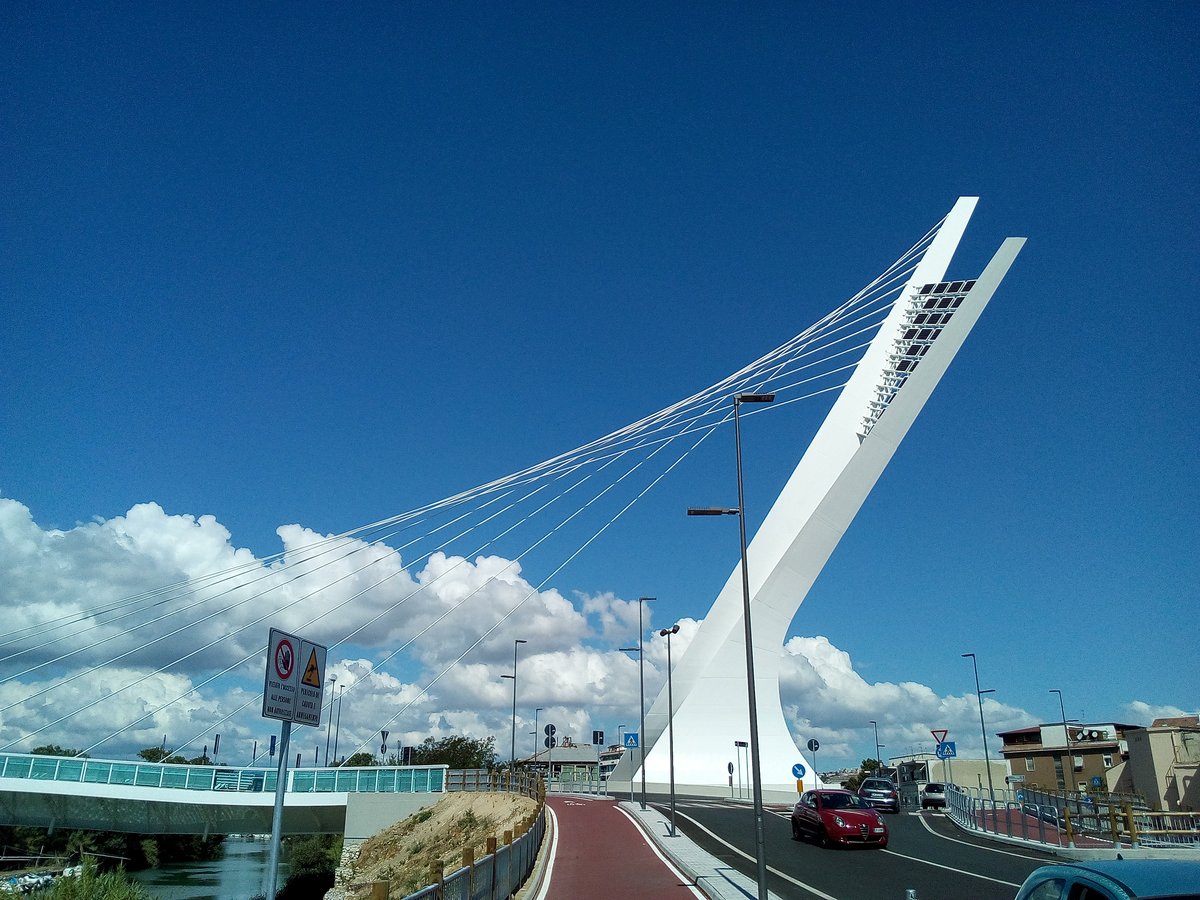
The cable-stayed bridge named after Ennio Flaiano connects the banks of the Pescara River with innovative design, solar panels, and a cycling and pedestrian path. A symbol of modernity and sustainability for the city.
- Ponte Ennio Flaiano, Pescara (PE)
- Open in Google Maps
- View on Google Images Ponte Ennio Flaiano a Pescara
Good to know
A Sail on the River: The Ennio Flaiano Bridge
If you arrive in Pescara from the south, the first thing you see is the Ennio Flaiano Bridge. It looks like a sail ready to set off, with its 58-meter mast reaching for the sky. It’s not just a bridge—it’s a functional work of art. Inaugurated in 2017, it connects the two banks of the Pescara River with a modern, sustainable design. Along its 85-meter length, solar panels generate energy for lighting. And then there’s that phrase carved into the Majella stone: “With my feet firmly planted on the clouds.” Everything here speaks of lightness and connection. The bridge has become the new symbol of a city looking forward.
From a children’s idea to a symbol of Pescara
The story of the Flaiano Bridge begins in 2007, when engineer Enzo Siviero designed it. But the name? We owe it to the students of Ennio Flaiano Elementary School, who proposed naming it after the writer and screenwriter from Pescara. After 27 months of work and an investment of 13.1 million euros, the bridge was inaugurated on June 15, 2017 in the presence of Minister Graziano Delrio. The total weight is 6,000 tons, with a 130-ton steel mast. It immediately became a landmark: not only for traffic, but for the very identity of the city.
- 2007: Project by Eng. Enzo Siviero
- 2015-2017: 27 months of construction
- June 15, 2017: Official inauguration
A Structure That Defies Gravity
The Flaiano Bridge is an engineering masterpiece. It is a cable-stayed bridge, with a central mast supporting the deck with steel cables. The sail-like shape is not just aesthetic: the multi-axis curves make the structure light and dynamic. The pylon, 58 meters high and weighing 130 tons, is the focal point. At its base, a stone from the Majella massif, engraved by sculptor Massimo Aceto, bears Flaiano’s famous quote. 28 meters wide and 85 meters long, the bridge is a mix of steel and reinforced concrete, with a robust yet elegant deck. At night, lighting transforms it into a sculpture of light.
Clean Energy from the Bridge
Not just design: the Flaiano Bridge is also eco-friendly. Its sail is fitted with photovoltaic panels that generate power for nighttime lighting. A smart idea that reduces environmental impact. The bridge is designed for soft mobility: it has cycling and walking paths and wheelchair-accessible ramps. Open 24 hours a day, it’s a crossing point for those who want to cross the river on foot or by bike, enjoying the view of the urban park. It’s a concrete example of how infrastructure can be useful, beautiful, and green all at once.
Three Great Reasons to Visit the Bridge
First: the view. From the bridge, you can see the flowing Pescara River, the urban park, and the city skyline. It’s the perfect spot for a souvenir photo. Second: the architecture. The sail-shaped design is unique in Abruzzo, and Flaiano’s quote invites you to reflect. Third: sustainability. Knowing that the bridge generates clean energy makes you feel part of a greener future. Plus, it’s free and always open. No ticket needed, no hours to worry about. Just show up and walk.
The perfect moment? At sunset.
The Flaiano Bridge is beautiful at any time, but if I had to choose, I’d say at sunset. When the sun sets behind the hills, the sky turns orange and the bridge lights come on. The atmosphere is magical. If you prefer calm, go early in the morning: the park is still quiet and the river reflects the light. In summer, the evening is pleasant for a walk. In winter, the illuminated bridge is a warm spot in the cold city.
After the Bridge, Two Must-See Stops
A stone’s throw from the Flaiano is the Parco Urbano del Fiume Pescara, a green area perfect for a relaxing walk along the water. A bit further on, the Torri Camuzzi (or Torri Stella) are another architectural landmark: two twin skyscrapers that mark the entrance to the city. If you have time, continue towards the center: Gabriele D’Annunzio’s birthplace is a few minutes away by car. The bridge is also the ideal starting point for an itinerary between modernity and history.
Itineraries nearby


💡 Did You Know…?
The bridge’s name was proposed by students of Flaiano elementary school, and the phrase ‘With feet firmly planted on the clouds’ by Ennio Flaiano is engraved on a stone from the Majella. Before opening, eleven trucks tested the strength of the spans.