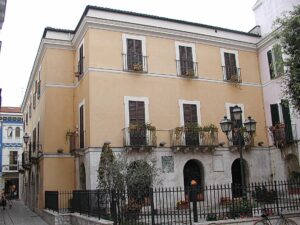
If you only have one day to discover L'Aquila, this itinerary through the historic center is perfect for you. Start at Piazza Duomo, the city's heart, and admire the majestic Basilica of San Bernardino with its Renaissance facade. Stroll among the noble palaces like Palazzo Centi and Palazzo Ardinghelli, symbols of post-earthquake reconstruction. Don't miss the monumental fountains, including the Fountain of the 99 Spouts, linked to the legend of the city's foundation. Visit the Spanish Fortress for a breathtaking panorama of the surrounding mountains. With this L'Aquila historic center one-day itinerary, you'll discover the essence of a resilient city, blending art, history, and authentic atmospheres, without overlooking practical details for a seamless experience.
🗺️ Your trip at a glance
A one-day walking itinerary to discover the historic and artistic heart of L'Aquila, from the Basilica of Collemaggio to Piazza Regina Margherita. The route, with an interactive map, combines spirituality, Renaissance architecture, and symbols of resilience at a pace suitable for everyone.
- Ideal for: travelers seeking an intense cultural experience in one day, families, and enthusiasts of history and art.
- Highlights: 8 main stops with a detailed map, a walking route through the historic center, focus on post-earthquake resilience and Renaissance and Baroque architecture.
- Perfect if: you want a complete and practical itinerary, with iconic stops like the Fountain of the 99 Spouts and views from the Civic Tower, without rush.
Itinerary stops
Stop no. 1
Basilica of Santa Maria di Collemaggio
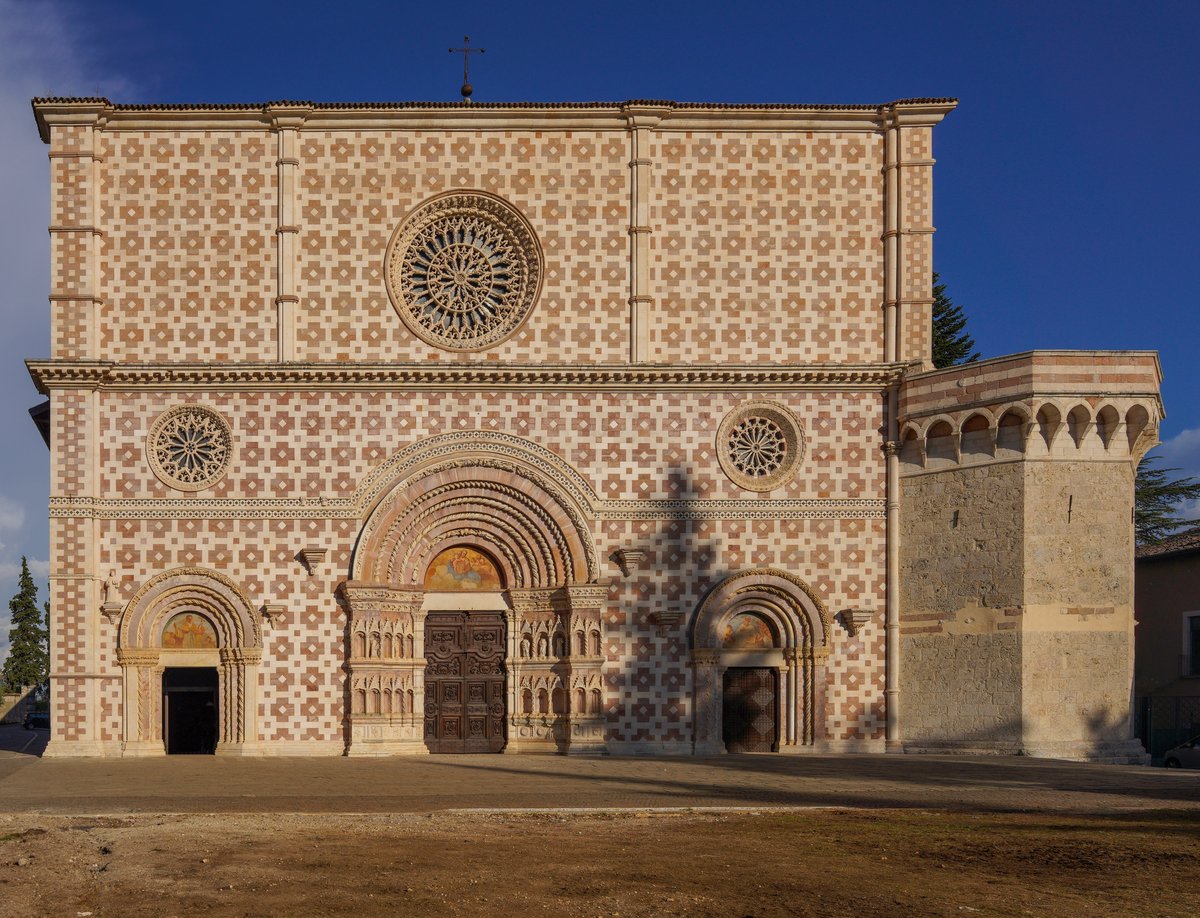 Let's begin our one-day itinerary in L'Aquila's historic center at the Basilica of Santa Maria di Collemaggio, a jewel of Abruzzese religious architecture. Located along Via San Josemaría Escrivà, this basilica welcomes you with its iconic pink and white checkered facade, a Romanesque masterpiece that dominates the city skyline. Upon entering, you'll be struck by the majesty of the three naves and the 14th-century frescoes depicting sacred stories. Don't miss the Holy Door, one of the first established in the world, and the tomb of Celestine V, the Pope of the Great Refusal, who was crowned here in 1294. After the 2009 earthquake, the basilica was carefully restored, preserving its historical charm intact. It's the ideal starting point to immerse yourself in L'Aquila's spirituality and art, offering an authentic glimpse into the city's resilience.
- Go to the page: Collemaggio Basilica in L'Aquila: Holy Door and Romanesque-Gothic Checkered Facade
- Via San Josemaría Escrivà, L'Aquila (AQ)
- Open in Google Maps
- View on Google Images

You should go if...
Stop no. 2
Fountain of the 99 Spouts
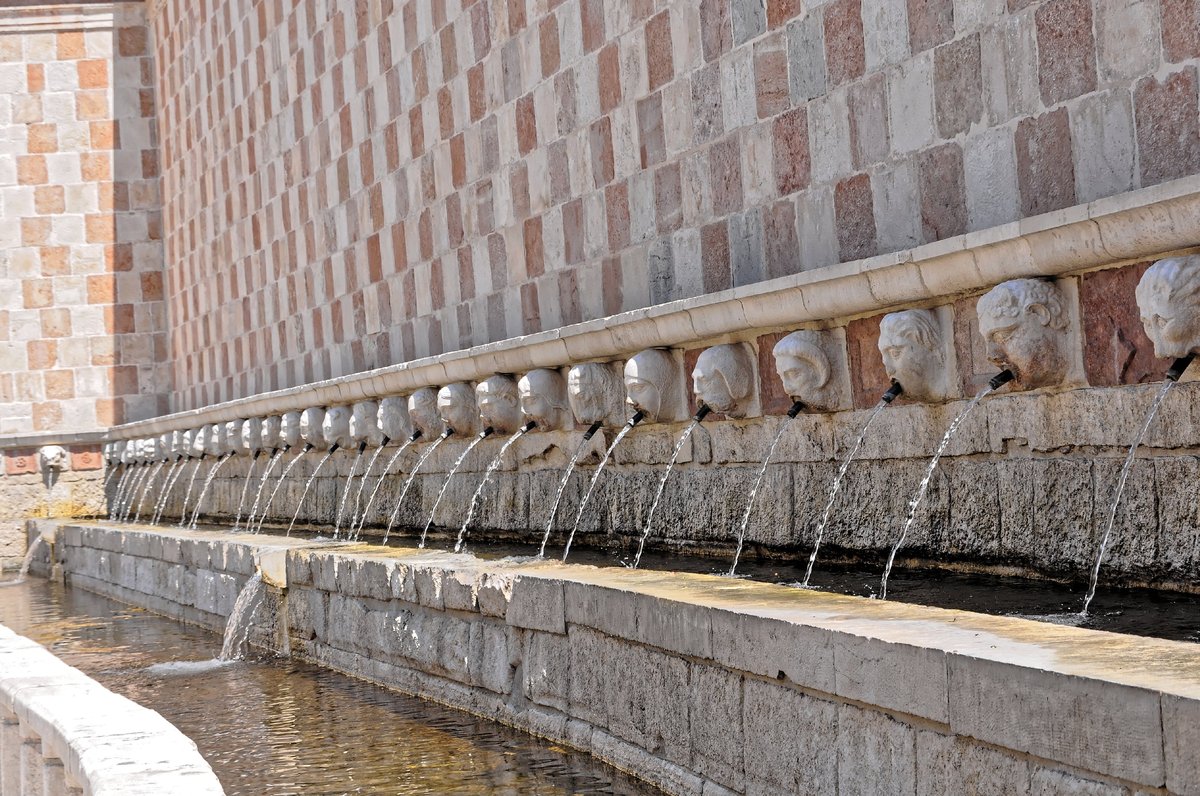 The Fountain of the 99 Spouts is one of L'Aquila's most iconic monuments, located on Via Madonna del Ponte. Built in the 13th century, this monumental fountain celebrates the legend of the 99 castles that founded the city, with each spout representing one of these ancient settlements. The architecture in local white and pink stone forms a striking trapezoid with three superimposed basins, where water constantly flows from carved stone masks. Each water jet has a different shape, creating a unique interplay of sounds and reflections. Upon closer observation, you can notice the differences between the masks—some anthropomorphic and others zoomorphic—testament to the skill of medieval Abruzzese artisans. The place maintains an intimate atmosphere despite its historical importance, with the stone steps inviting contemplative pauses.
- Via Madonna del Ponte, L'Aquila (AQ)
- Open in Google Maps
- View on Google Images
You should go if...
Stop no. 3
Palace Square
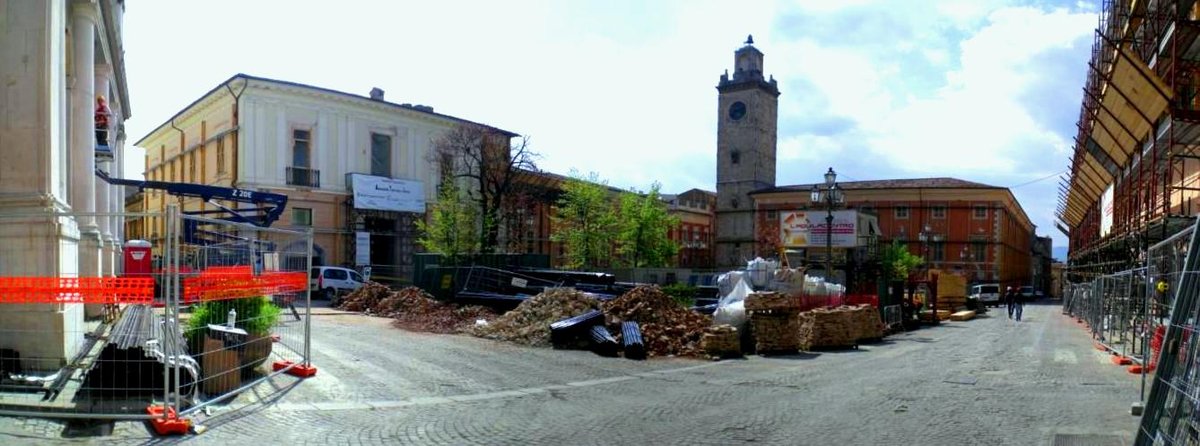 Leaving behind the watery magic of the 99 Cannelle, you arrive at Palace Square, the true center of Aquilan power since the Middle Ages. This broad, paved square is dominated by the Government Palace and the Civic Tower, symbols of civic authority that have witnessed centuries of history. The square is surrounded by elegant Renaissance and Baroque noble palaces, with white and pink stone facades that speak to the prestige of the families who once resided here. The architecture is a blend of styles ranging from Gothic to Baroque, evidence of the different eras that have shaped L'Aquila. Today the square maintains its role as a meeting place, with historic cafes overlooking the arcades and the lively atmosphere of market days. By observing the details of the bifora windows and carved portals, you understand why this space has been the beating heart of Aquilan political and social life for centuries.
- L'Aquila (AQ)
- Open in Google Maps
- View on Google Images
You should go if...
Stop no. 4
Civic Tower
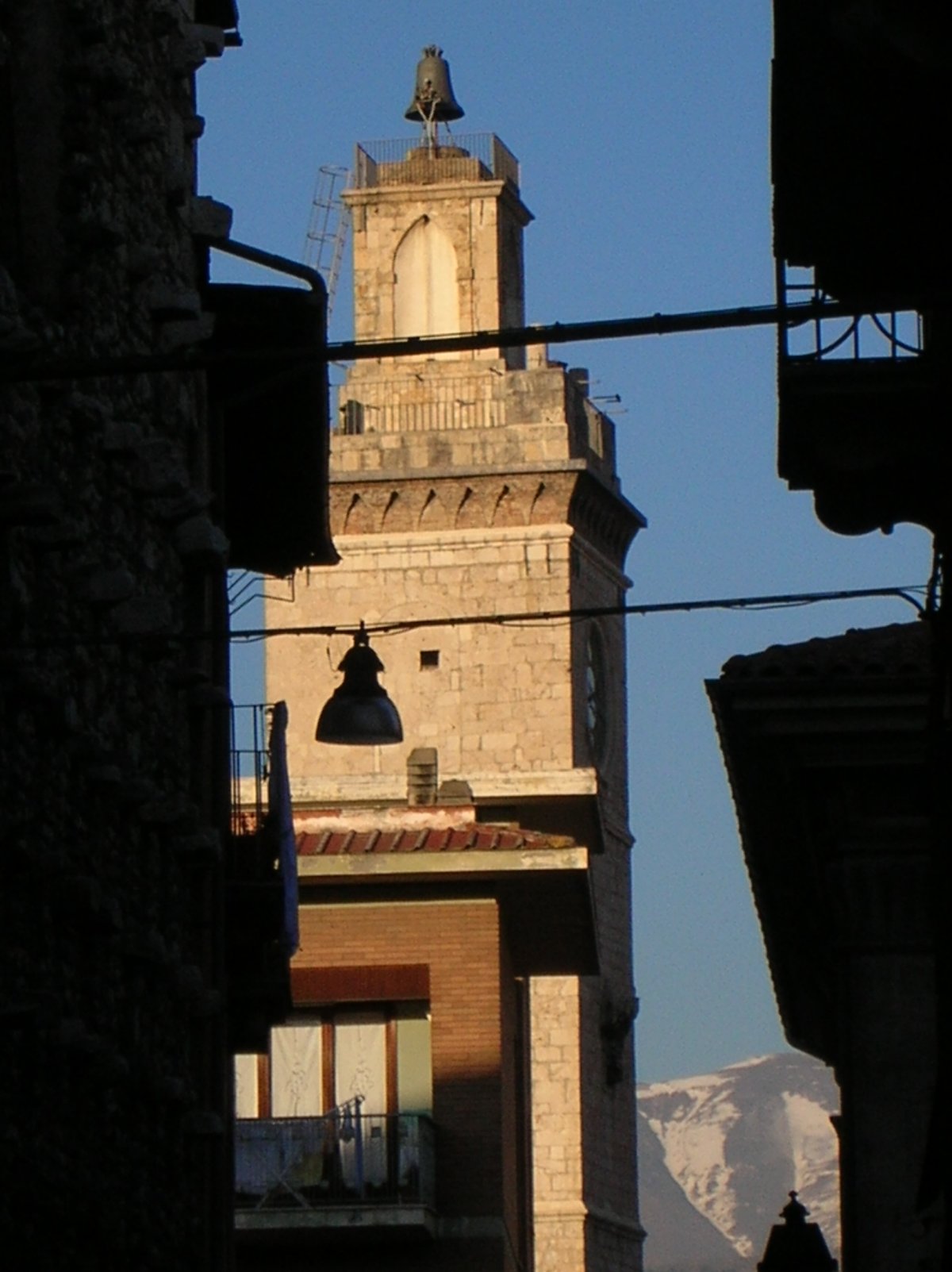 The Civic Tower soars over Piazza del Palazzo with its 35-meter height, offering one of the most spectacular views of L'Aquila's historic center. Built in the 13th century as a symbol of communal power, this bell tower has withstood earthquakes and wars, preserving its medieval charm intact. Climbing the 130 steps of the internal staircase leads to the bell chamber, where you can enjoy a 360-degree panorama embracing the rooftops of houses, Baroque churches, and the mountains of Abruzzo. The Ghibelline merlons crowning the structure recall the ancient struggles between Guelphs and Ghibellines, while the still-functioning mechanical clock has marked time for centuries. Observing the details in white Maiella stone, you'll understand why this tower has been a landmark for the people of L'Aquila for centuries.
- Piazza del Palazzo, L'Aquila (AQ)
- Open in Google Maps
- View on Google Images
You should go if...
Stop no. 5
Basilica of San Bernardino
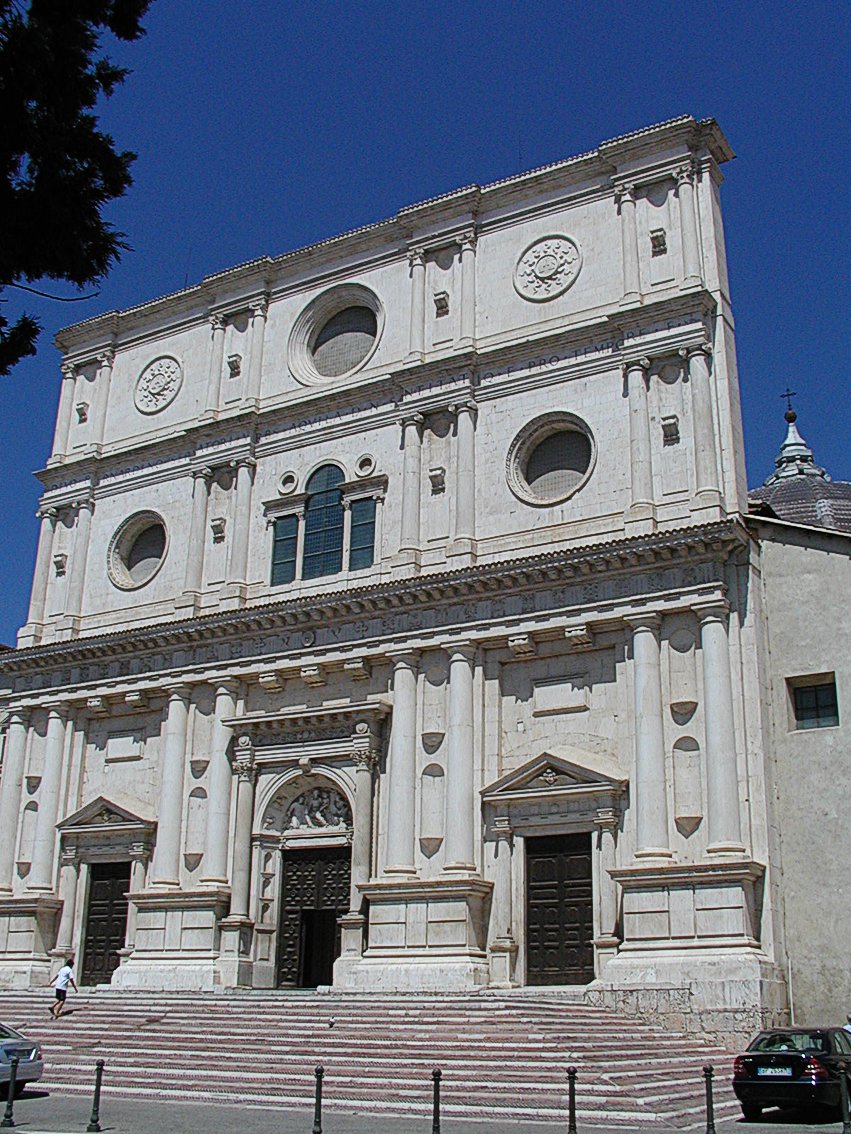 Leaving the Civic Tower behind, you approach the Basilica of San Bernardino, which dominates the square of the same name with its imposing Renaissance facade. Designed by Cola dell'Amatrice in the 16th century, this church houses the remains of San Bernardino of Siena, patron saint of L'Aquila. The Baroque interior surprises with its richness of gilded stuccoes and frescoes depicting the life of the saint. The Chapel of San Bernardino, a work by Silvestro dell'Aquila, is a sculptural masterpiece with its finely decorated marble mausoleum. Observing the octagonal dome and the bell tower, you perceive the importance this place has held in the religious history of L'Aquila, having survived earthquakes and remaining a constant reference point for the community.
- Piazza San Bernardino, L'Aquila (AQ)
- Open in Google Maps
- View on Google Images
You should go if...
Stop no. 6
Spanish Fort
 Leaving the Basilica of San Bernardino, you head towards the Spanish Fort, a massive Renaissance fortress located on Via Raul Manselli. Built in the 16th century at the behest of the Spanish viceroy Pedro de Toledo, this bastion represents one of the most significant examples of military architecture from that era in Abruzzo. Its massive stone walls, four corner bastions, and surrounding moat tell centuries of history, from Spanish rule to recent post-earthquake restorations. Today it houses the National Museum of Abruzzo, where you can admire archaeological finds, medieval and Renaissance artworks, including the famous Mammuthus meridionalis. Climbing to the terraces, you'll enjoy a breathtaking view of the historic center and the Gran Sasso—a panorama that blends history and nature in a single glance.
- Via Raul Manselli, L'Aquila (AQ)
- Open in Google Maps
- View on Google Images
You should go if...
Stop no. 7
Luminous Fountain
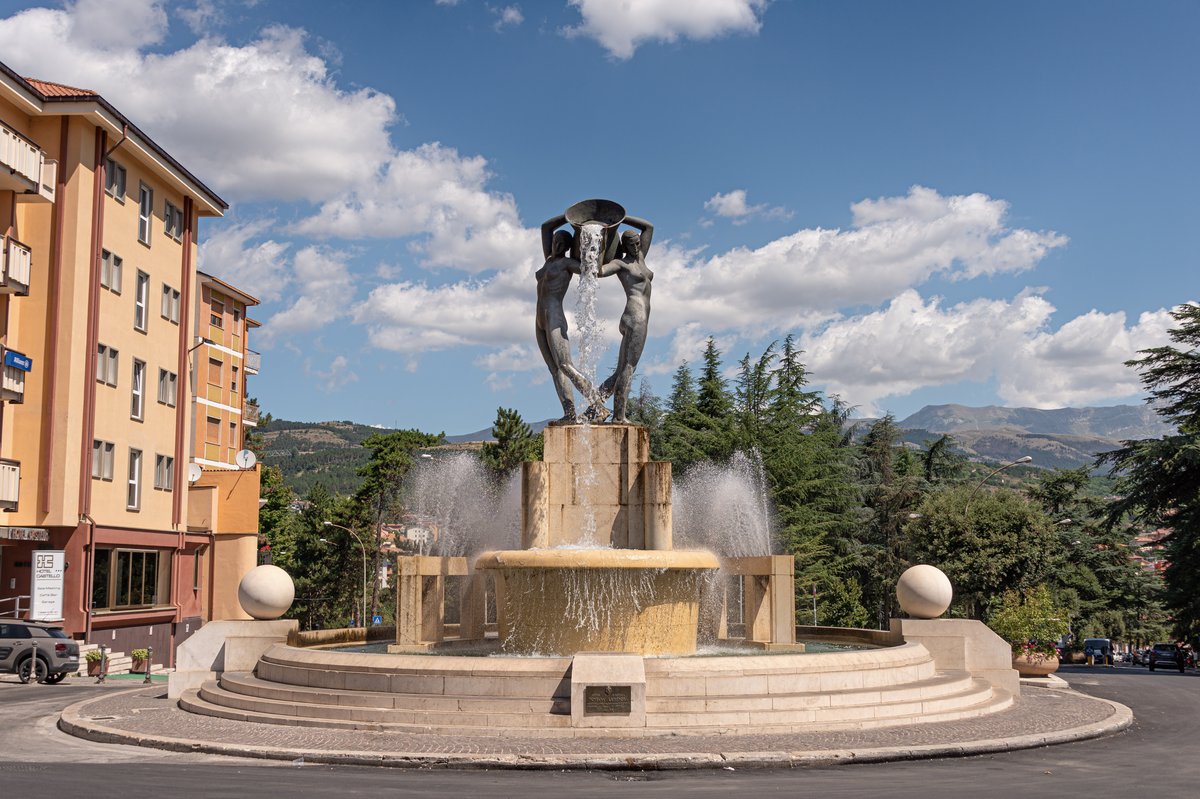 After exploring the majestic architecture of the Spanish Fortress, you'll immerse yourself in the beating heart of the city by reaching Piazza Battaglione Alpini. Here, the Luminous Fountain dominates the scene, a work created in 1934 by sculptor Nicola D'Antino. The two bronze female figures holding the characteristic basins represent Abruzzo Ulteriore and Abruzzo Citeriore, a tribute to the ancient territorial divisions. The fountain gets its name from the evocative play of lights that activates in the evening hours, creating a magical atmosphere reflected in the water. This monument, which survived the 2009 earthquake and was subsequently restored, has become a meeting point for the people of L'Aquila and an icon of the city's rebirth. Observing the details of the sculptures as the light changes is an experience that captures the essence of a L'Aquila looking to the future without forgetting the past.
- Piazza Battaglione Alpini L'Aquila, L'Aquila (AQ)
- Open in Google Maps
- View on Google Images
You should go if...
Stop no. 8
Piazza Regina Margherita
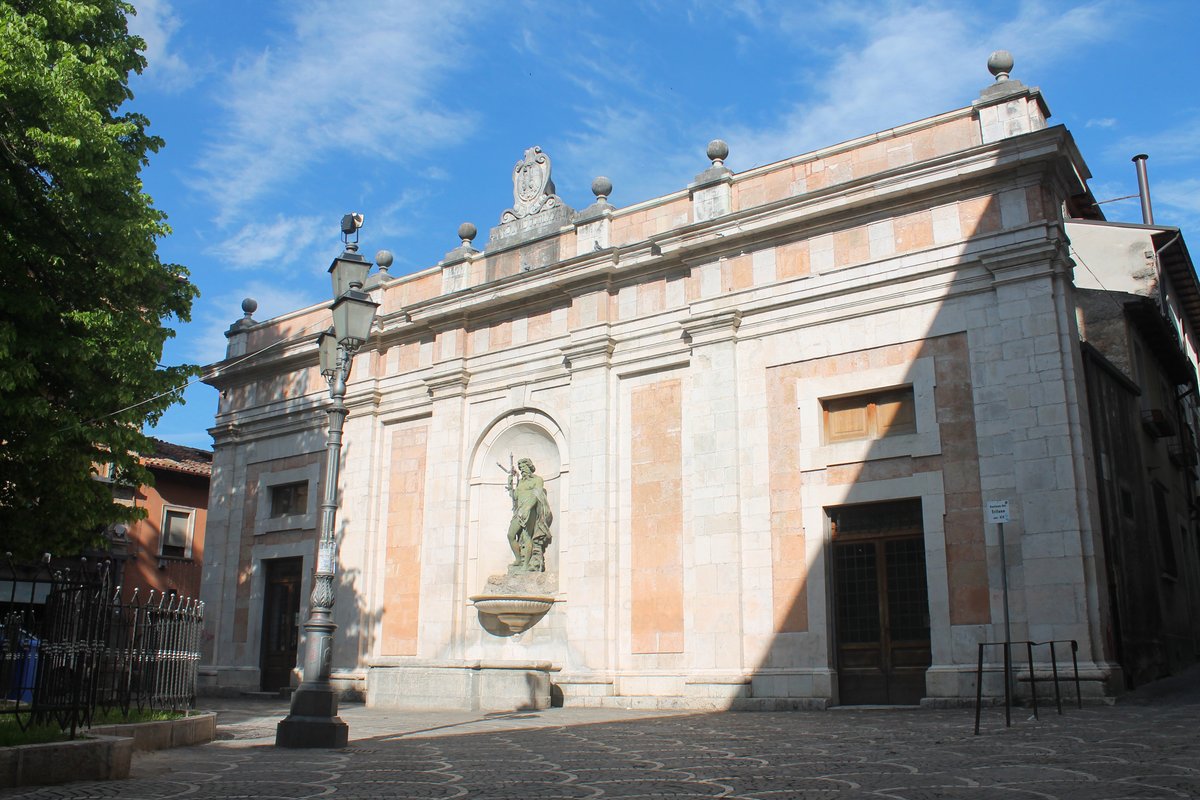 Leaving the Luminous Fountain behind, you enter Piazza Regina Margherita, one of the most elegant urban spaces in L'Aquila's historic center. The square takes its name from the Queen of Italy and stands out for the harmonious arrangement of Renaissance buildings surrounding it. At its center dominates the scenic Neptune Fountain, created in 1888, with the statue of the sea god emerging from the waters. Noble palaces such as Palazzo Lucentini Bonanni and Palazzo Pica Alfieri testify to the prestige of this area, which once hosted the city's most influential families. Observing the architectural details of the façades and the finely carved stone balconies allows you to appreciate the elegance of 16th-century Aquilan urban planning. This space, rebuilt after the 2009 earthquake, now represents a vibrant meeting point where the historical atmosphere blends with daily life.
- Piazza Regina Margherita, L'Aquila (AQ)
- Open in Google Maps
- View on Google Images
You should go if...