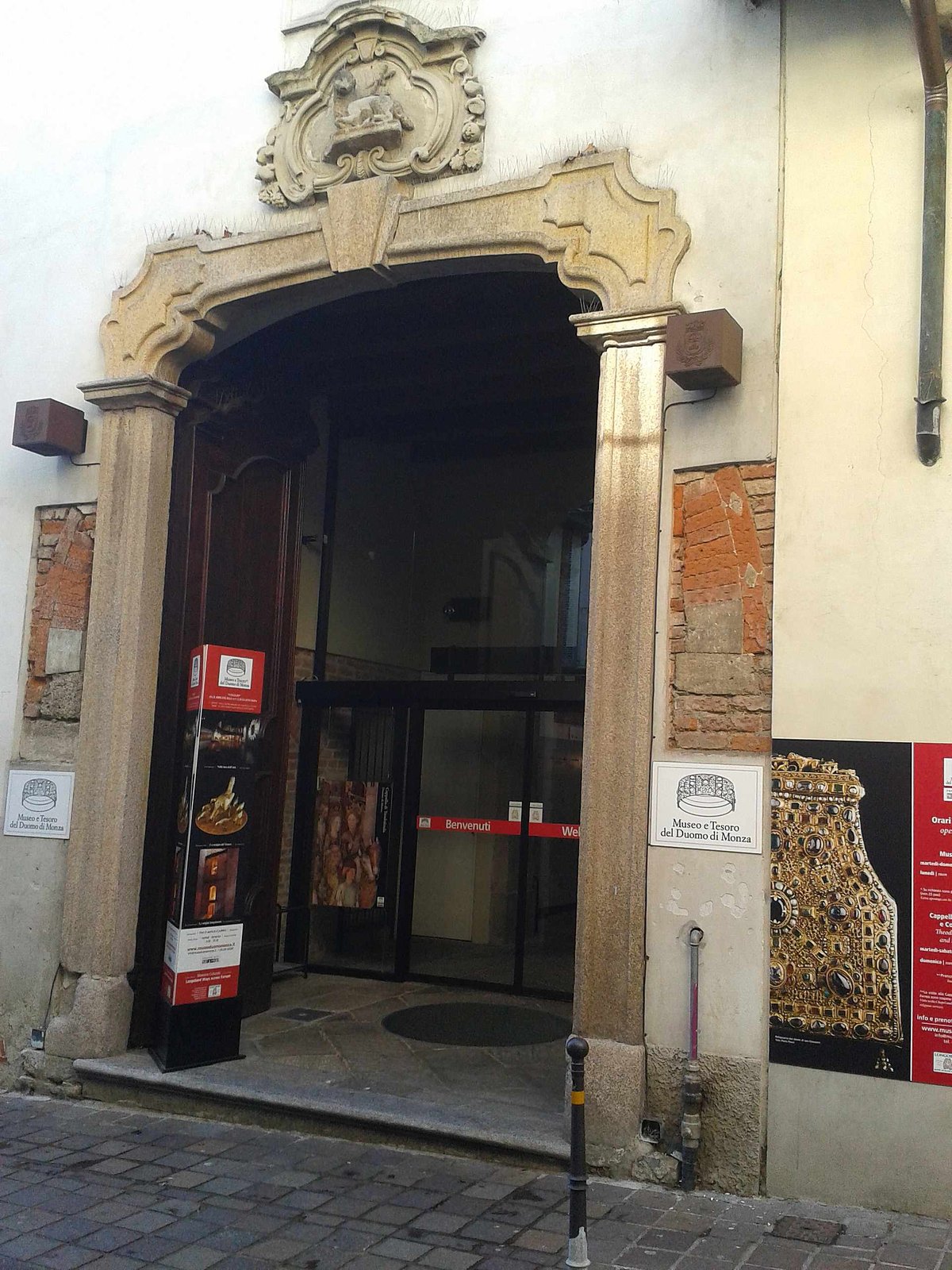
The Museum and Treasury of Monza Cathedral is a 1,400-year journey through Lombard goldsmith work, paintings, and the legendary Iron Crown. Located in the cathedral’s underground, it is divided into two sections: Serpero (early Middle Ages) and Gaiani (from the 1300s to today). Among the unique items are the Hen with Chicks, the Stilicho Diptych, and Theodolinda’s Crown.
• Admire the Iron Crown, symbol of the coronation of 120 emperors.
• Explore the Serpero section with treasures gifted by Theodolinda and Agilulf.
• Discover the Gaiani section with works from the 14th to the 20th century.
• Visit the temporary exhibition on the Rediscovered Polyptych (until April 13).
A Dive into Lombard History
Stepping into the Monza Cathedral Museum is like traveling back 1,400 years. Beneath your feet, an underground path winds through incredible treasures: the Iron Crown, the crosses of Theodolinda and Agilulf, the famous Stilicho Diptych. Each room tells a piece of history, among goldsmith works, tapestries, and paintings. This is no ordinary museum: every object here has a soul, a direct link to queens, emperors, and popes. Prepare to be awestruck.
A Dive into Lombard History
Stepping into the Monza Cathedral Museum is like traveling back 1,400 years. Beneath your feet, an underground path winds through incredible treasures: the Iron Crown, the crosses of Theodolinda and Agilulf, the famous Stilicho Diptych. Each room tells a piece of history, among goldsmith works, tapestries, and paintings. This is no ordinary museum: every object here has a soul, a direct link to queens, emperors, and popes. Prepare to be awestruck.
Historical Notes
It all begins around 595-600, when the Lombard queen
Theodelinda founded the basilica. From there, a succession of events: in 1300 the Visconti rebuilt it, in 1797 Napoleon seized the treasure (later returned), in 1963 the Serpero Museum was established, expanded in 2007 with the Gaiani section. Every era left its mark, from the Lombards to the Sforza, from the Borromeo to the present day. A timeline that reads like a novel.
- 595-600: Foundation of the basilica by Theodelinda
- 1300: Visconti reconstruction
- 1797-1815: Napoleonic spoliations
- 1963: Opening of the Serpero Museum
- 2007: Inauguration of the Gaiani section
Historical Notes
It all begins around 595-600, when the Lombard queen
Theodelinda founded the basilica. From there, a succession of events: in 1300 the Visconti rebuilt it, in 1797 Napoleon seized the treasure (later returned), in 1963 the Serpero Museum was established, expanded in 2007 with the Gaiani section. Every era left its mark, from the Lombards to the Sforza, from the Borromeo to the present day. A timeline that reads like a novel.
- 595-600: Foundation of the basilica by Theodelinda
- 1300: Visconti reconstruction
- 1797-1815: Napoleonic spoliations
- 1963: Opening of the Serpero Museum
- 2007: Inauguration of the Gaiani section
Serpero Section: The Early Medieval Treasure
The first section, named after Filippo Serpero, holds the jewels of the Lombard and Carolingian eras. Here you will find the Hen with Chicks, a masterpiece of goldsmithing, the Agilulf Cross, the Theodelinda Crown, and the famous pilgrim flasks. Each piece has a story: for example, the Berengar Cross, donated by the emperor in the 10th century. It is the beating heart of the museum, with objects that seem to have come from a dream. The soft lighting and display cases create an almost mystical atmosphere.
Serpero Section: The Early Medieval Treasure
The first section, named after Filippo Serpero, holds the jewels of the Lombard and Carolingian eras. Here you will find the Hen with Chicks, a masterpiece of goldsmithing, the Agilulf Cross, the Theodelinda Crown, and the famous pilgrim flasks. Each piece has a story: for example, the Berengar Cross, donated by the emperor in the 10th century. It is the beating heart of the museum, with objects that seem to have come from a dream. The soft lighting and display cases create an almost mystical atmosphere.
Gaiani Section: from the 14th Century to Today
The second section, Gaiani, is a journey through the more recent centuries. Funded by the Gaiani family, it was inaugurated in 2007 based on a project by Cini Boeri. Here you can admire the tapestries depicting the stories of Saint John the Baptist from cartoons by Arcimboldo, the chalice of Gian Galeazzo Visconti, and works by contemporary artists such as Lucio Fontana and Sandro Chia. Don’t miss the large stained-glass rose window from the 15th century, reassembled on a 12-meter wall: it is spectacular.
Gaiani Section: from the 14th Century to Today
The second section, Gaiani, is a journey through the more recent centuries. Funded by the Gaiani family, it was inaugurated in 2007 based on a project by Cini Boeri. Here you can admire the tapestries depicting the stories of Saint John the Baptist from cartoons by Arcimboldo, the chalice of Gian Galeazzo Visconti, and works by contemporary artists such as Lucio Fontana and Sandro Chia. Don’t miss the large stained-glass rose window from the 15th century, reassembled on a 12-meter wall: it is spectacular.
Why Visit It
Two reasons above all: first, the Iron Crown – which crowned 120 sovereigns – is kept here, in the Chapel of Theodelinda, visitable with a guide. Second, the museum is unique for its dual soul: on one side the Lombard treasures, on the other art from the 1300s onward. If you are passionate about history, art, or goldsmithing, you can’t miss it. Moreover, the combined museum+chapel ticket is a bargain: €14 with guided tour included.
Why Visit It
Two reasons above all: first, the Iron Crown – which crowned 120 sovereigns – is kept here, in the Chapel of Theodelinda, visitable with a guide. Second, the museum is unique for its dual soul: on one side the Lombard treasures, on the other art from the 1300s onward. If you are passionate about history, art, or goldsmithing, you can’t miss it. Moreover, the combined museum+chapel ticket is a bargain: €14 with guided tour included.
When to Go
The best time? On weekdays, early in the morning to avoid crowds. The museum opens at 9, and the light filtering from above makes everything more evocative. If you can, choose a day with clear skies: the city of Monza is more enjoyable on foot. Avoid Mondays (closed) and overly crowded weekends. In autumn or spring, when the gardens of the Villa Reale are at their best colors, the visit becomes a complete experience.
When to Go
The best time? On weekdays, early in the morning to avoid crowds. The museum opens at 9, and the light filtering from above makes everything more evocative. If you can, choose a day with clear skies: the city of Monza is more enjoyable on foot. Avoid Mondays (closed) and overly crowded weekends. In autumn or spring, when the gardens of the Villa Reale are at their best colors, the visit becomes a complete experience.
Nearby
Just a stone’s throw from the Duomo, don’t miss the Royal Villa of Monza and its vast park. A green oasis perfect for a stroll after the museum. Alternatively, immerse yourself in the historic center: Via Bergamo and Piazza Trento e Trieste are full of cafés and artisan shops. If you love contemporary art, the Civic Gallery of Monza has interesting exhibitions. Everything is within walking distance.
Nearby
Just a stone’s throw from the Duomo, don’t miss the Royal Villa of Monza and its vast park. A green oasis perfect for a stroll after the museum. Alternatively, immerse yourself in the historic center: Via Bergamo and Piazza Trento e Trieste are full of cafés and artisan shops. If you love contemporary art, the Civic Gallery of Monza has interesting exhibitions. Everything is within walking distance.