
🧭 What to Expect
- Ideal for: those who love art, history, and good food.
- Highlight: the Archaeological Museum with Ötzi and the medieval castles.
- Tip: visit the historic center in the morning and the castles in the afternoon.
- Don't miss: the view from Santa Maddalena and the Gries district.
Events nearby

If you're planning a visit to Bolzano, knowing what to see can make the difference between a rushed trip and an unforgettable experience. The capital of South Tyrol is a fascinating mix of Italian and German culture, reflected in its architecture, cuisine, and traditions. Start from the historic center, where the medieval arcades house shops and cafés; don't miss the Cathedral with its spire bell tower and the Dominican Church with Gothic frescoes. The South Tyrol Museum of Archaeology is a must to admire Ötzi, the Similaun mummy. Then head up to the castles: Castel Mareccio, surrounded by vineyards, and Castel Firmiano, overlooking the city. For a panoramic view, reach Santa Maddalena. The Gries district, with its square and Baroque church, offers a cozy atmosphere. Don't miss Museion, the museum of contemporary art, and the Victory Monument, a controversial but historic symbol. Finally, treat yourself to a wine and food break: Bolzano is famous for its apples and wine. Here's what to see in Bolzano.
Overview
- South Tyrol Museum of Archaeology: The Incredible Ötzi and Prehistory
- Bolzano Cathedral: The Sacred Symbol of the City
- Castel Mareccio: A Renaissance Gem Among Bolzano's Vineyards
- Castel Mareccio: A Renaissance Gem Among Bolzano's Vineyards
- Firmiano Castle: History, Autonomy, and the MMM Firmian
- Dominican Church: A Gothic Gem of Frescoes and Cloister
- Victory Monument: A Symbol That Divides and a Museum That Unites
- Museion: Contemporary Art in the Heart of Bolzano
- Santa Maddalena - St. Magdalena: Between Wine and Frescoes
- Castel Flavon: History and Flavor on the Porphyry Spur
- Castel Rafenstein: Ruins Overlooking Bolzano
- Druso Tower: The Mysterious Keep of Gries
- Castel Sant'Antonio: A Private Jewel of History and Ceramics
- Natural Science Museum: A Dive into Geology and Coral Reefs
- Teatro Comunale – Stadttheater: The Enigmatic Box
- Statue of Walther von der Vogelweide: Between Legend and Restoration
Itineraries nearby


South Tyrol Museum of Archaeology: The Incredible Ötzi and Prehistory
- Via Museo - Museumstraße 43, Bolzano (BZ)
- https://www.iceman.it
- Open in Google Maps
- View on Google Images
- +39 0471 320100
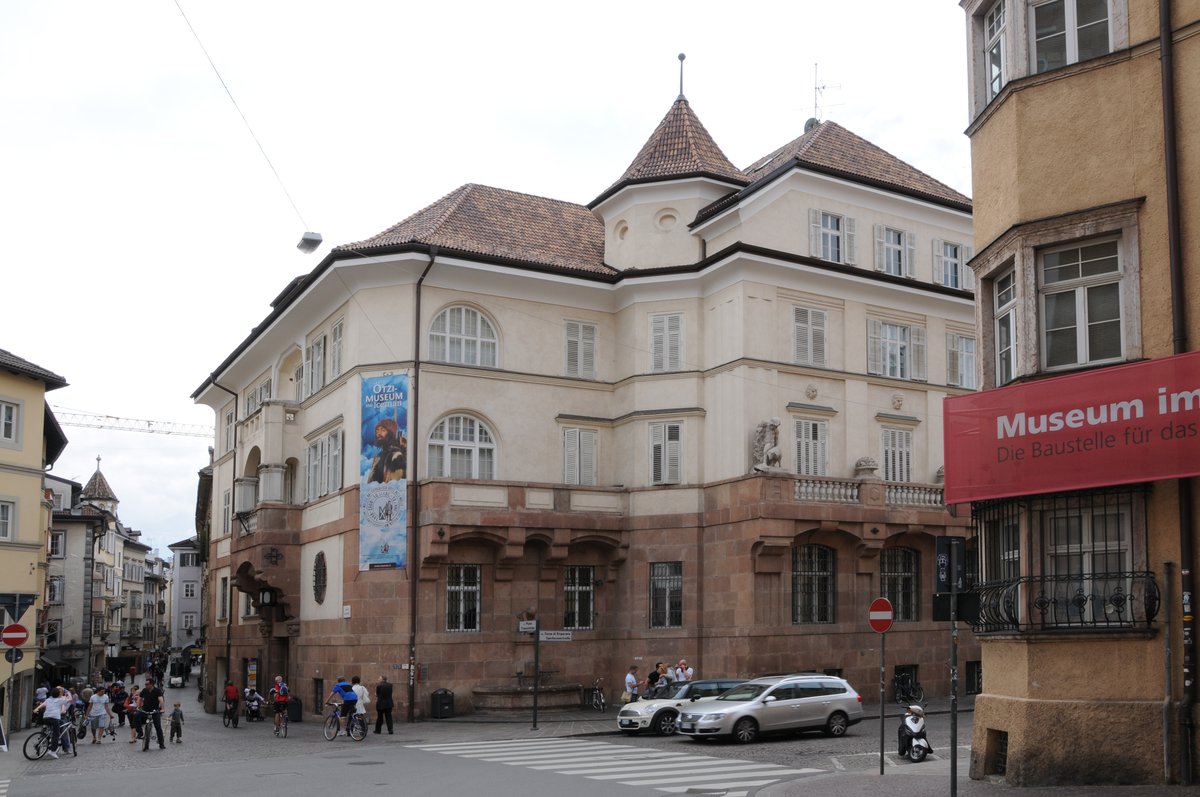 The South Tyrol Museum of Archaeology is the jewel of prehistory in Bolzano. Here, at number 43 Via Museo, Ötzi awaits you—the Similaun mummy accidentally discovered in 1991 by two hikers on the Senales Valley glacier. A find that changed history. The mummy, dating back over 5,300 years, is preserved in a refrigerated cell on the first floor, along with his original Copper Age clothing and equipment. The building itself is fascinating: built in 1912 as the headquarters of the Bank of Italy, it sits at the start of the pedestrian zone in the historic center. The exhibition spans three floors. On the ground floor, you can retrace the story of the discovery; on the second floor, interactive displays and recent studies reveal Ötzi's secrets: his diet, his injuries, and even his therapeutic tattoos. A true archaeological cold case! There are also artifacts from the Paleolithic to the Early Middle Ages, such as menhirs and Roman objects. The museum is accessible for people with disabilities, family-friendly, and offers audioguides (€4) and guided tours. Hours: Tuesday–Sunday 10am–6pm (closed Monday, except July–August when open daily). Full ticket €13, reduced €10; free with Museumcard until 2025. I recommend booking online to avoid queues. For more in-depth exploration, stop by the ArcheoParc Senales or the Iceman Ötzi Peak viewpoint. An unmissable experience for history lovers.
Bolzano Cathedral: The Sacred Symbol of the City
- Piazza della Parrocchia - Pfarrplatz, Bolzano (BZ)
- Open in Google Maps
- View on Google Images
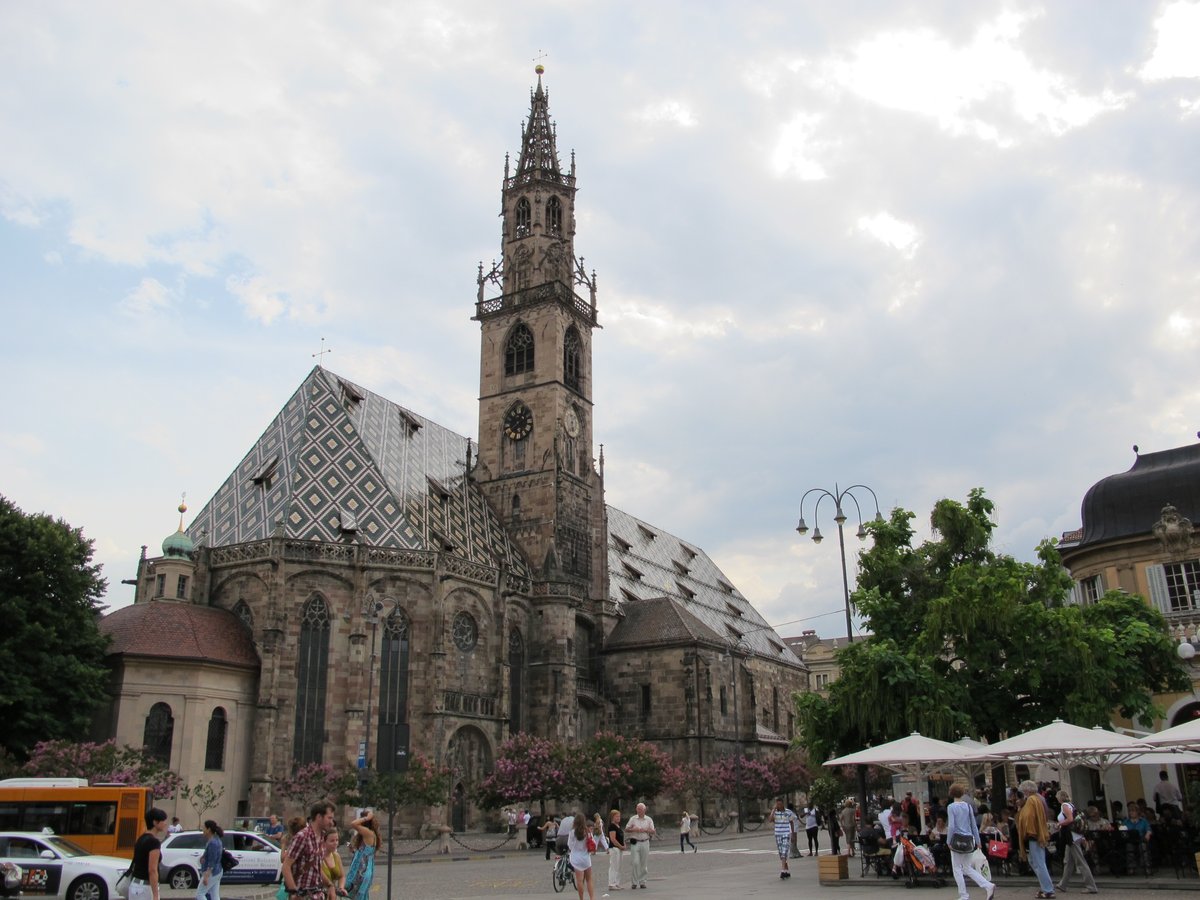 Stepping into Bolzano Cathedral is like diving into history. Not only is it the city's main church, but literally beneath your feet lie the foundations of a 4th-century basilica. Yes, you read that right: this Gothic building rises on layers of earlier churches, starting from an ancient Paleo-Christian basilica. The facade blends Romanesque and Gothic elements, with a rose window that catches the eye and a roof of green and gold tiles. The 65-meter bell tower is a masterpiece: designed by Burkhard Engelberg, its flamboyant spire recalls French cathedrals. Don't miss the Wine Portal, a Gothic doorway with carved vintners – reportedly one of the finest in Tyrol. Inside, the three naves welcome you with cross and star vaults. The Gothic sandstone pulpit, rebuilt after the war, is finely carved. The Baroque Chapel of Grace offers an interesting contrast. If you have time, visit the Cathedral Treasure Museum in the old provost's house: it houses one of the largest collections of Baroque sacred furnishings in Tyrol, with over 1,000 objects. A true treasure chest. The cathedral is located in Piazza della Parrocchia, a stone's throw from Piazza Walther. It is generally open daily with continuous hours; admission is free. Italian masses are held daily at 8:00 AM and Sundays at 7:00 PM. For details, it's best to check the official website.
Castel Mareccio: A Renaissance Gem Among Bolzano's Vineyards
- Go to the page: Castel Mareccio: A Renaissance Jewel in the Heart of Bolzano
- Lungo Talvera Bolzano - Bozner Wassermauer, Bolzano (BZ)
- Open in Google Maps
- View on Google Images
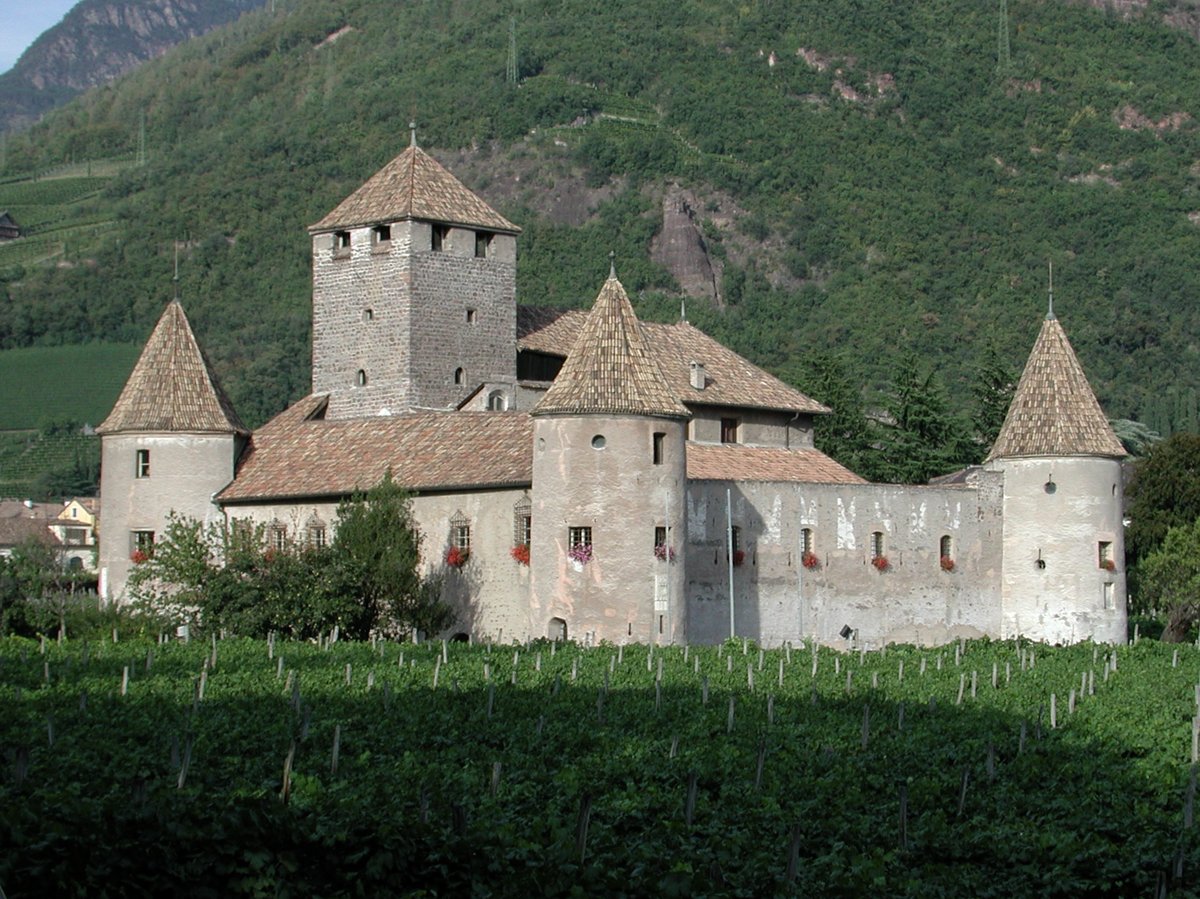 Just a stone's throw from Bolzano's center, nestled among the Lagrein vineyards, lies a castle that seems straight out of a Renaissance fairy tale: Castel Mareccio. Unlike classic fortresses perched on rocky outcrops, this one sits on the plain, surrounded by greenery with a stunning view of the Rosengarten. Its history begins in the 12th century, but its current look is thanks to the Römer family, who transformed it into an elegant residence in the 1500s, adding the four round towers and a wealth of frescoes. Upon entering, the courtyard covered by a glass structure is a modern space hosting events, but the real magic is on the upper floors. The Römer Hall is a burst of paintings: Moses with horns (yes, that Moses!), biblical scenes, and coats of arms. And then there's the Sator Magic Square, a Latin palindrome readable from any direction, only visible on a guided tour. On the second floor, the exhibition of historical postcards 'Once Upon a Time... Bolzano' in the Keep Tower offers a 360° panoramic view of the city. But beware: the castle is often closed for weddings and conferences, so check hours and dates on the official website. Tickets cost €5, last entry at 12:00 PM and 4:15 PM. Tip: reach it on foot from the station in 15 minutes, along the Talvera promenade—a spectacle even just for the exterior view.
Castel Mareccio: A Renaissance Gem Among Bolzano's Vineyards
- Go to the page: Castel Mareccio in Bolzano: Renaissance frescoed courtyard and event venue in the city center
- Lungo Talvera Bolzano - Bozner Wassermauer, Bolzano (BZ)
- Open in Google Maps
- View on Google Images
Just a stone's throw from Bolzano's center, nestled among the Lagrein vineyards, lies a castle that seems straight out of a Renaissance fairy tale: Castel Mareccio. Unlike classic fortresses perched on rocky outcrops, this one sits on the plain, surrounded by greenery with a stunning view of the Rosengarten. Its history begins in the 12th century, but its current look is thanks to the Römer family, who transformed it into an elegant residence in the 1500s, adding the four round towers and a wealth of frescoes. Upon entering, the courtyard covered by a glass structure is a modern space hosting events, but the real magic is on the upper floors. The Römer Hall is a burst of paintings: Moses with horns (yes, that Moses!), biblical scenes, and coats of arms. And then there's the Sator Magic Square, a Latin palindrome readable from any direction, only visible on a guided tour. On the second floor, the exhibition of historical postcards 'Once Upon a Time... Bolzano' in the Keep Tower offers a 360° panoramic view of the city. But beware: the castle is often closed for weddings and conferences, so check hours and dates on the official website. Tickets cost €5, last entry at 12:00 PM and 4:15 PM. Tip: reach it on foot from the station in 15 minutes, along the Talvera promenade—a spectacle even just for the exterior view.Firmiano Castle: History, Autonomy, and the MMM Firmian
- Go to the page: Firmian Castle: Messner Museum between medieval walls and Dolomite panoramas
- Mebo-Schnellstraße - Superstrada Mebo, Bolzano (BZ)
- Open in Google Maps
- View on Google Images
 If you are in Bolzano, you cannot miss Firmiano Castle, also known as Schloss Sigmundskron. Perched on a reddish porphyry rock southwest of the city, it is one of the largest castle complexes in South Tyrol. Its history begins in 945 under the name Formicaria, later passing to the Bishop of Trent in 1027 and entrusted to ministerial families such as the Firmians. But the real protagonist is Sigismund of Austria, who purchased it in 1473, transformed it into a fortress, and renamed it Sigmundskron (Sigismund's Crown). After centuries of decay, in 1957 the castle became a political symbol: over 30,000 South Tyroleans gathered here to protest the failure to implement the Paris Agreement, with the motto "Los von Trient" (Away from Trent), led by Silvius Magnago. Acquired by the Province of Bolzano in 1996, it was restored from 2001 to 2016, and in 2006 the Messner Mountain Museum (MMM) Firmian opened, conceived by Reinhold Messner. The museum, titled "The Enchanted Mountain," explores the relationship between humans and mountains with exhibits from around the world, while the architecture blends ancient walls with modern steel and glass elements. Don't miss the breathtaking view of the Sciliar and the Tessa Group, and take a break at the bar-restaurant. The castle is open Mon-Sun 10:00-18:00, closed Thursday; full ticket €15. A place that uniquely blends history, politics, and mountaineering.
Dominican Church: A Gothic Gem of Frescoes and Cloister
- Piazza Domenicani - Dominikanerplatz, Bolzano (BZ)
- Open in Google Maps
- View on Google Images
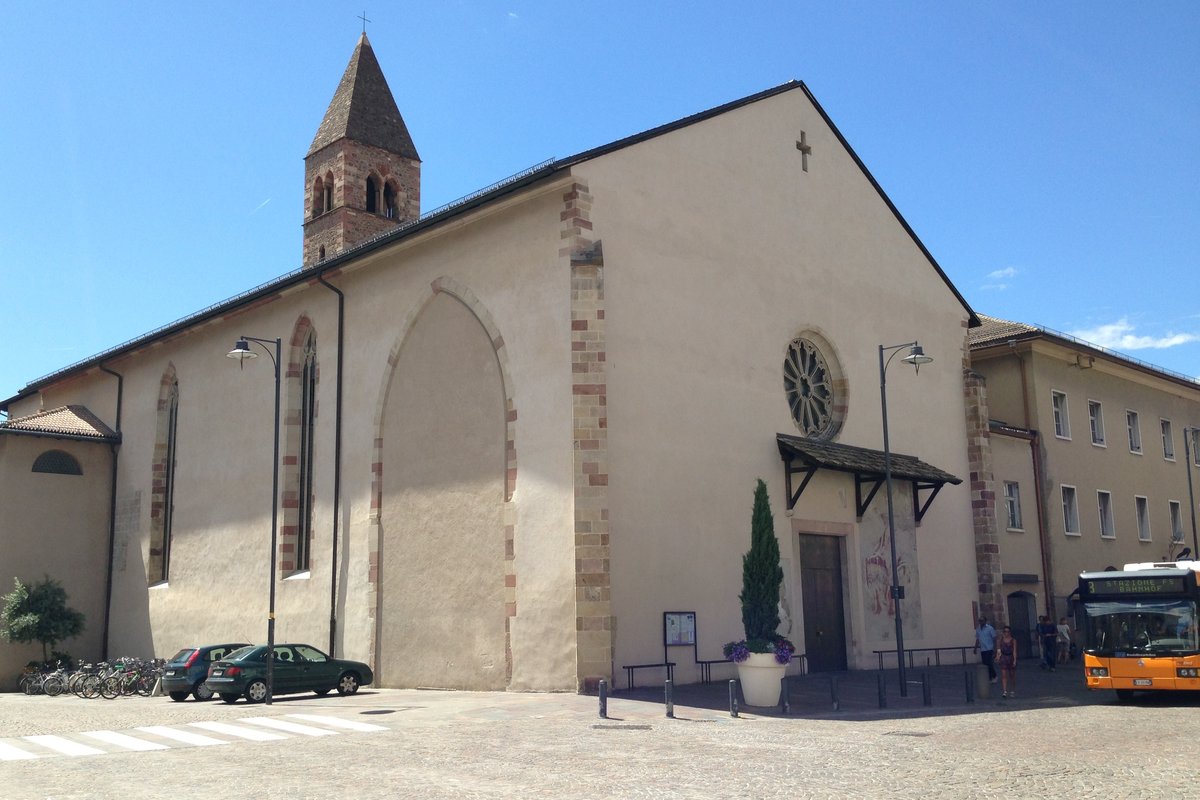 If you're passing through Bolzano, the Dominican Church is a stop you can't miss. Not only because it's one of the first examples of Gothic architecture in South Tyrol, but for what it holds inside. Built in 1272 by the Dominican friars and later rebuilt in the 14th century, it welcomes you with a simple façade, but as soon as you enter, you'll understand why it's considered a treasure.
The interior has three naves with octagonal pillars and ribbed vaults, but the real spectacle is the frescoes. The Chapel of St. John is a masterpiece: a complete cycle from the Giotto school from the first half of the 14th century, with scenes ranging from the life of St. John to the striking Triumph of Death. It's one of those places where you stand in awe, observing the details. In the Merchants' Chapel, there's the Vision of Soriano by Guercino, a Baroque work that stands out among the Gothic vaults.
But it doesn't end there. Adjacent is the 14th-century cloister, a peaceful corner with frescoes by Friedrich Pacher from 1496 depicting the life of Christ. From there you can access the Chapel of St. Catherine, with further Giotto-style frescoes from the 15th century. If you come between April and October, the cloister is open on Saturdays: a perfect opportunity to enjoy the atmosphere. The church is open every day (Mon-Sat 9:30 AM-5:00 PM, Sun 12:00 PM-6:00 PM) and admission is free. In short, a place that blends art, history, and a touch of magic.
Victory Monument: A Symbol That Divides and a Museum That Unites
- Piazza della Vittoria - Siegesplatz, Bolzano (BZ)
- Open in Google Maps
- View on Google Images
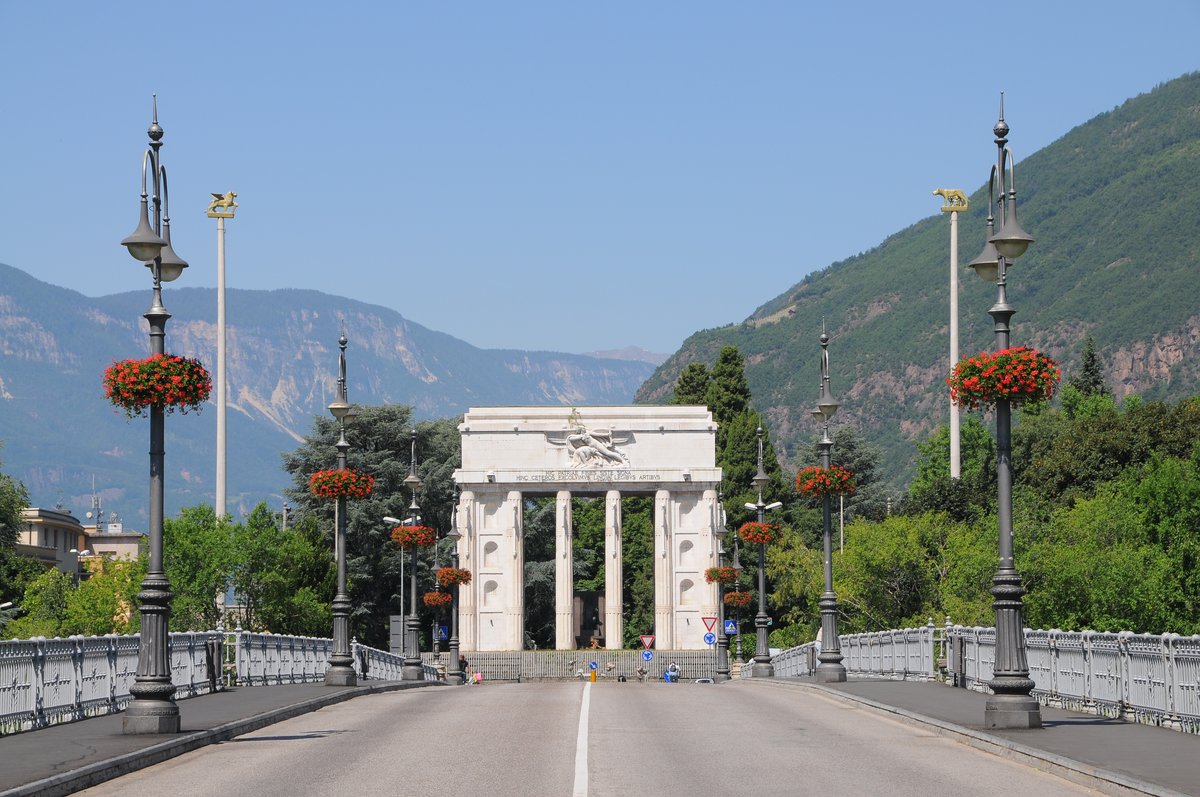 Wandering through Bolzano, you come across an imposing structure that does not go unnoticed: the Victory Monument, also known as the Siegesdenkmal. Designed by Marcello Piacentini and inaugurated in 1928, this triumphal marble arch was commissioned by the fascist regime to celebrate Italy's victory in World War I. The Latin inscription on the pediment – “HIC PATRIAE FINES SISTE SIGNA” – is still a source of debate today, as it claims a civilizing mission that the German-speaking population has always seen as a provocation.
But do not stop outside. Since 2014, inside the monument there is a gem: the exhibition “BZ ’18–’45. A Monument, a City, Two Dictatorships”. Over 700 square meters of underground rooms, including a crypt frescoed by Guido Cadorin, tell the story of the monument and the city between the two dictatorships, fascist and Nazi. Videos, documents, and installations make you reflect on how a work of art can become a tool of division and, later, of reconciliation. Admission is free (Tuesday to Sunday, 10-6) and the exhibition is barrier-free. A stop that will leave you with more questions than answers – and perhaps that is precisely the beauty of it.
Museion: Contemporary Art in the Heart of Bolzano
- Piazza Piero Siena - Piero-Siena-Platz 1, Bolzano (BZ)
- https://www.museion.it/
- Open in Google Maps
- View on Google Images
- info@museion.it
- +39 0471 223413
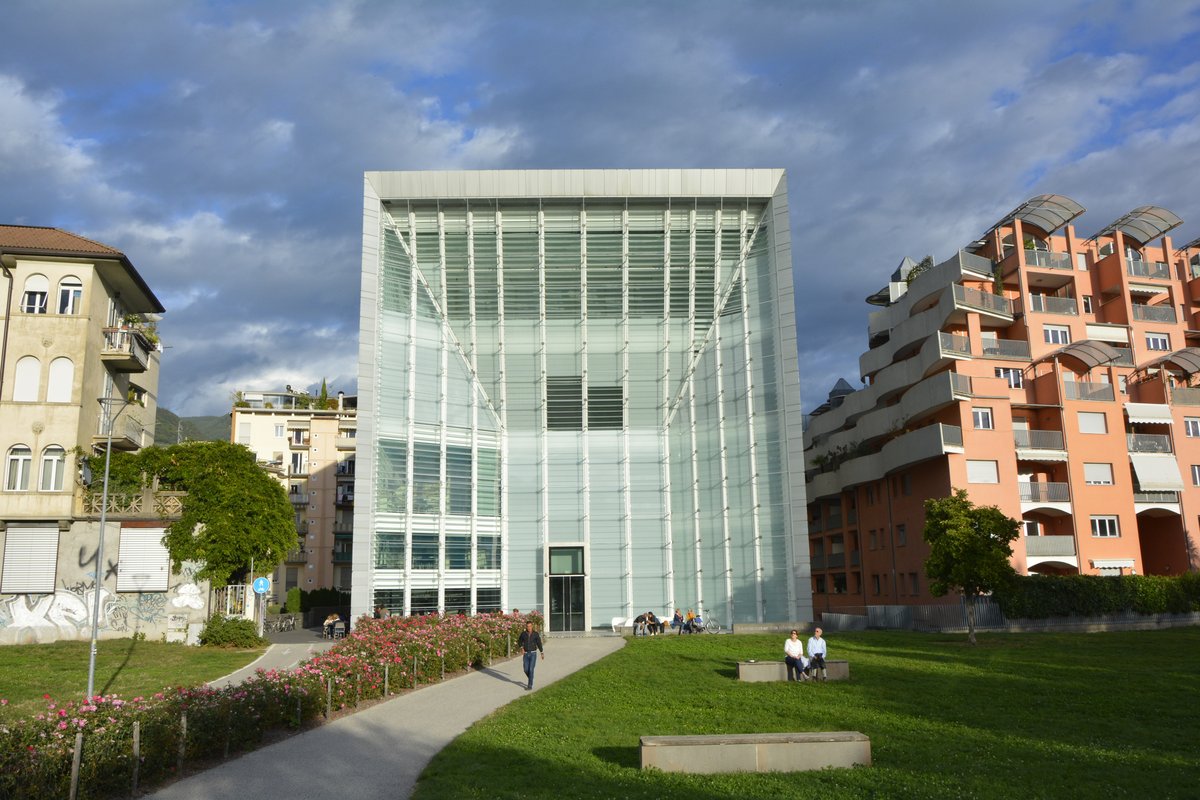 Impossible to miss it. As you stroll along the Talvera meadows, your gaze is drawn to a transparent glass cube that seems to float between the old town and the modern city. It’s Museion, Bolzano’s museum of modern and contemporary art, inaugurated in 2008 and designed by the Berlin-based firm KSV. The double-skin glass facade is not just beautiful: by day, it regulates light with movable slats; by night, it becomes a screen for projections and light installations. A play of transparency symbolizing openness and dialogue.
Inside, the spaces are fluid and barrier-free, all white, with movable walls that adapt to exhibitions. The permanent collection boasts over 4,500 works, focusing on art and language, sculpture, and non-European perspectives. But Museion is more than static artworks: it’s a living laboratory. Each year it offers temporary exhibitions, workshops (such as those by the Museion Art Club), and family activities. In 2026, the 'Museiopolis' program will take art outside the museum, into the city and province.
If you’re passing by, mark your calendar for Thursdays: from 6 PM to 10 PM admission is free, and you can enjoy the galleries at your leisure. The café stays open late, and from the third floor, the view of the Dolomites is breathtaking. Kids love the playful tours with the museum’s caterpillar. In short, a place that blends art, architecture, and everyday life. Not to be missed.
Santa Maddalena - St. Magdalena: Between Wine and Frescoes
- Untermagdalena - Santa Maddalena di Sotto, Bolzano (BZ)
- Open in Google Maps
- View on Google Images
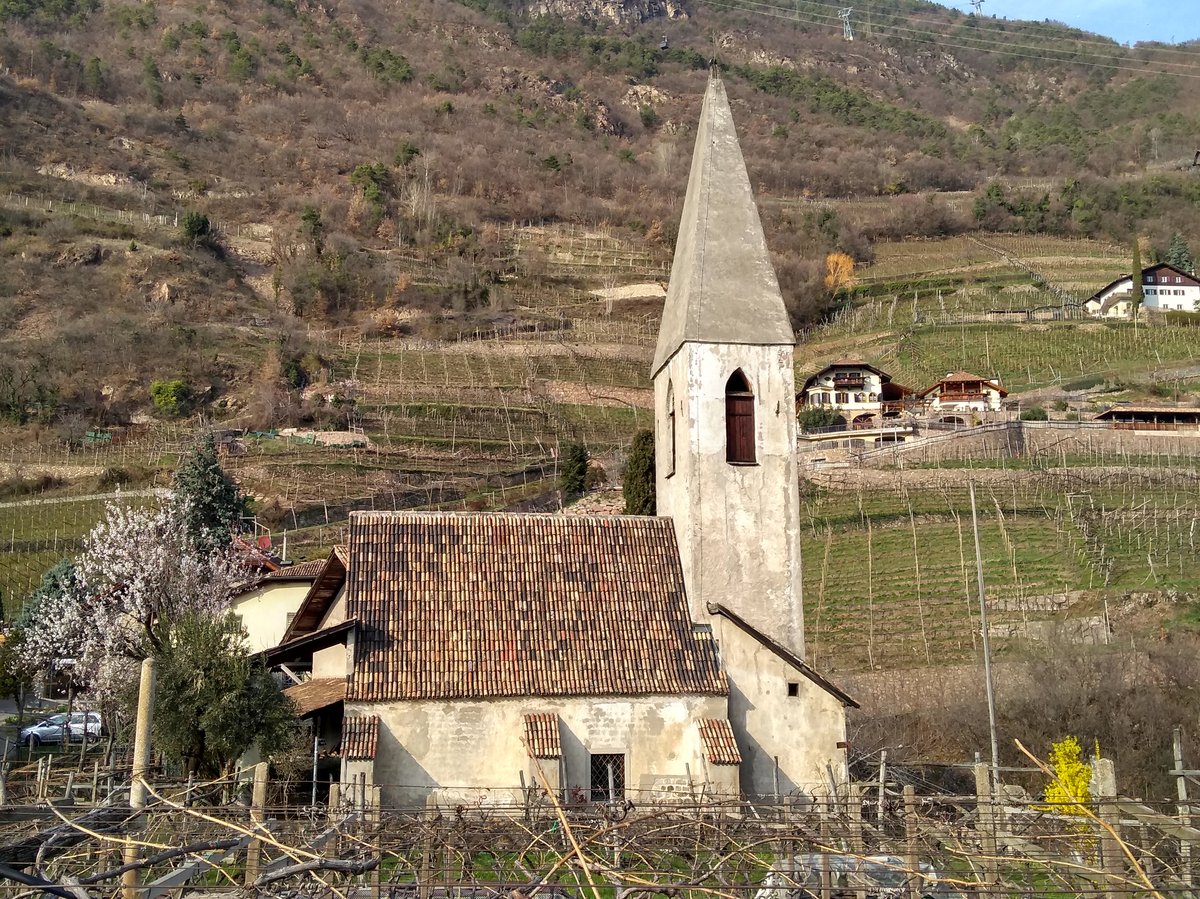 A stone's throw from Bolzano's center, the village of Santa Maddalena (St. Magdalena) combines wine, history, and picture-perfect landscapes. Perched on a hillside covered in vineyards, this small town is the heart of Santa Maddalena DOC production, a fruity red made from Schiava grapes that have been cultivated here for centuries.
The true gem is the Church of Santa Maddalena di Placedell, a Romanesque building already documented in 1295. Inside, two cycles of 14th-century frescoes: the older one, in the apse, is a masterpiece of early Alpine Gothic, while the later one shows Giotto's influence. Among the scenes, Mary Magdalene stands out at the center of the Crucifixion. The high altar, by Oswald Krad (1667), is one of the most important in the region.
The location offers breathtaking views of the Rosengarten and the Dolomites, especially at sunset when the enrosadira phenomenon tints the rocks red. It's no coincidence that the hill was already a place of worship in prehistoric times. Every year on July 22, the Feast of Santa Maddalena brings the village to life: mass, a breakfast of krapfen, then a South Tyrolean snack called Marende, and in the evening, tastings of the new wine.
For information on church hours, contact the Tourist Office. Our tip? Bring a bottle of Magdalener and enjoy the view: here time seems to stand still among rows of vines and legends.
Castel Flavon: History and Flavor on the Porphyry Spur
- Via Castel Flavon - Küepachweg 48, Bolzano (BZ)
- Open in Google Maps
- View on Google Images
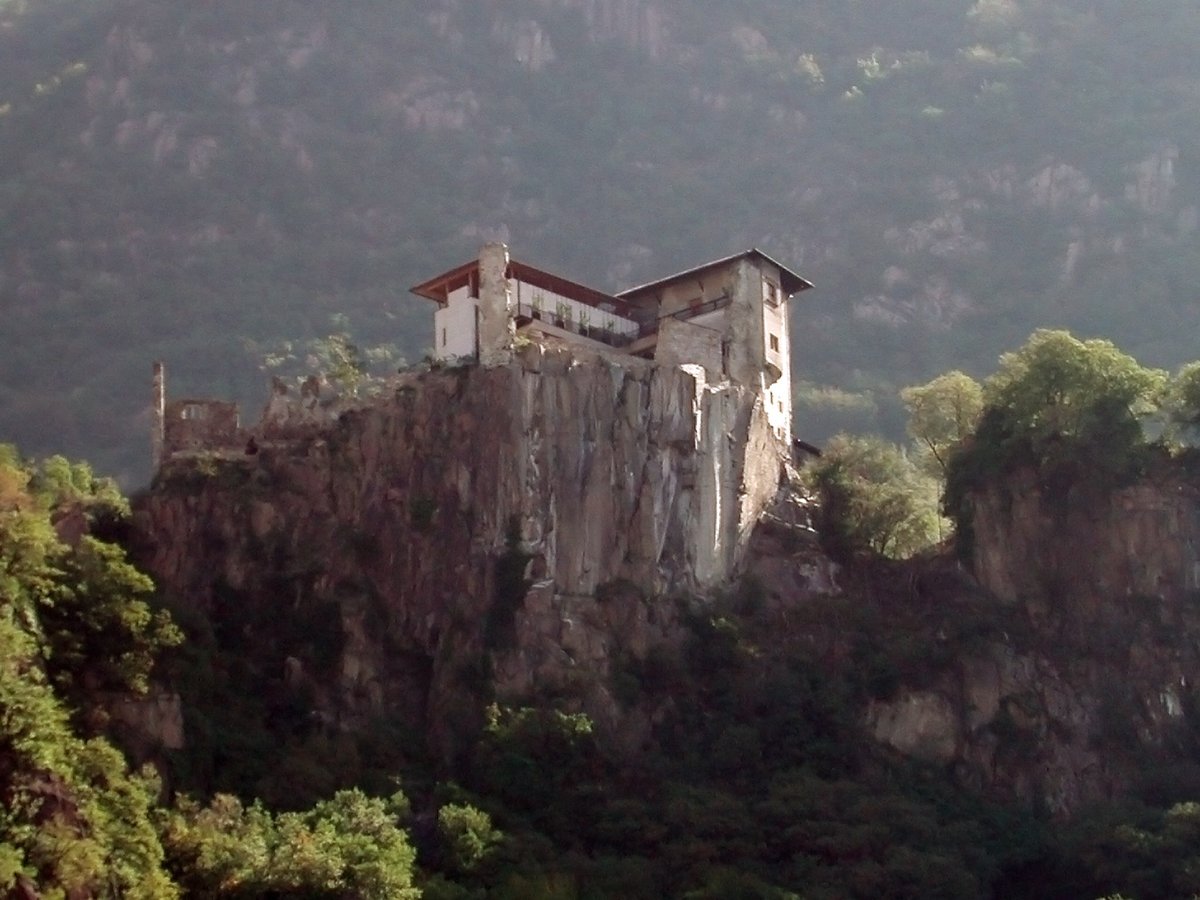 Perched on a porphyry rock spur in the Aslago district, Castel Flavon (Haselburg) dominates the Bolzano basin with views stretching from the Salto plateau to the Sarentino valley, all the way to the Renon. Its history begins in the 12th century with the Lords of Haselberg, who built the first keep and a defensive wall. Two centuries later, Leonard II of Fiè expanded the manor, adding the double arcades in the east wing, the north wing, and precious frescoes – today only fragments remain of a cycle depicting Roman emperors and scenes from the myth of Apollo. After a collapse in the 19th century, the castle was skillfully restored between 2001 and 2002 by architect Dietmar Dejori, bringing back its original three-wing shape.
Today, Castel Flavon lives a new life as a restaurant and event venue. The cuisine combines South Tyrolean and Mediterranean traditions, with dishes like tortelloni and veal medallions. The restaurant is open for lunch on Sundays (12:00-2:00 PM) and from Tuesday to Saturday for both lunch and dinner (11:30 AM-2:00 PM and 6:30 PM-10:00 PM); closed on Mondays. The atmosphere is romantic and elegant, with classical background music. Don't miss the Skybar Haselburg, which on the first Wednesday of every month hosts the "Oldies but Goldies" evening with DJ Marlon (music from the '70s-'90s). The castle is also a highly sought-after wedding venue, with outdoor ceremonies in the courtyard and parties in the panoramic tower.
To visit, park in the woods and follow the short walk (about 1.5 hours on foot from Aslago). Address: Via Castel Flavon 48. Info and reservations: +39 0471 402130, info@haselburg.it. Reservation is recommended, especially for dinners.
Castel Rafenstein: Ruins Overlooking Bolzano
- Rafensteiner Weg - Via Rafenstein, Bolzano (BZ)
- Open in Google Maps
- View on Google Images
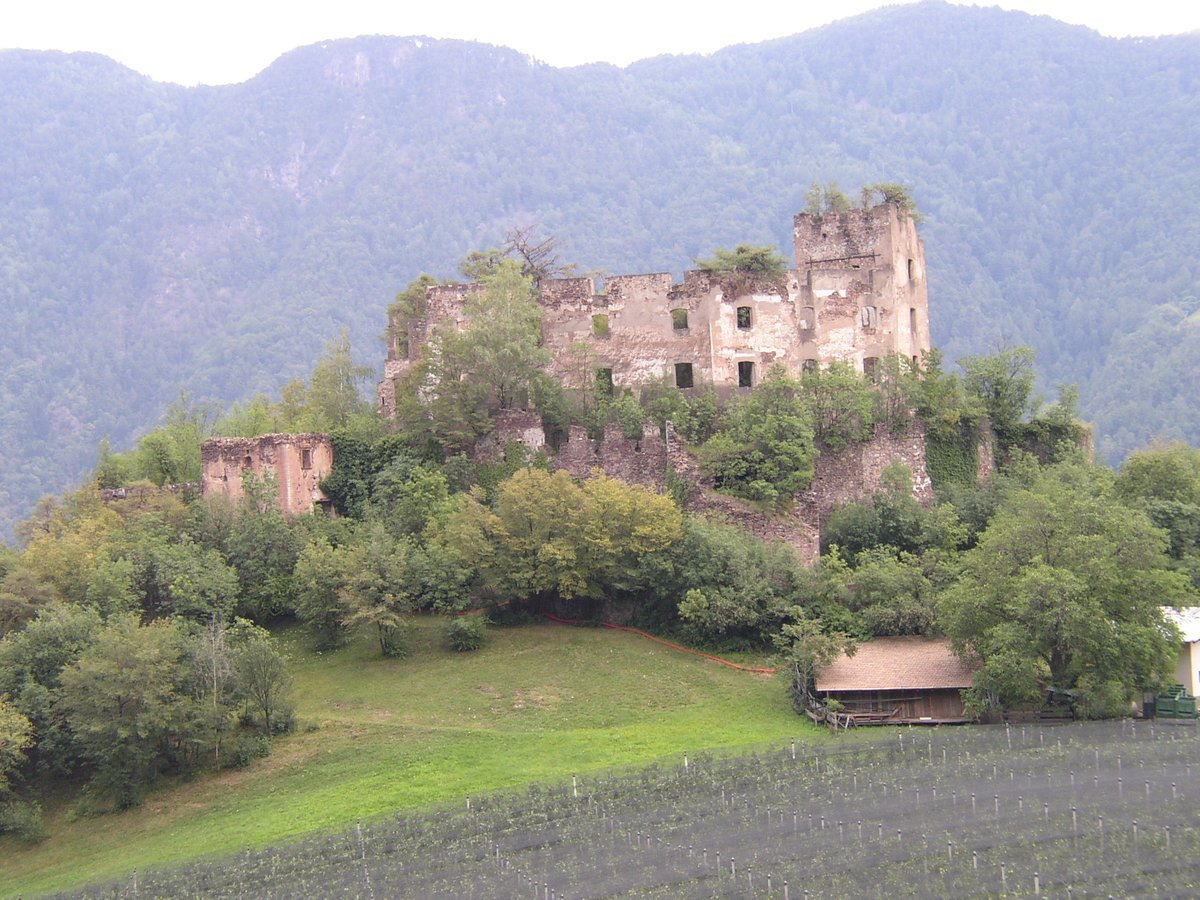 Perched above the Talvera Gorge, Castel Rafenstein (or Castel Sarentino) is one of those places where you feel history all around you. Built in the 13th century at the behest of Bishop Federico di Vanga, it served to control trade routes between north and south. Its history is turbulent: destroyed in 1277 by Mainardo II, it was rebuilt and expanded several times, eventually becoming the residence of Marx Sittich von Wolkenstein, who wrote the first description of Tyrol here. Today, after a long restoration completed in 2014, the ruins are once again accessible, but only by request for groups of at least 20 people. The uphill walk from the center of Bolzano is challenging (grade up to 25%), but the view that awaits you repays every effort: a perfect panorama of the Bolzano basin and, on clear days, the Dolomites. Next to the castle is the Gasthaus Rafenstein, perfect for a stop with typical South Tyrolean dishes. Don't expect a fairy-tale castle, but a fascinating ruin, heavy with centuries of battles and silence.
Druso Tower: The Mysterious Keep of Gries
- Via San Genesio - Jenesier Weg, Bolzano (BZ)
- Open in Google Maps
- View on Google Images
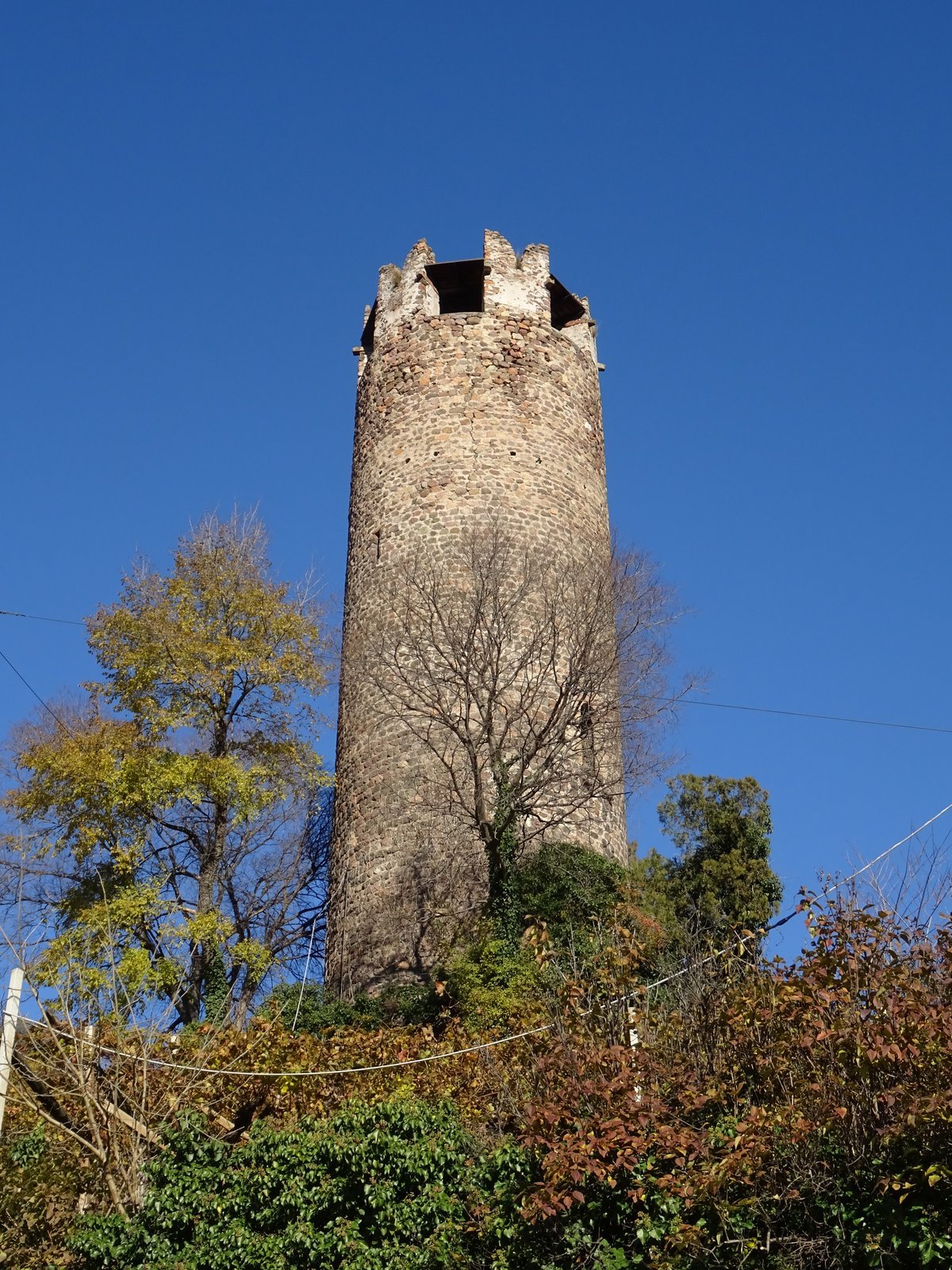 If you stroll through the Gries district in Bolzano, you might come across a strange round tower peeking out from among the houses: it is Druso Tower, also known as Gscheibter Turm (round tower) or Treuenstein Tower. Standing 20.10 meters tall with an internal diameter of 4.30 meters, this 13th-century structure is all that remains of the vanished Castle Treuenstein. The name "Druso" is a 17th-century historical misconception, when a friar linked it to the Roman general Drusus the Elder – in reality, it is a defensive keep from the early 13th century, first mentioned in 1231 as Trowenstein. What strikes you is the entrance: the original doorway is located 8 meters above ground, indicating the tower was not meant for living but solely for defense. There are no windows, only narrow arrow slits and swallowtail merlons. At its base, traces of the surrounding wall are still visible. Beside it stands the contemporary Chapel of St. Oswald. In 1862, the then-owner Karl Pieschl added a Tudor-style manor, designed by city architect Sebastian Altmann, which now coexists with the ancient tower. It is a place that feels mysterious: it makes you wonder how one entered, whether by rope ladders or scaffolding. I found it fascinating, a piece of the Middle Ages hidden among the little streets of Gries.
Castel Sant'Antonio: A Private Jewel of History and Ceramics
- Via Sant'Antonio - Sankt-Anton-Straße, Bolzano (BZ)
- Open in Google Maps
- View on Google Images
 If you stroll along the Lungotalvera Promenade, near the Talvera Meadows, you'll come across a structure that looks like something out of a fairy tale: Castel Sant'Antonio, also known as Schloss Klebenstein. More a stately residence than a castle, it originated in the 13th century as a residential tower called Karnol. Over the following centuries, the original pyramid-roofed tower with slits was expanded, and in the 1500s it took on its current appearance, with a crenellated perimeter wall, a second tower, and an elegant pavilion. Its German name comes from the Clewenstain family, who owned it in the 15th century; in 1923, with the official list of local names, it was Italianized to Sant'Antonio, after the baroque Chapel of St. Anthony at the end of the perimeter wall. Unfortunately, today it is privately owned and not open to visitors, but it's worth admiring from the outside, perhaps during a walk from Castel Roncolo. Fun fact: in its cellar, in 1950, the first workshop of Thun, the famous ceramics factory that made Bolzano world-famous, was founded.
Natural Science Museum: A Dive into Geology and Coral Reefs
- Via dei Bottai - Bindergasse 1, Bolzano (BZ)
- https://www.natura.museum/
- Open in Google Maps
- View on Google Images
- info@naturmuseum.it
- +39 0471 412964
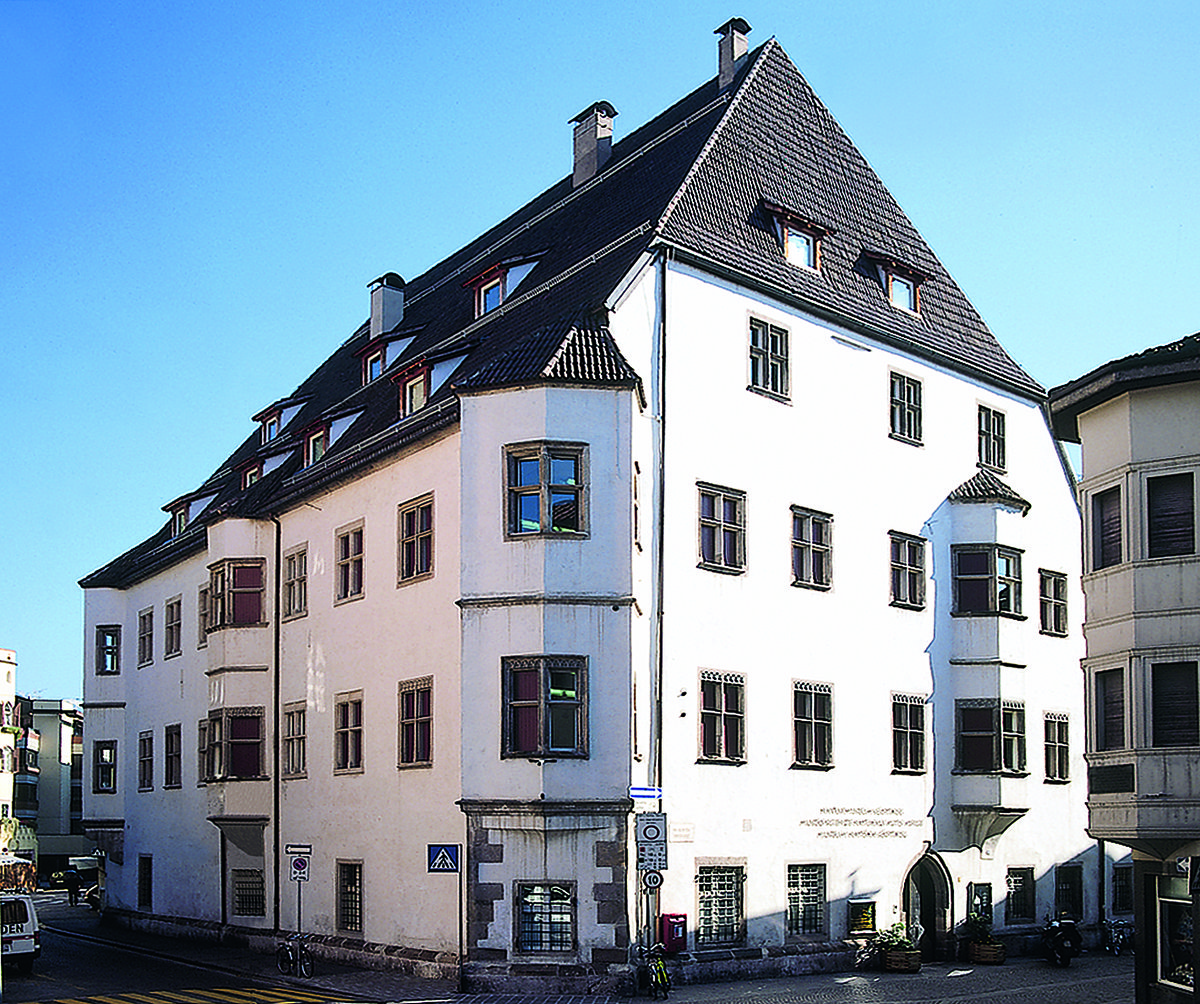 If you think a natural science museum is just for school trips, the Naturmuseum in Bolzano will change your mind. Opened in 1997, it occupies a historic 16th-century building, the former urban residence of Emperor Maximilian I. As soon as you enter, you're greeted by an exhibition tracing South Tyrol's geological history: from volcanic rocks to the Dolomites, through the ice ages. But the real star is the 9,000-liter coral reef aquarium, reconstructing a Triassic ecosystem from when this area was a tropical sea. Next to it, the Nautilus aquarium houses true 'living fossils', relatives of those found in Val Gardena. The museum spans two floors over about 1,000 square meters, with terrariums for local reptiles (yes, including vipers) and interactive models. On the ground floor, temporary exhibitions – like the recent one on Leonardo da Vinci. Hours: Tuesday-Sunday 10-18, closed Mondays (except holidays). Full ticket €7, reduced €5, family €14. It's a 6-minute walk from the station. Suitable for children and families, with Wi-Fi and a restaurant. A place where science becomes adventure.
Teatro Comunale – Stadttheater: The Enigmatic Box
- Piazza Giuseppe Verdi - Giuseppe-Verdi-Platz 40, Bolzano (BZ)
- https://www.fondazioneteatro.bolzano.it/
- Open in Google Maps
- View on Google Images
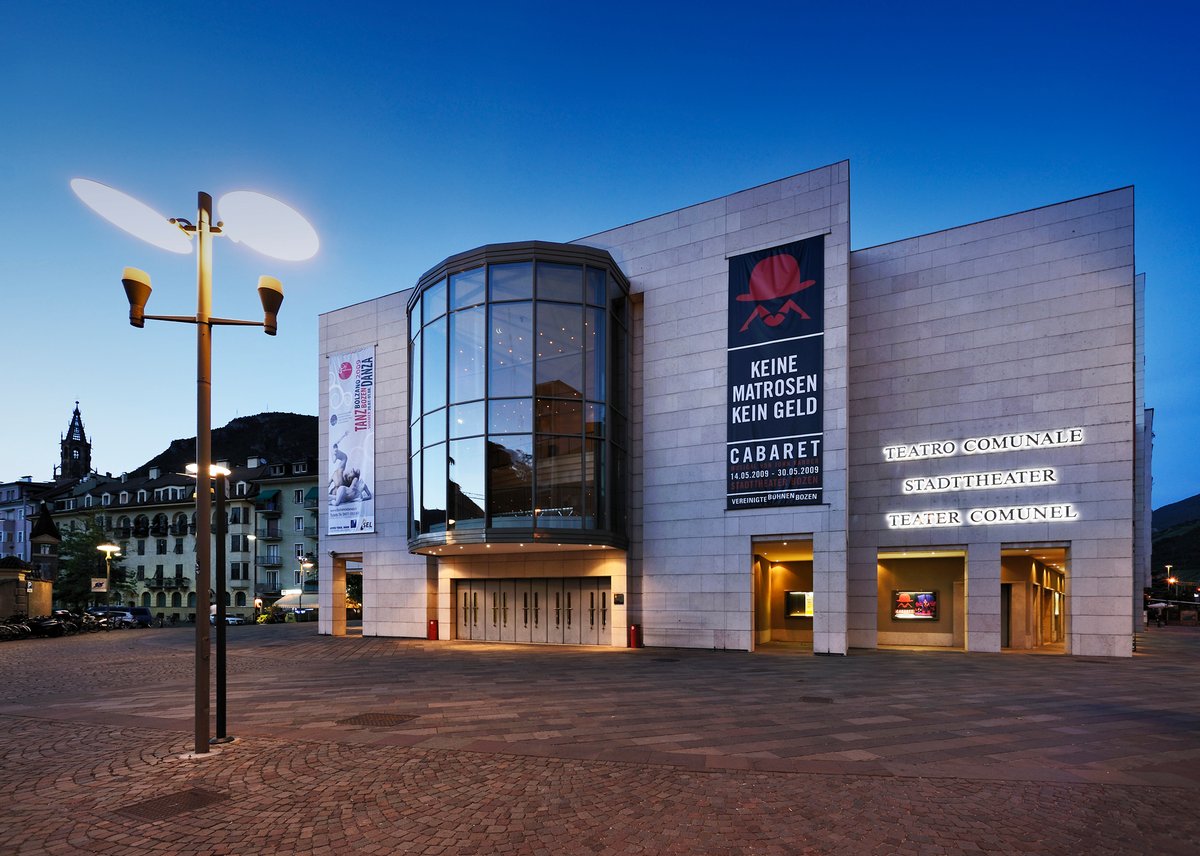 As you stroll through Bolzano and come across a ziggurat-shaped structure clad in Chiampo limestone, you're standing in front of the Teatro Comunale – Stadttheater. Designed by Marco Zanuso and inaugurated in 1999 with the presence of then-Deputy Prime Minister Sergio Mattarella, this building is a cultural landmark for South Tyrol. Outside, the trilingual inscription – Italian, German, Ladin – announces the theater's multicultural identity. Inside, the Sala Grande offers 802 seats (714 with orchestra pit) with a laminated wood ceiling designed for perfect acoustics. The Teatro Studio, with 272 seats (or 214 in some configurations), is ideal for more intimate performances. The three-level foyer, with seminato floors and Venetian stucco, often hosts performances and debates. The theater is managed by the Fondazione Teatro Comunale e Auditorium, which oversees a program of drama, opera, dance, and symphonic music. Every year, over 120 performances include productions by the Teatro Stabile di Bolzano and the Vereinigte Bühnen Bozen, alongside the Orchestra Haydn of Trento and Bolzano. Don’t miss summer festivals like Bolzano Danza – Tanz Bozen and the Bolzano Festival Bozen. Fun fact: in 2022, the Teatro Studio hosted the show “Impronte dell’anima” (Footprints of the Soul), dedicated to the Nazi extermination of disabled people — an example of civic theatre. To visit, note that guided tours are by reservation (email visiteguidate@teatrocomunale.bolzano.it). The box office is open Tuesday to Friday, 2:30 PM–7:00 PM. Convenient parking? The Bolzano Centro parking lot is 250 meters away, with discounted rates for theatergoers (€2). The theater is fully accessible: elevators, ramps, reserved seats in the stalls and gallery, and accessible restrooms. In short, a contemporary gem worth a stop, even just to admire its architecture from outside.
Statue of Walther von der Vogelweide: Between Legend and Restoration
- Piazza Walther - Waltherplatz, Bolzano (BZ)
- Open in Google Maps
- View on Google Images
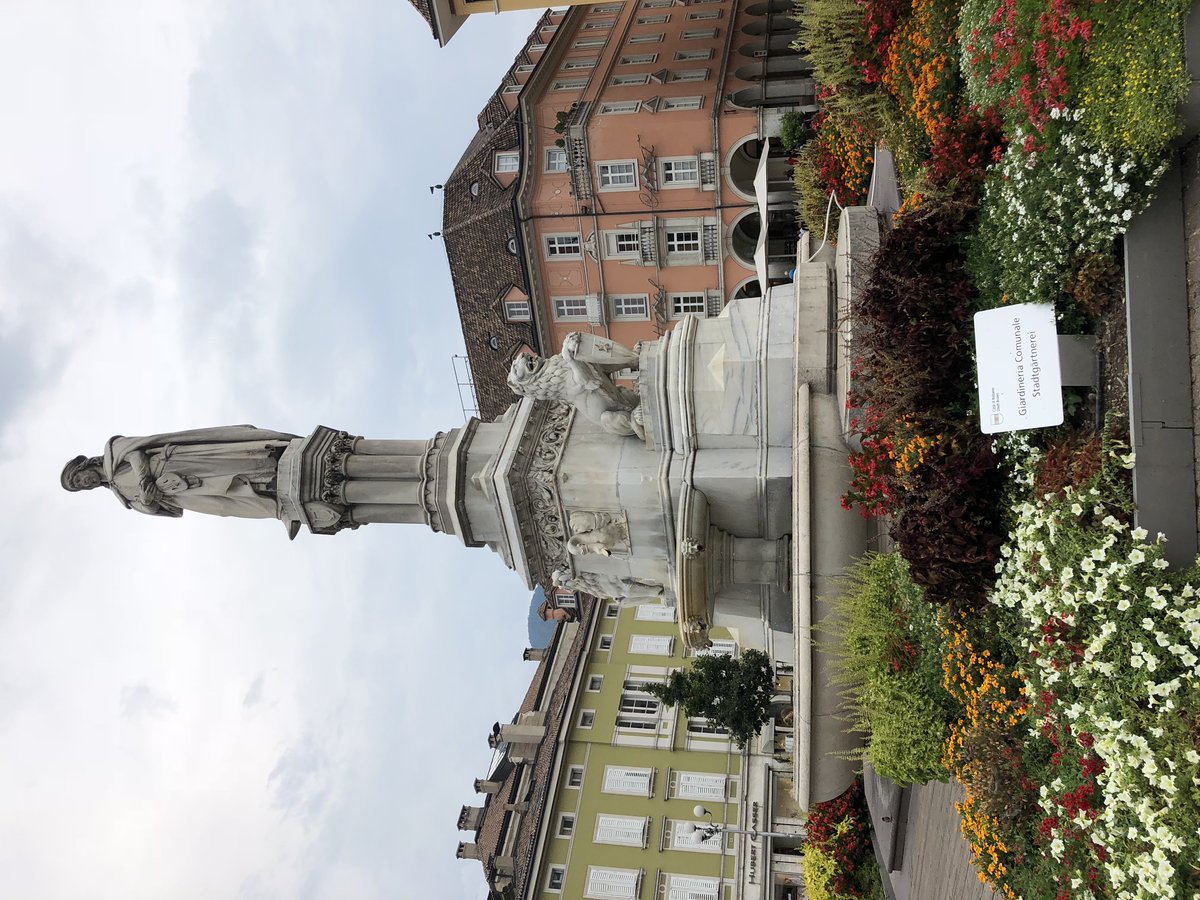 The statue of Walther von der Vogelweide dominates the square of the same name in the heart of Bolzano, right next to the cathedral. Carved from white Lasa marble by sculptor Heinrich Natter in 1889, it depicts the medieval poet sitting on a rock, holding a vielle in his hand and a pensive gaze. The monument is in Neo-Romanesque style, with verses engraved on the base celebrating art, love, and justice. It is not just a statue: it is part of a fountain with a gentle gurgle, offering a pleasant relief on hot summer days. The monument's history is eventful: during the fascist period in 1935, the statue was removed and relocated to Rosegger Park, while the square was renamed in honor of Victor Emmanuel III. Only after the war, in 1985, did the statue return to its original location. A restoration completed in 2020 restored the marble's luster, cleaning it from incrustations and treating it with a protective impregnating agent. The intervention, lasting two months and costing about 60,000 euros, also repaired damaged parts and restored the fountain's functionality. Visiting the statue is an experience that blends art and history: light plays on the stone, and the sound of water mingles with the life of the square. Walther von der Vogelweide was an important Minnesang poet, and his figure links Bolzano to medieval poetry. The monument is a symbol of the cultural fusion between Austrian and Italian traditions, and it is a must-see landmark for anyone visiting the city.