The Paolo Orsi Regional Archaeological Museum is one of the most important museums in Europe, located in Syracuse. With over 27,000 artifacts, it offers a chronological journey from prehistory to the Roman era. Here’s what you’ll find:
– Unique collections: from the Venus Landolina to the Castelluccio door panels
– Thematic sections: prehistory, Greek colonies, Hellenistic and Roman periods
– Famous artifacts: the Fusco horse, the Adelfia sarcophagus
– Practical information: opening hours, tickets, and how to get there
A Treasure Spanning Over 12,000 Sq M
Stepping into the Paolo Orsi Regional Archaeological Museum is like taking a leap back in time. Set within the greenery of Villa Landolina Park, just a stone’s throw from Syracuse’s center, this museum is one of Europe’s largest, boasting 12,000 square meters of exhibition space. Inaugurated in 1988 to a design by Franco Minissi, it houses artifacts from the Paleolithic to Roman times, with special mention for the Venus Landolina and the Sarcophagus of Adelfia. But it’s more than a collection: the modern layout, using artificial light and transparent bases, guides you through a continuous chronological journey. The first thing that strikes you is the elegance of the building, nestled among ancient trees and historic hypogea. This is no ordinary museum; it’s the story of ancient Sicily, piece by piece.
A Treasure Spanning Over 12,000 Sq M
Stepping into the Paolo Orsi Regional Archaeological Museum is like taking a leap back in time. Set within the greenery of Villa Landolina Park, just a stone’s throw from Syracuse’s center, this museum is one of Europe’s largest, boasting 12,000 square meters of exhibition space. Inaugurated in 1988 to a design by Franco Minissi, it houses artifacts from the Paleolithic to Roman times, with special mention for the Venus Landolina and the Sarcophagus of Adelfia. But it’s more than a collection: the modern layout, using artificial light and transparent bases, guides you through a continuous chronological journey. The first thing that strikes you is the elegance of the building, nestled among ancient trees and historic hypogea. This is no ordinary museum; it’s the story of ancient Sicily, piece by piece.
From the 1700s to the Modern Museum
The history of this museum spans nearly three centuries. It all began in
1780, when Bishop Alagona opened the Seminary Museum. By
1808 it became the Civic Museum, then in
1878 the National Archaeological Museum, housed in Piazza Duomo. From
1895 to 1934, the Rovereto archaeologist
Paolo Orsi directed it, enriching the collection through excavation campaigns. During World War II, the artifacts were hidden in the Euryalus Castle. After reopening, the 19th-century building proved too small. Thus, the new museum was born, designed by Franco Minissi at the urging of Luigi Bernabò Brea, and inaugurated on
January 16, 1988. Expansions followed in 2006 and 2014, and in 2015 the museum became one of the first in Sicily to offer a virtual tour via Google Street View.
- 1780: Seminary Museum
- 1808: Civic Museum
- 1878: National Archaeological Museum
- 1895-1934: Paolo Orsi as director
- 1988: Inauguration of new premises
- 2006: Hellenistic expansion
- 2014: Early Christian expansion
- 2015: Google Street View virtual tour
From the 1700s to the Modern Museum
The history of this museum spans nearly three centuries. It all began in
1780, when Bishop Alagona opened the Seminary Museum. By
1808 it became the Civic Museum, then in
1878 the National Archaeological Museum, housed in Piazza Duomo. From
1895 to 1934, the Rovereto archaeologist
Paolo Orsi directed it, enriching the collection through excavation campaigns. During World War II, the artifacts were hidden in the Euryalus Castle. After reopening, the 19th-century building proved too small. Thus, the new museum was born, designed by Franco Minissi at the urging of Luigi Bernabò Brea, and inaugurated on
January 16, 1988. Expansions followed in 2006 and 2014, and in 2015 the museum became one of the first in Sicily to offer a virtual tour via Google Street View.
- 1780: Seminary Museum
- 1808: Civic Museum
- 1878: National Archaeological Museum
- 1895-1934: Paolo Orsi as director
- 1988: Inauguration of new premises
- 2006: Hellenistic expansion
- 2014: Early Christian expansion
- 2015: Google Street View virtual tour
A journey into prehistory and protohistory
The tour begins in Sector A, where the oldest artifacts await you. Castings of dwarf elephants, Quaternary fossils, and stone tools tell the story of Sicily 10,000 years ago. Then it moves on to Neolithic cultures, like the Stentinello culture, leading up to the Copper and Bronze Ages. Highlights include the Castelluccio doorways, limestone slabs with relief decorations, symbols of fertility. Next come the Thapsos and Pantalica cultures, with pottery and objects showing Aegean and Mycenaean influences. Don’t miss the bronze horse from Fusco, a small geometric-style horse from the 8th century BC, now the museum’s symbol. Each display case includes photos and models to help you understand the context. It feels like an archaeological excursion without leaving Syracuse.
A journey into prehistory and protohistory
The tour begins in Sector A, where the oldest artifacts await you. Castings of dwarf elephants, Quaternary fossils, and stone tools tell the story of Sicily 10,000 years ago. Then it moves on to Neolithic cultures, like the Stentinello culture, leading up to the Copper and Bronze Ages. Highlights include the Castelluccio doorways, limestone slabs with relief decorations, symbols of fertility. Next come the Thapsos and Pantalica cultures, with pottery and objects showing Aegean and Mycenaean influences. Don’t miss the bronze horse from Fusco, a small geometric-style horse from the 8th century BC, now the museum’s symbol. Each display case includes photos and models to help you understand the context. It feels like an archaeological excursion without leaving Syracuse.
Masterpieces of Greco-Roman Art
Proceeding through sectors B and D, you enter the classical era. Sector B is dedicated to the Greek colonies: Naxos, Megara Hyblaea, Katane, with statues and ceramics. The Kourotrophos from Megara Hyblaea, a nurse with twins, stands out. But the true gem lies in Sector D: the Venus Landolina, a marble statue from the 2nd century AD depicting Venus Anadyomene, discovered in the 1800s. Beside her, the Adelfia Sarcophagus from the 4th century, with biblical bas-reliefs and inscriptions. And don’t forget the Silver Decadrachm by Euainetos, a coin featuring Arethusa and a chariot. The museum also houses the bust of Artemis from Piazza della Vittoria, with traces of original color. Each piece has a story that transports you back through the centuries.
Masterpieces of Greco-Roman Art
Proceeding through sectors B and D, you enter the classical era. Sector B is dedicated to the Greek colonies: Naxos, Megara Hyblaea, Katane, with statues and ceramics. The Kourotrophos from Megara Hyblaea, a nurse with twins, stands out. But the true gem lies in Sector D: the Venus Landolina, a marble statue from the 2nd century AD depicting Venus Anadyomene, discovered in the 1800s. Beside her, the Adelfia Sarcophagus from the 4th century, with biblical bas-reliefs and inscriptions. And don’t forget the Silver Decadrachm by Euainetos, a coin featuring Arethusa and a chariot. The museum also houses the bust of Artemis from Piazza della Vittoria, with traces of original color. Each piece has a story that transports you back through the centuries.
Three Good Reasons
1. The collection is immense and well-organized: over 27,000 artifacts arranged chronologically. Perfect for understanding the evolution of ancient Sicily. 2. Cutting-edge technology: thanks to collaboration with universities, the museum offers virtual tours on Google Street View and izi.TRAVEL. You can prepare for your visit or delve deeper afterward. 3. Perfect combination: the museum is located in the Neapolis Archaeological Park. You can visit the Greek theater, Roman amphitheater, and the Ear of Dionysius in the same afternoon. Plus, with a cumulative ticket (€18) you save. In short, it’s the ideal base for diving into ancient Syracuse.
Three Good Reasons
1. The collection is immense and well-organized: over 27,000 artifacts arranged chronologically. Perfect for understanding the evolution of ancient Sicily. 2. Cutting-edge technology: thanks to collaboration with universities, the museum offers virtual tours on Google Street View and izi.TRAVEL. You can prepare for your visit or delve deeper afterward. 3. Perfect combination: the museum is located in the Neapolis Archaeological Park. You can visit the Greek theater, Roman amphitheater, and the Ear of Dionysius in the same afternoon. Plus, with a cumulative ticket (€18) you save. In short, it’s the ideal base for diving into ancient Syracuse.
The Right Time
Personally, I recommend a visit on a weekday morning. The museum is closed on Mondays, but from Tuesday to Saturday it opens at 9. Arriving early allows you to enjoy the collection calmly, without the weekend crowds. Moreover, the internal artificial light makes the experience consistent throughout the year. If you are in Syracuse in spring or autumn, the weather is mild and you can stroll through the park of Villa Landolina after the visit. Avoid the midday hours in the summer months, but inside it is air-conditioned. On Sundays, hours are reduced (9-14), so if you are short on time, choose a weekday. Thursdays and Fridays are often quieter.
The Right Time
Personally, I recommend a visit on a weekday morning. The museum is closed on Mondays, but from Tuesday to Saturday it opens at 9. Arriving early allows you to enjoy the collection calmly, without the weekend crowds. Moreover, the internal artificial light makes the experience consistent throughout the year. If you are in Syracuse in spring or autumn, the weather is mild and you can stroll through the park of Villa Landolina after the visit. Avoid the midday hours in the summer months, but inside it is air-conditioned. On Sundays, hours are reduced (9-14), so if you are short on time, choose a weekday. Thursdays and Fridays are often quieter.
Exploring Beyond the Museum
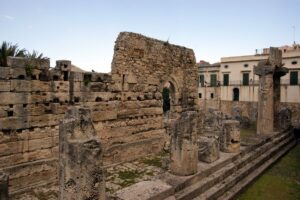
Neapolis Archaeological Park: just a short walk away, this park is a must. Here you’ll find the Greek Theatre (5th century BC), the Roman Amphitheatre, and the famous Ear of Dionysius, an artificial cave with incredible acoustics. You can combine a visit to the museum with a single ticket. Ortygia: Syracuse’s historic island is a 20-minute walk away. Get lost in its narrow streets, admire the Cathedral (an ancient Greek temple) and the Arethusa Spring. A tip: after the museum, have lunch at a small restaurant in Ortygia, perhaps with pasta alla Norma and fresh fish. Two unmissable stops to complete your Syracuse experience.
Exploring Beyond the Museum
Neapolis Archaeological Park: just a short walk away, this park is a must. Here you’ll find the Greek Theatre (5th century BC), the Roman Amphitheatre, and the famous Ear of Dionysius, an artificial cave with incredible acoustics. You can combine a visit to the museum with a single ticket. Ortygia: Syracuse’s historic island is a 20-minute walk away. Get lost in its narrow streets, admire the Cathedral (an ancient Greek temple) and the Arethusa Spring. A tip: after the museum, have lunch at a small restaurant in Ortygia, perhaps with pasta alla Norma and fresh fish. Two unmissable stops to complete your Syracuse experience.