
🧭 What to Expect
- Ideal for: a slow journey between culture and nature
- Highlights: authentic villages, sea, castles, unique museums
- Recommended period: spring and autumn for mild climate
- Tip: taste typical Romagna dishes
Events nearby
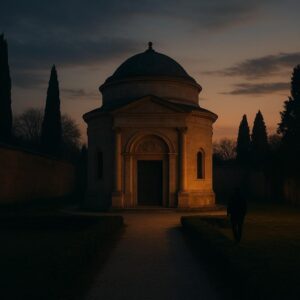
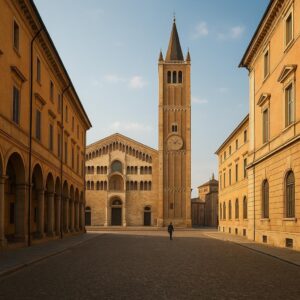
The Province of Forlì-Cesena is a surprising destination: not only the cities of Forlì and Cesena, but a territory rich in medieval villages, castles, sea, and hills. From the Malatestiana Library, a UNESCO gem in Cesena, to the Cesenatico Lighthouse, a symbol of the Romagna coast, each stop offers a piece of history. The fortresses of Monte Poggiolo and Forlimpopoli tell of the medieval past, while the Maritime Museum of Cesenatico and the Archaeological Museum of Sarsina reveal ancient traditions. The villages of Longiano, Gatteo, and Meldola are perfect for a stroll through alleys and local flavors. Don't miss the suggestive Monte Busca Volcano and the Abbey of Sant'Ellero. An ideal itinerary for a weekend discovering the authentic beauties of Romagna.
Overview
- Malatestiana Library: A Renaissance Gem in Cesena
- Cesenatico Lighthouse: Guardian of the Canal Port
- Rocca di Monte Poggiolo, the Oldest Castle in the Area
- Museum of Maritime: A Journey Among Historic Boats and Seafaring Tradition
- Rocca delle Caminate: History, Views, and Rebirth
- Abbey of San Mercuriale
- Longiano Castle: Between History, Art, and Breathtaking Views
- Malatestiano Castle of Gatteo
- The Rocca of Forlimpopoli: Fortress and Heart of the City
- National Archaeological Museum of Sarsina
- Sant'Ellero Abbey: History, Faith, and an Ancient Ritual
- Monte Busca Volcano: the Eternal Flame of the Apennines
- Caterina Sforza Fortress: Meldola's Stronghold Between History and Restoration
- Teatro Alessandro Bonci – Elegance and Tradition in Cesena
- Cathedral of Santa Croce: Forlì's Duomo
Itineraries nearby
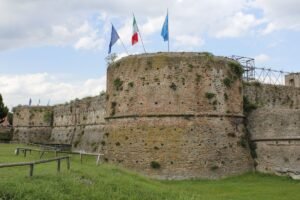
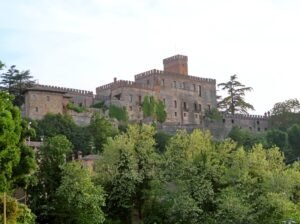
Malatestiana Library: A Renaissance Gem in Cesena
- Go to the page: Malatestiana Library Cesena: 348 Illuminated Codices from 1454 in the UNESCO Hall
- Piazza Maurizio Bufalini 1, Cesena (FC)
- Open in Google Maps
- View on Google Images
 In Cesena, under the porticoes of Piazza Bufalini, lies a place that seems suspended in time: the Malatestiana Library. It is considered the first public library in Italy and Europe, and in 2005 it was inscribed on the UNESCO Memory of the World Register. A well-deserved recognition, because everything here has remained intact since the 15th century: the building, the furnishings, and even the books, still chained to the reading desks. A world-class unique, making you feel as if you’ve jumped back 500 years.
The main hall, the Aula del Nuti, was designed by Matteo Nuti, a student of Leon Battista Alberti, at the behest of Malatesta Novello. The space has three naves, with 58 wooden bookcases holding 340 illuminated manuscripts. Among the rarities is the world’s smallest book readable with the naked eye: 15×9 millimeters, containing a letter from Galileo Galilei. Nearby, the Piana Library – donated by Pope Pius VII – houses choir books, 16th-century editions, and a 1104 Gospel Book.
The guided tour lasts about 40 minutes and costs €8 (€5 reduced). Entry to the Ancient Library only is €5. Reservation required, maximum capacity 25 people per slot. The ticket also includes access to the Archaeological Museum and the Art Gallery. Note: the Aula del Nuti has no artificial lighting, so it operates only with daylight. From April to October, continuous hours; in winter, only afternoons. Closed on Sundays? No, but entry is free on the first Sunday of each month. In short, a place that every history and book lover should see at least once.
Cesenatico Lighthouse: Guardian of the Canal Port
- Go to the page: Cesenatico Lighthouse: 26-meter white tower overlooking Leonardo's port
- Via del Porto, Cesenatico (FC)
- https://www.marina.difesa.it/cosa-facciamo/fari/Pagine/4028.aspx
- Open in Google Maps
- View on Google Images
 The Cesenatico Lighthouse is an essential landmark for anyone visiting the city. Built in 1892, it stands at the end of the Molo di Levante, just steps from the Port Authority. Its structure consists of a two-story keeper's house with yellow and white plaster, flanked by a white tower only 3 meters high, but with the lantern placed 18 meters above sea level. From there it emits two white flashes every six seconds, visible up to 15 nautical miles – a fully automated lighthouse managed by the Italian Navy. Today the keeper's house houses the Coast Guard, and the tower has recently undergone restoration that has restored its original yellow finishes to their splendor. Unfortunately it is not open to the public, but the walk along the pier is an unmissable experience: at sunset the sea takes on warm colors and the view is breathtaking. It is the ideal place to take photos and enjoy the sea breeze. Despite modern technology, the lighthouse remains a powerful symbol of Cesenatico's strong maritime identity, a landmark that has guided fishermen home for over a century. If you are passing through, stop and observe it: you will almost feel like you can hear the stories of those who have seen it shine for generations.
Rocca di Monte Poggiolo, the Oldest Castle in the Area
- Via Ciola, Castrocaro Terme e Terra del Sole (FC)
- https://www.appenninoromagnolo.it/castelli/montepoggiolo.asp
- Open in Google Maps
- View on Google Images
 Rocca di Monte Poggiolo (or Fortress of Castrocaro) is one of the oldest fortifications in Italy, with origins dating back to the late 9th century. Perched on a cliff of "sasso spungone" rich in marine fossils, it offers breathtaking views of the Forlì plain all the way to the Adriatic Sea. The earliest historical records date to 906, when Count Berengario is mentioned. Over the centuries, the castle was contested by families such as the Ordelaffi, Malatesta, and Pagani, until it became a Medici stronghold in 1471, expanded by the architect Giuliano da Maiano between 1482 and 1490. The structure is entirely brick-built, with a rhomboidal layout, circular bastions, and sloping walls. Its perimeter measures 146.85 meters, with the keep 18 meters high and the other towers 12 meters. A small well called the Queen's Well is linked to the legend of Caterina Sforza, who used it as a trap. After the construction of Terra del Sole (1564), the fortress lost its military importance and was disarmed in 1772. Today it is privately owned and in a state of neglect, but can be admired from the outside. It can be reached on foot from Terra del Sole (Pianello trail) or by mountain bike (27 km route from Castrocaro Terme). The view is extraordinary: a dive into medieval history. Nearby, the ancient rural house "Palazzo del Diavolo" recalls Garibaldi's refuge after the fall of the Roman Republic.
Museum of Maritime: A Journey Among Historic Boats and Seafaring Tradition
- Via Carlo Armellini, Cesenatico (FC)
- Open in Google Maps
- View on Google Images
 Walking along the canal port of Cesenatico, designed by none other than Leonardo da Vinci in 1502, you come across a unique sight: ten traditional Upper Adriatic boats moored right there, ready to be visited. This is the Floating Section of the Museum of Maritime, the only floating museum in Italy dedicated to working boats. Among trabaccoli, bragozzi, and paranze, each boat features its lug sails in bright colors – ochre yellow, orange, red – which once indicated belonging to a fishing family. And look closely at the bow: those painted eyes are not decorations, but ancient propitiatory symbols. The museum also has a Land Section at Via Armellini 18, a modern pavilion where you can board a trabaccolo and a bragozzo complete with sails, and discover how boats were built in a 19th-century workshop. There are also interactive installations to try tying knots and maneuvering hoists – perfect for adults and children. The ticket costs only 2 euros and includes entry to the Municipal Antiquarium. If you come in summer (June to September), the boats can be visited daily from 10 am to 12 pm and 5 pm to 11 pm, and two of them set sail for demonstration trips. During the Christmas period, the port turns into a floating nativity scene with life-sized statues. In short, a dive into maritime history that smells of salt and authenticity. Info and reservations: 0547 79205.
Rocca delle Caminate: History, Views, and Rebirth
- Go to the page: Rocca delle Caminate: Medieval Fortress with 360° Views over Romagna
- Via Giuseppe Mazzini, Predappio (FC)
- https://www.roccadellecaminate.com/
- Open in Google Maps
- View on Google Images
 Perched on a hill at 356 meters altitude, the Rocca delle Caminate is a medieval castle overlooking the Bidente and Rabbi valleys. Nicknamed the "balcony of Romagna," it offers breathtaking views of the surrounding hills. Its origins date back to around the year 1000, but its more recent history is tied to Benito Mussolini, who chose it as his summer residence. Today, after a restoration funded by the EU (not conservative, but with a modern touch), the Rocca hosts conferences, training courses, and university lectures. Open to the public on Saturdays and Sundays (10:00 AM–7:00 PM), it can also be visited by appointment with guide Chiara Macherizzi (349-8087330). The castle is easily reachable by car or bike: the provincial road 126, recently restored after the damage from the 2023 floods (investment of 2 million euros), connects Predappio, Rocca delle Caminate, and Meldola. Events are plentiful: in September, the historical reenactment "Falchi e archi" features a medieval encampment, falconry, and food stalls; in June, the Slalom Predappio-Rocca delle Caminate recalls the restart of car races after the lockdown. Whether you are a history enthusiast, a cyclist seeking a scenic climb (3.8 km, average gradient 6.4%), or simply curious, the Rocca delle Caminate is worth a visit.
Abbey of San Mercuriale
- Go to the page: San Mercuriale Abbey Forlì: 75m Romanesque Bell Tower and Renaissance Cloister
- Piazzetta delle Poste, Forlì (FC)
- Open in Google Maps
- View on Google Images
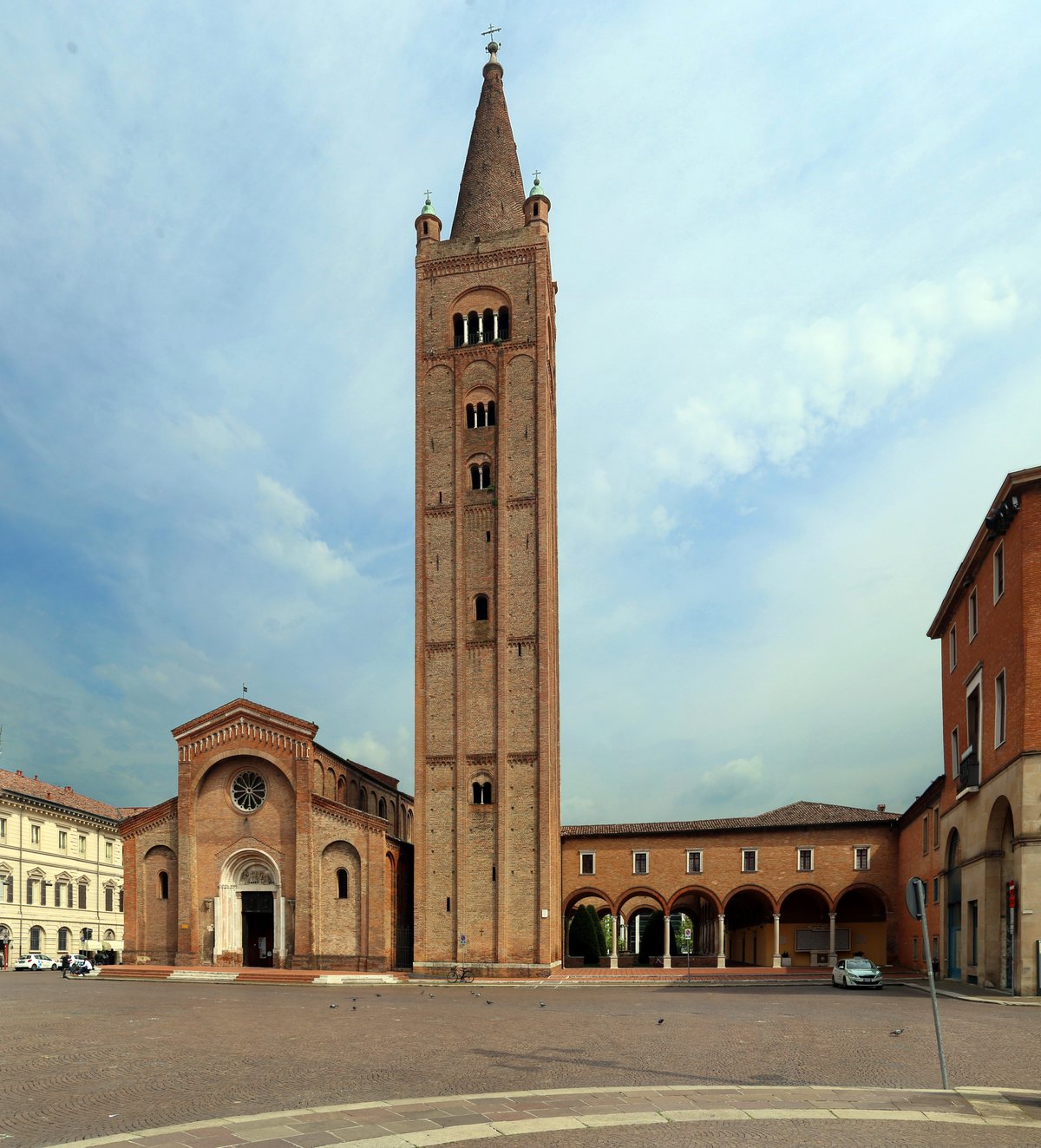 If there is one monument that embodies the soul of Forlì, it is the Abbey of San Mercuriale. Overlooking Piazza Saffi, this Romanesque basilica dominates the center with its 75-meter bell tower, among the tallest in Italy. Dedicated to the city's first bishop, construction began in 1178 and was completed three years later, on the remains of a 6th-century parish church. The red brick façade is striking in its simplicity, but the portal steals the show: in the lunette, a 13th-century high relief depicts the Dream and Adoration of the Magi, considered one of the earliest sculpted nativity scenes in the world. Inside, with three naves, works by Marco Palmezzano stand out, along with the funerary monument of Barbara Manfredi (1466) and the 18th-century Arcata Ferri. Strolling through the Renaissance cloister, you breathe in a contemplative atmosphere. The relics of San Mercuriale are kept in the chapel of the same name; recent studies have revealed that the saint was a man of Asian origin who died between the ages of 50 and 60. The abbey is open daily from 7:30 to 19:00 with free admission. The bell tower can be visited only on special occasions such as October 26 (feast of the saint) or February 4 (Madonna del Fuoco). A tip: park at Piazza XX settembre and reach it on foot. Forlì will surprise you.
Longiano Castle: Between History, Art, and Breathtaking Views
- Piazza Malatestiana, Longiano (FC)
- Open in Google Maps
- View on Google Images
 Perched on a hill at 179 meters, the Malatesta Castle of Longiano dominates the village with its imposing bulk. Its origins? They trace back to the Early Middle Ages, but a parchment from 1059 already attests to its existence. For centuries it was a stronghold of the Malatesta family, who fortified it with bastions and a double ring of walls. Then, in 1519, Count Guido Rangoni transformed it into a noble residence, removing some fortifications but leaving us a Renaissance loggia that is still walkable today.
Upon entering, you are struck by the Sala dell’Arengo: the ceilings decorated in the 19th century by Giovanni Canepa and Girolamo Bellani portray illustrious figures from Longiano's history. But the true treasure is the collection of the Tito Balestra Foundation: over 5,000 works, including masterpieces by Guttuso, Morandi, De Pisis, Chagall, and Goya. A journey through Italian and international art that dialogues with the ancient walls.
Climb up to the panoramic terrace: on clear days, your gaze can reach the Adriatic Sea. And if you're lucky, you might catch a concert in the courtyard named after Carlo Malatesta, where a 16th-century Venetian basin stands out, a witness to the brief dominion of the Serenissima. My advice: visit in the afternoon, when the warm light caresses the red bricks.
Practical info: open Tuesday-Sunday, 10:00-12:00 and 15:00-19:00 (in August only afternoons). Full ticket €7, reduced €5. For art and history lovers, it's an unmissable stop in Romagna.
Malatestiano Castle of Gatteo
- Piazza Castello, Gatteo (FC)
- Open in Google Maps
- View on Google Images
 If you pass through Gatteo, stop by the Malatestiano Castle. It is the only Malatestian castle on the plain north of Rimini still standing, and you can see it right away. Built in the 13th century on a Roman encampment, it was a real fortress, with a water-filled moat and drawbridge. Then in the 18th century everything changed: the walls were lowered, the moat filled with earth, the drawbridge replaced by a fixed stone bridge. Today the entrance is a round arch, and above it is the 17th-century civic tower with a clock. Strolling in the inner courtyard, you can feel history breathing here. The 2003 restorations returned the castle to the community, and in August the courtyard hosts the Feast of San Lorenzo. During the year, there are theatrical performances like 'Zitti tutti!' in Romagnol dialect. The structure is simple: almost square layout, five bulwarks, one tower. The original walls are still visible on the eastern side, with traces of the slots for the drawbridge beams. I found it fascinating, especially thinking that figures like the condottiero Gattamelata passed through here. Entry is free, the courtyard is accessible to people with reduced mobility (for the walls, however, a bit of care is needed). Parking outside, easy. In short, a stop worth making, between village and countryside.
The Rocca of Forlimpopoli: Fortress and Heart of the City
- Go to the page: Forlimpopoli Fortress: Archaeological Museum, Casa Artusi and Panoramic View
- Via del Castello, Forlimpopoli (FC)
- Open in Google Maps
- View on Google Images
 If you pass through Forlimpopoli, the Rocca Albornoziana will catch your eye as soon as you enter Piazza Garibaldi. It is one of the best-preserved fortifications in Romagna, and it is not just a monument: here beats the heart of the city. Built between 1360 and 1365 by order of Cardinal Egidio d'Albornoz, it stands on the ruins of the ancient cathedral – the remains of the apses are still visible in the courtyard. The layout is quadrangular, with four mighty circular towers and a moat that can still be glimpsed on the eastern and southern sides. Over time, it passed from the hands of the Ordelaffi to those of Cesare Borgia, the Rangoni, and the Zampeschi, who in the 16th century transformed it from a military fortress into a noble residence. Today, the Rocca houses the municipal offices, the Tobia Aldini Archaeological Museum (with artifacts from the Paleolithic to the Renaissance), and the Giuseppe Verdi Theatre, a jewel with a horseshoe-shaped auditorium and cast-iron columns. Here, on the night of January 25, 1851, the bandit Stefano Pelloni, known as the Passatore, made a spectacular raid. Climb to the first floor to visit the palatine chapel with 17th-century frescoes by Francesco Longhi: The Fall of the Manna and The Prophet Elijah. The inner courtyard is always open for free, and in summer it fills with events. If you want a guided tour, contact the tourist office. In short, a place that blends medieval and Renaissance, art and everyday life – unmissable for those who love authentic history.
National Archaeological Museum of Sarsina
- Via Cesio Sabino 39, Sarsina (FC)
- https://www.polomusealeemiliaromagna.beniculturali.it/musei/museo-archeologico-nazionale-di-sarsina
- Open in Google Maps
- View on Google Images
- pm-ero.muarchsarsina@beniculturali.it
- +39 0547 94641
 If you're in the Forlì-Cesena area and love archaeology, add the National Archaeological Museum of Sarsina to your list. Don't expect just any museum: here you can breathe the history of ancient Sassina, birthplace of the playwright Plautus. The highlight? The Mausoleum of Rufus, almost 15 meters high, an incredibly well-preserved Roman funerary monument around which the exhibition space was built. Then there's the mosaic of the Triumph of Dionysus, which after restoration has regained its original colors: a lively scene with Dionysus on a chariot pulled by tigers. The collection spans from prehistory to late antiquity, with statues of oriental deities, glazed ceramics typical of the Adriatic area, and an intact multicolored glass cup. All artifacts come from local excavations, starting from the necropolis of Pian di Bezzo. The museum is currently temporarily closed for seismic vulnerability reduction works – full reopening is expected in early 2026. But don't worry: during the closure, free events and themed tours are organized in collaboration with the municipality. In short, one more reason to return to Sarsina as soon as it reopens.
Sant'Ellero Abbey: History, Faith, and an Ancient Ritual
- Via Sant'Ellero, Galeata (FC)
- Open in Google Maps
- View on Google Images
 Perched on a hill overlooking Galeata, Sant'Ellero Abbey is a Romanesque gem steeped in history and legend. Founded in the 5th century by the hermit Ellero, it once served as a crucial 'quasi-diocese' overseeing over forty parishes between Romagna and Tuscany. The original structure's surviving church features a facade of carved sandstone blocks: capitals with two-tailed sirens (symbol of temptation) and knight-monks (symbol of prayer). Inside, the raised presbytery conceals the early Christian crypt, the heart of the complex. Here, in a hushed atmosphere, lies the 8th-century sarcophagus of Saint Ellero, adorned with Byzantine motifs. But the real highlight is the so-called 'vuco': a 25 cm hole in the vault of the cell where, according to tradition, inserting your head and sitting on the stone prevents back and headaches. This ritual is so deeply rooted that pilgrims still practice it, especially in May. The journey itself is an experience: from Galeata's square, you ascend on foot along an ancient processional route with Stations of the Cross (about 40 minutes). Halfway, a Byzantine column commemorates the legendary encounter between the saint and King Theodoric. The abbey can be visited by appointment (tel. 0543 981655), and admission is free. For groups and guided tours, contact the Rabisch association.
Monte Busca Volcano: the Eternal Flame of the Apennines
- Via Portichese, Tredozio (FC)
- Open in Google Maps
- View on Google Images
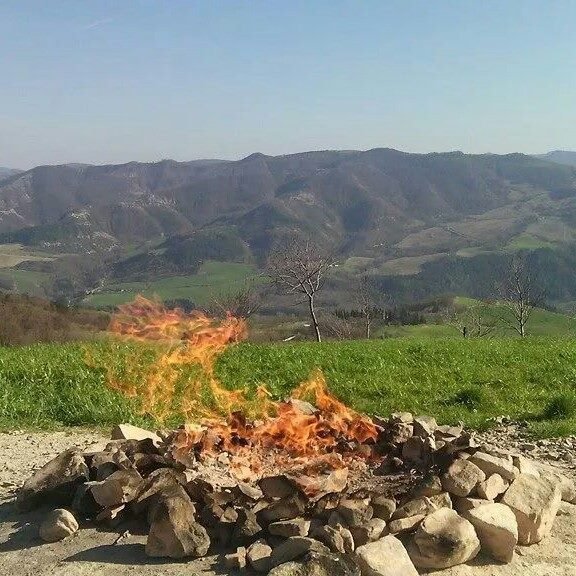 At 740 meters in altitude, between the Montone and Tramazzo valleys, there's a place that looks like it came out of a fairy tale (or a geological documentary): the Monte Busca Volcano. Yes, I know, the name is misleading. It's not a real volcano, but a burning methane fountain, a perennial flame that has been burning among the rocks since before the 1500s. The first to mention it was the friar Leandro Alberti in 1588, who in his book described a place called 'Hell' with a hole four feet wide from which fire came out capable of burning even green wood. Today, that flame is as high as the wind decides: sometimes a bonfire, sometimes a small tongue of fire. To get there, take the SP22 from Portico di Romagna towards Tredozio; at km 7+700 you'll find a parking lot in front of an abandoned farmhouse. Two minutes on foot through trees and bushes, and you're in an open field with a pile of stones spitting flames. It looks like magic, but it's just methane coming out of the ground. In 1939, the Methane Hydrocarbons Company built a pipeline and a building in the fascist architectural style, inaugurated by Mussolini himself. But the gas was scarce, costs high, and after the war everything was abandoned. Since then, the gas found a new way out, and the flame became free again. Today it's a unique place, especially at sunset when the fire lights up against the darkening sky. You can get there by car, but the path is short and not accessible to everyone. Bring your dog if you want – it's welcome. And don't forget: it's not a volcano, but it will have the same effect on you.
Caterina Sforza Fortress: Meldola's Stronghold Between History and Restoration
- Via Camillo Brunori, Meldola (FC)
- Open in Google Maps
- View on Google Images
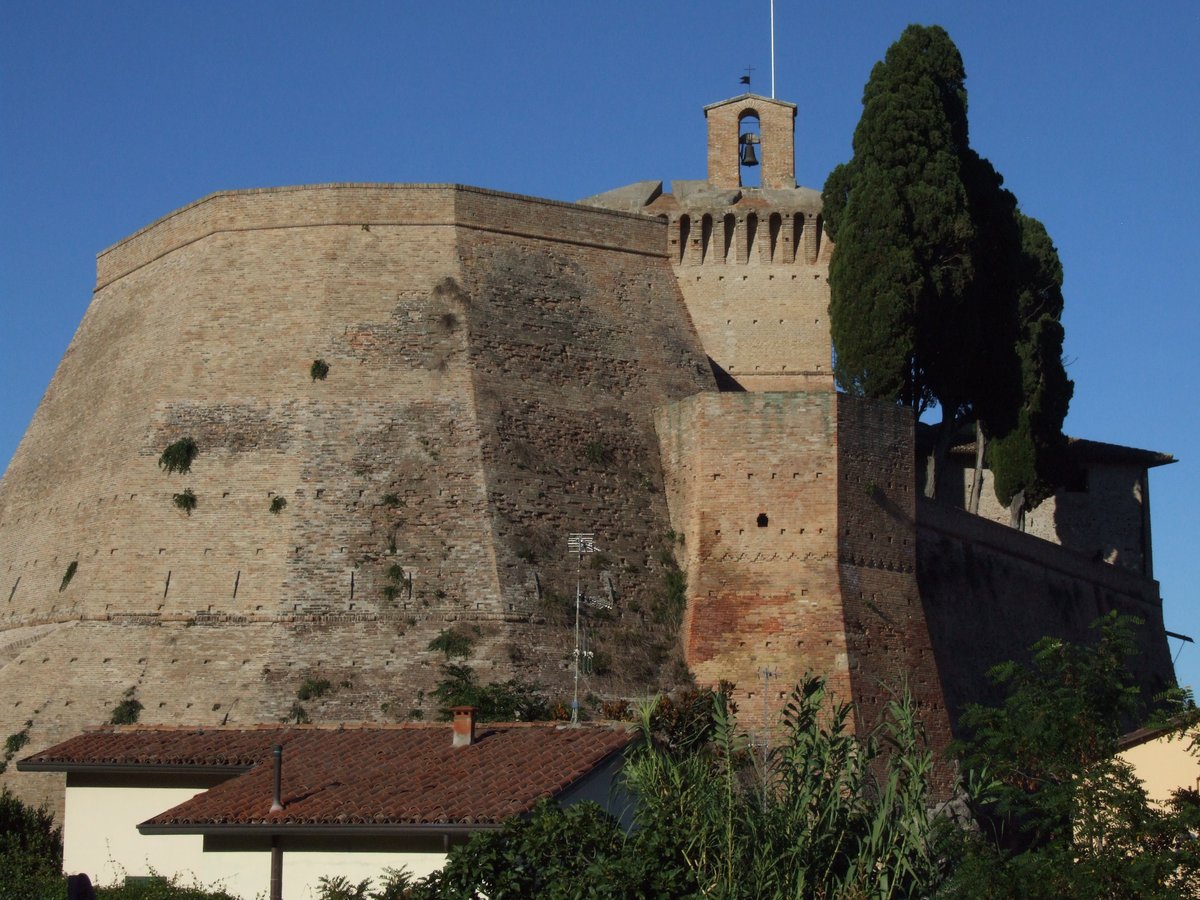 In the heart of Meldola, the Caterina Sforza Fortress (or Ravaldino Castle) has come back to life after years of closure. Built in 1471 by Pino III Ordelaffi on a design by Giorgio Marchesi, it was later expanded by Girolamo Riario and his wife, the famous Caterina Sforza. After being widowed, she had a third ravelin and a small palace called "Paradise" built, where she lived until the siege of 1499. Caterina bravely resisted Cesare Borgia, but the fortress fell on January 12, 1500: on the south side, the Borgia coat of arms is still visible at the point of the breach. In the following centuries, the fortress became a prison, a function it maintained until the 1900s. Today, after a restoration still underway, it can be visited with free guided tours. The keep preserves three stacked halls and a singular stone spiral staircase without a central support: 67 steps that support each other by overlapping. In the upper hall, there is the mouth of a well that descends to the courtyard. Walking along the walls, you breathe an atmosphere of other times, amid medieval history and legends of intrigue. A dive into the past well worth a stop, perhaps paired with a walk in the village of Meldola.
Teatro Alessandro Bonci – Elegance and Tradition in Cesena
- Go to the page: Cesena's Bonci Theatre: Perfect Acoustics and Gilded Boxes Since 1846
- Piazza Mario Guidazzi, Cesena (FC)
- Open in Google Maps
- View on Google Images
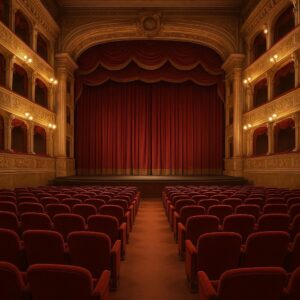
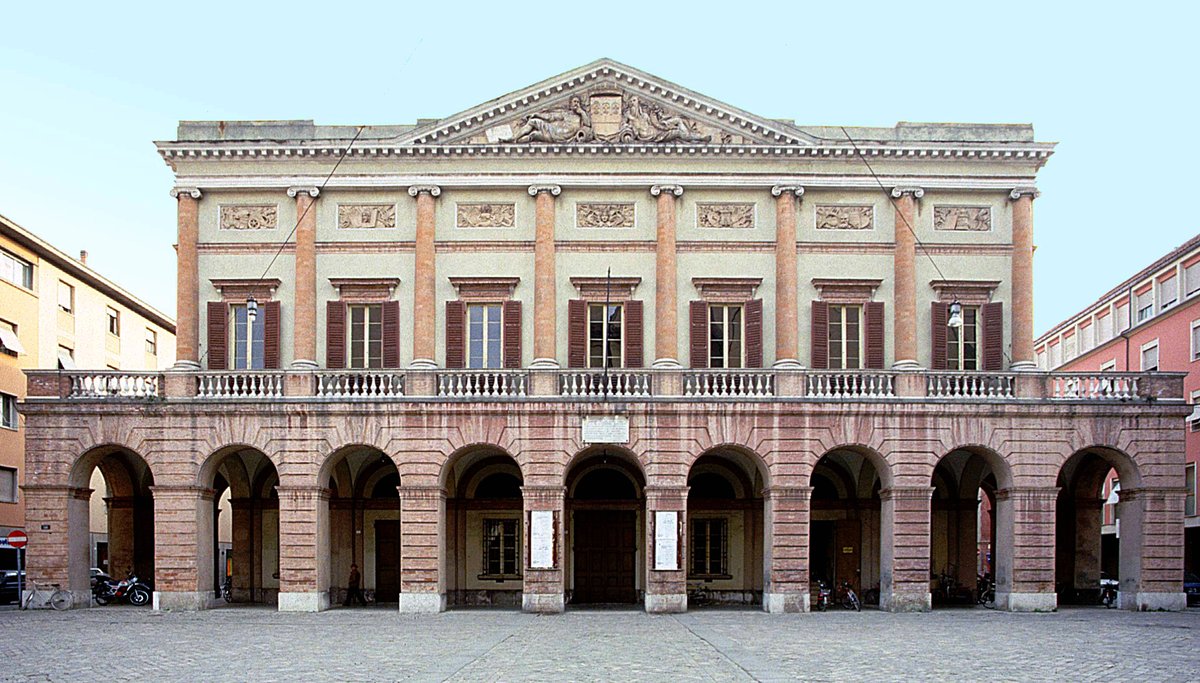 If you're in Cesena and have a passion for culture, a visit to the Teatro Alessandro Bonci is a must. This neoclassical gem, designed by Vincenzo Ghinelli and inaugurated in 1846, is a true temple of the arts. The façade, with its columns and tympanum decorated with allegories of the Savio and Rubicone rivers, welcomes you in Piazza Guidazzi. But it's the interior that takes your breath away: the horseshoe-shaped hall, with four tiers of boxes and a gallery, is adorned with refined paintings by Francesco Migliari, who immortalized scenes from the Divine Comedy. The acoustics are simply perfect, a reason why world-famous artists love to perform here. The theater is named after the great tenor Alessandro Bonci, who sang here in 1904 and made it famous. Today the program ranges from opera to drama, ballet to concerts, with a season from October to May. Don't miss the chance to visit the foyer and the stalls: the staff will accompany you with passionate explanations. And if you're lucky, you can attend a show and experience the emotion of a theater that has enchanted audiences for nearly two centuries. After the visit, take a walk in the surroundings: the theater is near the Public Gardens, ideal for a stroll. For info and tickets: 0547 355959 or info@teatrobonci.it.
Cathedral of Santa Croce: Forlì's Duomo
- Go to the page: Forlì's Santa Croce Cathedral: Neoclassical Facade and Romanesque Bell Tower
- Via degli Orgogliosi, Forlì (FC)
- Open in Google Maps
- View on Google Images
 If you're passing through Forlì, a stop at the Duomo is a must. The Cathedral of Santa Croce is not only the city's main place of worship but also a treasure trove of art that tells centuries of history. The building you see today is largely the result of a neoclassical reconstruction completed in 1841 based on a design by Giulio Zambianchi, but its origins date back at least to the 10th century. As you walk through the aisles, you'll come across two absolute gems: the Cappella della Madonna del Fuoco and the Cappella del Santissimo Sacramento. The first, built between 1619 and 1636, houses the precious woodcut of the Madonna del Fuoco, an image that, according to tradition, miraculously survived a fire in 1428. Its dome is frescoed by Carlo Cignani with the Assumption of the Virgin, a masterpiece that alone is worth the visit. On the other side, the Chapel of the Most Holy Sacrament, commissioned by Caterina Sforza in 1490, preserves the fresco of the Madonna della Ferita. Don't miss the Romanesque wooden crucifix from the 12th century, with its triumphant Christ with open eyes. Admission is free, and the cathedral is open daily from 6:30 AM to 12:00 PM and from 4:00 PM to 7:00 PM. A tip: if you're in the area on February 4, join the feast of the Madonna del Fuoco, with stalls serving traditional anise-flavored piadina. In short, a place that authentically blends faith, history, and art.