
🧭 What to Expect
- Ideal for history and culture enthusiasts, with an itinerary through Magna Graecia and Norman medieval times.
- Highlights: National Archaeological Museum with the Riace Bronzes, sites of Locri Epizephiri and Kaulon with unique mosaics.
- Includes Norman castles like those in Scilla and Bova, and historic lighthouses with views over the Strait of Messina.
- Offers authentic experiences away from mass tourism, blending archaeology, architecture and coastal landscapes.
The Province of Reggio Calabria is a land that blends millennia of history with breathtaking landscapes. Here, Greek archaeology merges with the crystal-clear waters of the Strait, where Sicily can be seen on the horizon. Highlights include the National Archaeological Museum of Reggio Calabria, home to the Riace Bronzes, and the sites of Locri Epizephiri and Kaulon, remnants of Magna Graecia. Norman castles, such as those in Scilla and Sant’Aniceto, overlook the coast, while the lighthouses of Capo dell’Armi and Punta Stilo guide sailors. It’s a destination for those seeking culture, nature, and authentic traditions, far from mass tourism.
Overview
- National Archaeological Museum of Reggio Calabria
- Locri Epizephiri
- Kaulon Archaeological Park
- Ruffo Castle of Scilla
- Aragonese Castle
- Norman Castle of Bova
- Norman Castle of Roger II
- Scilla Lighthouse
- Cape dell'Armi Lighthouse
- Punta Stilo Lighthouse
- Roman Villa of Casignana
- Saracen Tower of Palmi
- Diocesan Museum of Oppido Mamertina
- Bova Marina Synagogue Museum
- Marmarico Hydroelectric Power Plant
Itineraries nearby


National Archaeological Museum of Reggio Calabria
- Go to the page: Reggio Calabria Archaeological Museum: Riace Bronzes and Magna Graecia Artifacts
- Piazza Giuseppe de Nava 26, Reggio di Calabria (RC)
- https://www.museoarcheologicoreggiocalabria.it/
- Open in Google Maps
- View on Google Images
- man-rc.comunicazione@cultura.gov.it
- 0965613988
 If you visit Reggio Calabria, the National Archaeological Museum is an essential stop. Located in Piazza De Nava, it houses one of the most important collections from Magna Graecia. The Riace Bronzes are the crown jewel: two bronze statues from the 5th century BC, discovered in 1972 in the sea off Riace, which will leave you breathless with their anatomical perfection. But don't stop there: the museum also preserves the Head of the Philosopher, a realistic portrait that seems to speak, and the Bronze Tablet of Locri, a unique document on the laws of the ancient city. The rooms are organized by thematic areas, with artifacts from Locri Epizefiri, Kaulon, and Rhegion, ancient Reggio. The itinerary guides you through the history of Greek Calabria, with ceramics, jewelry, and sculptures that tell the story of daily life and religious cults. The museum is modern and accessible, with clear explanatory panels and lighting that enhances every detail. I recommend booking online to avoid queues, especially on weekends. If you're a history enthusiast, don't miss the section dedicated to sanctuaries, with votive offerings and gifts that reveal ancient rituals. An experience that enriches any trip to Calabria.
Locri Epizephiri
- Go to the page: Locri Epizephiri: Greek Theatre by the Sea and Ancient Laws on Bronze Tablets
- Strada Statale 106 Jonica, Locri (RC)
- https://www.locriantica.it/
- Open in Google Maps
- View on Google Images
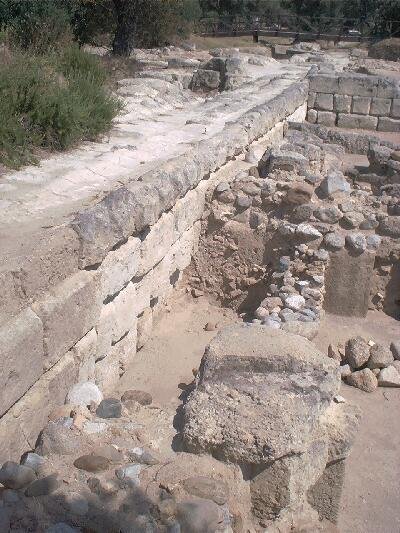 If you're looking for a journey into the heart of Magna Graecia, Locri Epizephiri is an essential stop. This archaeological site offers an authentic experience, away from the crowds, where you can walk among the ruins of one of the most important Mediterranean colonies. Imagine—here in the 7th century BC, the Locrians founded a city that became a beacon of culture and power. Today, strolling through the remains, you can admire the Sanctuary of Persephone, a sacred place that housed the pinakes, votive tablets unique in the world. Continue to the Greco-Roman Theater, still well-preserved, where performances and assemblies were once held. Don't miss the city walls, stretching for kilometers, testifying to the city's grandeur. The National Archaeological Museum, right next door, completes the visit with artifacts like pottery, statues, and those pinakes that tell you about rituals and daily life. For a practical tip: visit early in the morning or late afternoon to enjoy the best light and the silence enveloping the site. Remember to wear comfortable shoes, as the terrain is uneven and you'll want to explore every corner without a hitch. Locri Epizephiri isn't just a collection of stones—it's an experience that lets you touch history firsthand, perfect for those who love culture without frills.
Kaulon Archaeological Park
- Go to the page: Kaulon Archaeological Park: Dragon Mosaic and Ionian Sea View
- Strada Statale 106 Jonica, Monasterace Marina (RC)
- Open in Google Maps
- View on Google Images
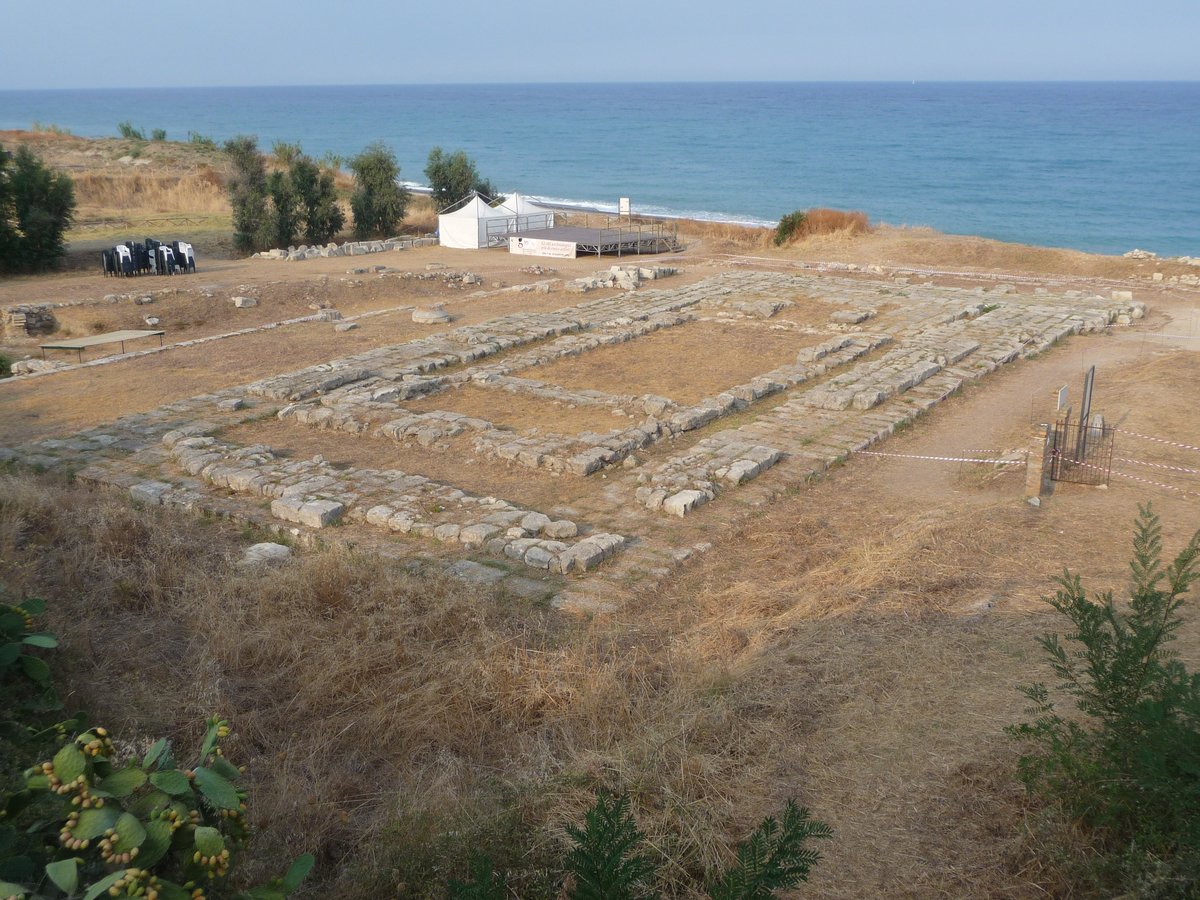 The Kaulon Archaeological Park takes you back in time to the 8th century BC, when Greek colonists founded this important city of Magna Graecia. What makes this site unique is its strategic position: it rises right by the sea, with waves lapping against the ancient ruins. The real treasure here are the mosaics of the House of the Dragon, among the oldest and best preserved in the Mediterranean. The depicted sea dragon, over 4 meters long, is a breathtaking masterpiece. Walking among the remains of the settlement, you'll clearly recognize the original urban layout, with streets intersecting at right angles according to the typical Hippodamian plan. Don't miss the remains of the Temple of Zeus, which dominated the acropolis, and the Roman baths that testify to the site's continuous habitation. The attached museum completes the experience with artifacts like the Orphic tablets, rare Greek texts that reveal beliefs about the afterlife. The special feature? You can see all this with the sound of the sea as your soundtrack, because the site directly overlooks the beach of Monasterace Marina.
Ruffo Castle of Scilla
- Via Castello, Scilla (RC)
- http://scilla.asmenet.it/index.php?action=index&p=244
- Open in Google Maps
- View on Google Images
- +39 0965 704422
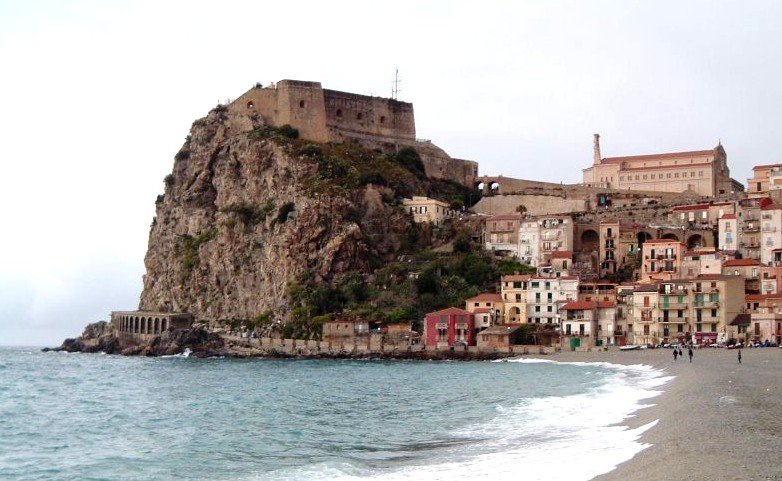 The Ruffo Castle of Scilla is a jewel perched on a rocky spur dominating the Strait of Messina, offering one of the most spectacular views in Calabria. Built in the Norman era and later expanded by the Ruffo family in the 16th century, this castle is not just a historical monument but a privileged vantage point to admire the currents of the Strait and, on clear days, even Mount Etna. Inside, you can visit the restored halls hosting temporary exhibitions and artifacts related to local history, including relics from swordfish fishing, a centuries-old tradition in Scilla. The castle's strategic position made it a crucial outpost for controlling maritime traffic, and today it gifts visitors unforgettable photographs at sunset, when the sun dyes the sea and the Sicilian coast red. Don't miss the walk along the walls to discover hidden corners and the small internal chapel, dedicated to Saint George. For a complete experience, pair your visit with a stop in the Chianalea village, known as 'the little Venice,' with its houses perched over the sea and small restaurants where you can taste freshly caught fish. The castle is open year-round, but the best time to visit is from May to September, when the weather is ideal for enjoying the outdoor panoramas.
Aragonese Castle
- Piazza Castello, Reggio di Calabria (RC)
- https://turismo.reggiocal.it/HomePage.aspx
- Open in Google Maps
- View on Google Images
- turismo@comune.reggio-calabria.it
- +39 0965 3622587
 The Aragonese Castle of Reggio Calabria is one of the city's most recognizable symbols, an imposing fortress that rises directly opposite the Strait of Messina. Originally built during the Byzantine era between the 8th and 9th centuries, the castle has undergone numerous transformations over the centuries, with its current appearance dating mainly to the Aragonese period of the 15th century. The structure is characterized by its cylindrical towers and massive walls that have withstood earthquakes and sieges. Today, the castle frequently hosts temporary exhibitions and cultural events, becoming an artistic hub as well as a historical one. Its location is strategic: it lies in the heart of the historic center, just steps from the Falcomatà waterfront and the National Archaeological Museum. Admission is free, but it's wise to check the opening hours as they may vary depending on current exhibitions. Inside, beyond the exhibition spaces, you can admire the courtyards and some sections of the original walls. The view from outside the walls is spectacular, with direct vistas of Mount Etna and the Sicilian coast. For those visiting Reggio, the Aragonese Castle is a must-see stop not only for its historical importance but also to understand the city's urban evolution. Restoration work has preserved the charm of this monument intact, which continues to tell centuries of Calabrian history.
Norman Castle of Bova
- Via Castello, Bova (RC)
- Open in Google Maps
- View on Google Images
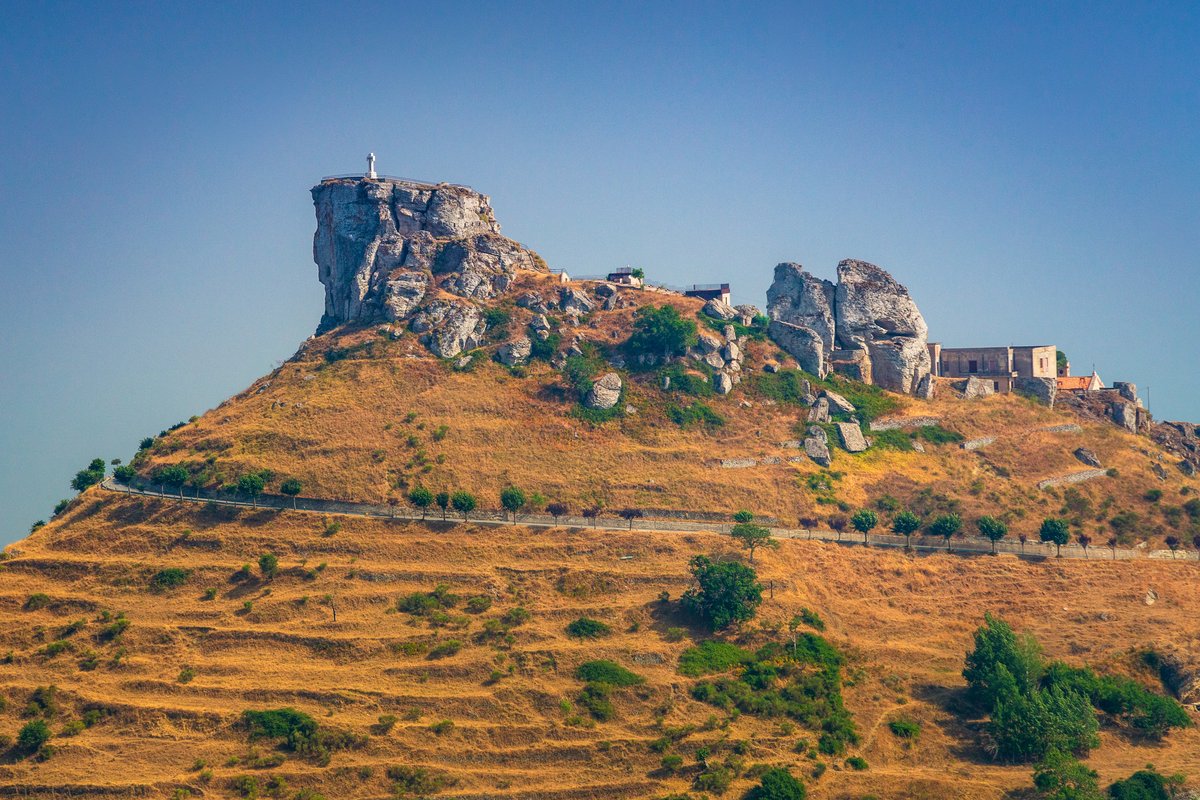 The Norman Castle of Bova dominates the village from its 820-meter height, offering one of the most spectacular views of the Strait of Messina and the Aspromonte. Built in the 11th century by the Normans on pre-existing Byzantine fortifications, it now stands as a fascinating complex of ruins that tell centuries of history. The perimeter walls made of local stone still preserve traces of the corner towers and interior rooms, while from the summit you can even spot Mount Etna on the clearest days. The strategic position was crucial for controlling the communication routes between the Ionian and Tyrrhenian coasts. Today, climbing up to the castle means immersing yourself in an atmosphere suspended in time, among the scents of the Mediterranean scrub and the flight of peregrine falcons. The access path starts from Bova's historic center, crossing cobbled alleys and stone houses, with explanatory signs that help interpret the archaeological remains. I recommend visiting at sunset, when the golden light enhances the volumes of the ruins and the panorama lights up with warm colors. Bring comfortable shoes for the last unpaved stretch and a camera: every corner here deserves a shot.
Norman Castle of Roger II
- Sentiero Panoramico, Stilo (RC)
- Open in Google Maps
- View on Google Images
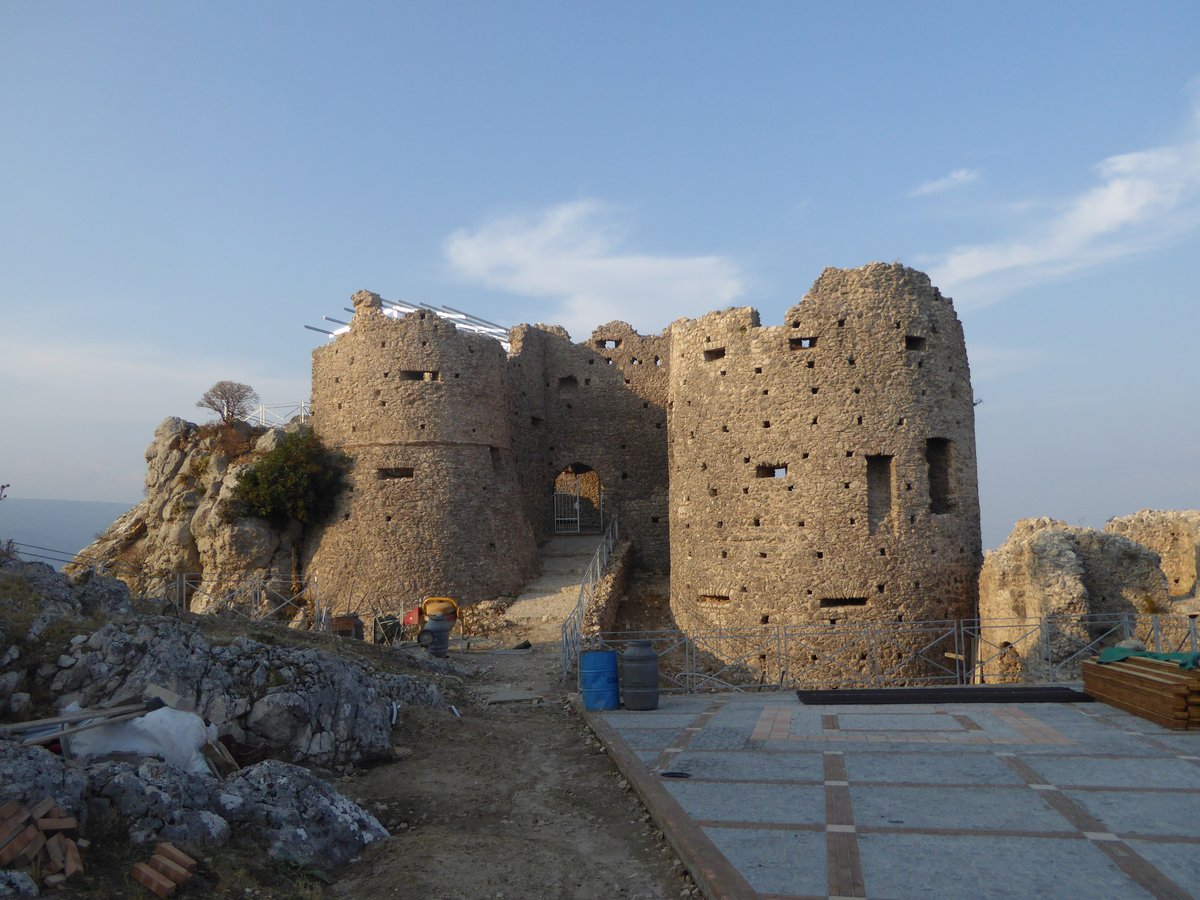 The Norman Castle of Roger II is not just a ruin: it's a piece of living history that welcomes you with all its grandeur. Arriving in Stilo, you immediately see it perched at 700 meters above sea level, a stone giant dominating the Stilaro valley. Built in the 11th century by order of Roger II of Hauteville, this castle held a crucial strategic position for controlling the route to the Ionian Sea. Today, what stands out are the perimeter walls that have withstood centuries, the still recognizable square towers, and the remains of the palatine chapel. As you climb toward the fortress, you immediately understand why the Normans chose this rocky spur: the view stretches from the Calabrian Serre mountains all the way to the sea, a panorama that alone makes the visit worthwhile. Inside, don't expect furnished rooms but the essence of medieval military architecture: water collection cistern, service areas, and traces of the living quarters. A practical tip: wear comfortable shoes because the final stretch is a steep path, but the satisfaction of reaching the summit is priceless. Perfect for those who love history without frills, this castle tells you about a Calabria made of power, defense, and breathtaking landscapes.
Scilla Lighthouse
- Via Grotte, Scilla (RC)
- Open in Google Maps
- View on Google Images
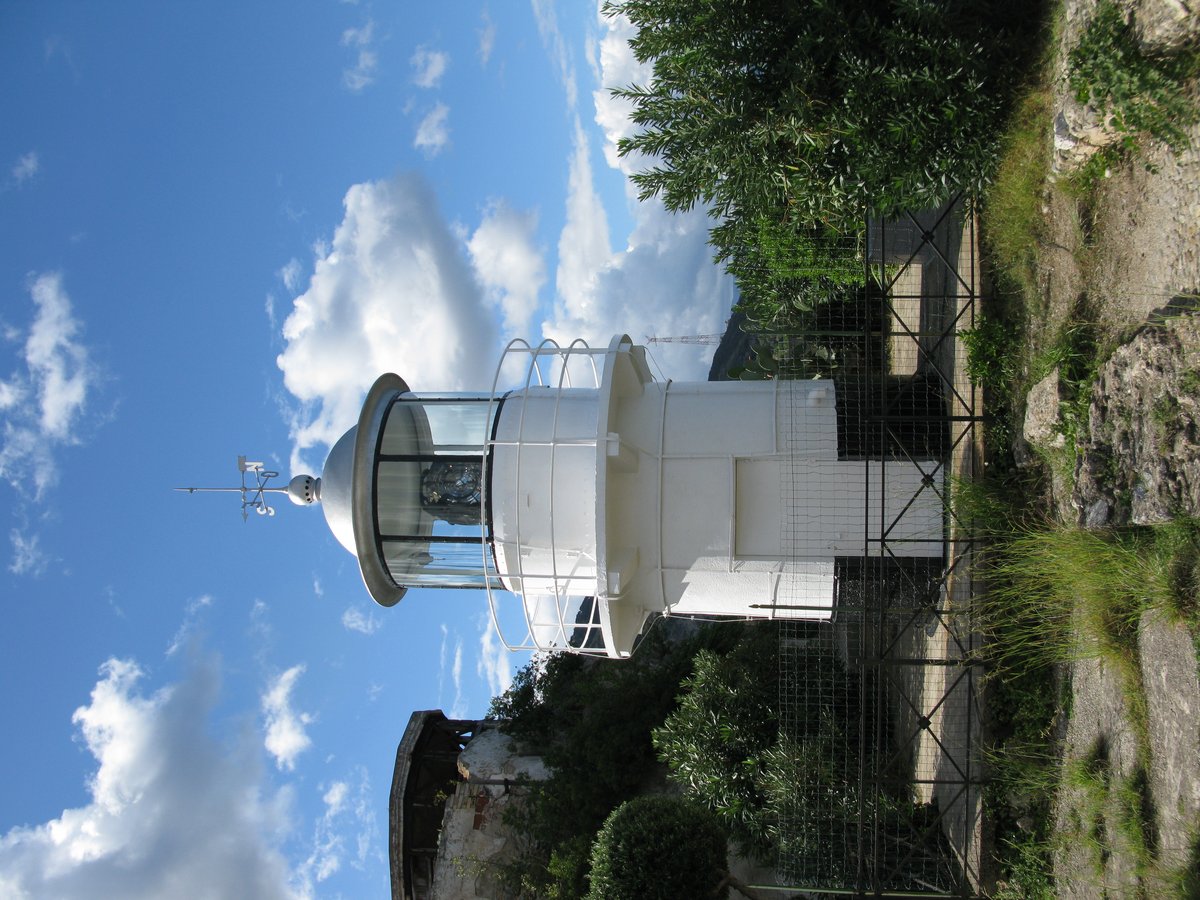 The Scilla Lighthouse is not just a navigational landmark, but a true balcony over the Strait of Messina. Built in 1913 on a rocky spur overlooking the sea, it stands directly opposite the mythical whirlpool of Charybdis, where legend says Ulysses faced the sea monsters. Today, its strategic position offers breathtaking views of the Calabrian and Sicilian coasts, with the profile of Mount Etna often silhouetted on the horizon. The structure, 15 meters high, is still active and managed by the Italian Navy, but the surrounding area is accessible to visitors. The path to reach it, through the alleys of the Scilla village, is already an experience: you pass by the Ruffo Castle, which dominates the promontory, and walk alongside the typical fishermen's houses. Once you arrive, the spectacle is guaranteed: on clear days, you can clearly see ships crossing the Strait, and if you're lucky, you might witness the phenomenon of the Fata Morgana, an optical mirage that distorts distant images. Practical tip: bring a camera, because the sunsets here are unforgettable, with colors that ignite over the sea and illuminate the Sicilian coast. Note: access to the lighthouse itself is limited, but the external square offers equally spectacular views without the need for reservations.
Cape dell'Armi Lighthouse
- Go to the page: Cape dell'Armi Lighthouse: Italy's Southernmost Beacon Overlooking the Strait of Messina
- Strada Statale 106 Jonica, Lazzàro (RC)
- Open in Google Maps
- View on Google Images
 Reaching the Cape dell'Armi Lighthouse is an experience that gives you the sensation of truly being at Italy's boundaries. This lighthouse, built in 1885, is located at the southernmost point of mainland Calabria, in Lazzàro, a hamlet of Motta San Giovanni. Its strategic position is incredible: from here, your gaze sweeps across the Strait of Messina, with Sicily seemingly within arm's reach, and when the sky is clear, you can perfectly distinguish both Mount Etna and the Aeolian Islands. The lighthouse, standing 30 meters tall, is still active and managed by the Italian Navy, with a light range of 25 nautical miles guiding ships through the most breathtaking passage in the Mediterranean. The masonry structure, with its characteristic white cylindrical tower, dominates a rocky promontory accessible via a scenic trail. The path to reach it is short but thrilling: you walk through Mediterranean scrubland, with broom and myrtle bushes scenting the air, and with every step, the view expands. Once at the top, you're faced with a 360-degree breathtaking panorama: on one side, the Ionian Sea with its crystal-clear waters, on the other, the Strait with its currents. It's not uncommon to spot dolphins or, on windy days, the famous 'mazzare' cutting through the waves. The area around the lighthouse is perfect for a stop: you can sit on the rocks and admire the sunset as the sun dips behind Sicily, painting the sky in shades of orange and purple. Bring a bottle of water and something to shield you from the wind, which often blows here. The spot is rarely crowded, ideal for those seeking a corner of peace and authenticity. Remember: there are no services in the immediate vicinity, but nearby Lazzàro offers a few trattorias where you can sample fresh fish. If you're visiting the province of Reggio Calabria, this lighthouse is a must-see stop to truly understand where the peninsula ends and the open sea begins.
Punta Stilo Lighthouse
- Strada Statale 106 Jonica, Monasterace Marina (RC)
- Open in Google Maps
- View on Google Images
 The Punta Stilo Lighthouse is one of the most recognizable symbols of the Reggio Calabria Ionian coast, located right in Monasterace Marina. Built in 1867, this historic lighthouse stands on a rocky promontory offering a breathtaking panoramic view of the Ionian Sea and the archaeological area of Kaulon. Its strategic position makes it a privileged observation point, especially at sunset, when the colors of the sky reflect on the sea creating an unforgettable spectacle. The original stone structure has been well preserved and maintains its vintage charm, with the characteristic white tower standing out against the horizon. Visiting the lighthouse also means immersing yourself in local history: here you can breathe the atmosphere of the old lighthouse keepers who for decades watched over passing ships. The path to reach it is simple and accessible, with a well-marked trail starting from Monasterace Marina beach. Once you arrive, in addition to the lighthouse, you can admire the remains of the ancient Magna Graecia city of Kaulon, visible from the summit. Practical tip: bring a camera because the sunset shots here are among the most beautiful on the Calabrian Ionian coast. If you're passionate about history and nature, don't miss the opportunity to combine your lighthouse visit with one to the Kaulon Archaeological Park, located just a few minutes' walk away. The area is perfect for a day trip, with the possibility of taking a swim in the crystal-clear waters of the beach below after your visit.
Roman Villa of Casignana
- Strada Statale 106 Jonica, Casignana (RC)
- Open in Google Maps
- View on Google Images
 The Roman Villa of Casignana is one of those places that makes you understand how rich and refined life was along the Ionian coast of Calabria during Roman times. Accidentally discovered in the 1960s during roadworks, this 1st-4th century AD villa extends over more than 15 hectares and preserves **extraordinarily beautiful polychrome mosaics**, among the best preserved in Southern Italy. The complex was a luxurious countryside residence, probably belonging to a wealthy Roman landowner, with private baths, residential areas, and production facilities. The true treasure lies in the mosaic floors: **the apsidal room with the marine mosaic** shows dolphins, tritons, and sea creatures that seem to swim even today, while other rooms feature complex geometric patterns and mythological figures. The location is strategic: just steps from the sea, along the ancient Via Popilia that connected Reggio to Capua. Today the site is well-equipped for visits, with walkways that allow you to walk above the mosaics without damaging them. Practical advice? Come early in the morning to avoid the hottest hours and enjoy the best light for photographing the mosaic details. Bring water because there's little shade, but it's absolutely worth it to see up close these masterpieces that have endured for centuries.
Saracen Tower of Palmi
- Lungomare Donna Canfora, Palmi (RC)
- Open in Google Maps
- View on Google Images
 The Saracen Tower of Palmi is one of the city's most recognizable symbols, an imposing 16th-century defensive structure that rises on a rocky spur overlooking the sea. Built in 1585 by order of the Spanish viceroy, it was part of the surveillance system against Saracen pirate raids that infested the Tyrrhenian Sea. Its strategic position, 80 meters above sea level, offers a breathtaking panorama stretching from the Aeolian Islands to the Costa Viola, with Stromboli often visible on the horizon. The tower, with a circular plan and scarped base, is made of local stone and still preserves the original two-story structure, connected by a stone staircase. Today it is open to visitors and occasionally hosts exhibitions and cultural events. The access path, through a scenic trail, offers unique glimpses of the Palmi cliff and the beach below. Inside, you can admire the cannon loopholes and the ancient cistern for rainwater collection. The tower is illuminated at night, creating a suggestive effect that makes it visible even from a distance. For those visiting Palmi, it is a must-see not only for its history but for the visual experience it offers: the sunset from the Saracen Tower is considered one of the most beautiful in Calabria, with the colors of the sky reflecting on the crystal-clear sea below.
Diocesan Museum of Oppido Mamertina
- Piazza F.M. Zuco 1, Oppido Mamertina (RC)
- https://www.museooppidopalmi.it
- Open in Google Maps
- View on Google Images
- museodiop@gmail.com
- +39 0966 86513
 If you're looking for a place that tells the religious and artistic history of Calabria, the Diocesan Museum of Oppido Mamertina is an unmissable stop. Housed within the Bishop's Palace, the museum preserves sacred art works from churches across the diocese, many of which were damaged in the 1908 earthquake. Among the most significant pieces are the 18th-century liturgical vestments, embroidered with gold and silver threads, and the polychrome wooden sculptures depicting saints and madonnas. Don't miss the section dedicated to sacred silverware, with chalices and monstrances of exquisite craftsmanship, and the illuminated manuscripts that bear witness to local devotion. The exhibition route winds through thematic rooms illustrating the life of the Christian community in the area, with artifacts ranging from the Middle Ages to the 19th century. Special mention goes to the Reliquary of Saint Leo, patron saint of Oppido Mamertina, a masterpiece of 18th-century Neapolitan goldsmithing. The visit is enriched by educational panels explaining the historical and artistic context of the works, making the experience accessible even to non-experts. The museum periodically organizes temporary exhibitions and educational workshops, especially during patron saint festivities. For those who wish to delve deeper, it's possible to book a guided tour that reveals anecdotes and curiosities about the exhibited works. A practical tip: check the opening hours on the official website, as they may vary by season.
Bova Marina Synagogue Museum
- Strada Statale 106 Jonica, Bova Marina (RC)
- https://www.beniculturali.it/luogo/museo-e-parco-archeologico-archeoderi?page=2#contatti
- Open in Google Maps
- View on Google Images
 If you think Calabria is just about sea and beaches, the Bova Marina Synagogue Museum will make you think again. This small but significant museum stands right where, in the 1980s, the remains of a 4th-century synagogue emerged - one of the oldest testimonies of Jewish presence in Southern Italy. Upon entering, you're greeted by an intimate atmosphere: mosaic floors with Jewish symbols like the menorah and shofar speak of a vibrant community that once prayed and traded here. The exhibited artifacts - coins, lamps, ceramics - aren't just objects, but pieces of a forgotten history: that of Calabrian Jews, integrated into the social fabric before Byzantine persecutions. The visit is a journey through time showing how Bova Marina was a cultural crossroads, with the synagogue located along the ancient Via Popilia, the Roman artery connecting Reggio to Capua. The explanations are clear and accessible, perfect even if you're not an archaeology expert. For me, the value lies in seeing how a chance discovery during construction work brought to light a page of Calabrian history that few know about. I recommend combining the visit with a stroll through Bova Marina's historic center to savor the context in which this gem is preserved.
Marmarico Hydroelectric Power Plant
- Sentiero dei Fuoristrada per le cascate del Marmarico, Bivongi (RC)
- Open in Google Maps
- View on Google Images
 The Marmarico Hydroelectric Power Plant in Bivongi is one of those places that surprises you with how technology and nature blend harmoniously. Built in 1928 along the Stilaro stream, this plant represents a perfect example of still-functioning industrial archaeology. What immediately strikes you is the local stone architecture that blends with the surrounding landscape, creating a fascinating contrast between the ancient and the modern.
The tour takes you through the original rooms where you can admire the still-operational turbines and the energy production system that harnesses the river's waters. The sound of flowing water and the hum of the machines create a unique, almost hypnotic atmosphere. The special feature of this site is that it's not just a museum: it's a plant that continues to produce energy, showing you firsthand how the hydroelectric cycle works.
The visit route allows you to observe up close the perfectly preserved historical machinery, including the original wooden and brass control panels. The guide (available by reservation) explains in detail the process of transforming hydraulic energy into electricity, making everything understandable even for non-experts. The surrounding environment, with its lush vegetation and constant sound of water, completes a multisensory experience that makes you appreciate human ingenuity applied with respect for the environment.