
Walking Tour of Brescia in 1 Day is ideal for those who want to discover the city authentically. This 8-stop itinerary guides you from Piazza Loggia, the Renaissance heart, to the Castle, passing through the two Duomos, the Broletto, and the Santa Giulia Museum. The route is entirely pedestrian, easy, and full of surprises. Along the way, don’t miss the view from the Clock Tower and the frescoes in the museum. Lasting about 4-5 hours (excluding breaks), it’s perfect for a weekend or day trip. Wear comfortable shoes and go! Brescia’s historic center is a gem: frescoed buildings, elegant squares, and a lively atmosphere. Each stop is narrated with tips and curiosities. Ideal for culture lovers and foodies (a must-stop for an aperitivo in the square). Don’t forget your camera.
🗺️ Your trip at a glance
Walking tour of Brescia in one day is the best way to discover the city in just a few hours. A route that combines the main attractions in an easy and scenic walk.
- Ideal for: city-breakers and budget travelers looking for a rich itinerary of history and art.
- Highlights: fully pedestrian route, 8 unmissable stops from the Renaissance to the Middle Ages, panoramic views from the castle.
- For whom: anyone who wants to discover Brescia authentically, without rush and with practical tips.
Itinerary stops
Stop no. 1
Mostasù dèle Cosére: The Big Face Without a Nose
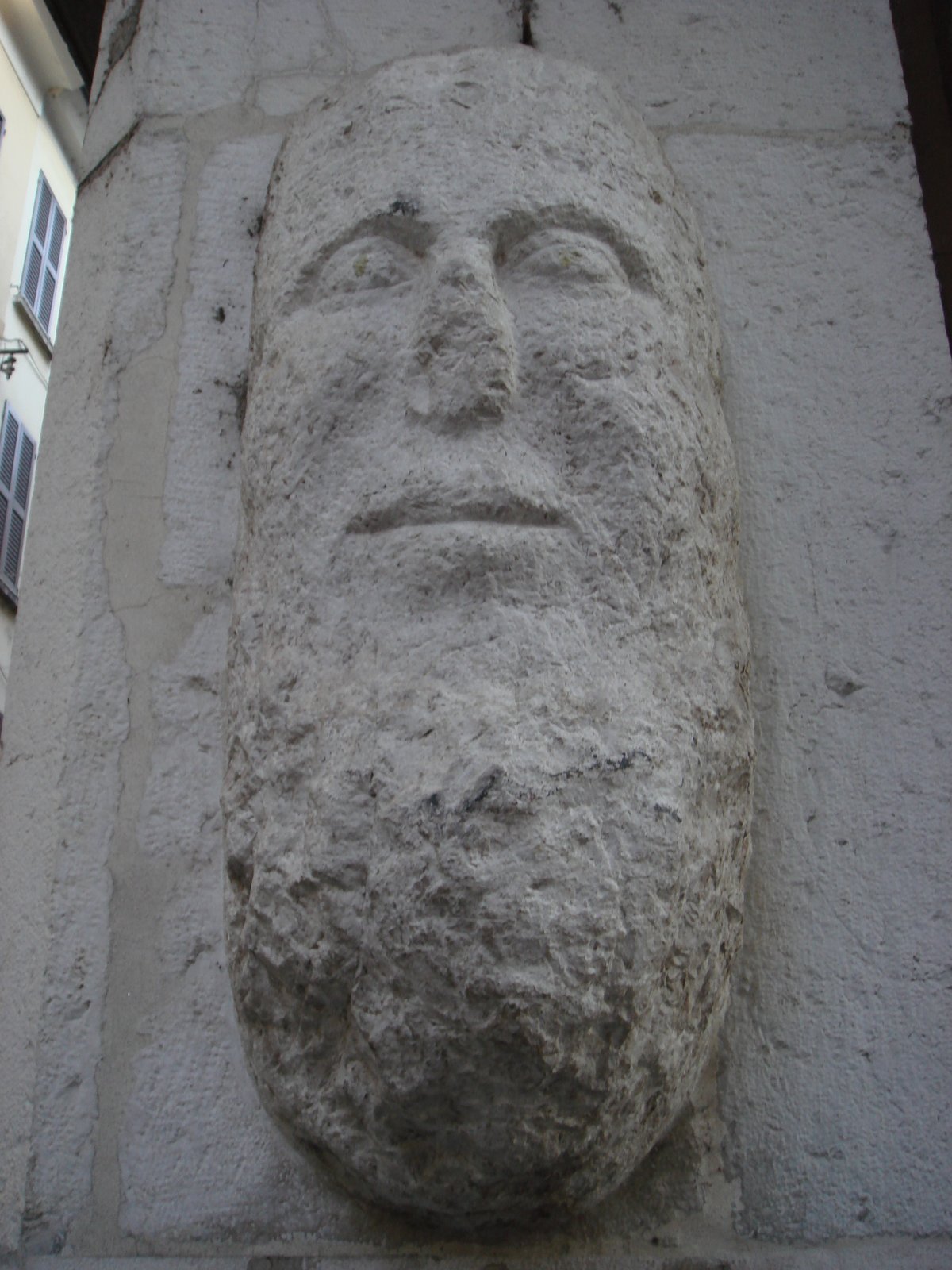 The first stop is a bit off the beaten path, but it’s the one that sticks with you the most. At the corner of Corso Goffredo Mameli and Contrada delle Cossere, embedded in a wall, is the Mostasù dèle Cosére (Big Face of the Cossere, in Brescian dialect). It’s an old stone mask with a long beard and… no nose. Yes, that’s right: the nose has been chiseled away, and around this missing piece swirl legends that feel medieval. The most famous? In 1311, Emperor Henry VII, furious with the Guelph Brescians, swore to cut off the noses of all citizens. Finding no one on the streets (they were all hiding), he took it out on the statue. Other versions say he contented himself with cutting off the noses of statues. The fact remains that the Mostasù remained like that, mutilated, and for centuries it was used as a “talking statue”: people would attach anonymous notes with criticisms of the rulers. A piece of folk history that still makes people smile and sparks curiosity.
- Corso Goffredo Mameli, Brescia (BS)
- Open in Google Maps
- View on Google Images

You should go if…
Stop no. 2
Market Square
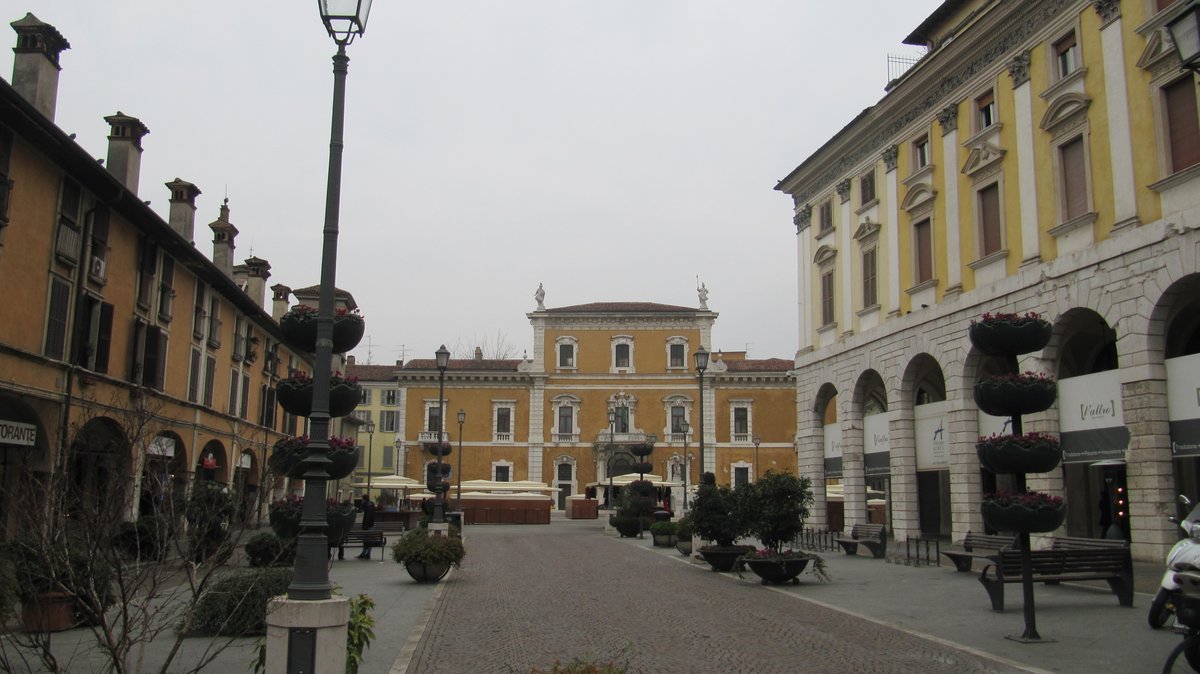 After leaving Piazza Loggia, head down Corso Palestro and within minutes you’ll find yourself in Piazza del Mercato. Here time seems to have stood still: it’s one of Brescia’s most authentic squares, born in the 15th century after the demolition of the medieval walls. From the start it was the heart of the cloth and linen trade, and even today you can still breathe that lively atmosphere. The low-arched porticoes on the south side date back to the 15th century and once housed merchants’ shops. Beneath them, in the center, stands out the 19th-century Fountain of Abundance, with a statue by Giovanni Antonio Labus. On the other side, Palazzo Beretta (16th century) adds a Renaissance touch, while the small Church of the Madonna of Linen (1608) tells a story of popular devotion. To the west, Palazzo Martinengo Palatini now houses the University’s Rectorate, an elegant Baroque example with statues of Minerva and Mars. A true mix of eras, from the 15th to the 20th century, all contained in a compact space. Since 2011 it has been pedestrianized, perfect for a stop.
- Piazza del Mercato, Brescia (BS)
- Open in Google Maps
- View on Google Images
You should go if…
Stop no. 3
Piazza della Vittoria: The Rationalist Face of Brescia
 After the medieval charm of Piazza del Mercato, the path widens into Piazza della Vittoria, a place that catapults you into 1930s Italy. Designed by Marcello Piacentini between 1927 and 1932, this L-shaped square is the result of the demolition of the Pescherie district. The Torrione INA, Italy’s first skyscraper with its 15 floors, stands tall at the corner, while the Palazzo delle Poste in white-ochre bichrome occupies the north side. Beneath the Torre della Rivoluzione lies the Arengario, a pulpit in red stone from Tolmezzo decorated with bas-reliefs that tell the story of Brescia, from the Winged Victory to the Ten Days. Today the square is completely pedestrianized, with a modern fountain on the west side. Every second Sunday of the month, the antiques market takes place, an opportunity to rummage through vintage items.
- Piazza della Vittoria, Brescia (BS)
- Open in Google Maps
- View on Google Images
You should go if…
Stop no. 4
Teatro Grande: A Dive into Opera History
 Just steps from Piazza della Vittoria, Teatro Grande welcomes you with its monumental facade on Corso Zanardelli. Entering, you immerse yourself in a bygone atmosphere: the Rococo Foyer, with frescoes by Francesco Zugno and Francesco Battaglioli, is an elegant salon where the Accademia degli Erranti once held its meetings. The horseshoe-shaped auditorium, designed by Luigi Canonica and inaugurated in 1810, features five tiers of boxes and a royal box decorated with Egyptian motifs. Here, in 1904, Puccini’s Madama Butterfly found its first triumph after the fiasco at La Scala. Today the theater offers a rich season of opera, ballet, and concerts, including the prestigious International Piano Festival of Brescia and Bergamo. If you’re passing by, treat yourself to a break at the Caffè del Teatro Grande – Berlucchi in the Foyer, open on weekends. And in summer, don’t miss the Grand Tour: guided tours that also reveal the stage and backstage.
- Portici di Corso Giuseppe Zanardelli 9A, Brescia (BS)
- https://www.teatrogrande.it/
- Open in Google Maps
- View on Google Images
You should go if…
Stop no. 5
Winter Co-Cathedral of Santa Maria Assunta
 After leaving the Teatro Grande, you find yourself in Piazza Paolo VI. Here stands the Winter Co-Cathedral, nicknamed the Rotonda for its circular plan. It is a rare example of Lombard Romanesque architecture, built in the 11th century on early Christian remains. As soon as you enter, you are struck by the hemispherical dome supported by eight massive pillars. For me, the highlight is the Crypt of San Filastrio, dating back to the 6th century: the oldest site of Brescian Christianity. Don’t miss the sarcophagus of Bishop Berardo Maggi in red marble, featuring scenes of the 1298 peace. Among the artworks, the organ by Giangiacomo Antegnati with panels painted by the Romanino stands out, as well as the paintings by Moretto in the Chapel of the Blessed Sacrament. Admission is free, open daily from 8 am to 7 pm. I recommend going down into the crypt to breathe in the millennial history of this place.
- Go to the page: Winter Co-Cathedral of Santa Maria Assunta: The Romanesque Rotunda of Brescia
- Piazza Paolo VI, Brescia (BS)
- Open in Google Maps
- View on Google Images
You should go if…
Stop no. 5
Winter Co-Cathedral of Santa Maria Assunta
After leaving the Teatro Grande, you find yourself in Piazza Paolo VI. Here stands the Winter Co-Cathedral, nicknamed the Rotonda for its circular plan. It is a rare example of Lombard Romanesque architecture, built in the 11th century on early Christian remains. As soon as you enter, you are struck by the hemispherical dome supported by eight massive pillars. For me, the highlight is the Crypt of San Filastrio, dating back to the 6th century: the oldest site of Brescian Christianity. Don’t miss the sarcophagus of Bishop Berardo Maggi in red marble, featuring scenes of the 1298 peace. Among the artworks, the organ by Giangiacomo Antegnati with panels painted by the Romanino stands out, as well as the paintings by Moretto in the Chapel of the Blessed Sacrament. Admission is free, open daily from 8 am to 7 pm. I recommend going down into the crypt to breathe in the millennial history of this place.- Go to the page: Old Cathedral of Brescia: Medieval Frescoes and Paleochristian Crypt with Roman Columns
- Piazza Paolo VI, Brescia (BS)
- Open in Google Maps
- View on Google Images
You should go if…
Stop no. 6
Torre del Pegol: The Sentinel of Brescia
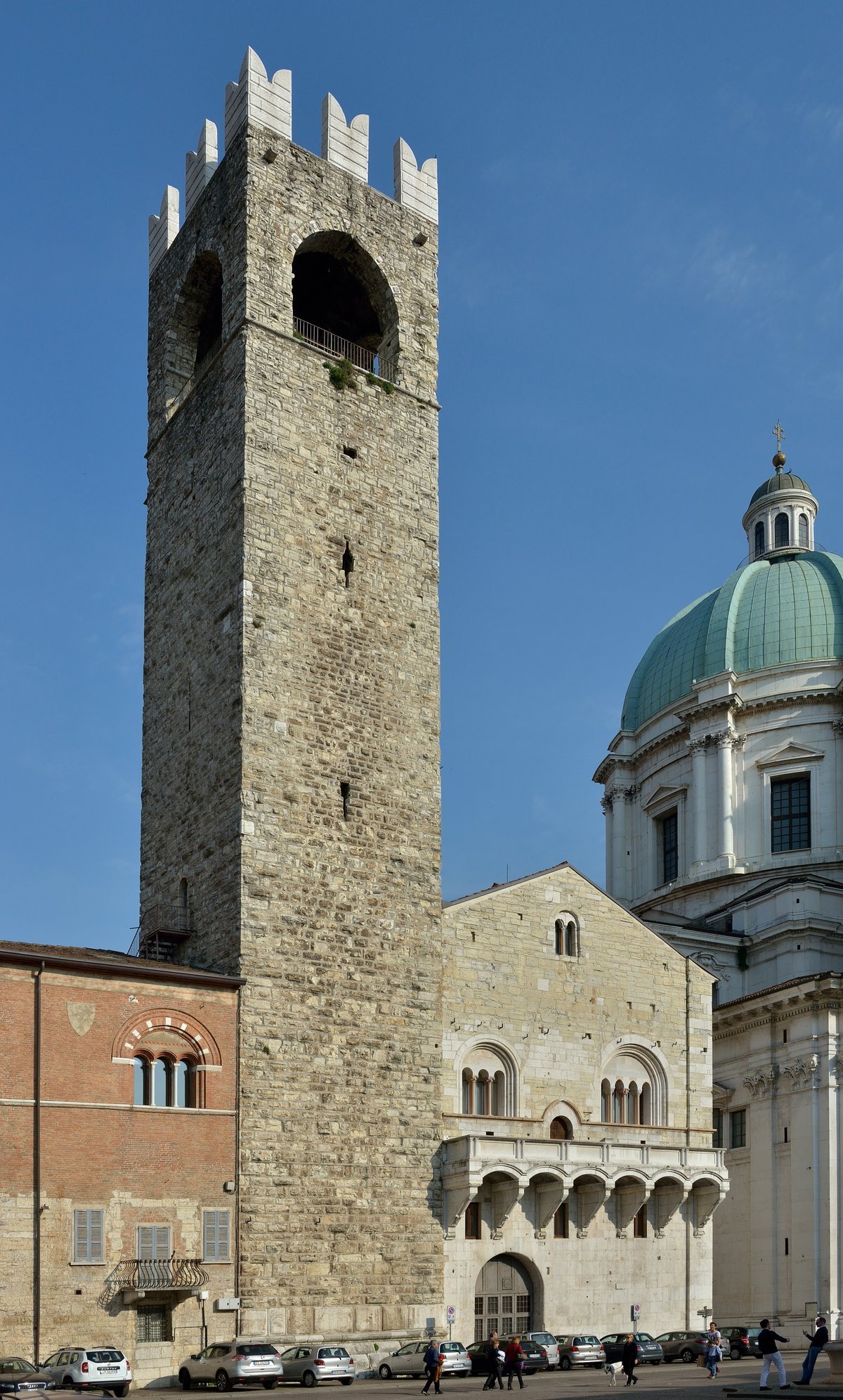 From the winter co-cathedral, look up and you’ll find yourself before the Torre del Pegol, 54 meters high, which has watched over Piazza Paolo VI for centuries. It dates back to the 12th-13th century, though some documents mention a tower as early as 1198. It survived an earthquake in 1222 that caused 20,000 victims, and at its base in 1178 the Laubia lignorum, the first city government, was born. Should I climb? Not for everyone: the internal staircase was transformed into a helical staircase in the 16th century, but the effort is repaid by the view. If you have time, listen to the three bells still rung by hand during festivities: a living legacy that, since 1235 with the Campana Militum, called the troops. Reopened to the public in 2007, the tower is a fundamental piece of the Broletto.
- Piazza Paolo VI, Brescia (BS)
- Open in Google Maps
- View on Google Images
You should go if…
Stop no. 7
Tosio Martinengo Art Gallery
 After leaving the Torre del Pegol, you head down the street towards Piazza Moretto. Here, inside the elegant Palazzo Martinengo da Barco, an artistic journey awaits. Reopened in 2018 after a restoration that uncovered frescoes and wooden ceilings, the Tosio Martinengo Art Gallery is a collection born from two donations: the first from Count Paolo Tosio in 1851 and the second from Count Leopardo Martinengo in 1889. I step in and am immediately captivated by Raphael’s Angel, a small oil on panel that radiates an almost divine light. But the heart of the museum is the 16th-century Brescian painting: Savoldo, Romanino, Moretto – their paintings have a realism that hits you in the gut. Then you reach the rooms of Giacomo Ceruti, known as Il Pitocchetto: scenes of the poor, washerwomen, and beggars portrayed with incredible dignity. There are also sculptures by Canova, canvases by Hayez, and a collection of Venetian glass. The tour is chronological, with velvet walls and inlaid cabinets. A tip: download the free EasyGuide on your smartphone, and if you have kids, try the Geronimo Stilton app-game. Here, art isn’t just to be seen – it’s to be lived.
- Go to the page: Tosio Martinengo Art Gallery: Raphael and Moretto in the Heart of Brescia
- Piazza Moretto 4, Brescia (BS)
- https://www.bresciamusei.com/pinacoteca.asp
- Open in Google Maps
- View on Google Images
You should go if…
Stop no. 8
Museo di Santa Giulia: The Lombard Heart of Brescia
 From the Pinacoteca, just a few steps take you to the Museo di Santa Giulia, a complex that alone is worth the trip. It’s not just a museum: it’s an entire underground city to discover. You enter the monastery founded by King Desiderius in 753 AD and immediately find yourself immersed in layers of history. On the lower floor, the Roman domus from the 1st-4th centuries with mosaics and frescoes still vivid. Then you go up to the Lombard basilica of San Salvatore, with reused columns and frescoes by Romanino. And then the Nuns’ Choir, entirely frescoed, where the Benedictine nuns attended mass hidden from view. The highlight? The Cross of Desiderius, a masterpiece of Carolingian goldsmithing with 212 gems, housed in the church of Santa Maria in Solario. Every corner tells a story: the Martinengo Mausoleum, the ivory lipsanoteca, the viridarium with contemporary sculptures. The route is chronological but you don’t feel like you’re in a textbook: you walk among Roman columns and medieval bell towers, like a journey through time. The entrance is at Via dei Musei 81/b, and the visit will take at least two hours – but you could lose half a day there.
- Go to the page: Santa Giulia Museum: A Journey Through Brescia’s History
- Via dei Musei 81b, Brescia (BS)
- https://www.bresciamusei.com/santagiulia.asp
- Open in Google Maps
- View on Google Images
You should go if…
Stop no. 8
Museo di Santa Giulia: The Lombard Heart of Brescia
From the Pinacoteca, just a few steps take you to the Museo di Santa Giulia, a complex that alone is worth the trip. It’s not just a museum: it’s an entire underground city to discover. You enter the monastery founded by King Desiderius in 753 AD and immediately find yourself immersed in layers of history. On the lower floor, the Roman domus from the 1st-4th centuries with mosaics and frescoes still vivid. Then you go up to the Lombard basilica of San Salvatore, with reused columns and frescoes by Romanino. And then the Nuns’ Choir, entirely frescoed, where the Benedictine nuns attended mass hidden from view. The highlight? The Cross of Desiderius, a masterpiece of Carolingian goldsmithing with 212 gems, housed in the church of Santa Maria in Solario. Every corner tells a story: the Martinengo Mausoleum, the ivory lipsanoteca, the viridarium with contemporary sculptures. The route is chronological but you don’t feel like you’re in a textbook: you walk among Roman columns and medieval bell towers, like a journey through time. The entrance is at Via dei Musei 81/b, and the visit will take at least two hours – but you could lose half a day there.- Go to the page: Santa Giulia Museum in Brescia: UNESCO Monastery with Desiderius’ Cross and Roman Domus
- Via dei Musei 81b, Brescia (BS)
- https://www.bresciamusei.com/santagiulia.asp
- Open in Google Maps
- View on Google Images
You should go if…

