
🧭 What to Expect
- Ideal for: art, history, and culture enthusiasts
- Highlights: Renaissance masterpieces, unique atmosphere, UNESCO heritage
- Don’t miss: the Duomo and the Galleria dell’Accademia
- Tip: book tickets in advance to avoid queues
- Best time: spring and autumn
Events nearby

Florence is an open-air museum, but beyond the great classics there are lesser-known gems worth visiting. In this article, I’ll take you on a journey through the quintessential Renaissance city, with an itinerary that combines iconic landmarks like the Duomo, the Uffizi, and Ponte Vecchio with more intimate corners such as the Basilica of Santa Maria Novella and the Boboli Gardens. Let's explore together the must-see stops, with practical tips to enjoy Florence stress-free. From the cathedral to Michelangelo's David, via lively squares and panoramic views: here's what to see in Florence for a complete experience. Wear comfortable shoes, because every corner here is a surprise.
Overview
- Florence's Duomo: A Marble Lily
- Uffizi: Timeless Masterpieces
- Ponte Vecchio: History, Shops, and Secrets
- Palazzo Vecchio: The Political Heart of Florence
- Basilica of Santa Croce: The Pantheon of Italian Glories
- Basilica of Santa Croce: The Pantheon of Italian Glories
- Accademia Gallery: David and Beyond
- Piazza della Signoria: Florence's Political Living Room
- The Baptistery of San Giovanni: A Masterpiece to Discover
- Palazzo Pitti: The Medici's Royal Palace
- Basilica of Santa Maria Novella: A Gothic and Renaissance Masterpiece
- Basilica of Santa Maria Novella: A Gothic and Renaissance Masterpiece
- Boboli Gardens
- Boboli Gardens
- Giotto's Bell Tower: A Climb Between History and Panorama
- Basilica of San Lorenzo: The Medici's Secret Heart
- Basilica of San Lorenzo: The Medici's Secret Heart
- Piazza del Duomo: The Monumental Heart of Florence
- Museo dell'Opera del Duomo: The Hidden Treasure of the Monumental Complex
Itineraries nearby
Florence's Duomo: A Marble Lily
- Go to the page: Florence Cathedral: Brunelleschi's Dome, Gates of Paradise and Panoramic View
- Piazza del Duomo, Firenze (FI)
- https://operaduomo.firenze.it/
- Open in Google Maps
- View on Google Images
 Entering Florence's Duomo is like stepping into another era. The Cathedral of Santa Maria del Fiore, with its imposing dome dominating the skyline, is far more than a symbol. Designed by Arnolfo di Cambio in 1296, it is the third largest church in Europe after St. Peter's and St. Paul's. But what immediately strikes you is the exterior: the polychrome marbles of white, green, and pink create a unique visual effect, even though the facade we see today is Neo-Gothic, completed only in the 19th century. Then, once inside, the atmosphere changes. The interior is surprisingly austere compared to the richness outside: three naves with pointed vaults, massive pillars. The polychrome marble floor, designed by Baccio d'Agnolo, holds a secret: during restorations after the 1966 flood, it was discovered that some marbles come from the ancient facade, turned upside down. But the real spectacle is the dome, a Renaissance masterpiece by Filippo Brunelleschi. With its 45-meter diameter, it is the largest masonry dome ever built. Climbing the 463 steps is tiring, but the close-up view of the frescoes of the Last Judgment by Vasari and Zuccari repays every effort. And from the top, the panorama of Florence is breathtaking. Don't miss the Crypt of Santa Reparata beneath the cathedral, with the remains of the early Christian basilica. And if you want to save money, entry to the cathedral is free for individuals; to climb the dome you need the cumulative ticket for €18, valid for all monuments of the complex. In short, the Duomo is not just a postcard: it is a journey through the centuries.
Uffizi: Timeless Masterpieces
- Go to the page: Uffizi Gallery: Masterpieces by Botticelli, Leonardo, and Michelangelo in Florence
- Chiasso del Buco, Firenze (FI)
- https://www.uffizi.it
- Open in Google Maps
- View on Google Images
- infouffizi@beniculturali.it
- +39 055 294883
 Stepping into the Uffizi Gallery is like jumping into the beating heart of the Renaissance. The building, commissioned by Cosimo I de' Medici and designed by Giorgio Vasari in 1560, was originally intended to house offices – hence the name “Uffizi” – but by 1581 his son Francesco had transformed it into a private gallery. The museum opened to the public in 1769 under Pietro Leopoldo of Lorraine and has since become one of the most visited in the world. I recommend booking online to avoid infernal queues: a full-price ticket costs €29 (€25 if bought on-site the same day), but the first Sunday of the month is free. Once inside, prepare for a chronological journey from the 1200s to the 1700s. The rooms are arranged by period and school: don't miss rooms 10–14 dedicated to Botticelli, where the Birth of Venus and Primavera reign. Further on, you'll find Leonardo da Vinci's Annunciation and Michelangelo's Tondo Doni, his only panel painting in Florence. If you have a soft spot for the Baroque, the Caravaggio room with Bacchus and Medusa will leave you breathless. The museum is closed on Mondays, but from Tuesday to Sunday it opens from 8:15 a.m. to 6:30 p.m. (last entry at 5:30 p.m.). Wear comfortable shoes because there are many stairs and over 100,000 works to admire, even if only a fraction is on display. An insider tip: around 4:00 p.m. the crowd thins out, and you can enjoy the masterpieces more calmly. And don't forget to peek out from the Corridor over the Arno for a stunning view of Ponte Vecchio.
Ponte Vecchio: History, Shops, and Secrets
- Go to the page: Ponte Vecchio: Historic Jewelry and the Vasari Corridor over the Arno River
- Lungarno degli Acciaioli, Firenze (FI)
- Open in Google Maps
- View on Google Images
 When you think of Florence, does your mind immediately go to the Duomo or the Uffizi? Yet Ponte Vecchio is perhaps the city's most authentic symbol. It's Florence's oldest bridge, with a ford existing here since Roman times. The current three-arch structure dates back to 1345, attributed to Taddeo Gaddi or Neri di Fioravante: an advanced architectural solution for its time, with low arches that have withstood centuries of floods. One curiosity: it's the only bridge in Florence not destroyed by the Germans during World War II – they only mined the approaches, leaving the bridge intact. And in 1966, during the flood, it held strong. Above the shops runs the Vasari Corridor, built in 1565 for the Medici, connecting Palazzo Vecchio to Palazzo Pitti: a secret passage about a kilometer long. The shops? Originally they were butchers and tanneries, full of waste. In 1593 Ferdinando I de' Medici replaced them with goldsmiths and jewelers: a choice that made the bridge world-famous. Today, strolling among the shop windows is a unique experience, even if prices are high – but it's worth getting lost among rings and necklaces of Florentine craftsmanship. At the center of the bridge, a terrace with a fountain and the bust of Benvenuto Cellini, a famous 16th-century goldsmith: from there, the view of the Arno and the riverbanks is spectacular, especially at sunset. In the evening, when the shops close with their wooden shutters, the atmosphere becomes almost magical. Advice: visit early in the morning or at sunset to avoid the crowd and enjoy the light on the water. It's always open, with no time limits. A place full of history, art, and Florentine life.
Palazzo Vecchio: The Political Heart of Florence
- Go to the page: Palazzo Vecchio: Hall of the Five Hundred, Secret Passages, and View from Arnolfo's Tower
- Piazza della Signoria, Firenze (FI)
- Open in Google Maps
- View on Google Images
 If there’s one place that embodies Florence’s political history, it’s Palazzo Vecchio. While everyone rushes to the Duomo and Uffizi, this fortified palace in Piazza della Signoria deserves a stop. Built starting in 1299 on a design by Arnolfo di Cambio, it was the seat of the republican government and later the residence of Cosimo I de’ Medici. Today it’s still the town hall, but its halls are a museum. The Salone dei Cinquecento is the highlight: 54 by 23 meters, with a coffered ceiling decorated with 39 panels and frescoes by Vasari celebrating Florentine victories. Here you’ll find Michelangelo’s Genius of Victory, an unfinished yet powerful marble. Nearby, the Studiolo of Francesco I is a windowless room, a Mannerist jewel full of secret cabinets. On the upper floors, the Hall of the Lilies houses Donatello’s Judith and Holofernes, while the Map Room displays a 16th-century globe. Don’t miss the Torre di Arnolfo: 406 steps take you to 95 meters high, with a breathtaking view (but beware: not for those with vertigo or heart problems). Beneath the palace, the excavations of the Roman theater are a treat for history buffs. In short, Palazzo Vecchio is a concentration of art, power, and secrets: set aside at least two hours to explore it.
Basilica of Santa Croce: The Pantheon of Italian Glories
- Go to the page: Basilica of Santa Croce: The Temple of Italian Glories
- Piazza Santa Croce 16, Firenze (FI)
- Open in Google Maps
- View on Google Images
 When you cross the threshold of Santa Croce, you immediately understand why it is called the temple of Italian glories. This Franciscan basilica, begun in 1294 to a design by Arnolfo di Cambio (the same architect of the Duomo), is much more than a church: it is the resting place of Michelangelo, Galileo, Machiavelli, and many others. The neo-Gothic facade, with white and green marble and a Star of David at the center (a symbol of tolerance), was only completed in the 19th century by Niccolò Matas. The interior has three naves with a truss ceiling and octagonal pillars, simple yet solemn.
Enter and let yourself be guided: to the right you find Michelangelo's tomb (designed by Vasari), immediately followed by Dante's cenotaph. Further ahead, the Bardi Chapel features Giotto's frescoes on the life of St. Francis – some of the master's finest. Don't miss Taddeo Gaddi's Baroncelli Chapel, with the first nocturnal scene in Western painting. Cimabue's crucifix, damaged by the 1966 flood, is still visible in the refectory, a symbol of rebirth.
Santa Croce is also an open-air museum: besides masterpieces by Donatello and Brunelleschi (the famous Pazzi Chapel), there are cloisters, a museum, and a library. Practical info: open Mon-Sat 9:30-17:30, Sun 13:00-17:30. Full ticket €8, free for under 11s and residents of the province. Dress appropriately (shoulders and knees covered) and plan to stay at least an hour. The square outside is lively, especially during the Calcio Storico in June. A place not just to see, but to experience.
Basilica of Santa Croce: The Pantheon of Italian Glories
- Go to the page: Basilica of Santa Croce: Tombs of Michelangelo and Galileo in Florence's Pantheon
- Piazza Santa Croce 16, Firenze (FI)
- Open in Google Maps
- View on Google Images
When you cross the threshold of Santa Croce, you immediately understand why it is called the temple of Italian glories. This Franciscan basilica, begun in 1294 to a design by Arnolfo di Cambio (the same architect of the Duomo), is much more than a church: it is the resting place of Michelangelo, Galileo, Machiavelli, and many others. The neo-Gothic facade, with white and green marble and a Star of David at the center (a symbol of tolerance), was only completed in the 19th century by Niccolò Matas. The interior has three naves with a truss ceiling and octagonal pillars, simple yet solemn.Enter and let yourself be guided: to the right you find Michelangelo's tomb (designed by Vasari), immediately followed by Dante's cenotaph. Further ahead, the Bardi Chapel features Giotto's frescoes on the life of St. Francis – some of the master's finest. Don't miss Taddeo Gaddi's Baroncelli Chapel, with the first nocturnal scene in Western painting. Cimabue's crucifix, damaged by the 1966 flood, is still visible in the refectory, a symbol of rebirth.
Santa Croce is also an open-air museum: besides masterpieces by Donatello and Brunelleschi (the famous Pazzi Chapel), there are cloisters, a museum, and a library. Practical info: open Mon-Sat 9:30-17:30, Sun 13:00-17:30. Full ticket €8, free for under 11s and residents of the province. Dress appropriately (shoulders and knees covered) and plan to stay at least an hour. The square outside is lively, especially during the Calcio Storico in June. A place not just to see, but to experience.
Accademia Gallery: David and Beyond
- Go to the page: Accademia Gallery: Michelangelo's David and Unfinished Prisoners
- Via Ricasoli 58/60, Firenze (FI)
- http://www.galleriaaccademiafirenze.beniculturali.it
- Open in Google Maps
- View on Google Images
- ga-afi@beniculturali.it
- +39 055 0987100
 If you think of the Accademia Gallery, your first thought goes to the David, right? Yet this museum is much more than that giant statue. Entering here is like diving into Florentine art from the Middle Ages to the Renaissance. Founded in 1784 by Grand Duke Pietro Leopoldo as a teaching workshop for the Academy of Fine Arts, the gallery houses one of the richest collections of Tuscan gold-ground painting, with masterpieces by Giotto, Botticelli, Ghirlandaio, and many others. But the main attraction remains the David, moved here in 1873 to protect it from weathering. Walking through the Gallery of Prisoners, you come face to face with Michelangelo's unfinished sculptures – the Prisoners and St. Matthew – which reveal his creative process. Don't miss the Hall of the Colossus with Giambologna's terracotta model of the Rape of the Sabine Women, and the Bartolini Plaster Cast Gallery with 19th-century plaster casts. A hidden gem? The Museum of Musical Instruments, with Stradivarius violins and a harpsichord by Bartolomeo Cristofori. Practical info: via Ricasoli 58/60, open Tue-Sun 8:15-18:50 (last entry 18:20), closed Monday. Ticket €16 (reduced €2 for ages 18-25), free under 18 and first Sunday of the month. Reservation strongly recommended (additional cost €4): you avoid endless queues. On Tuesdays and Thursdays, evening openings until 22 with fewer crowds. Bring only a small bag (max 40x30x18 cm) and no flash. In an hour and a half, you take home a piece of the Renaissance.
Piazza della Signoria: Florence's Political Living Room
 If you think you've seen it all with the Duomo and the Uffizi, think again. Piazza della Signoria is the true beating heart of Florence, a stage where history blends with everyday life. Since 1268, when the Guelphs razed the houses of the Ghibellines to the ground, this space has become the center of power. Palazzo Vecchio dominates the scene with its Arnolfo tower, seat of government and later residence of Cosimo I de' Medici. In front, a copy of Michelangelo's David looks at you haughtily – the original is at the Accademia, but here you breathe the atmosphere of 1504. The Loggia dei Lanzi is a free gallery: Cellini's Perseus and Giambologna's Rape of the Sabine Women leave you speechless. Don't miss the Fountain of Neptune, criticized in its time for its 'too revealing' nymphs, and the plaque on the ground marking the burning of Savonarola in 1498. Beneath your feet, Roman remains of baths and dye-works. The square is always lively, but early morning or sunset is magical. Wear comfortable shoes, bring water, and don't touch the statues – it seems obvious, but every now and then someone tries. If you get tired, sit on the steps of the Loggia and watch the world go by.
The Baptistery of San Giovanni: A Masterpiece to Discover
- Go to the page: Baptistery of St. John: Golden Mosaics and the Gates of Paradise in Florence
- Piazza del Duomo, Firenze (FI)
- Open in Google Maps
- View on Google Images
 If you think you've seen everything in Florence after the Duomo and the Uffizi, you're wrong. The Baptistery of San Giovanni, right opposite the cathedral, is a gem that deserves your full attention. It is the oldest building on the square, with origins dating back to the 5th century on a Roman domus. Its octagonal plan symbolizes the eighth day, eternity, and it is clad in white Carrara marble and green Prato marble. The three bronze doors are legendary: the South Door by Andrea Pisano, the North Door, and the famous Gates of Paradise by Lorenzo Ghiberti, which Michelangelo said were worthy of being the gates of Paradise. Inside, the dome is covered in gold-ground mosaics, with an imposing Last Judgment by Coppo di Marcovaldo and Cimabue. Here Dante Alighieri was baptized, and the floor retains a solar clock from 1048. Don't miss the tomb of Antipope John XXIII by Donatello. The atmosphere is solemn and mystical, almost as if you expect an angel to descend. Entry is included in the cumulative ticket for the Grande Museo del Duomo (€15, valid for 72 hours). Visit at a leisurely pace, perhaps early in the morning to avoid the crowds.
Palazzo Pitti: The Medici's Royal Palace
- Go to the page: Pitti Palace: The Medici Royal Residence with Palatine Gallery and Boboli Gardens
- Sdrucciolo dei Pitti, Firenze (FI)
- https://www.uffizi.it/palazzo-pitti
- Open in Google Maps
- View on Google Images
 If you think you've seen everything in Florence with the Duomo and the Uffizi, think again. Cross the Ponte Vecchio and get ready to be amazed: Palazzo Pitti is a royal palace that will make you feel like a grand duke for a day. Built in 1458 by banker Luca Pitti to rival the Medici, it was bought by them in 1549 and became their official residence. From the outside, the rusticated façade looks austere, but inside it's a riot of frescoes, stuccoes, and masterpieces. The historic core is the Palatine Gallery, with works by Raphael, Titian, and Caravaggio, arranged like an 18th-century picture gallery: paintings hang from floor to ceiling. Then there are the Royal Apartments, with original furnishings from the Medici, Lorraine, and Savoy families, and the Treasure of the Grand Dukes, which houses jewelry and precious items. If you love fashion, don't miss the Costume Museum, unique in Italy, with clothing from the 16th century to the present day. The Boboli Gardens are an open-air museum of 45,000 m², with fountains, statues, and a breathtaking view of the city. To visit everything – palace and garden – allow at least 3-4 hours. The cumulative ticket (€16) includes the Palatine Gallery, Apartments, Museum of Silverware, and Gallery of Modern Art. Open Tuesday to Sunday, 8:15-18:50; closed on Mondays. Arrive early to avoid the queue, and remember: Palazzo Pitti is the true heart of Florentine power.
Basilica of Santa Maria Novella: A Gothic and Renaissance Masterpiece
- Go to the page: Basilica of Santa Maria Novella: Masaccio's Trinity and Ghirlandaio's Frescoes
- Piazza di Santa Maria Novella 18, Firenze (FI)
- http://www.chiesasantamarianovella.it/
- Open in Google Maps
- View on Google Images
 If you think Florence is just the Duomo and the Uffizi, think again. The Basilica of Santa Maria Novella, just steps from the train station, is a concentrated dose of history and art that few take the time to explore properly. Built from 1279 by the Dominicans, it is Florence's first great basilica and boasts a unique facade: Leon Battista Alberti completed it in 1470 for the Rucellai family, harmoniously blending Gothic and Renaissance styles. Look at the frieze with billowing sails, the Rucellai emblem, and note the astronomical instruments on the left: an armillary sphere and a sundial commissioned by the astronomer friar Ignazio Danti in 1572. But it's inside that the real treasure lies. The interior, a Latin cross with three naves, stretches almost 100 meters and houses absolute masterpieces. At the center of the nave, Giotto's Crucifix (1290) gazes at you with pathos. A little further, in the left nave, Masaccio's Holy Trinity (1427) will leave you speechless: the perspective is so perfect it seems to break through the wall. Then there are Ghirlandaio's frescoes in the Tornabuoni Chapel, depicting scenes of Florentine daily life, and those by Filippino Lippi in the Strozzi Chapel. Don't miss the Green Cloister, with frescoes by Paolo Uccello, and the Spanish Chapel, which narrates the triumph of the Dominican order. Useful info: entrance costs €5 (or €7.50 with the museum), open daily with varying hours (check the official site smn.it). Come early in the morning to enjoy the light on the stained glass and the silence among the naves. Trust me: Santa Maria Novella is much more than just a stopover.
Basilica of Santa Maria Novella: A Gothic and Renaissance Masterpiece
- Go to the page: Basilica of Santa Maria Novella: A Gothic and Renaissance Masterpiece
- Piazza di Santa Maria Novella 18, Firenze (FI)
- http://www.chiesasantamarianovella.it/
- Open in Google Maps
- View on Google Images
If you think Florence is just the Duomo and the Uffizi, think again. The Basilica of Santa Maria Novella, just steps from the train station, is a concentrated dose of history and art that few take the time to explore properly. Built from 1279 by the Dominicans, it is Florence's first great basilica and boasts a unique facade: Leon Battista Alberti completed it in 1470 for the Rucellai family, harmoniously blending Gothic and Renaissance styles. Look at the frieze with billowing sails, the Rucellai emblem, and note the astronomical instruments on the left: an armillary sphere and a sundial commissioned by the astronomer friar Ignazio Danti in 1572. But it's inside that the real treasure lies. The interior, a Latin cross with three naves, stretches almost 100 meters and houses absolute masterpieces. At the center of the nave, Giotto's Crucifix (1290) gazes at you with pathos. A little further, in the left nave, Masaccio's Holy Trinity (1427) will leave you speechless: the perspective is so perfect it seems to break through the wall. Then there are Ghirlandaio's frescoes in the Tornabuoni Chapel, depicting scenes of Florentine daily life, and those by Filippino Lippi in the Strozzi Chapel. Don't miss the Green Cloister, with frescoes by Paolo Uccello, and the Spanish Chapel, which narrates the triumph of the Dominican order. Useful info: entrance costs €5 (or €7.50 with the museum), open daily with varying hours (check the official site smn.it). Come early in the morning to enjoy the light on the stained glass and the silence among the naves. Trust me: Santa Maria Novella is much more than just a stopover.Boboli Gardens
 If you think you've seen everything Florence has to offer after the Duomo and the Uffizi, think again. Just a stone's throw from Ponte Vecchio, behind the imposing facade of Palazzo Pitti, lies the Boboli Gardens: a park that is an open-air museum, a labyrinth of paths, statues, and fountains that transports you back in time to the Medici court. Created in the 16th century for Eleonora of Toledo, wife of Cosimo I, the garden stretches over about 45,000 square meters and was designed by Niccolò Tribolo, later expanded by Ammannati and Buontalenti. It is one of the first and most important examples of an Italian garden, so much so that it is a UNESCO World Heritage site. Enter and let instinct guide you: the main path is the Viottolone, a tree-lined avenue of cypresses leading to the Isolotto, with the Ocean Fountain by Giambologna. Here, among river statues and a small lake, you feel like you're on a stage. Don't miss the Buontalenti Grotto, a baroque masterpiece of shells and stalactites, and the Fountain of Neptune, which Florentines affectionately call "the Fork." Climbing towards the Kaffeehaus, a rococo pavilion with a stunning view of Florence, you can breathe in the relaxed atmosphere that only a historic garden can provide. Bring comfortable shoes and water, as there are slopes and gravel. The entrance ticket (€10 full price, free for under 18) also includes the nearby Bardini Garden. Boboli is open all year from 8:15 AM, with hours changing according to the season (usually closing between 4:30 PM and 7:10 PM). Avoid Mondays, as it closes on the first and last of the month. Set aside at least a couple of hours, but if you stop to read a book under an ancient holm oak, no one will kick you out.
Boboli Gardens
If you think you've seen everything Florence has to offer after the Duomo and the Uffizi, think again. Just a stone's throw from Ponte Vecchio, behind the imposing facade of Palazzo Pitti, lies the Boboli Gardens: a park that is an open-air museum, a labyrinth of paths, statues, and fountains that transports you back in time to the Medici court. Created in the 16th century for Eleonora of Toledo, wife of Cosimo I, the garden stretches over about 45,000 square meters and was designed by Niccolò Tribolo, later expanded by Ammannati and Buontalenti. It is one of the first and most important examples of an Italian garden, so much so that it is a UNESCO World Heritage site. Enter and let instinct guide you: the main path is the Viottolone, a tree-lined avenue of cypresses leading to the Isolotto, with the Ocean Fountain by Giambologna. Here, among river statues and a small lake, you feel like you're on a stage. Don't miss the Buontalenti Grotto, a baroque masterpiece of shells and stalactites, and the Fountain of Neptune, which Florentines affectionately call "the Fork." Climbing towards the Kaffeehaus, a rococo pavilion with a stunning view of Florence, you can breathe in the relaxed atmosphere that only a historic garden can provide. Bring comfortable shoes and water, as there are slopes and gravel. The entrance ticket (€10 full price, free for under 18) also includes the nearby Bardini Garden. Boboli is open all year from 8:15 AM, with hours changing according to the season (usually closing between 4:30 PM and 7:10 PM). Avoid Mondays, as it closes on the first and last of the month. Set aside at least a couple of hours, but if you stop to read a book under an ancient holm oak, no one will kick you out.Giotto's Bell Tower: A Climb Between History and Panorama
- Piazza del Duomo, Firenze (FI)
- Open in Google Maps
- View on Google Images
 If you think you've seen everything in Florence just because you queued for the Duomo and the Uffizi, you're wrong. Giotto's Bell Tower is a different story. Standing 84.7 meters tall, with 414 steps to climb to the top, it rewards you with one of the most spectacular views of the city and Brunelleschi's Dome. Construction began in 1334 under Giotto's direction but was only completed in 1359 by Francesco Talenti, passing through the hands of Andrea Pisano. The white, green, and red marble cladding makes it a Gothic jewel, in perfect harmony with the cathedral. The lower part is decorated with 56 reliefs depicting creation, human activities, virtues, and planets – a true medieval encyclopedia. Higher up, 16 statues of prophets and sibyls (the originals are in the Museo dell'Opera del Duomo). As you climb, you stop at each floor: two rooms with mullioned windows, then the bell chamber with its seven bells, including the largest 'Santa Reparata' from 1475. At the top, the view is breathtaking: all of Florence at your feet. The combined ticket (from €15 to €30 depending on the pass) also includes the Baptistery, Museum, and crypt. Open daily from 8:15 AM to 7:45 PM, last entry at 7:00 PM. Wear comfortable shoes and, if you go in summer, bring water: the climb is challenging but worth it.
Basilica of San Lorenzo: The Medici's Secret Heart
- Go to the page: Basilica of San Lorenzo: The Medici Mausoleum
- Via della Stufa, Firenze (FI)
- Open in Google Maps
- View on Google Images
 If you think you've seen it all in Florence after the Duomo and the Uffizi, stop right there: the Basilica of San Lorenzo is a whole other story. It's the city's oldest church, consecrated way back in 393, but what you see today is pure Renaissance. The Medici family wanted it rebuilt, entrusting the project to Filippo Brunelleschi. The exterior? Don't expect marble: the façade is deliberately unfinished, in bare rough stone, almost as if to underline that true beauty lies within. And inside, folks, your jaw will drop. The harmony of the aisles, with white plaster and gray pietra serena stone, is a masterpiece of balance. Then there are the treasures: Brunelleschi's Old Sacristy, with Donatello's friezes; Donatello's two bronze pulpits, full of pathos; Rosso Fiorentino's Marriage of the Virgin; Filippo Lippi's Annunciation Martelli. And don't forget the Medici tombs: under the high altar lies Cosimo the Elder, marked by a bronze grate. If you have time, also visit the Canon's Cloister and the crypt with tombs of Donatello and others. Single ticket at €9, open Monday to Saturday 10 am–5:30 pm. In short, a place that makes you understand why Florence is Renaissance.
Basilica of San Lorenzo: The Medici's Secret Heart
- Go to the page: Basilica of San Lorenzo in Florence: Brunelleschi's Renaissance Architecture and the Medici Chapels
- Via della Stufa, Firenze (FI)
- Open in Google Maps
- View on Google Images
If you think you've seen it all in Florence after the Duomo and the Uffizi, stop right there: the Basilica of San Lorenzo is a whole other story. It's the city's oldest church, consecrated way back in 393, but what you see today is pure Renaissance. The Medici family wanted it rebuilt, entrusting the project to Filippo Brunelleschi. The exterior? Don't expect marble: the façade is deliberately unfinished, in bare rough stone, almost as if to underline that true beauty lies within. And inside, folks, your jaw will drop. The harmony of the aisles, with white plaster and gray pietra serena stone, is a masterpiece of balance. Then there are the treasures: Brunelleschi's Old Sacristy, with Donatello's friezes; Donatello's two bronze pulpits, full of pathos; Rosso Fiorentino's Marriage of the Virgin; Filippo Lippi's Annunciation Martelli. And don't forget the Medici tombs: under the high altar lies Cosimo the Elder, marked by a bronze grate. If you have time, also visit the Canon's Cloister and the crypt with tombs of Donatello and others. Single ticket at €9, open Monday to Saturday 10 am–5:30 pm. In short, a place that makes you understand why Florence is Renaissance.Piazza del Duomo: The Monumental Heart of Florence
- Via dei Martelli, Firenze (FI)
- Open in Google Maps
- View on Google Images
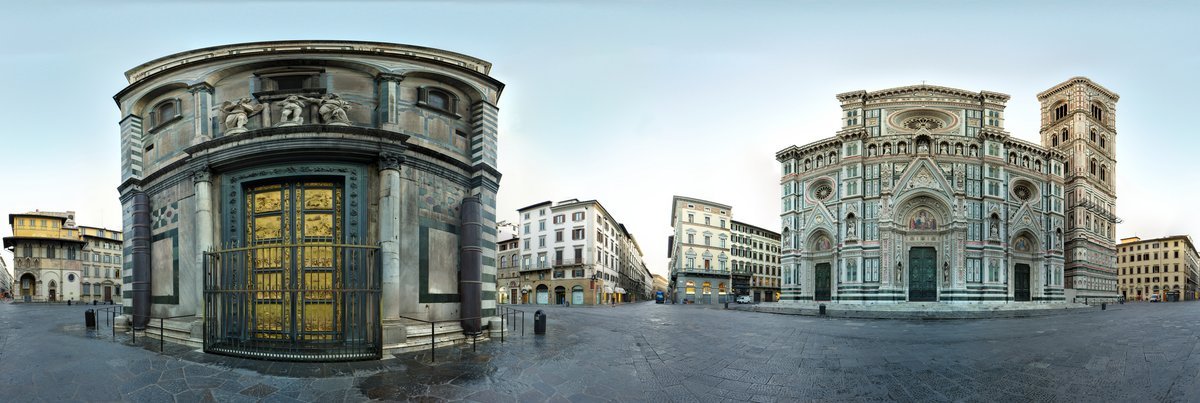 If you think Florence is only about the Duomo and the Uffizi, you're wrong. Piazza del Duomo is an open-air museum that holds centuries of art and architecture. Besides the majestic Cathedral of Santa Maria del Fiore, with its Brunelleschi dome towering 116 meters and the largest frescoed surface ever created, here you'll find Giotto's Campanile, 84.7 meters high, with 414 steps offering a breathtaking view of the city. Don't miss the Baptistery of San Giovanni, a Romanesque octagonal building from the 12th century, famous for Ghiberti's Gates of Paradise and the ceiling mosaics. And then there's the Museo dell'Opera del Duomo, which holds masterpieces like Michelangelo's Pietà and the cantorie by Donatello and Luca della Robbia. The square is also home to the Venerabile Arciconfraternita della Misericordia, founded in 1244 and still active, and historic palaces like Palazzo dei Canonici and Palazzo Strozzi di Mantova. Since 2009 it has been entirely pedestrianized, making it perfect for a stroll. I recommend climbing the dome or the bell tower at dawn to avoid queues and enjoy the soft light. Note: you need the Brunelleschi Pass to visit the monuments, but entry to the cathedral is free. Remember to cover your shoulders and knees: the dress code is strict. In short, Piazza del Duomo is not just the Duomo: it's a treasure chest of wonders waiting to be discovered.
Museo dell'Opera del Duomo: The Hidden Treasure of the Monumental Complex
- Piazza del Duomo, Firenze (FI)
- Open in Google Maps
- View on Google Images
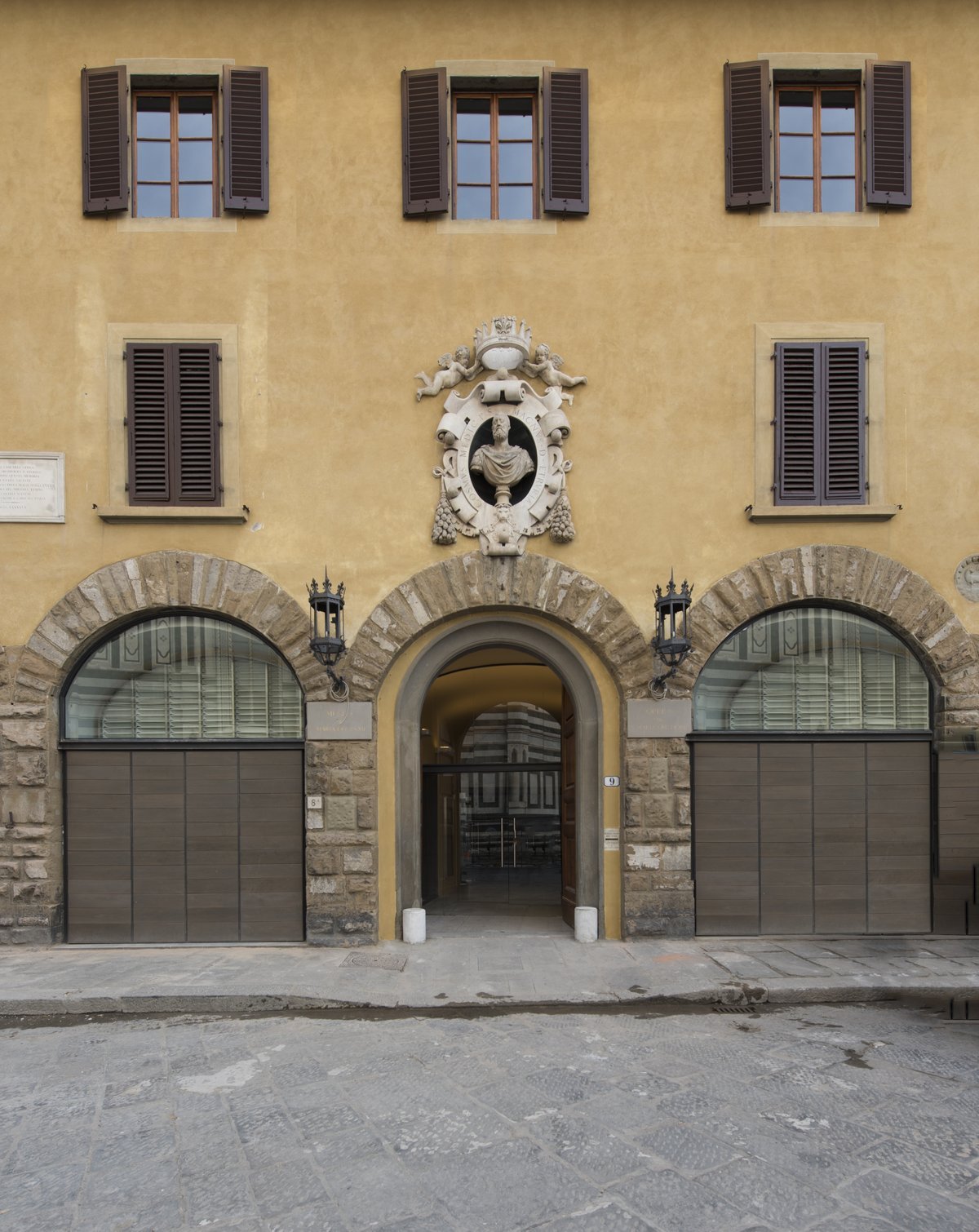 If you think you've seen everything in Florence after the Duomo and the Uffizi, think again. Just steps from the cathedral, the Museo dell'Opera del Duomo is a must for anyone who wants to truly understand the history of this complex. The museum reopened in 2015 after a restoration that expanded it to 6,000 square meters over three floors and 28 rooms, housing over 750 works. Here you'll find masterpieces that for centuries adorned the Duomo, Baptistery, and Campanile. Highlights include Ghiberti's Gates of Paradise and the North Door – yes, you can see them up close, without the queues. But the showstopper is Michelangelo's Bandini Pietà, where the artist portrayed himself as Nicodemus. Then there's Donatello's Penitent Magdalene, a wooden sculpture so expressive it seems about to speak. Unmissable is the Paradise Room with a 1:1 scale reconstruction of the old cathedral façade, dismantled in 1587. The ticket is cumulative (€15) and valid for 48 hours for all monuments of the Grand Museum of the Duomo. Open daily, usually until 7:00 PM (check times as they change). In short: a museum that lets you experience the grandeur of the Renaissance, away from the crowds.