Introduction
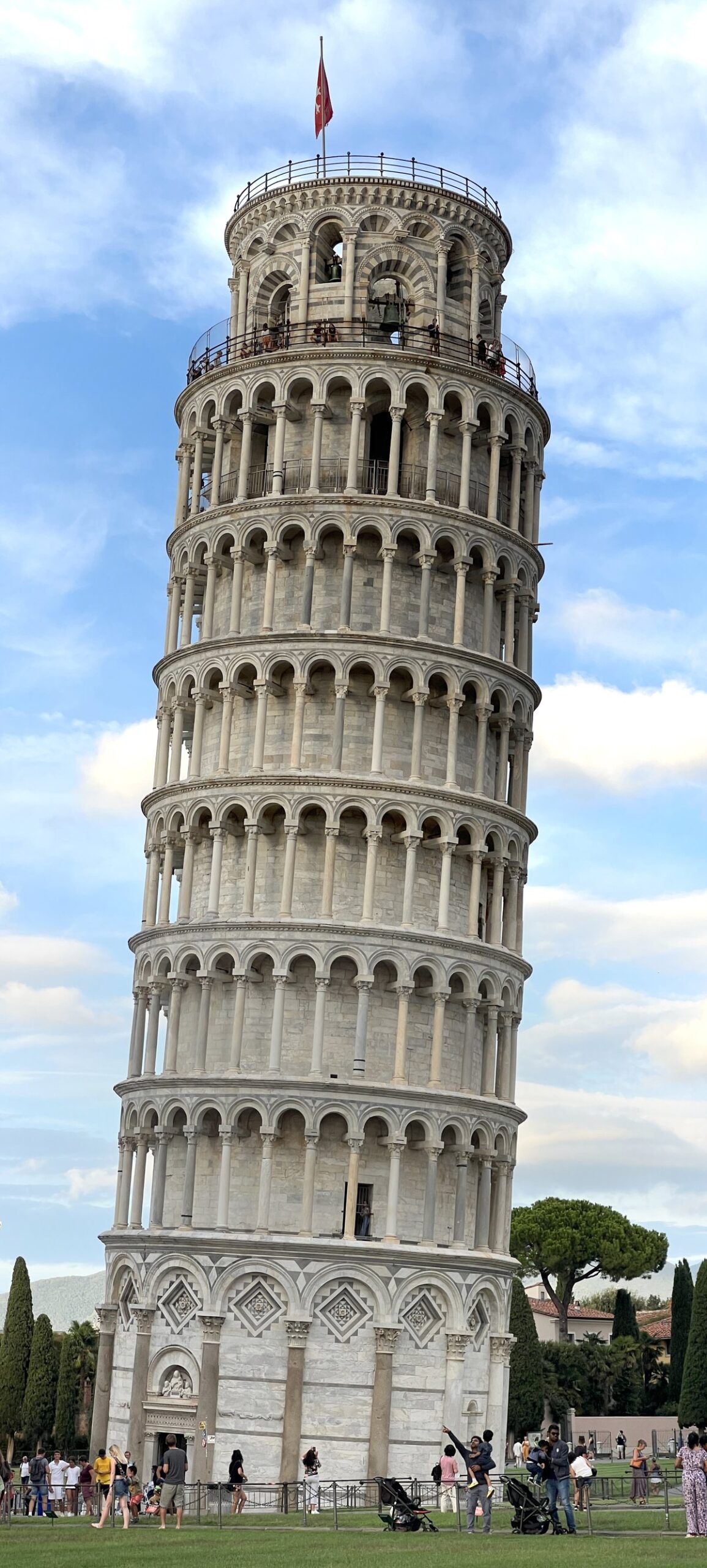
If there’s one monument that turned its imperfection into a global icon, it’s the Leaning Tower of Pisa. You see it from afar, leaning crookedly against the sky, and you can’t help but smile. Walking into Piazza dei Miracoli and facing it is a heart-stopping moment: white, elegant, yet so lopsided it seems like a prank of nature. The Duomo’s bell tower, with its 56 meters of height and a lean of almost 4 degrees, is the perfect subject for a souvenir photo – the one where you pretend to hold it up. But beyond its social media fame, the tower offers an authentic experience: climbing its 251 steps is like stepping back into the Middle Ages, among worn marbles and a view that stretches over all of Pisa.
Introduction
If there’s one monument that turned its imperfection into a global icon, it’s the Leaning Tower of Pisa. You see it from afar, leaning crookedly against the sky, and you can’t help but smile. Walking into Piazza dei Miracoli and facing it is a heart-stopping moment: white, elegant, yet so lopsided it seems like a prank of nature. The Duomo’s bell tower, with its 56 meters of height and a lean of almost 4 degrees, is the perfect subject for a souvenir photo – the one where you pretend to hold it up. But beyond its social media fame, the tower offers an authentic experience: climbing its 251 steps is like stepping back into the Middle Ages, among worn marbles and a view that stretches over all of Pisa.
Historical Background
The tower began construction on August 9, 1173, under the direction of architect Bonanno Pisano (though not all historians agree). Already by the third floor, in 1178, the clay soil gave way and the tower started to lean. Work stopped for a century, perhaps saving it from collapse. It resumed in 1275 under Giovanni di Simone and Giovanni Pisano, who tried to compensate for the tilt by building the upper floors with a slight counter-lean. The bell chamber was completed in the mid-14th century, and the seven bells were installed in 1372. In 1987, UNESCO declared the entire Piazza dei Miracoli a World Heritage Site. Between 1990 and 2001, an international committee stabilized the tower by excavating underground and lightening the structure, reducing the tilt from 5.5° to 3.97°.
Historical Background
The tower began construction on August 9, 1173, under the direction of architect Bonanno Pisano (though not all historians agree). Already by the third floor, in 1178, the clay soil gave way and the tower started to lean. Work stopped for a century, perhaps saving it from collapse. It resumed in 1275 under Giovanni di Simone and Giovanni Pisano, who tried to compensate for the tilt by building the upper floors with a slight counter-lean. The bell chamber was completed in the mid-14th century, and the seven bells were installed in 1372. In 1987, UNESCO declared the entire Piazza dei Miracoli a World Heritage Site. Between 1990 and 2001, an international committee stabilized the tower by excavating underground and lightening the structure, reducing the tilt from 5.5° to 3.97°.
Climbing the Tower: A Unique Experience
Climbing the Leaning Tower of Pisa is not like visiting an ordinary bell tower. The 251 marble steps (284 up to the bell chamber, but 251 open to the public) are narrow and worn: you feel the tilt as you climb, a slight dizziness that reminds you you’re in a special place. The spiral staircase is carved into the thickness of the wall, and every now and then small windows offer glimpses of the square. At the top, the bell chamber houses seven bells, each with its own name: the oldest, Pasquareccia, dates back to 1262. The view is breathtaking: the Cathedral, the Baptistery, the Camposanto, and beyond, the center of Pisa. The visit lasts a maximum of 30 minutes, but those minutes stay with you.
Climbing the Tower: A Unique Experience
Climbing the Leaning Tower of Pisa is not like visiting an ordinary bell tower. The 251 marble steps (284 up to the bell chamber, but 251 open to the public) are narrow and worn: you feel the tilt as you climb, a slight dizziness that reminds you you’re in a special place. The spiral staircase is carved into the thickness of the wall, and every now and then small windows offer glimpses of the square. At the top, the bell chamber houses seven bells, each with its own name: the oldest, Pasquareccia, dates back to 1262. The view is breathtaking: the Cathedral, the Baptistery, the Camposanto, and beyond, the center of Pisa. The visit lasts a maximum of 30 minutes, but those minutes stay with you.
The Secrets of the Lean
Why does the Tower lean? The answer lies in the ground: soft clay and sand, with foundations less than 4 meters deep. It began to tilt during construction, but the medieval architects didn’t lose heart: they tried to straighten it by building the upper floors slightly curved. Over the centuries, the lean increased, reaching 5.5° in 1993. Recent studies have shown that the same tilt made the tower exceptionally resistant to earthquakes, thanks to a dynamic interaction with the ground. The restorations from 1990 to 2001 removed soil from under the base and added lead counterweights, stabilizing it for at least 300 years. Today the tilt is about 3.97°, which can also be perceived from the floor of the nearby Cathedral.
The Secrets of the Lean
Why does the Tower lean? The answer lies in the ground: soft clay and sand, with foundations less than 4 meters deep. It began to tilt during construction, but the medieval architects didn’t lose heart: they tried to straighten it by building the upper floors slightly curved. Over the centuries, the lean increased, reaching 5.5° in 1993. Recent studies have shown that the same tilt made the tower exceptionally resistant to earthquakes, thanks to a dynamic interaction with the ground. The restorations from 1990 to 2001 removed soil from under the base and added lead counterweights, stabilizing it for at least 300 years. Today the tilt is about 3.97°, which can also be perceived from the floor of the nearby Cathedral.
Why Visit It
The Leaning Tower of Pisa is not just an Instagrammable photo. First: it is part of an extraordinary UNESCO complex – Piazza dei Miracoli with the Cathedral, Baptistery, and Camposanto is worth a trip on its own. Second: climbing the tower gives you a unique perspective over the medieval city and the Tuscan countryside, a view that no other monument offers. Third: the engineering story of how it was stabilized is fascinating, almost as much as its lean. And let’s face it, it’s an opportunity to take the photo of all time: pretending to hold it up is a ritual that unites generations. Don’t miss the chance to get the cumulative ticket (from €37) to visit all the monuments in the square.
Why Visit It
The Leaning Tower of Pisa is not just an Instagrammable photo. First: it is part of an extraordinary UNESCO complex – Piazza dei Miracoli with the Cathedral, Baptistery, and Camposanto is worth a trip on its own. Second: climbing the tower gives you a unique perspective over the medieval city and the Tuscan countryside, a view that no other monument offers. Third: the engineering story of how it was stabilized is fascinating, almost as much as its lean. And let’s face it, it’s an opportunity to take the photo of all time: pretending to hold it up is a ritual that unites generations. Don’t miss the chance to get the cumulative ticket (from €37) to visit all the monuments in the square.
When to Go
The best time to visit the Tower is at dawn or sunset. The raking light illuminates the white and green marble, creating an almost surreal effect, and the crowds are thinner. If you can, choose a weekday in low season (October or March). In summer, queues can be long, but booking online reduces the wait. Avoid the midday hours, not only because of the heat but also due to the tourists flooding the square. If you happen to have a cloudy day, don’t worry: the tower has a mysterious charm even in the rain, and the reflections on the wet stones are evocative.
When to Go
The best time to visit the Tower is at dawn or sunset. The raking light illuminates the white and green marble, creating an almost surreal effect, and the crowds are thinner. If you can, choose a weekday in low season (October or March). In summer, queues can be long, but booking online reduces the wait. Avoid the midday hours, not only because of the heat but also due to the tourists flooding the square. If you happen to have a cloudy day, don’t worry: the tower has a mysterious charm even in the rain, and the reflections on the wet stones are evocative.
Nearby
Piazza dei Miracoli is a concentration of wonders: the Duomo, a Pisan Romanesque masterpiece, the Baptistery, the largest in the world (with incredible acoustics), and the Monumental Cemetery, a historic cemetery with 14th-century frescoes. A few steps away, the center of Pisa offers the Lungarno with its palaces overlooking the Arno, and Piazza dei Cavalieri, the heart of student life. If you have time, visit the Museo dell’Opera del Duomo to admire the cathedral’s treasures. And for a sweet treat, look for an artisanal gelateria in the alleys behind the square.
Nearby
Piazza dei Miracoli is a concentration of wonders: the Duomo, a Pisan Romanesque masterpiece, the Baptistery, the largest in the world (with incredible acoustics), and the Monumental Cemetery, a historic cemetery with 14th-century frescoes. A few steps away, the center of Pisa offers the Lungarno with its palaces overlooking the Arno, and Piazza dei Cavalieri, the heart of student life. If you have time, visit the Museo dell’Opera del Duomo to admire the cathedral’s treasures. And for a sweet treat, look for an artisanal gelateria in the alleys behind the square.