
Bergamo Alta is a medieval gem suspended between history and breathtaking views. This one-day walking itinerary takes you to discover the Venetian walls, a UNESCO World Heritage site, with stops at Porta Sant’Agostino, the Polveriera, Porta San Lorenzo, Palazzo Medolago, the Fontanone Visconteo, and Palazzo Terzi. You will walk along bastions and tree-lined avenues, with panoramic views stretching from the Prealps to the Po Valley. Perfect for those who love history and want to explore at a leisurely pace. The route is mostly flat or with gentle slopes, suitable even for the less fit. In about half a day (3-4 hours), you can experience the unique atmosphere of Bergamo Alta, far from the traffic and hustle of the lower city. An experience that combines art, nature, and culture in a single itinerary, perfect for a day trip.
🗺️ Your trip at a glance
In short, this itinerary offers you a full immersion in the history of Bergamo Alta, among Venetian walls and breathtaking views. Ideal for an unforgettable day trip.
- Ideal for: city-breakers and history enthusiasts who want to discover Bergamo Alta on foot.
- Key highlights: UNESCO World Heritage, unique panoramic views, authentic stops, and a flat route.
- For whom: curious travelers, families with children, photography and culture lovers.
Itinerary stops
Stop no. 1
Porta Sant’Alessandro: the monumental entrance to the Venetian Walls
 We start our itinerary from Porta Sant’Alessandro, the western entrance to the upper city. Built between 1565 and 1575, this gate in gray and yellow stone was part of the Venetian defensive system, now a UNESCO heritage site. Its name recalls the ancient basilica dedicated to the patron saint, demolished in 1561 to make way for the walls. Nearby, a column marks its exact location. Climbing up here, you look out onto Colle Aperto, a square that offers a charming view of the plain and the city’s profile. The structure, with its three arches, protected an important aqueduct that supplied water to the cisterns. Note the Lion of Saint Mark on top, added in 1958. It’s the perfect starting point to breathe in atmospheres of bygone times: those coming from Como or Lecco, as in the past, find themselves immediately catapulted into history. From here, following the walls, a path full of surprises opens up.
- Largo di Porta Sant’Alessandro, Bergamo (BG)
- Open in Google Maps
- View on Google Images

You should go if…
Stop no. 2
San Marco Upper Powder Magazine
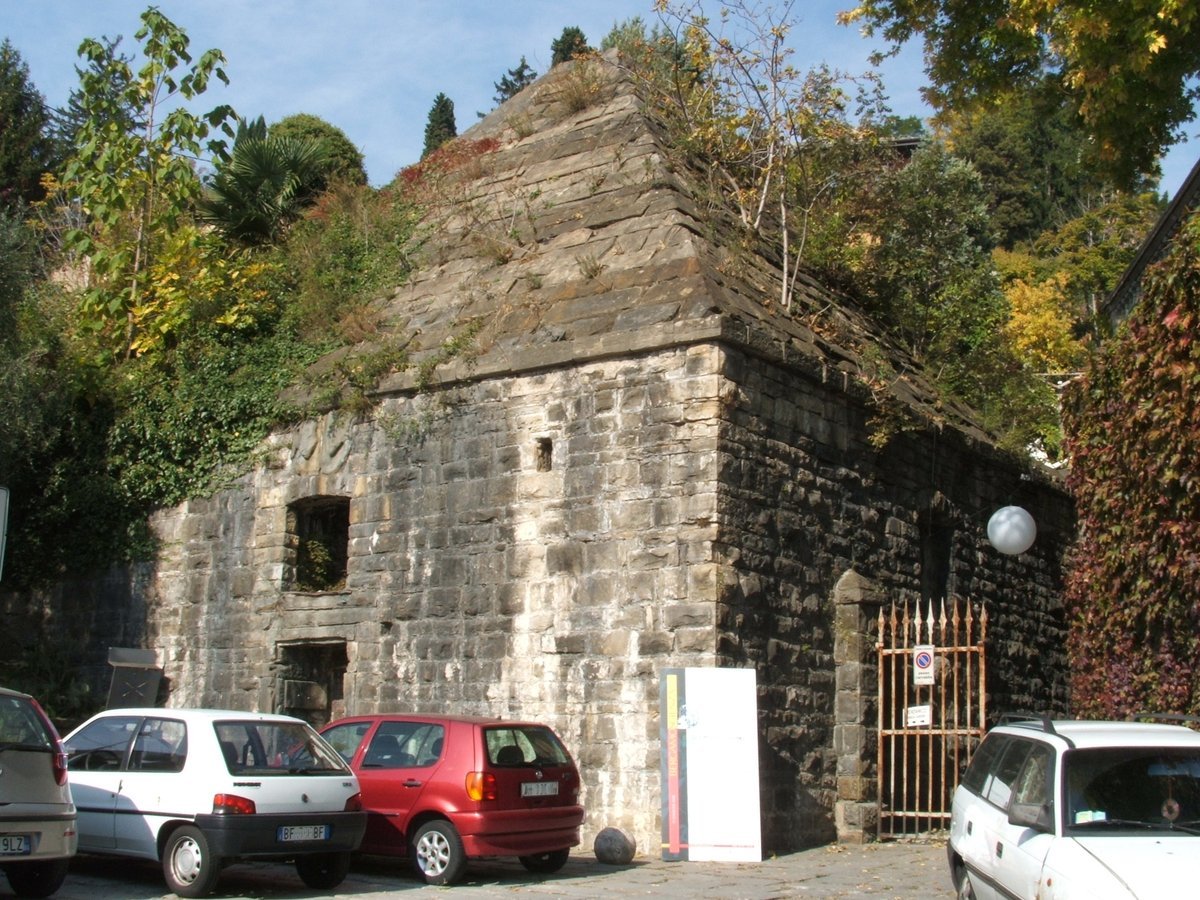 Just a stone’s throw from Porta Sant’Agostino, the San Marco Upper Powder Magazine is one of those places that makes you realize how serious Bergamo’s defenses were. Imagine a stone cube 2.5 meters thick, almost 15 meters high, with a lead covering to keep gunpowder safe from moisture. Built at the end of the 16th century by the Venetians, it stored ammunition away from the inhabited center after an explosion at the Rocca caused damage. Today, after a restoration that saved it from decay, the powder magazine is a small gem open to visitors: free admission and weekend openings from July to October. Inside, the brick vault and the coats of arms of the rectors tell centuries of history. And from the square in front, the view of the walls is a sight worth the stop. If you are passionate about military architecture, this is your corner of Bergamo.
- Via Roccolino, Bergamo (BG)
- Open in Google Maps
- View on Google Images
You should go if…
Stop no. 3
San Lorenzo Gate
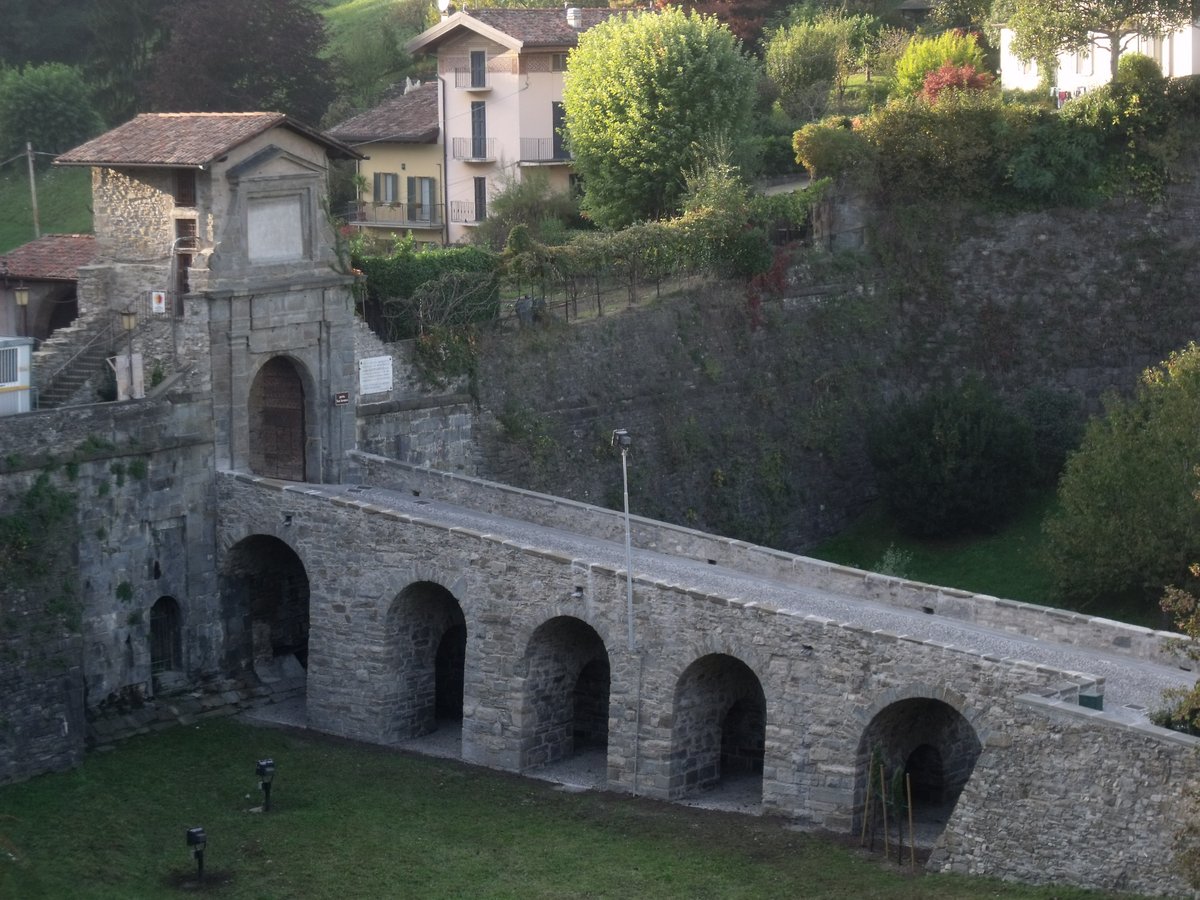 Continuing along the walls, you come to the smallest and oldest of the four gates: San Lorenzo Gate, also known as Garibaldi Gate. Built between 1561 and 1588, it takes its name from the church of San Lorenzo that was demolished to make way for the fortifications. Its history is curious: a few years after construction it was closed because deemed vulnerable, and only in 1627 was it reopened at a higher level thanks to protests from travelers who used it to enter the city. It was here that Giuseppe Garibaldi passed on June 8, 1859, liberating Bergamo from the Austrians. On the façade, a painted Lion of Saint Mark from 1915 is fading, and unlike the other gates, the original bas-relief is missing: it is the most rustic gate, the one intended for the common people. The access bridge in masonry with five arches is still the original from the 1600s, without restorations. Since 2017, it has been a UNESCO World Heritage site. If you arrive from the north, this is where you will enter the Upper Town, enjoying a breathtaking view of the plain.
- Via Giovanni Maironi da Ponte, Bergamo (BG)
- Open in Google Maps
- View on Google Images
You should go if…
Stop no. 4
Palazzo Medolago Albani
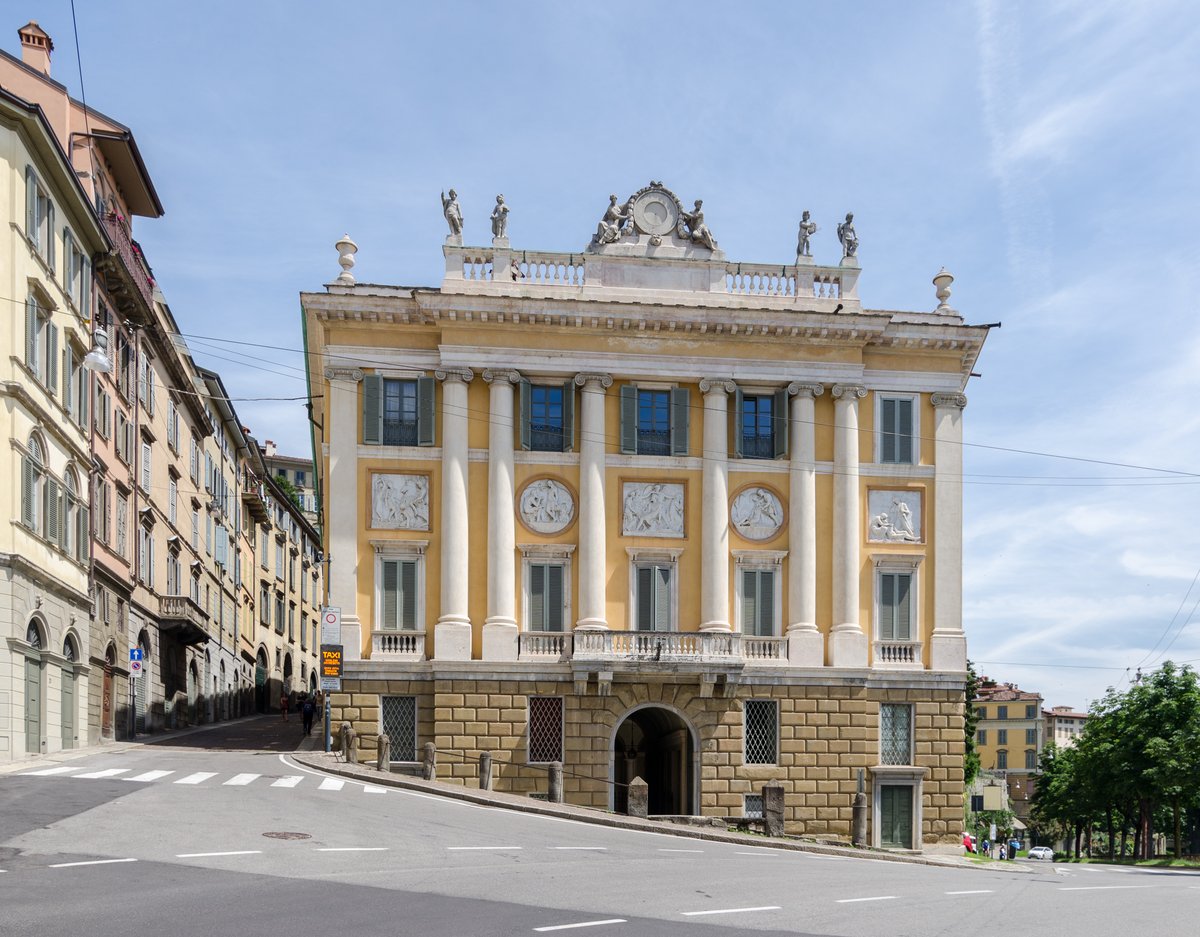 Continuing along the walls, the imposing Palazzo Medolago Albani suddenly appears, a neoclassical masterpiece designed by architect Simone Cantoni between 1770 and 1791. Originally owned by the Counts Vailetti, it was purchased in 1841 by Count Giacomo Medolago Albani, who turned it into one of the most elegant residences in Bergamo Alta. Here, in 1857, Emperor Franz Joseph and the famous Sissi stayed, and two years later Garibaldi and Vittorio Emanuele II met. The façade, with its high rusticated base and half-columns, is embellished with five Carrara marble medallions by Giovanni Maria Benzoni, depicting scenes from Jerusalem Delivered. Above, a balustrade with statues and a clock by Antonio Gelpi. Inside, unfortunately not accessible as it is still a private residence, lie the Green, Red, and Blue rooms, the Bonomini gallery, and a monumental staircase. From outside, however, it is worth pausing to admire the details and imagine the aristocratic life that once took place here.
- Viale delle Mura, Bergamo (BG)
- Open in Google Maps
- View on Google Images
You should go if…
Stop no. 5
Visconteo’s Great Fountain: Bergamo’s Secret Cistern
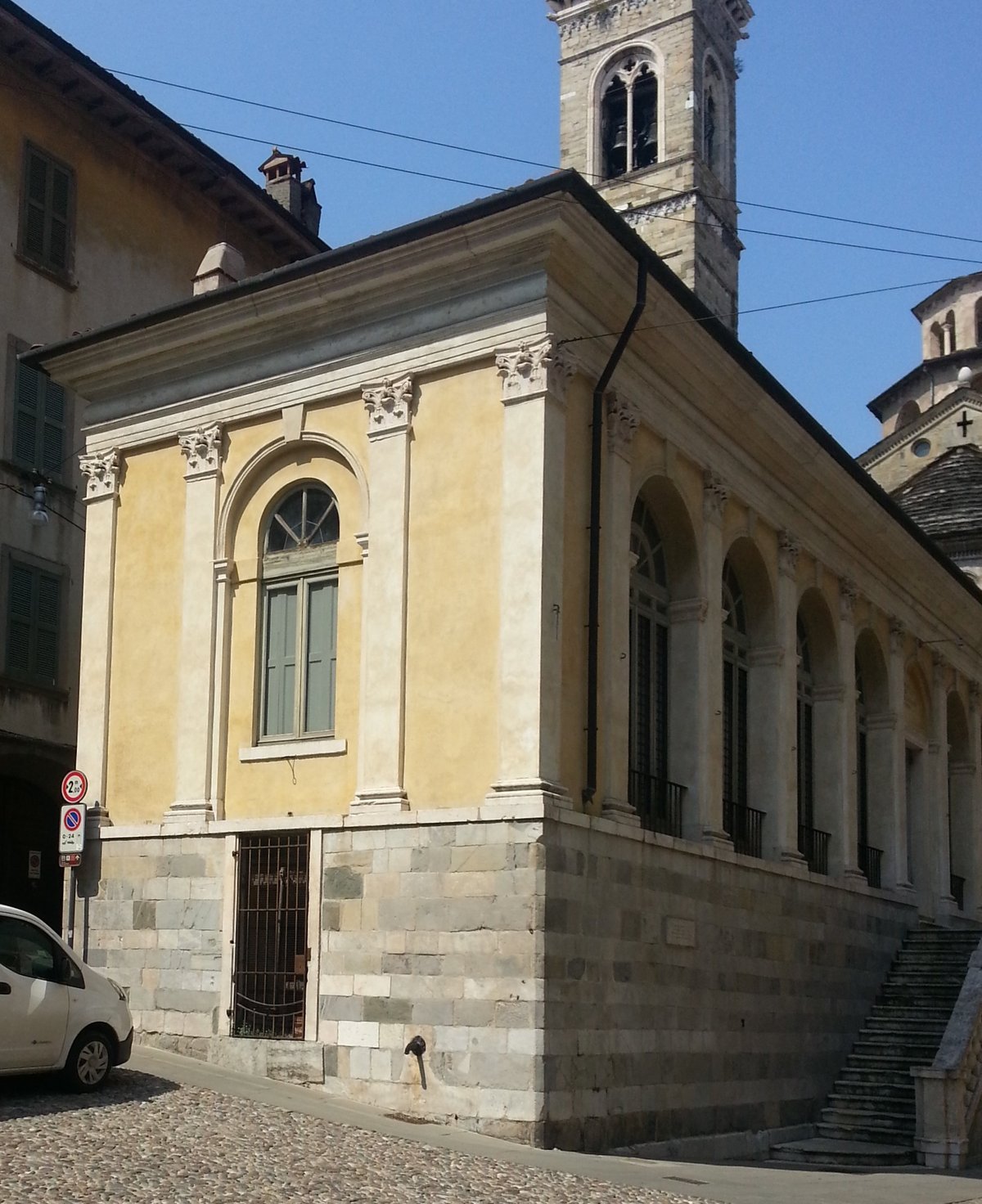 After Palazzo Medolago, the path leads you to Piazza Reginaldo Giuliani, where the Visconteo’s Great Fountain hides — one of the most impressive medieval cisterns in Italy. Built in 1342 by order of Luchino Visconti, this 3,000-cubic-meter tank ensured the city’s survival during sieges. Today, almost invisible at first glance, it is incorporated into the neoclassical building of the Ateneo di Scienze, Lettere e Arti. Take a look at the grate on the side: you can glimpse the cistern and the old pump, now silent. The contrast between the sober 18th-century facade and its ancient hydraulic function is striking. Don’t miss the 14th-century plaque with coats of arms and a Gothic inscription, telling the date and patrons. A place that speaks of power, water, and ingenuity, perfect for those who love the city’s hidden stories.
- Piazza Duomo, Bergamo (BG)
- Open in Google Maps
- View on Google Images
You should go if…
Stop no. 6
Palazzo Terzi
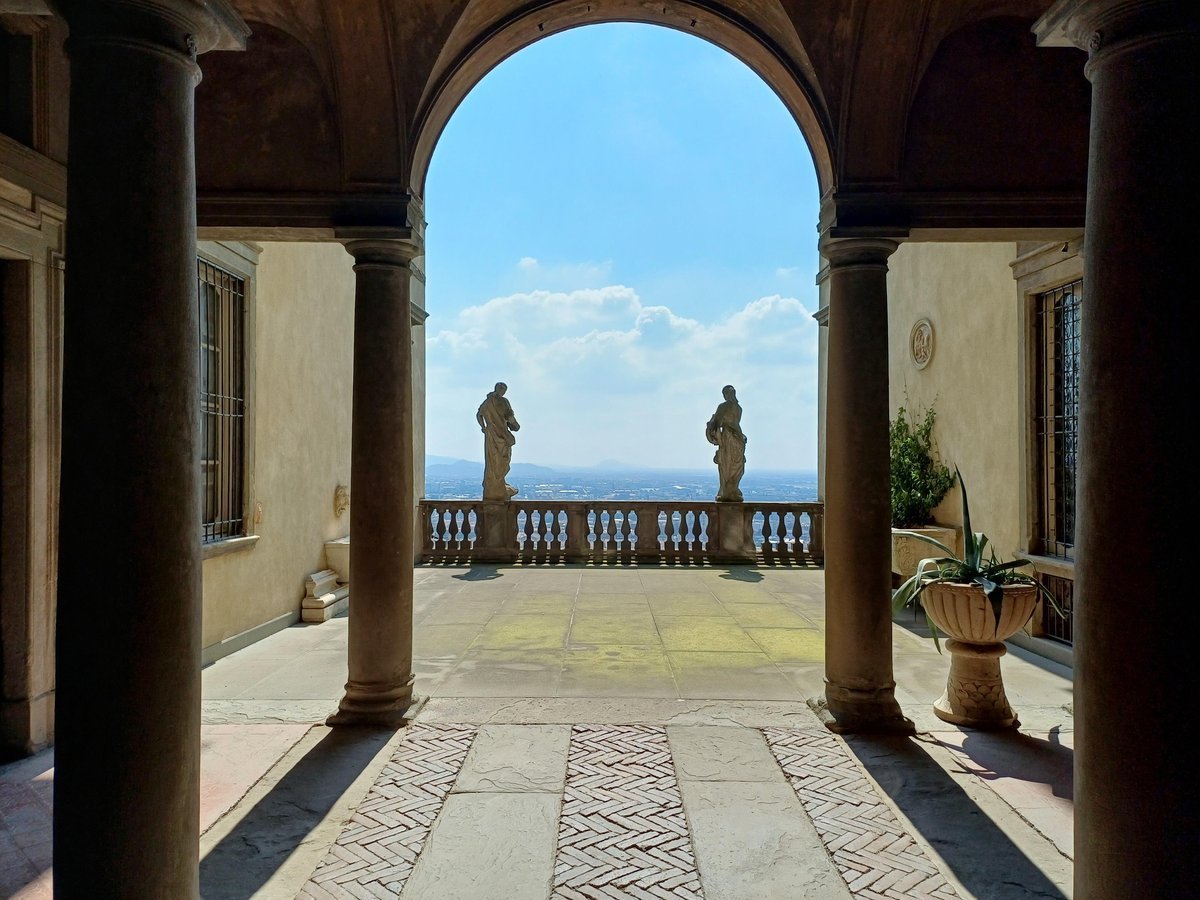 We close the day with a true gem: Palazzo Terzi, the most important Baroque palace in Bergamo. Overlooking an intimate little square, the palace is still inhabited by the Marchesi Terzi and retains all the charm of a historic residence. The interior is a succession of richly decorated rooms: the double-height Grand Salon, the Red Room with damask and frescoes by Storer, and the Mirror Room with an inlaid floor by Caniana. Not to be missed is the garden terrace, offering a breathtaking view of the lower city. Hermann Hesse, who stayed here in 1913, called it “one of the most beautiful corners in Italy.” Visits are only possible by appointment or on specific dates (€10 adults, €8 children): book well in advance. A dreamy finale for those who love discovering authentic places.
- Piazza Terzi, Bergamo (BG)
- http://www.palazzoterzi.it/
- Open in Google Maps
- View on Google Images
You should go if…

