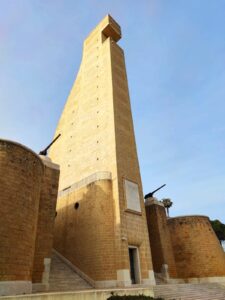
Discover Imperial Puglia with this 3-day itinerary in the province of Barletta-Andria-Trani, Italy's youngest province. A journey that will take you to explore the majestic Frederick II castles, including the famous Castel del Monte, a UNESCO World Heritage site, and the charming seaside villages overlooking the Adriatic Sea. You'll explore unique archaeological sites, such as Barletta's Infamous Column, and taste the authentic flavors of Apulian tradition. This Barletta Andria Trani province itinerary is perfect for those seeking culture, history and sea all in one go, with well-balanced stops and practical tips to optimize your time.
🗺️ Your trip at a glance
Three intense days of history, sea, and culture in the Barletta-Andria-Trani province. From the majestic Castel del Monte to the seaside villages of Trani and Barletta, through archaeological sites and local food and wine specialties. A complete itinerary that combines the essence of Imperial Puglia into an unforgettable journey.
- Ideal for: travelers seeking a complete cultural itinerary
with a mix of Frederick II history, archaeology, and seaside atmospheres.- Highlights: includes Castel del Monte UNESCO World Heritage site, three Frederick II castles,
seaside villages overlooking the Adriatic, and the archaeological site of Canne della Battaglia.- Perfect for those who: love medieval and ancient history, appreciate art
(De Nittis Pinacoteca), and seek a structured 3-day trip.
Itinerary stops
Day 1 - Stop no. 1
Castel del Monte
 Begin your journey through Imperial Apulia with Castel del Monte, the Federician jewel standing solitary on the hills of Andria. This extraordinary UNESCO monument, built by order of Frederick II of Swabia in the 13th century, immediately captivates with its perfect octagonal shape and distinctive geometric harmony. Every corner of the castle reveals unique architectural details, from elegant bifora windows to sculptures blending classical, Islamic, and Gothic elements. As you ascend through the building's two floors, you sense the atmosphere charged with symbolism that has fueled theories for centuries about its true purpose—perhaps an astronomical observatory, perhaps a place of meditation. The commanding position offers breathtaking panoramic views over the Murge, while the absence of defensive features hints at a more refined and intellectual purpose.
- Go to the page: Castel del Monte: Perfect Octagonal Architecture and Frederician Mysteries
- Strada Provinciale 8 di Castel del Monte, Andria (BT)
- https://aditusculture.com/esperienze/andria/musei-parchi-archeologici/castel-del-monte-andria
- Open in Google Maps
- View on Google Images

You should go if...
Day 1 - Stop no. 2
Barletta Castle
 Barletta Castle stands imposingly in the heart of the city, just steps from the seafront. Built at the behest of Frederick II of Swabia in the 13th century, this fortress represents one of the most significant examples of Frederick II military architecture in Apulia. Its massive structure with corner towers and original moat testifies to its strategic defensive function. Today it houses the Civic Museum with archaeological collections ranging from the Roman era to the Middle Ages, including artifacts from the nearby site of the Battle of Cannae. Climbing the walls offers a unique panoramic view of the historic center and the Adriatic Sea. The visit allows you to discover the different construction phases, from Norman origins to Angevin and Aragonese interventions, making the castle a true living historical stratification of the BAT province.
- Viale Manuti Giorgio, Barletta (BT)
- Open in Google Maps
- View on Google Images
You should go if...
Day 1 - Stop no. 3
De Nittis Picture Gallery
 After exploring the Frederick II fortress, we head to Via della Marra to immerse ourselves in the art of Giuseppe De Nittis, one of the foremost exponents of Italian Verismo. The gallery, housed in the 16th-century Palazzo della Marra, preserves over 200 works by the Barletta-born painter, including his famous pastel paintings and Parisian views that brought him international fame. The permanent collection also features autographed letters and personal documents revealing the artist's relationships with colleagues such as Degas and Manet. The exhibition rooms, arranged chronologically, allow visitors to follow De Nittis's stylistic evolution from his early Apulian landscapes to his luminist experiments. Particularly moving is the section dedicated to family portraits, where the psychological intensity of the subjects stands out. The visit concludes with an overview of the Macchiaioli movement, of which De Nittis was a forerunner in Italy.
- Go to the page: De Nittis Gallery: Over 200 Works in the Painter's House-Museum in Barletta
- Via della Marra, Barletta (BT)
- Open in Google Maps
- View on Google Images
You should go if...
Day 2 - Stop no. 1
Swabian Castle of Trani
 Leaving behind the elegance of the De Nittis Art Gallery, the second day of the Imperial Apulia itinerary leads us to Via Lionelli, 16 to discover the Swabian Castle of Trani. This imposing fortress, commissioned by Frederick II in 1233, rises majestically on the cliffs of the Adriatic Sea, dominating the harbor with its perfectly preserved military architecture. The massive corner towers and crenellated walls tell centuries of history, from Swabian to Angevin dominations. Inside, the porticoed courtyards and frescoed halls host temporary exhibitions and cultural events, while the underground prisons still preserve the inmates' carvings. Particularly evocative is the view from the patrol walkway, which embraces the entire Gulf of Trani with the Romanesque cathedral in the background. The visit allows you to understand the strategic importance of this outpost in controlling Adriatic trade routes.
- Go to the page: Swabian Castle of Trani: Frederick II's seaside fortress with panoramic views
- Via Lionelli 16, Trani (BT)
- https://www.beniculturali.it/mibac/opencms/MiBAC/sito-MiBAC/Luogo/MibacUnif/Luoghi-della-Cultura/visualizza_asset.html?id=150134&pagename=157031
- Open in Google Maps
- View on Google Images
You should go if...
Day 2 - Stop no. 2
Sant'Anna Synagogue Museum
 The second stop of day two takes us to the heart of Trani's ancient Jewish quarter, where the Sant'Anna Synagogue Museum stands as a silent witness to a community that profoundly shaped the city's history. This 13th-century building, located at Via la Giudea 24, represents one of the few perfectly preserved examples of medieval Jewish architecture in Southern Italy. The structure, converted into a Christian church after the expulsion of the Jews in the 16th century, now houses a museum that tells the story of Trani's Jewish community through archaeological finds and documents. The atmosphere within these walls is unique, with its cross vaults and ancient Hebrew inscriptions still visible. The visit allows you to understand how Trani was an important multicultural center during the Middle Ages, where Jews, Christians, and Muslims coexisted and traded. Particularly evocative is the mikveh, the Jewish ritual bath discovered during restoration work, which completes the discovery experience of this hidden gem.
You should go if...
Day 2 - Stop no. 3
Villa Comunale
 After visiting the Sant'Anna Synagogue Museum, we head towards the seafront to discover Trani's Villa Comunale, a public garden that serves as the city's green lung. Created in the 19th century, this space stretches along the coast with tree-lined avenues of palms and maritime pines that create a relaxing atmosphere. The location is strategic: from here, you can enjoy a spectacular view of the port and Trani Cathedral, with its characteristic bell tower standing out against the sky. The gardens are enhanced by flowerbeds, wrought-iron benches, and fountains, perfect for a refreshing break. Particularly evocative is the main avenue, which leads directly to the sea, offering unique glimpses of the Adriatic coast. Villa Comunale is not just a place for leisure but also a privileged vantage point to admire the city's architecture and the comings and goings of boats in the port.
- Trani (BT)
- Open in Google Maps
- View on Google Images
You should go if...
Day 3 - Stop no. 1
Archaeological Park of Cannae of the Battle
 The third day of our Imperial Apulia itinerary begins with a leap back in time to the Archaeological Park of Cannae of the Battle, located along the Decumanus Maximus in Barletta. This nationally significant archaeological site preserves traces of the ancient Daunian city and the famous clash between Romans and Carthaginians in 216 BC. Visible remains include the megalithic walls, dwellings of the ancient settlement, and the acropolis with its public buildings. The area extends across a hill overlooking the Ofanto valley, offering breathtaking panoramic views of the surrounding landscape. The visit allows you to understand the strategic importance of this place, which was the stage for one of the most decisive battles of antiquity. The path winds through well-preserved ruins, with explanatory panels guiding visitors through the site's history. Particularly fascinating is the area of the ancient settlement, where you can recognize the structures of houses and communal spaces of the Daunian community.
- Go to the page: Archaeological Park of Cannae: Roman Weapons and Views over the Ofanto Valley
- Decumanus Maximus, Barletta (BT)
- Open in Google Maps
- View on Google Images
You should go if...
Day 3 - Stop no. 2
Antiquarium of Cannae della Battaglia
 The Antiquarium of Cannae della Battaglia is an essential stop for those wanting to delve deeper into the ancient history of Apulia. Located within the archaeological park, this museum houses artifacts recovered from excavations of the ancient city of Cannae, famous for the 216 BC battle between the Romans and Carthaginians. The display cases showcase ceramics, coins, and everyday tools that tell the story of the inhabitants' lives before and after the epic clash. Educational panels help contextualize the findings, while graphic reconstructions show the evolution of the settlement. The visit is completed with a walk through the surrounding archaeological area, where you can admire the remains of the walls and dwellings. An experience that combines culture and landscape, perfect for concluding the itinerary in the province of Barletta-Andria-Trani.
- Go to the page: Antiquarium of Cannae Battlefield: Archaeological Museum with artifacts from the Bronze Age to the Middle Ages
- Strada Provinciale 19 Accesso a Canne della Battaglia, Barletta (BT)
- https://museipuglia.cultura.gov.it/musei/museo-e-parco-archeologico-canne-della-battaglia/
- Open in Google Maps
- View on Google Images
You should go if...
Day 3 - Stop no. 3
Bisceglie Castle
 The Bisceglie Castle marks the final stop on our itinerary through Italy's youngest province. This imposing fortress rises in the heart of the historic center, just steps from the harbor, and stands as one of the best-preserved examples of Norman-Swabian military architecture. Built between the 11th and 12th centuries, the castle features a quadrangular layout with corner towers and a majestic central keep. The perimeter walls still retain arrow slits and patrol walkways, offering an authentic glimpse into medieval life. From the terraces, visitors enjoy an exceptional panoramic view of the Adriatic Sea and the characteristic fishing village, with its white houses and cobblestone alleys. The strategic location, between the town center and the harbor, makes this fortress a privileged vantage point for understanding the city's urban development.
- Largo Castello, Bisceglie (BT)
- Open in Google Maps
- View on Google Images
You should go if...