
Discover the Viterbo province villages castles itinerary with this 3-day route that takes you to the heart of Tuscia. Start at Civita di Bagnoregio, the dying town perched among the gullies, then explore Bolsena with its crystal-clear lake and Monaldeschi Castle. On the second day, dedicate yourself to Caprarola with Palazzo Farnese and Sutri with its Roman amphitheater. End in style in Viterbo between the San Pellegrino district and the Terme dei Papi. A journey through history, nature, and good cuisine that will make you fall in love with this still authentic land.
🗺️ Your trip at a glance
Three days to explore the historical and architectural treasures of Tuscia Viterbese, from medieval castles to Renaissance palaces, immersed in authentic landscapes.
- Ideal for: travelers seeking history, architecture, and panoramas away from mass tourism.
- Highlights: a structured 3-day itinerary with 9 precise stops, including castles (Torre Alfina, Orsini), fortresses (Rocca dei Papi), Renaissance palaces (Farnese, Orsini), and unusual sites like Bomarzo's Sacred Wood.
- Perfect for those who: appreciate organized routes with maps, historical details for each stop, and discovering well-preserved noble residences and medieval fortresses.
Itinerary stops
Day 1 - Stop no. 1
Castle of Torre Alfina
 The Castle of Torre Alfina stands majestically at the start of our itinerary through the medieval villages of Tuscia. This fortified complex, located in the territory of Acquapendente, represents one of the best-preserved examples of castle architecture in northern Lazio. The current structure mainly dates back to the 19th century, when it was radically renovated in neo-Gothic style by Marquis Edoardo Cahen, who transformed the ancient medieval fortress into a noble residence. Today, the castle overlooks the village below with its crenellated towers and imposing keep, offering a panoramic view that stretches all the way to Mount Amiata. Access to the inner courtyard is free and allows visitors to admire the architecture and decorative details up close, while the interiors are only open for special occasions. The castle is surrounded by a vast centuries-old park that invites short walks among ancient oaks and shaded paths.
- Via di Castello, Acquapendente (VT)
- https://www.castellotorrealfina.com/
- Open in Google Maps
- View on Google Images

You should go if...
Day 1 - Stop no. 2
Basilica of Saint Christina
 The Basilica of Saint Christina in Bolsena stands on Via Mazzini, a strategic location for those exploring the first day of the 'Borghi e Castelli della Tuscia' itinerary. This sanctuary is famous for the Eucharistic miracle of 1263, when during a Mass the host began to bleed, an event that inspired the establishment of the Feast of Corpus Christi. Inside, visitors can admire the early Christian catacombs where the martyr Christina was buried, with frescoes and crypts that tell centuries of devotion. The Romanesque structure, with its simple facade, contrasts with the history-rich interiors, including the miracle stone preserved in an urn. Perfect for a reflective stop, the basilica also offers a view of Lake Bolsena, adding a touch of tranquility to the journey.
- Via Mazzini, Bolsena (VT)
- Open in Google Maps
- View on Google Images
You should go if...
Day 1 - Stop no. 3
Rocca dei Papi
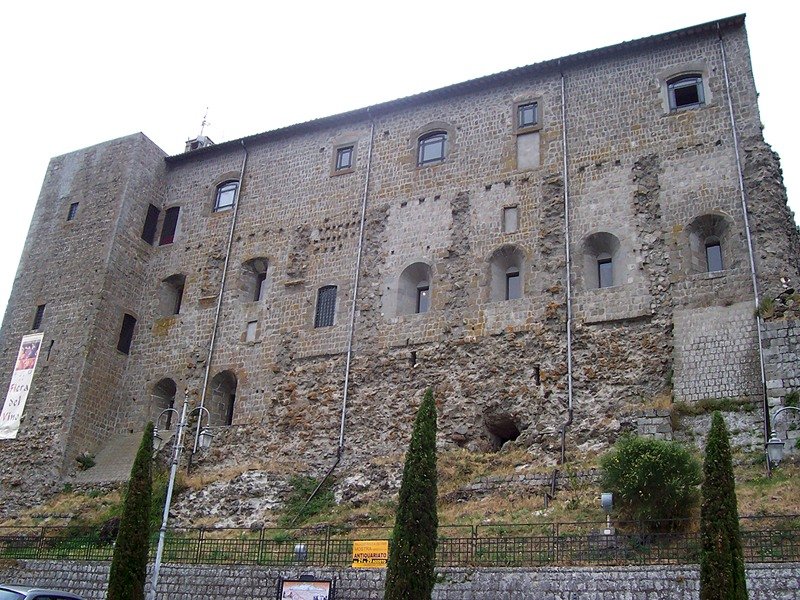 The Rocca dei Papi in Montefiascone rises imposingly on Via della Rocca, offering one of the most spectacular panoramic views of Lake Bolsena. This medieval fortress, built in the 14th century as a summer residence for the popes, still preserves its massive walls and towers that tell centuries of history. Climbing to the top, you can glimpse the entire lake basin and the surrounding villages, a sight that alone makes the visit worthwhile. Inside, the spaces once used for defensive and residential purposes evoke the era when popes like Urban V stayed here. The strategic location makes it a privileged observation point, perfect for those seeking a blend of military architecture and unforgettable landscapes. Ideal as the third stop of the day, after the Basilica of Santa Cristina in Bolsena, it offers a moment of contemplation before continuing the itinerary.
- Via della Rocca, Montefiascone (VT)
- Open in Google Maps
- View on Google Images
You should go if...
Day 2 - Stop no. 1
Sacred Wood
 The Sacred Wood of Bomarzo, also known as the Park of the Monsters, presents itself as a truly unique experience. Created in the 16th century at the behest of Prince Pier Francesco Orsini, this green space conceals over thirty stone sculptures that emerge from the vegetation with grotesque and allegorical forms. Among the most iconic works stand out the Orcus, a gigantic head carved into the rock with a gaping mouth, and the Leaning House, which defies the laws of gravity. The path winds through war elephants, dragons, and nymphaea, each loaded with hermetic meanings tied to Renaissance culture. Visiting this place means immersing oneself in an atmosphere suspended between dream and reality, far from the traditional canons of Italian gardens.
You should go if...
Day 2 - Stop no. 2
Orsini Palace
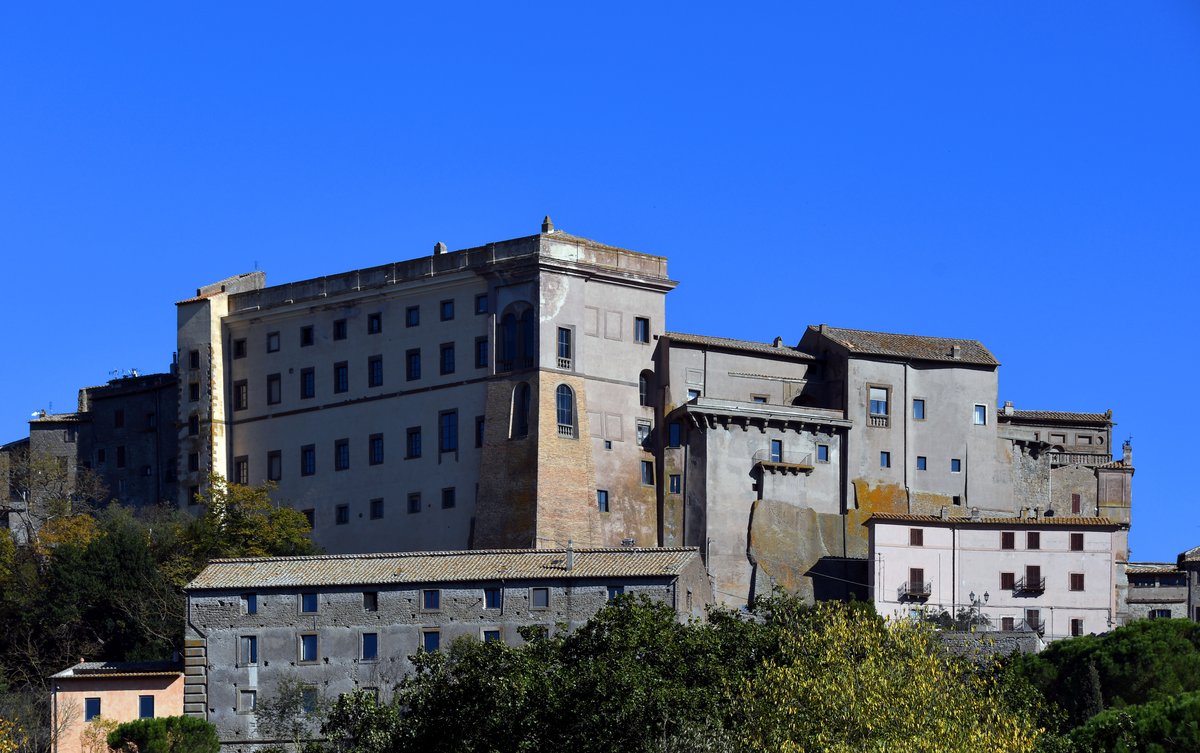 The second day of the journey through the villages and castles of Tuscia continues with Orsini Palace, located in the heart of Bomarzo along Via del Castello. This imposing Renaissance building, constructed between the 15th and 16th centuries by the powerful Orsini family, represents one of the finest examples of aristocratic architecture in the Viterbo area. The structure maintains the appearance of a medieval fortress with its crenellated towers, yet already displays typical Renaissance elements in its internal courtyards and decorations. Today it houses the Bomarzo town hall, thus maintaining its public function. From its terraces, visitors can enjoy an exceptional panoramic view of the Tiber Valley and the Cimini Mountains, allowing them to understand the strategic importance of this location in controlling the territory.
- Via del castello, Bomarzo (VT)
- Open in Google Maps
- View on Google Images
You should go if...
Day 2 - Stop no. 3
Farnese Palace
 After leaving Bomarzo and its Orsini Palace, the third stop of the second day takes us to Caprarola, where the imposing Farnese Palace rises along Via Antonio da Sangallo. Designed by Antonio da Sangallo the Younger and completed by Jacopo Barozzi da Vignola in the 16th century, this building is an exceptional example of Mannerist architecture. Its pentagonal layout and majestic helical spiral staircase, known as the Royal Staircase, are distinctive elements that immediately capture attention. Inside, the frescoes by Taddeo and Federico Zuccari tell stories of the Farnese family, while the Italian-style gardens offer a peaceful retreat. Visiting this palace means immersing yourself in the grandeur of the Renaissance and understanding the power of one of Italy's most influential dynasties.
- Go to the page: Palazzo Farnese in Caprarola: Pentagonal Architecture and Double Helix Staircase
- Via Antonio da Sangallo, Caprarola (VT)
- Open in Google Maps
- View on Google Images
You should go if...
Day 3 - Stop no. 1
Orsini Castle
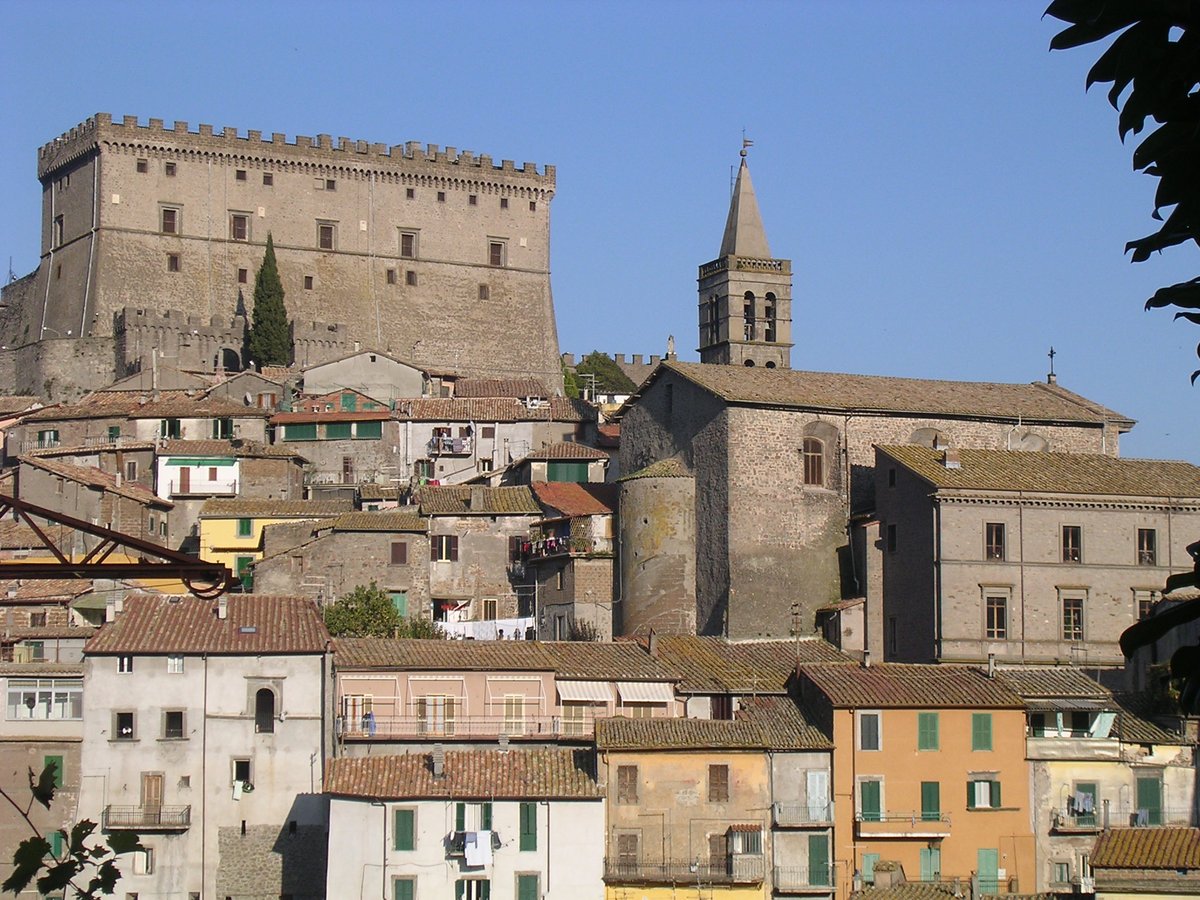 The third day of our "Tuscia's Villages and Castles" itinerary begins with a visit to Orsini Castle in Soriano nel Cimino, located on Via Bastione. This imposing manor, built in the 13th century by the powerful Orsini family, rises on a peperino spur dominating the entire village. Its medieval military architecture is perfectly preserved, with crenellated towers, massive walls, and a keep offering panoramic views over the chestnut-covered hills. Inside, the courtyards and halls tell centuries of history, from the struggles between Guelphs and Ghibellines to the papal period. Climbing up to the castle means following a path that winds through medieval alleys, offering suggestive glimpses of Soriano and the surrounding countryside. This fortress represents one of the best-preserved examples of military architecture in Tuscia, a place where history can be felt in every stone.
- Via Bastione, Soriano nel Cimino (VT)
- Open in Google Maps
- View on Google Images
You should go if...
Day 3 - Stop no. 2
Sasso Naticarello
 Leaving the crowded villages behind, the third day of the itinerary leads to Sasso Naticarello, a massive erratic boulder located along the Faggeta Provincial Road in Soriano nel Cimino. This block of peperino, approximately 4 meters high, stands out for its rounded shape and smooth surface, shaped by glaciers during the Quaternary era. Its isolated position, surrounded by ancient beech trees, creates an almost mystical atmosphere, enhanced by local legends that consider it a gathering point for witches and spirits. Access is easy, with a short walkable stretch from the road, ideal for a refreshing stop. Observing the rock up close, one can notice engravings and marks left by time, while the surrounding vegetation provides shade and coolness, making the place perfect for a contemplative break before continuing towards Lake Bolsena.
- Strada provinciale faggeta, Soriano nel Cimino (VT)
- Open in Google Maps
- View on Google Images
You should go if...
Day 3 - Stop no. 3
Santacroce Altieri Palace
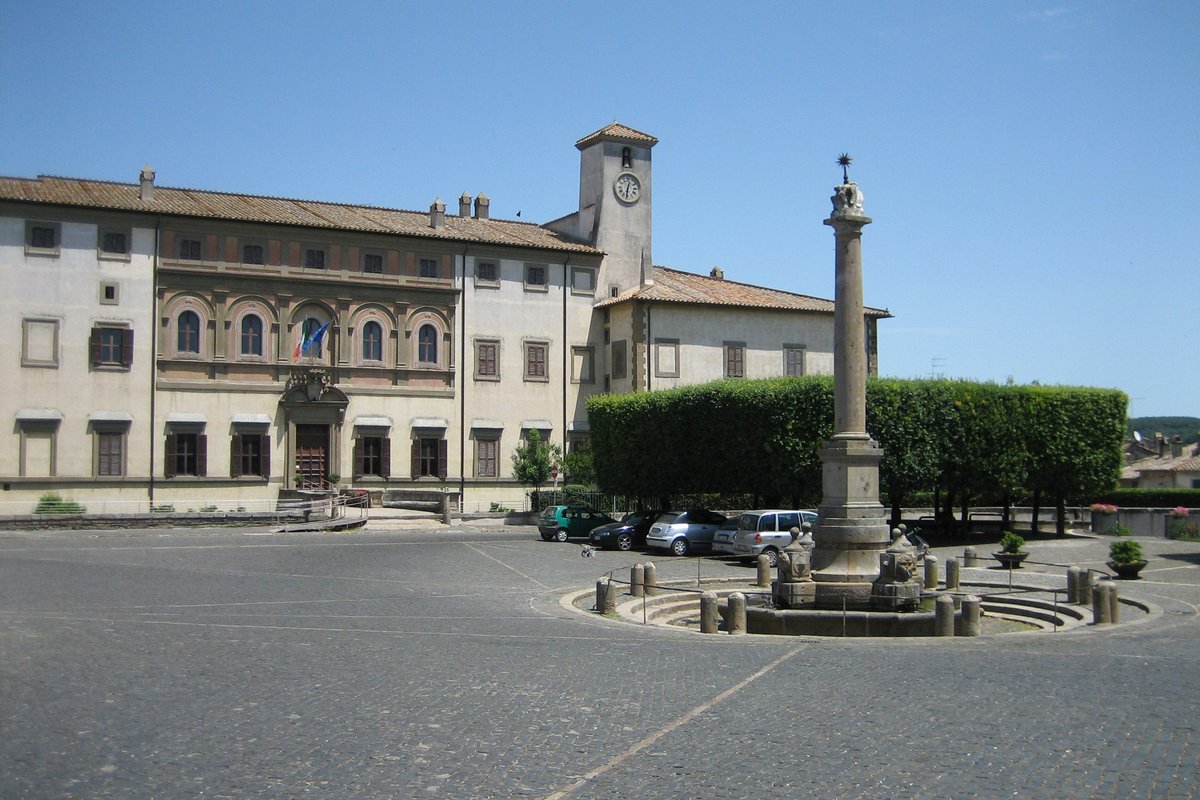 Concluding the third day of the itinerary, the Santacroce Altieri Palace in Oriolo Romano stands as a sixteenth-century architectural masterpiece dominating the historic center. Commissioned by Giorgio Santacroce, the palace features a sober facade with peperino-framed windows and a monumental portal. Inside, the rooms preserve traces of frescoes and coffered ceilings, while the central courtyard offers an intimate atmosphere. Its location along Via delle Olmate makes it easily accessible during your stroll through the village, allowing you to appreciate the architectural details that narrate centuries of local history. This building, less known compared to other noble residences in Tuscia, represents a well-preserved example of Renaissance aristocratic dwelling, ideal for those seeking authenticity without the crowds.
- Via delle Olmate, Oriolo Romano (VT)
- https://polomusealelazio.beniculturali.it/
- Open in Google Maps
- View on Google Images
You should go if...


