
🧭 What to Expect
- Ideal for: history enthusiasts, families, and nature lovers.
- Highlights: authentic villages, medieval castles, waterfalls, museums.
- Recommended: in spring and autumn for mild weather.
- Don't miss: the Upper Town of Bergamo and the Serio Waterfalls.
- Activities: hiking, cultural visits, food and wine.
Events nearby


If you think Bergamo is only the Upper Town, you are wrong. The province of Bergamo is a concentration of medieval villages, castles, and nature. In this article, I'll take you to discover the must-see places: from the Accademia Carrara with its masterpieces, to the Basilica of Santa Maria Maggiore and the Colleoni Chapel in the historic center. Outside the city, the Malpaga Castle projects you into the Renaissance, while Cornello dei Tasso is a village suspended in time. For nature lovers, the Serio Waterfalls in Valbondione are a spectacle, and the Le Cornelle Wildlife Park is perfect for families. There are also castles like that of the Counts of Calepio, the Rocca Viscontea, and the Castle of San Vigilio. For hikers, Monte Gioco offers breathtaking views. An itinerary that ranges from north to south, with stops that tell centuries of history and natural beauty.
Overview
- Accademia Carrara: a journey through masterpieces and patronage
- Accademia Carrara: a journey through masterpieces and patronage
- Basilica of Santa Maria Maggiore: Between Romanesque and Baroque
- Colleoni Chapel: A Renaissance Jewel in the Heart of Bergamo
- Malpaga Castle: The Home of Condottiero Colleoni
- Cornello dei Tasso: A Leap into the Middle Ages of Village and Post
- Serio Waterfalls: The Spectacle of Water Falling from the Sky
- San Vigilio Castle: A Medieval Jewel with Breathtaking Views
- Le Cornelle Wildlife Park: A Dive into Nature with Animals and Education
- Castle of the Counts Calepio: History and Charm Between Bergamo and Val Calepio
- Rocca Viscontea: A Dive into Medieval History
- Monte Gioco: A 360° Panorama of Val Serina
Itineraries nearby


Accademia Carrara: a journey through masterpieces and patronage
- Go to the page: Accademia Carrara: Masterpieces from Raphael to Botticelli in Bergamo
- Via San Tomaso 82, Bergamo (BG)
- https://www.lacarrara.it/
- Open in Google Maps
- View on Google Images
- info@lacarrara.it
- +39 035 234396
 If you're in Bergamo, Accademia Carrara is a must-visit. Founded in 1796 by Count Giacomo Carrara, this art gallery is known as the museum of Italian collecting: each work is the result of donations from patrons who wanted to share their passion. The exhibition layout, renewed in 2023, unfolds across sixteen rooms and guides you from the Gothic period to the 19th century, with over three hundred works on display. Highlights include Raphael's San Sebastiano, Pisanello's Portrait of Leonello d'Este, and Madonnas by Mantegna and Bellini. The Renaissance section is a dive into Venetian and Lombard painting, with works by Lorenzo Lotto and Giovan Battista Moroni, while the 19th-century section will surprise you with Canaletto and Francesco Hayez. But Carrara is not just paintings: it also has a collection of drawings, prints, and a historic library. As of 2024, the visit is enriched by the PwC Gardens, a free 3000 sqm green space with a bistrot, perfect for a break after the tour. The museum is open Tuesday to Sunday (hours vary, last entry 45 minutes before closing). Full ticket costs €10, but free for under 18s. In short, a place that combines art, history, and an unexpected corner of nature.
Accademia Carrara: a journey through masterpieces and patronage
- Go to the page: Accademia Carrara: Masterpieces by Raphael and Botticelli in Bergamo Alta
- Via San Tomaso 82, Bergamo (BG)
- https://www.lacarrara.it/
- Open in Google Maps
- View on Google Images
- info@lacarrara.it
- +39 035 234396
If you're in Bergamo, Accademia Carrara is a must-visit. Founded in 1796 by Count Giacomo Carrara, this art gallery is known as the museum of Italian collecting: each work is the result of donations from patrons who wanted to share their passion. The exhibition layout, renewed in 2023, unfolds across sixteen rooms and guides you from the Gothic period to the 19th century, with over three hundred works on display. Highlights include Raphael's San Sebastiano, Pisanello's Portrait of Leonello d'Este, and Madonnas by Mantegna and Bellini. The Renaissance section is a dive into Venetian and Lombard painting, with works by Lorenzo Lotto and Giovan Battista Moroni, while the 19th-century section will surprise you with Canaletto and Francesco Hayez. But Carrara is not just paintings: it also has a collection of drawings, prints, and a historic library. As of 2024, the visit is enriched by the PwC Gardens, a free 3000 sqm green space with a bistrot, perfect for a break after the tour. The museum is open Tuesday to Sunday (hours vary, last entry 45 minutes before closing). Full ticket costs €10, but free for under 18s. In short, a place that combines art, history, and an unexpected corner of nature.Basilica of Santa Maria Maggiore: Between Romanesque and Baroque
- Go to the page: Basilica of Santa Maria Maggiore: Florentine Tapestries and Baroque Stuccoes in Bergamo Alta
- Piazza Padre Reginaldo Giuliani, Bergamo (BG)
- Open in Google Maps
- View on Google Images
 Stepping into the Basilica of Santa Maria Maggiore is like diving into centuries of history. Built starting in 1137 as a vow to the Madonna against the plague, this church is a gem blending different styles. From the outside, it appears Romanesque-Lombard, but without a main façade: there are four side entrances. The most famous is the Porta dei Leoni rossi (north) with its Verona marble lions, a work by Giovanni da Campione from 1353. On the other side, the Porta dei Leoni bianchi in Candoglia marble. Yes, that's right: no main entrance, but walking around the church reveals details like the ancient medieval measures carved into the wall (a cavezzo of 2.63 m and a braccio of 53.1 cm).
As soon as you cross the threshold, the interior takes your breath away. From Romanesque sobriety to a Baroque extravaganza: gilded stuccoes, frescoes, Flemish and Tuscan tapestries depicting the life of Mary. The highlight? The intarsia wooden choir designed by Lorenzo Lotto and executed by Giovan Francesco Capoferri between 1522 and 1555: a marvel of inlays portraying biblical scenes with incredible precision. Then the tombs: here rest Gaetano Donizetti (monument by Vincenzo Vela) and his teacher Simone Mayr, a pilgrimage for opera lovers. Also noteworthy is the Baroque confessional by Andrea Fantoni (1704) and the pipe organ from 1915. For the curious, there's the Treasury Museum in the matronea, open weekend afternoons.
Practical info: admission costs €5 (free for residents and during services). Hours: winter Mon-Fri 9-12:30 and 14:30-17, Sat until 18, Sun 9-12:45 and 15-18; summer daily 9-12:30 and 14:30-18. Masses are at 10 on weekdays and at 11 and 12:15 on holidays (with the Cappella Musicale). Oh, the octagonal baptistery? It's outside, in Piazza Duomo, moved in 1898. A special feature: a tactile bronze model (1:100) is available for visually impaired visitors.
Colleoni Chapel: A Renaissance Jewel in the Heart of Bergamo
- Piazza Padre Reginaldo Giuliani, Bergamo (BG)
- Open in Google Maps
- View on Google Images
 Overlooking Piazza Duomo, the Colleoni Chapel is one of those places that takes your breath away. Step inside and you instantly understand why it’s considered the masterpiece of Bergamo’s Renaissance. Commissioned by Bartolomeo Colleoni in 1472 from Antonio Amadeo, it was built by demolishing the old sacristy of Santa Maria Maggiore—a power move that stirred quite a debate at the time.
The facade is a riot of white and red marbles, with geometric patterns that look almost like embroidery. Inside, the mood shifts: frescoes by Giambattista Tiepolo (1733) adorn the pendentives and lunettes, while Colleoni’s gilded wooden equestrian statue commands the scene. Attributed to Sisto di Norimberga, it strikes you with its proud expression. Just below, the marble sarcophagus with Amadeo’s reliefs holds the condottiero’s remains—but only since 1969 has it been known that the real tomb lies in a secret crypt.
Folklore says that touching the coat of arms on the iron gate at midnight brings good luck—I haven’t tried it, but I see plenty of people rubbing it. If you’re here, don’t miss the tomb of his daughter Medea, added in 1842, and the carved wooden pews. The chapel is open Tuesday to Sunday: from March to October 9:30–12:30 and 2:00–6:30 PM; in winter it closes at 4:30 PM. Admission is free, but leaving a donation is a kind gesture.
Malpaga Castle: The Home of Condottiero Colleoni
- Via Guglielmo Marconi, Malpaga (BG)
- http://www.castellomalpaga.it/
- Open in Google Maps
- View on Google Images
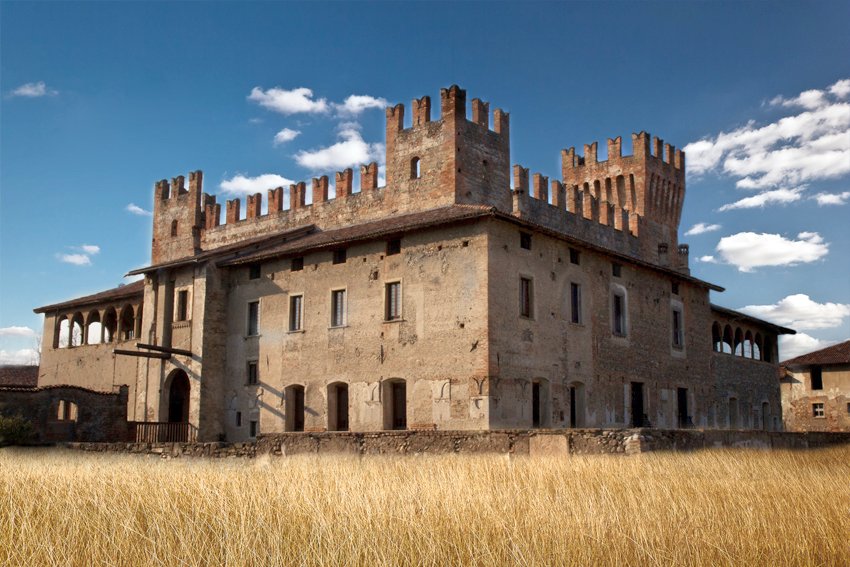 If you think of castles in Bergamo, Malpaga Castle is one that sticks in your mind. Not just for its massive silhouette rising from the plain, surrounded by a moat still full of water, but for the history it holds. We are in Cavernago, a few kilometers from Bergamo, and here in 1456 the condottiero Bartolomeo Colleoni decided to set up camp. He bought the estate for 100 gold ducats and turned it into a noble residence befitting a captain general of the Serenissima. From the outside it looks like an impregnable fortress – with two rings of walls and two moats – but inside it's a whole different world. The frescoes are the true treasure: in the banquet hall, Romanino (or someone like him) painted the visit of King Christian I of Denmark in 1474, with processions, tournaments, and banquets. In the courtyard, instead, the Battle of Riccardina. Upstairs, rooms with 17th-century allegories and Colleoni's bedroom, without a fireplace (for safety) and with barred windows. Today the castle is privately owned but open to visitors. You can tour with a guide or audioguide (tickets from €12 to €18). And if you want a special experience, there are candlelit visits or historical dinners with costumed servants. Also unmissable is the Locanda dei Nobili Viaggiatori, where you can eat Bergamo dishes with views of the ancient residence.
Cornello dei Tasso: A Leap into the Middle Ages of Village and Post
- Go to the page: Cornello dei Tasso: An Intact Medieval Village and the Tasso Postal Museum
- Camerata Cornello (BG)
- Open in Google Maps
- View on Google Images
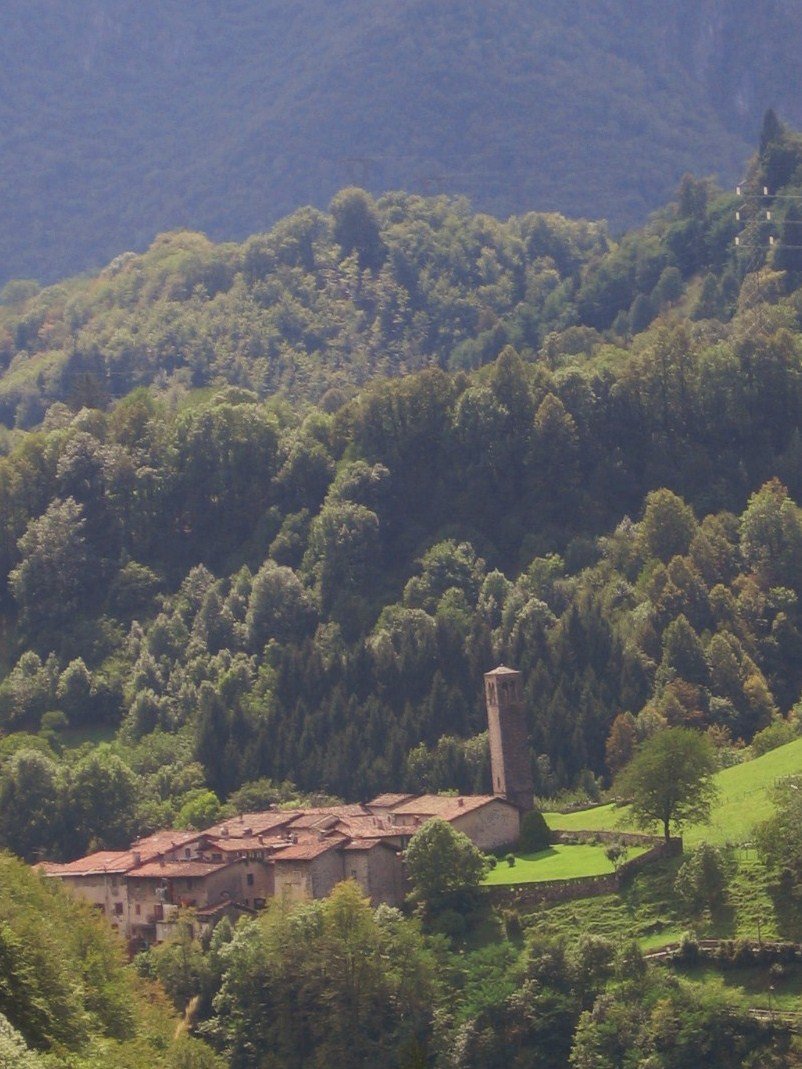 If you're looking for a village that seems to have stepped out of a history book, Cornello dei Tasso is the place. Perched on a rocky spur overlooking the Brembo River in the Brembana Valley, it can only be reached on foot. And that alone tells you how special it is. Once a bustling commercial center along the Mercatorum road, the construction of the Priula road in 1592 isolated it, preserving its medieval structure intact. Today it is part of 'The most beautiful villages of Italy.'
The village is famous as the birthplace of the Tasso family, who founded the modern postal service. From here, couriers set off connecting Europe, and even today the Museo dei Tasso e della Storia Postale displays unique documents, such as an 1840 letter with the world's first postage stamp, the Penny Black. Entry to the museum is free.
Walking under the long arcade with stone arches and a wooden ceiling, you'll feel like you're living in another era. The village is developed on four levels: at the bottom, the overhanging buildings, then the arcaded street, then the houses, and finally the Romanesque church of Saints Cornelius and Cyprian, with its crooked bell tower and 15th-century frescoes. The ruins of Palazzo Tasso are also present, from which the family kept watch over the valley. To visit everything, you can book a paid guided tour. Our advice? Come during the week, because parking is limited and in summer or on holidays it fills up quickly.
Serio Waterfalls: The Spectacle of Water Falling from the Sky
- Variante dello scarico, Valbondione (BG)
- Open in Google Maps
- View on Google Images
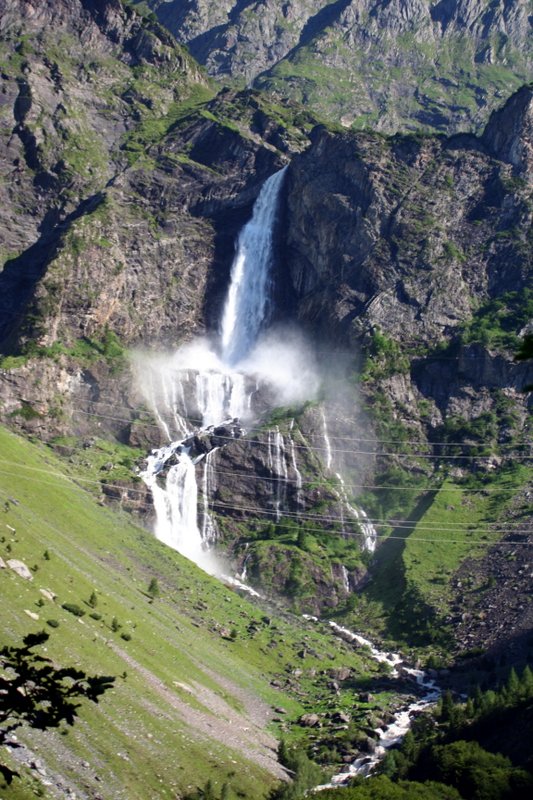 If you think you've seen it all in Lombardy, get ready to think again. The Serio Waterfalls, in Valbondione in the upper Seriana Valley, are a true natural spectacle – even if, truth be told, they are man-made. With a drop of 315 meters divided into three leaps (166, 74, and 75 meters), they are the tallest in Italy. The catch? To see them in all their power, you need to mark your calendar: water is released from the Barbellino dam only 5 times a year, for half an hour each. The dates for 2026? June 13, July 11 (night opening with illumination), August 16, September 13, and October 11, all at 11:00 AM except the evening one at 10:00 PM.
To reach the viewpoint, forget the car: you hike on foot. There are three trails, all with about 400 meters of elevation gain and a 1.5-hour walk. The easiest is the CAI 305 from Valbondione, suitable for families with children (but better use a trekking backpack, no stroller). The most scenic is the CAI 332 starting from the Grumetti hamlet and leading to the Grandi Macigni of Maslana, where the show is guaranteed. If you're feeling lazier, from Lizzola you can also see the waterfalls from the terraces of the Mirtillo, Campel, and Due Baite mountain huts, reachable by chairlift.
A practical tip: arrive at least two and a half hours early, park (cost €3, managed by the Valbondione Youth Association) and prepare with hiking boots and a windbreaker – no sandals or heels, please. The event is free, but if you want a guide, Alpine Guides organize excursions (€7 for over 11s). And if you're a film buff, know that these waterfalls appeared in the movie "Call Me by Your Name". In short, an experience that blends nature, engineering, and a touch of magic.
San Vigilio Castle: A Medieval Jewel with Breathtaking Views
- Via al Castello, Bergamo (BG)
- Open in Google Maps
- View on Google Images
 San Vigilio Castle is one of those places that makes you fall in love with Bergamo. Perched on the hill of the same name at 496 meters, it dominates the Città Alta and offers a panorama that stretches from Monte Bastia to the Prealps, across the plains. And it's not just the view that makes the trip worthwhile; history breathes from every corner. The first fortifications date back to the 6th century, but it was between the 14th and 16th centuries, under the Visconti and the Venetians, that it took its star shape with four bastions (Castagneta, Belvedere, Del Ponte, and San Vigilio). Strolling along the crenelated walls, don't miss the underground chambers: the speleological group Le Nottole organizes guided tours by reservation to explore the secret tunnel that connected the castle to Fort San Marco. A real dive into the past. The castle is now a free public park, easily reached by the San Vigilio funicular (or a pleasant walk from Porta Sant'Alessandro). Hours vary: in winter it opens at 8:00 and closes at 17:00, in summer it stays open until 21:00. On the hill there are also two luxury restaurants, perfect for a special lunch. Personal tip: arrive at sunset when the light turns the mountains red. One note: the castle is not accessible for people with reduced mobility. But for everyone else, it's a must-see.
Le Cornelle Wildlife Park: A Dive into Nature with Animals and Education
- Via Cornelle, Ossanesga (BG)
- https://www.lecornelle.it/
- Open in Google Maps
- View on Google Images
 If you're looking for a day trip that combines nature, education, and fun, Le Cornelle Wildlife Park is a must-see. Located in Ossanesga, a hamlet of Valbrembo, this 100,000 sqm park was founded in 1981 by Angelo Ferruccio Benedetti and has been passionately managed by his family ever since. It is home to approximately 1,000 animals from 120 different species, including mammals, birds, and reptiles. Instead of cramped cages, the animals roam in spacious enclosures that faithfully replicate their natural habitats, an approach that promotes reproduction and animal welfare. Notable residents include the Bengal tiger, the white lion, pink flamingos, the Nile crocodile, and the royal python. But it's not just a place to observe: the park offers an excellent educational program for schools and organizes special events like 'Una ZOOrnata', dedicated to the inclusion of people with disabilities. Strolling through the green terraces that slope down towards the Brembo River, the atmosphere is relaxed and family-friendly, perfect for a day outdoors. I recommend arriving early in the morning to enjoy the environmental education shows and, why not, bring a picnic to enjoy in the designated areas. A biodiversity haven that does good for the heart and mind.
Castle of the Counts Calepio: History and Charm Between Bergamo and Val Calepio
- Via Conti di Calepio, Castelli Calepio (BG)
- Open in Google Maps
- View on Google Images
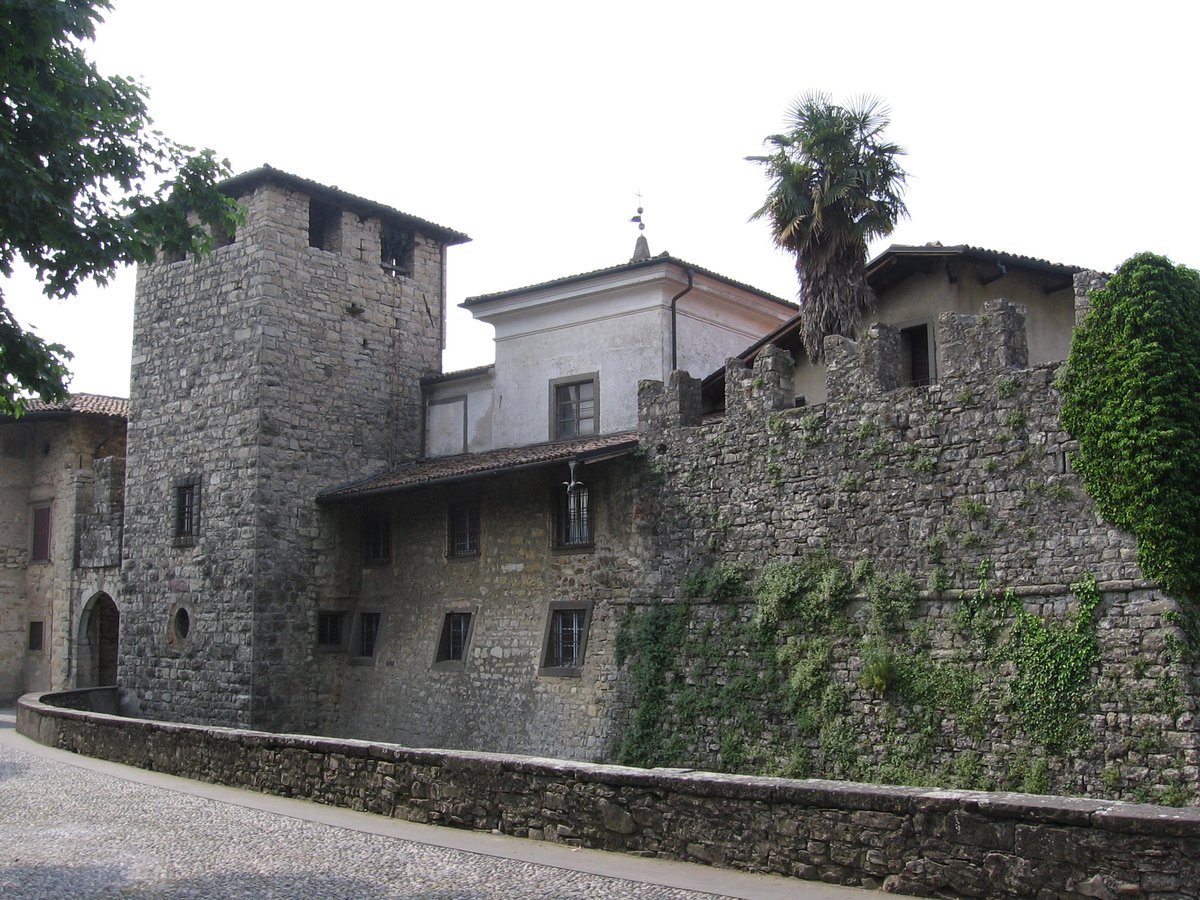 If you are passing through Bergamo, you cannot miss the Castle of the Counts Calepio, a medieval gem perched on a promontory overlooking the Oglio valley. Built in 1430 by Count Trussardo Calepio – an ally of Venice against Milan – this manor still retains its charm, with towers, swallow-tail battlements, and a deep moat that emphasizes its defensive appearance. But don't be fooled: between the 17th and 18th centuries, the castle was transformed into an elegant noble residence, with rooms frescoed by artists such as Luigi Deleidi (il Nebbia) and Carlo Innocenzo Carloni, stuccoes by Muzio Camuzio, and a splendid Sala dei Fiori (Hall of Flowers) with vivid colors. Not to be missed is the Italian-style terrace garden, from which you can enjoy a panoramic view stretching to Lake Iseo. During the guided tour (duration 90 minutes, cost €10 full price, €3 for ages 7 to 12), you will also discover the history of the Calepio family, the famous 'Calepino' dictionary compiled by his son Ambrogio, and the chapel of San Maurizio with the remains of Saint Celestine Martyr. Today the castle is managed by the Fondazione Conti Calepio, which uses the proceeds for charitable works. Booking is mandatory (331 7531149) and photos are not allowed inside. In short, a dive into history a stone's throw from Bergamo, among villages, castles, and nature.
Rocca Viscontea: A Dive into Medieval History
- Via Don Rinaldo Rossi, Romano di Lombardia (BG)
- Open in Google Maps
- View on Google Images
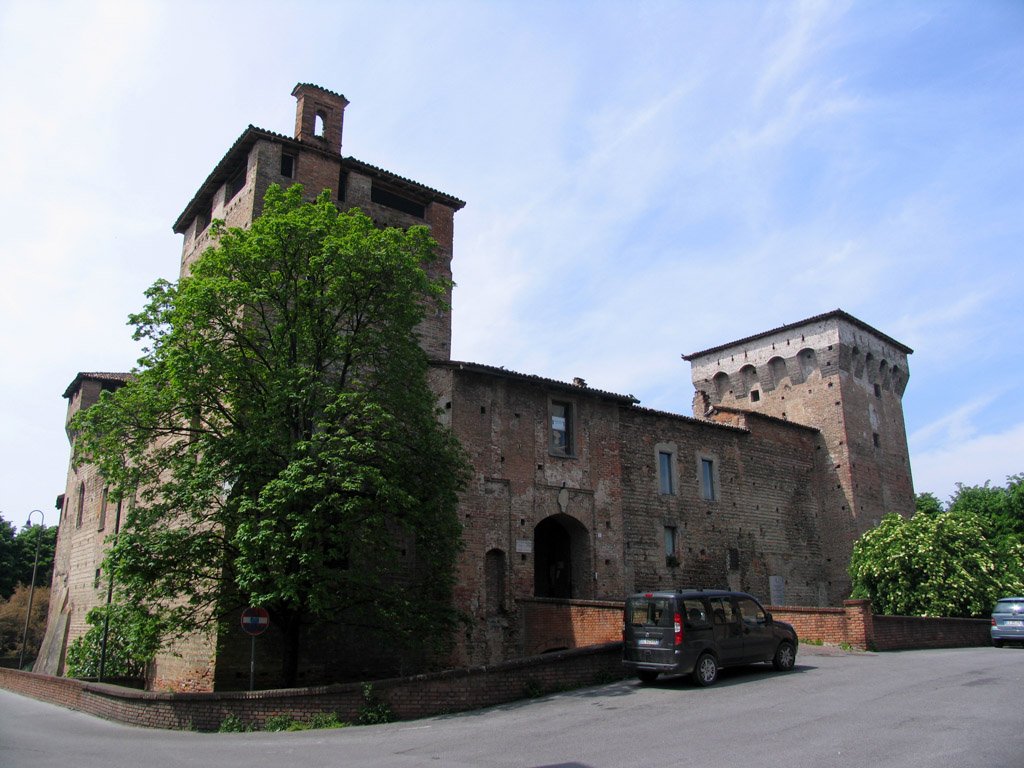 The Rocca Viscontea in Romano di Lombardia is one of those fortresses that instantly takes you back in time. Built from the 12th century onward, it was part of the town's defensive system, and its strategic location – straddling Milan and Venice – made it virtually impregnable. Today, entering through the brick bridge that replaced the old drawbridge, you find yourself in a courtyard where original frescoes still appear, such as the vibrant Lion of St. Mark. The four towers tell different eras: the oldest is the southeast one (13th century), while the northwest tower, more massive, served as a prison under the Visconti and even during World War II. And then there's the southeast tower, where Bartolomeo Colleoni had a frescoed loggia and a small escape door, the 'pontesella del soccorso,' opened. Speaking of escapes: legend has it that Frederick Barbarossa, fleeing through a secret underground passage, supposedly hid a golden carriage… but no one has ever found it. If you like war stories, inside there's the Museum of Community Memory, with relics from the two world wars (free admission, open Thursday, Saturday, and Sunday from 10 am to noon). The guided tour costs €5 and lasts about an hour and a half, also taking you along the patrol walkways. Too bad it's not accessible for those with mobility issues, but the medieval charm is guaranteed.
Monte Gioco: A 360° Panorama of Val Serina
- Serina (BG)
- Open in Google Maps
- View on Google Images
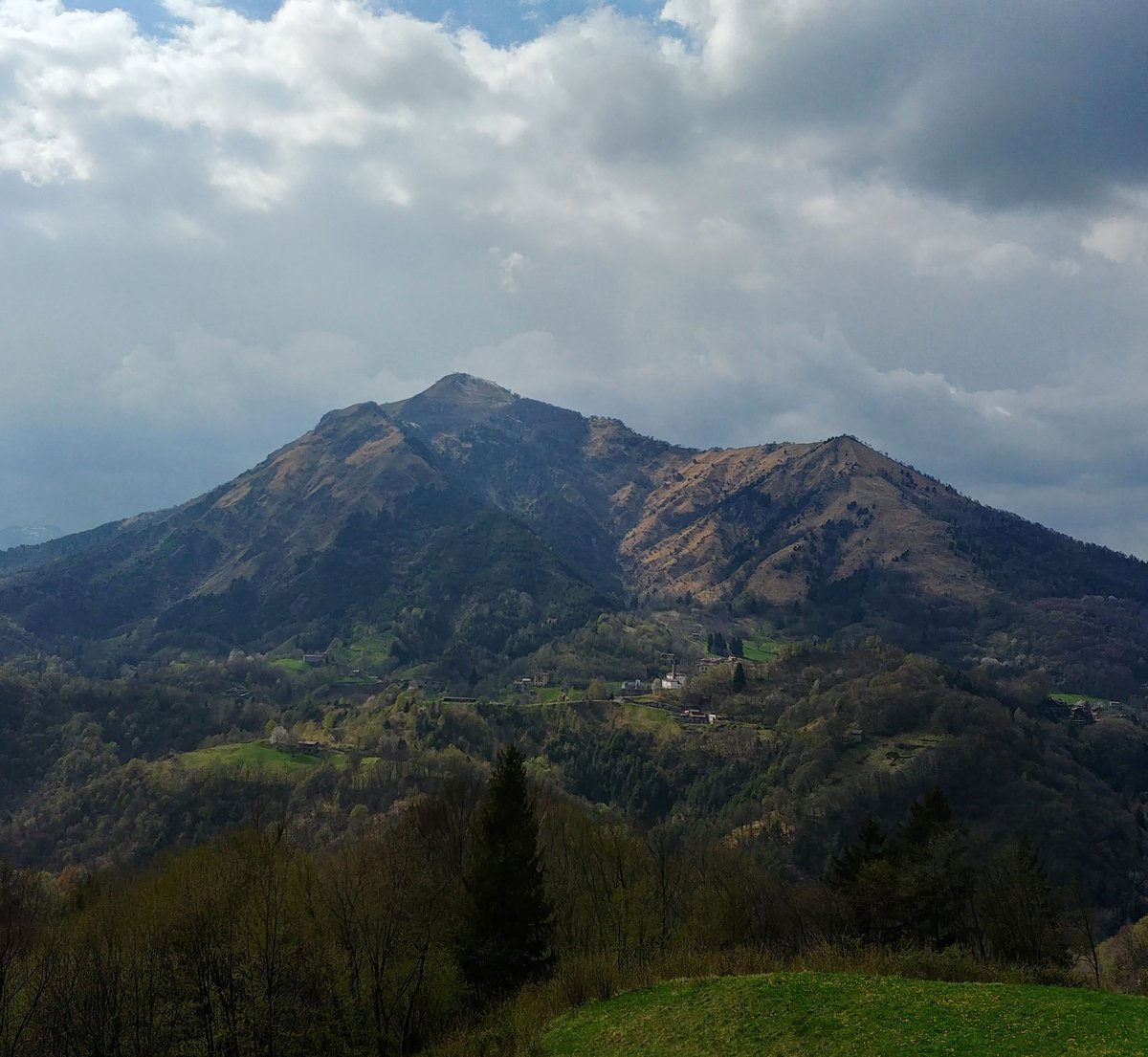 If you're looking for a walk that gives instant satisfaction, Monte Gioco (1,366 m) is just what you need. Also known as Monte Zucco, this grassy pyramid dominates Val Serina and offers a 360° panorama spanning from the M.A.G.A. group (Menna, Arera, Grem, Alben) to the Grigne mountains. The hike starts from the hamlet of Lepreno, in Serina, where you can park for free on Via Garibaldi. Follow the CAI 598 trail, which begins with a staircase through the village houses and then opens onto wide meadows. The route is of moderate difficulty: about 500 meters of elevation gain, with a 1.5-hour ascent to the summit cross. The final stretch is steep but well-marked. The summit is marked by a metal cross and a summit register: sign in and enjoy the view. For the return, you can descend the same way or do a loop passing Monte Zucchin (1,206 m) and Passo di Salvarizza, which features a chapel. The 598A trail, recently marked by the Fancy Mountain Group, allows you to circumnavigate the mountain in a loop of about 5 km and 3 hours total. Bring water and hiking boots: there are no refreshment points along the trail. Spring and fall are the best seasons, but even in winter with snow, the hike is possible for experts. In any case, the view rewards every effort.