
Discover Caltanissetta in one day with this walking itinerary that takes you from Castello di Pietrarossa to Museo Mineralogico, passing through historic monuments and squares. Perfect for history and culture lovers, this route immerses you in the heart of the Sicilian city, among ancient fortresses and unique mineralogical collections. Start at Castello di Pietrarossa, the city’s medieval symbol, then head to the center to visit Cattedrale di Santa Maria la Nova and Museo Mineralogico. Continue with Chiesa di San Sebastiano and Palazzo Moncada, before ending with a stroll in Piazza Garibaldi. The route is entirely in the center, easy and flat, suitable for everyone. Each stop is a short distance away, so you can enjoy each place without rushing. Don’t miss the evocative Pozzo Gattopardo and the Museo Archeologico di Caltanissetta. A compact yet rich itinerary, ideal for a day trip.
🗺️ Your trip at a glance
A one-day walking itinerary to discover the best of Caltanissetta. Perfect for a cultural day trip.
- Ideal for: history and culture enthusiasts who want to explore the city in a few hours.
- Highlights: iconic stops like the Castle and Museum, all reachable on foot, along an easy and flat route.
- Why it’s different: a unique mix of medieval architecture and mineralogical collections in the heart of Sicily.
Itinerary stops
Stop no. 1
Pietrarossa Castle: Between History and Legend
 The first stop on the itinerary takes you on the trail of Caltanissetta’s Arab-Norman past: the Castello di Pietrarossa, perched on a limestone ridge overlooking the Salso Valley. Built by the Arabs around 900 AD, its name comes from the Arabic ‘mnra’ (red), indicating the fortress’s prominence. Today only imposing ruins remain: the central tower 25 meters high and the northern watchtower, with curtain walls that once enclosed three towers. Strolling among the remains, notice the ancient cisterns for rainwater and imagine medieval life. It was here in 1378 that the Sicilian barons gathered for the General Parliament. And legends abound: they say the ghost of Princess Adelasia, found buried among the rubble, still wanders among the towers. The castle is free to visit and offers a breathtaking view over the city and the valley below. A perfect start to discover the historic heart of Caltanissetta.
- Via Castello Di Pietrarossa, Caltanissetta (CL)
- Open in Google Maps
- View on Google Images

You should go if…
Stop no. 2
Mineralogical Museum: A Dive into the History of Sulfur
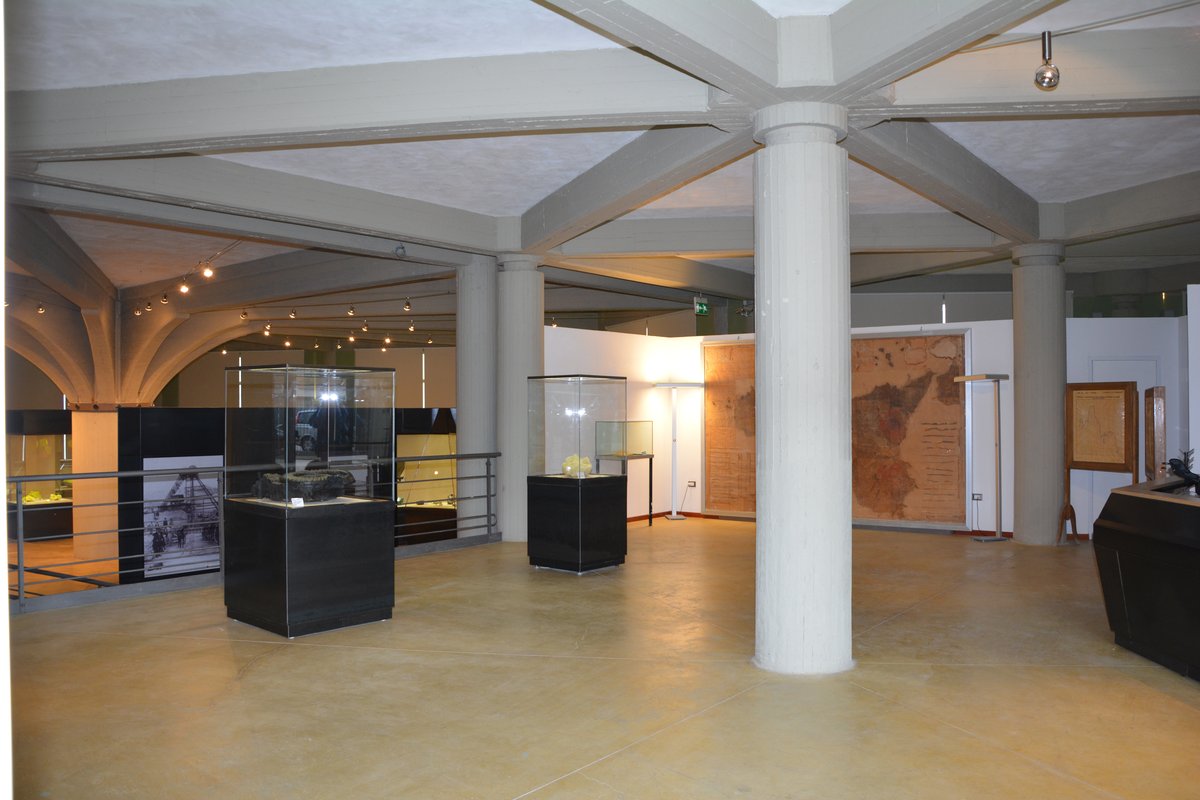 After the castle, the second stop takes you to the “Sebastiano Mottura” Mineralogical, Paleontological, and Sulfur Mining Museum. Here time seems to stand still: 2,500 minerals and 1,500 fossils tell you the geological history of Sicily, but the real star is sulfur. Founded in 1862 by engineer Mottura, the museum houses a unique section dedicated to mining technologies: small winding towers, ore carts, and “Gill” furnaces are displayed alongside vintage panels. Not to be missed is the scale model of a mine with tunnels and shafts. Among the rare pieces are a large German ammonite, a meteorite donated by the Negus of Ethiopia, and a prehistoric elephant jaw. Admission is free, and the museum is open Monday to Saturday (9 AM – 1 PM).
- Go to the page: Caltanissetta Mineralogical Museum: Complete Collection of Sicilian Sulfur Minerals
- Viale della Regione, Caltanissetta (CL)
- Open in Google Maps
- View on Google Images
You should go if…
Stop no. 3
War Memorial
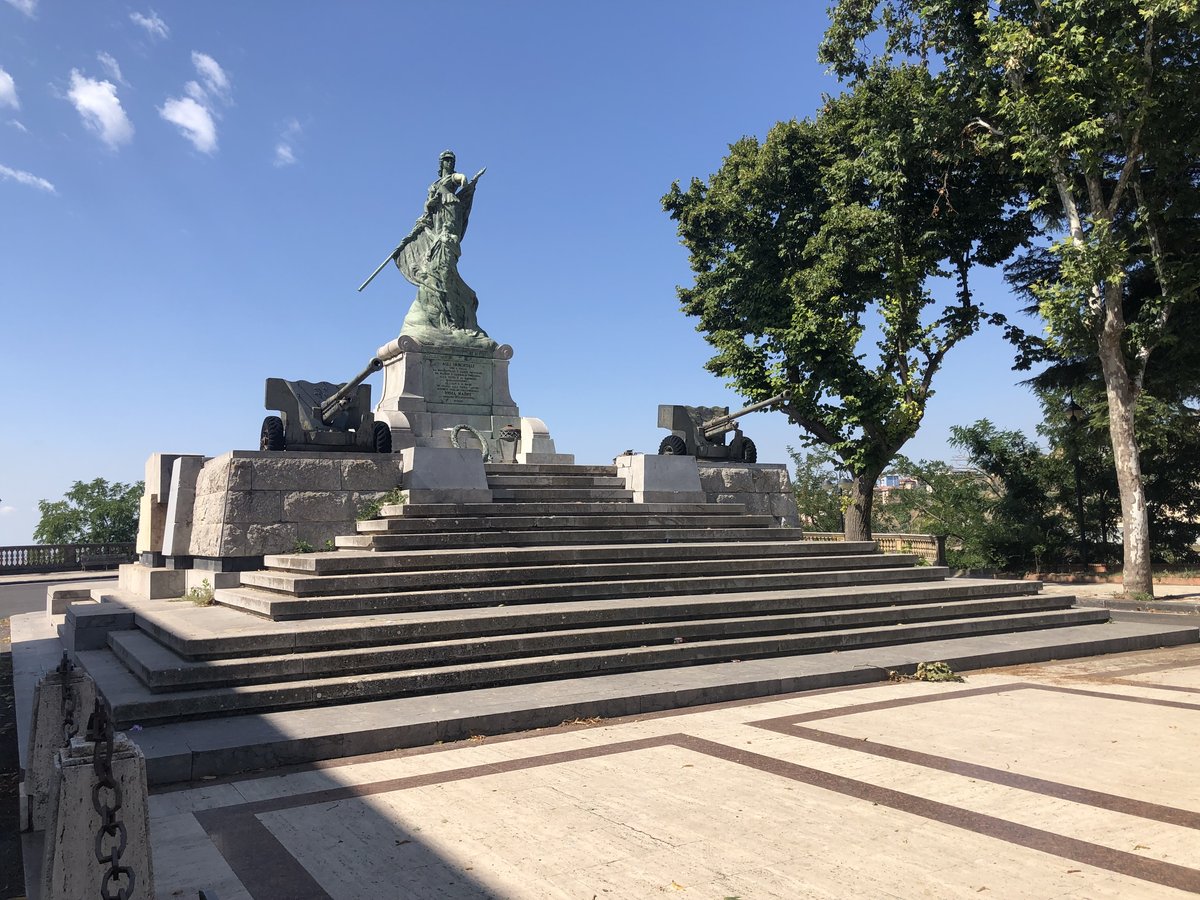 Leaving the museum’s minerals behind, the third stop is a dive into collective memory. The War Memorial has dominated Viale Regina Margherita since 1922, when it was inaugurated to commemorate the 291 soldiers from Caltanissetta who fell in World War I. Sculptors Cosimo and Francesco Sorgi used bronze from enemy cannons cast in Naples to create the statue: a Grateful Homeland holding the book of History and the palm of peace, while a hero clutches the Tricolore. On the sides, two original cannons and a laurel wreath complete the monument. Unfortunately, over time the memorial has suffered vandalism and decay – chipped marble and oxidation – but every April 25 it becomes the heart of a ceremony where authorities place a wreath. It’s a corner of history that speaks of sacrifice, but also of a city that does not forget.
- Viale Regina Margherita, Caltanissetta (CL)
- Open in Google Maps
- View on Google Images
You should go if…
Stop no. 4
Regional Archaeological Museum
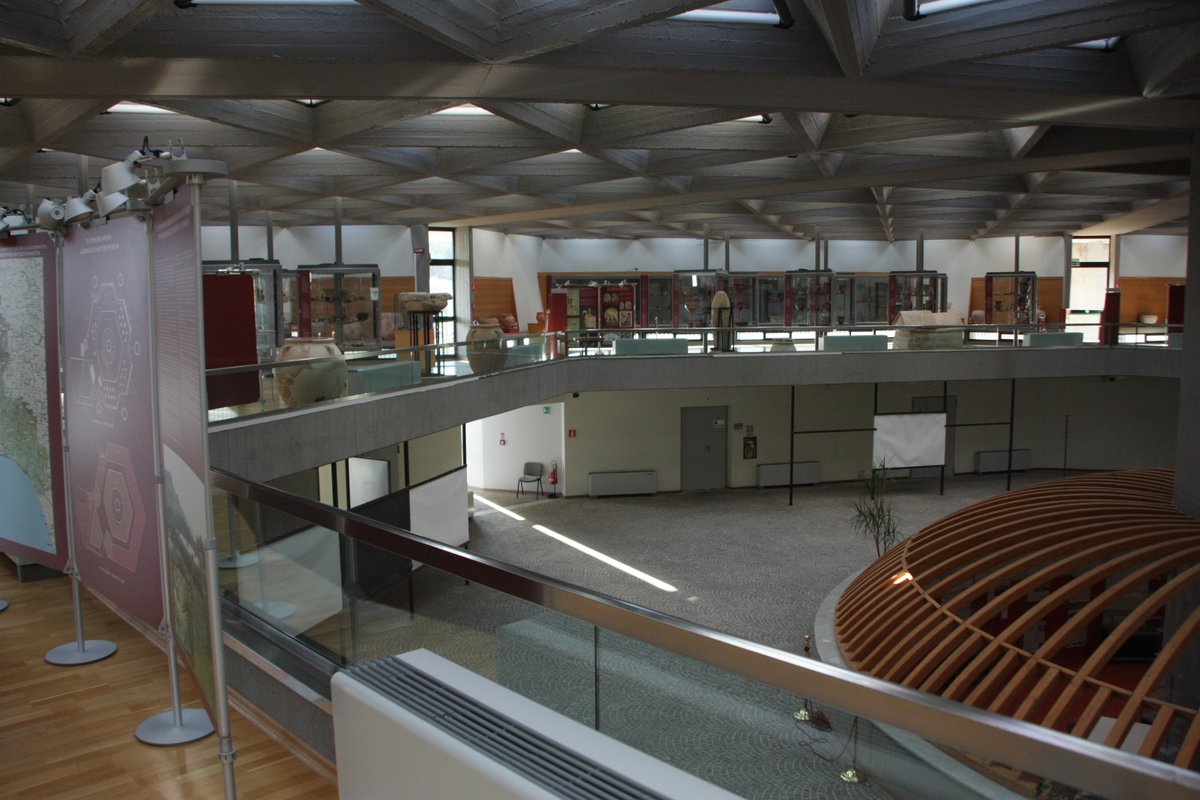 After the monument, you’re in for a dive into prehistory. The Regional Archaeological Museum of Caltanissetta, designed by Franco Minissi and opened in 2006, is nestled among olive and almond trees near the Abbey of Santo Spirito. Its modern polygonal structure of glass and travertine houses over 5,000 artifacts from the early Copper Age to the late Roman Empire. Highlights include the grave goods from Gibil Gabib and Sabucina, red-figure pottery, warrior bronzes, and a precious gilded silver phiale. The exhibition, divided into five sections, tells the story of the indigenous Sicanian populations and the Hellenization of central Sicily. The star piece: a 6th-century BC Kore statuette. Unfortunately, the museum has been temporarily closed for maintenance since 2023 (latest update: no reopening date found), but it’s still a must-see to keep an eye on. If you’re in the area, admire the architecture and enjoy the surrounding landscape.
- Go to the page: Caltanissetta Archaeological Museum: Greek Vases and Sabucina Treasures
- Via Santo Spirito, Caltanissetta (CL)
- Open in Google Maps
- View on Google Images
You should go if…
Stop no. 5
Monument to the Redeemer
 Leave the museum behind and climb to 727 meters: the Monument to the Redeemer awaits you on the summit of Mount San Giuliano. The bronze statue, almost 5 meters tall, was cast from the bronze of two papal cannons by the Roman firm Rosa e Zanazio for the Jubilee of 1900. The base, made of gray limestone and designed by Ernesto Basile, contains a small chapel and a crypt. Fun fact: the statue faces northeast, turning its back on the city, a detail that has fueled local legends. Officially inaugurated on September 29, 1900 (postponed due to mourning for the assassination of King Umberto I), every August 6 the Feast of the Redeemer is celebrated with a procession. In January 2026, strong winds from Cyclone Harry tilted the cross behind it, while in June volunteers from Plastic Free cleaned the area of 300 kg of waste and 4,000 cigarette butts. A symbol of identity offering a 360° view of the city and surrounding hills.
- Piazza Ernesto Basile, Caltanissetta (CL)
- Open in Google Maps
- View on Google Images
You should go if…


