
Welcome to the Varesotto, a land where Lombard history blends with charming villages and medieval castles. This 3-day itinerary will take you to discover Arcumeggia, known for its houses frescoed by great artists, and Castelseprio, a UNESCO World Heritage site with the frescoes of the Church of Santa Maria foris portas. You will then cross the village of Castello di Masnago, with its fortress dominating the landscape, and the evocative village of Angera, with the imposing Rocca di Angera. Each stop is a dive into the past, between art and nature. Ideal for those who love exploring authentic places, far from mass tourism. Get ready for a journey rich in culture, landscapes, and local flavors, perfect for a long weekend or a three-day escape.
🗺️ Your trip at a glance
A 3-day itinerary combining castles, Lombard art, and authentic villages in the heart of Varesotto. Perfect for history and culture enthusiasts who want to discover a lesser-known side of Lombardy.
- Ideal for: cultural explorers and history lovers.
- Highlights: UNESCO sites, Lombard frescoes, well-preserved castles.
- For whom: those seeking a trip off the beaten path, between art and nature.
Itinerary stops
Day 1 – Stop no. 1
Arcumeggia: the painted village that leaves you speechless
 Not every day you arrive in a village and feel like you’re inside a painting. In Arcumeggia, a hamlet of Casalzuigno, that’s exactly what happens. From the first steps on Via Sant’Antonio, the house facades speak to you: they are painted with frescoes created since 1956 by artists such as Treccani, Sassu, and Brindisi. The project was born to counter the depopulation of the village, and today it is a unique open-air museum in Italy. Get lost in the alleys, look for the Via Crucis on the churchyard of Sant’Ambrogio church, and enjoy the view of Monte Rosa and Lake Maggiore from the nearby small church of San Michele. If you are looking for an authentic place, the atmosphere here is that of a mountain village frozen in time, with paths that wind into the woods and, if you have the breath, traces of the Cadorna Line from World War I. In short, a stop that tastes of art, history, and nature all at once.
You should go if…
Day 1 – Stop no. 2
Cuasso Castle: Lombard Ruins
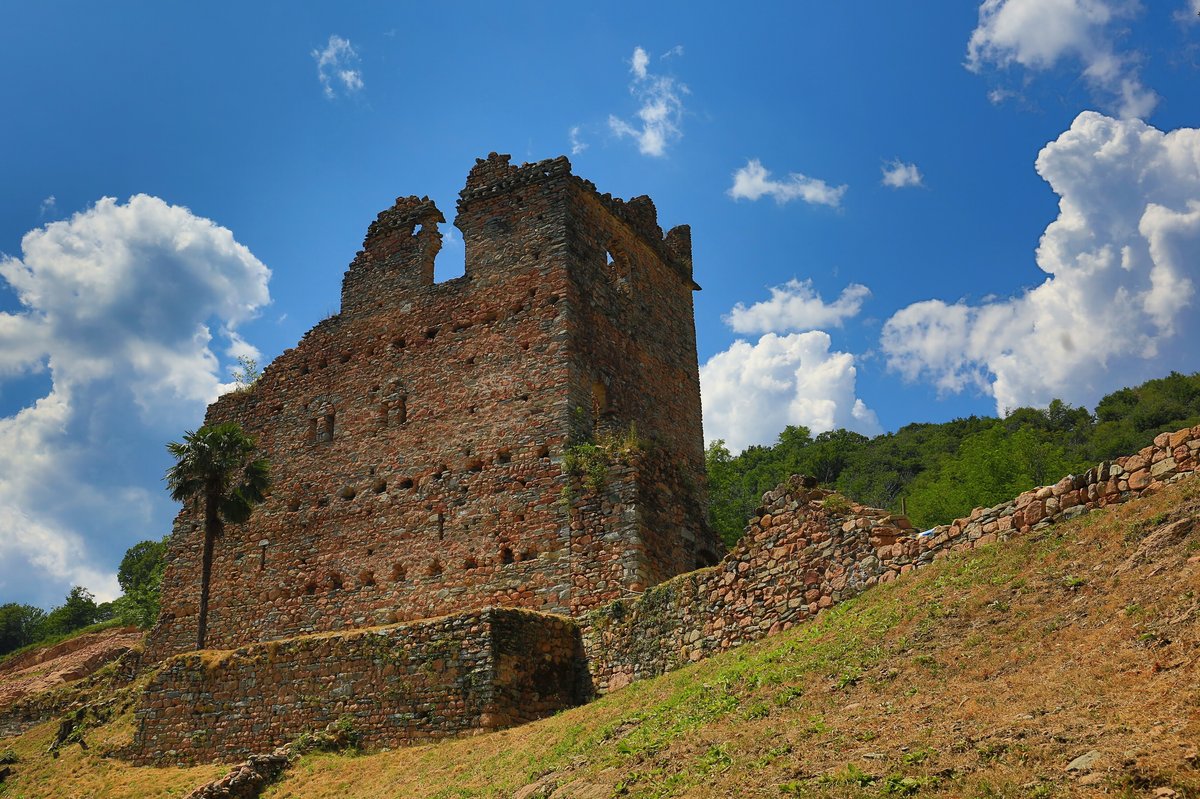 After Arcumeggia, continue towards Cuasso Castle, also known as Castelasc, perched on a hill at 444 meters altitude. Of Gallo-Roman and Lombard origins, it was a strategic stronghold in the Ceresio defense system, in communication with other castles in the area. Today, imposing ruins remain, telling centuries of history: struggles between Milanese and Comaschi, clashes between Guelphs and Ghibellines, until its abandonment in the 13th century. The keep, still visible from the south even kilometers away, had a ship-like shape and four floors. The oldest part is the north-eastern fortress, dating back to Roman times, later expanded by the Lombards. Unfortunately, the castle is privately owned and not open to visitors due to the dangerous condition of the structures. But it can be admired from the outside, perhaps during a walk among the nearby red porphyry quarries of Cuasso. A place that, despite neglect, still exudes an intense medieval charm.
- Go to the page: Cuasso Castle: 12th Century Medieval Ruins with 360° Views of Lake Lugano
- SP29, Cuasso al Piano (VA)
- Open in Google Maps
- View on Google Images
You should go if…
Day 1 – Stop no. 3
Abbey of San Gemolo
 Leaving behind the Castle of Cuasso, you arrive in Ganna to visit the Abbey of San Gemolo, a monastic complex steeped in medieval atmosphere. Founded in 1095 by three canons from Milan Cathedral, the abbey stood along the ancient Via Francisca del Lucomagno, a hub for pilgrims and merchants. Today, the church, consecrated in 1160, preserves frescoes from the 14th and 15th centuries, including a striking Madonna of Mercy. But the real gem is the pentagonal cloister, unique in its kind, with pointed arches enclosing a silent garden. Climb to the upper floor: here the Abbey Museum displays prehistoric artifacts, ceramics, and an art gallery with works from the 15th to the 19th century. Don’t miss the legend of San Gemolo, a deacon beheaded who, according to tradition, picked up his own head and rode to this place. From the abbey, a trail also leads to the Fountain of San Gemolo, where reddish rocks recall the martyr’s blood. A peaceful corner uniting art, faith, and nature.
- Via Ugo Perego, Ganna (VA)
- Open in Google Maps
- View on Google Images
You should go if…
Day 2 – Stop no. 1
Cislago Castle: A Baroque Home Between History and Nature
 Arriving in Cislago, the first stop of the second day is the Visconti-Castelbarco Castle, which dominates the historic center with its elegant bulk. Rebuilt in 1620 by Marquis Cesare II Visconti on the ruins of a medieval fortress destroyed by the Swiss in 1510, today it is a private residence, not open to the public inside. But don’t be discouraged: the view from outside is worth the stop. The façade, with two crenellated towers and an eighteenth-century wrought-iron gate, overlooks a French-style garden. Stroll through the adjoining municipal park, once part of the castle’s grounds, and admire the oratory of Santa Maria Assunta and San Martino, with fifteenth-century frescoes. If you’re lucky, you can spot the kestrels nesting on the towers: a pair, Tini and Gae, raise their young among the battlements, followed by a community of enthusiasts. The castle also houses a picture gallery with Visconti portraits, but all this remains hidden behind the walls. A place that combines Baroque art, Lombard history, and a touch of wild nature.
- Go to the page: Cislago Castle: A Baroque Gem Amid Park and Kestrels
- Piazza Castelbarco, Cislago (VA)
- Open in Google Maps
- View on Google Images
You should go if…
Day 2 – Stop no. 1
Cislago Castle: A Baroque Home Between History and Nature
Arriving in Cislago, the first stop of the second day is the Visconti-Castelbarco Castle, which dominates the historic center with its elegant bulk. Rebuilt in 1620 by Marquis Cesare II Visconti on the ruins of a medieval fortress destroyed by the Swiss in 1510, today it is a private residence, not open to the public inside. But don’t be discouraged: the view from outside is worth the stop. The façade, with two crenellated towers and an eighteenth-century wrought-iron gate, overlooks a French-style garden. Stroll through the adjoining municipal park, once part of the castle’s grounds, and admire the oratory of Santa Maria Assunta and San Martino, with fifteenth-century frescoes. If you’re lucky, you can spot the kestrels nesting on the towers: a pair, Tini and Gae, raise their young among the battlements, followed by a community of enthusiasts. The castle also houses a picture gallery with Visconti portraits, but all this remains hidden behind the walls. A place that combines Baroque art, Lombard history, and a touch of wild nature.- Go to the page: Cislago Castle: Crenellated Towers, Italian Gardens, and Ballroom
- Piazza Castelbarco, Cislago (VA)
- Open in Google Maps
- View on Google Images
You should go if…
Day 2 – Stop no. 2
Prepositural Church of San Vittore
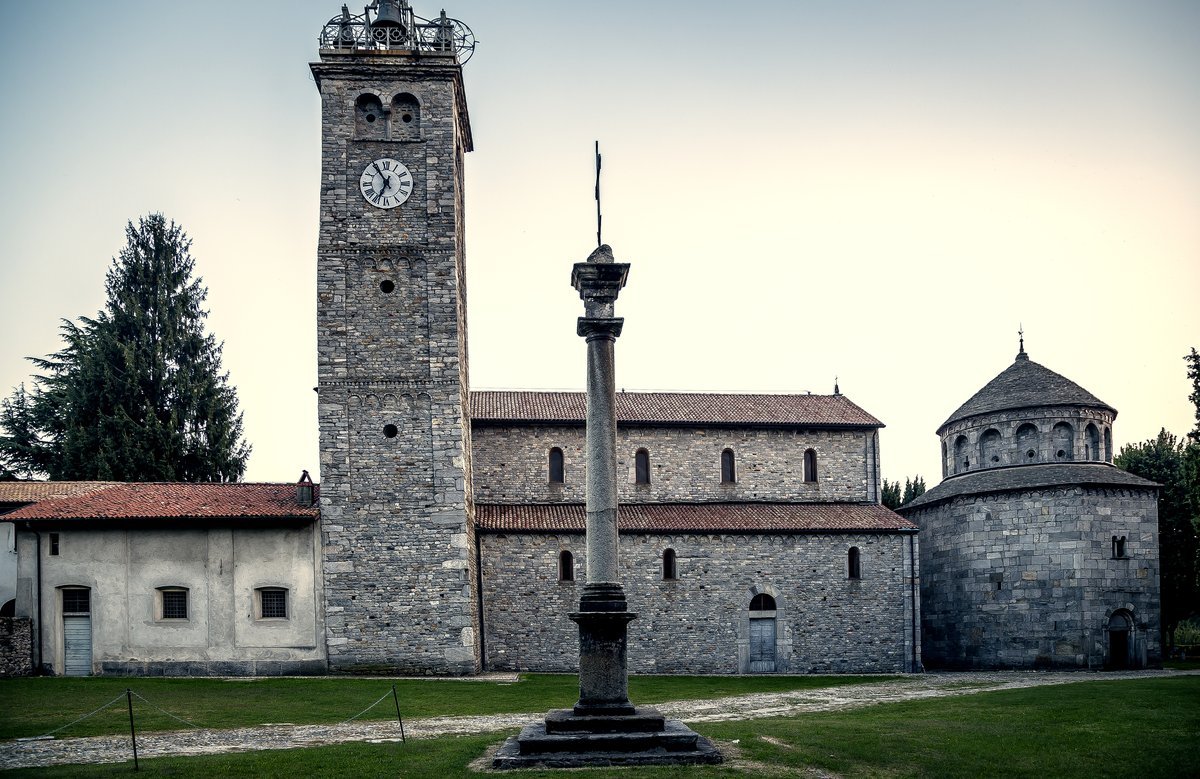 The Prepositural Church of San Vittore, together with the adjacent baptistery, forms one of the most fascinating Romanesque complexes in Lombardy. Built between the 9th and 12th centuries on an earlier 5th-6th century building, the basilica was probably commissioned by Arnolfo II da Arsago, Archbishop of Milan. The Master Comacini worked on its construction, leaving traces of their talent in every detail. The salient façade, with its portal and three arched windows, anticipates the three-nave interior, where pillars and columns made from reused Roman materials create a solemn atmosphere. Don’t miss the 12th-century octagonal baptistery: climb to the matroneum and observe the ancient baptismal font, placed lower than the floor. Outside, the bell tower with its reused stones and blind arches is worth a stop. Nearby, the sacristy houses a 19th-century gold processional cross, recently restored. Admission is free, and if you happen to be there on May 8, you can participate in the patronal feast with the typical ‘Morettini di San Vittore’.
- Via San Vittore, Arsago Seprio (VA)
- Open in Google Maps
- View on Google Images
You should go if…
Day 2 – Stop no. 3
Caidate Castle
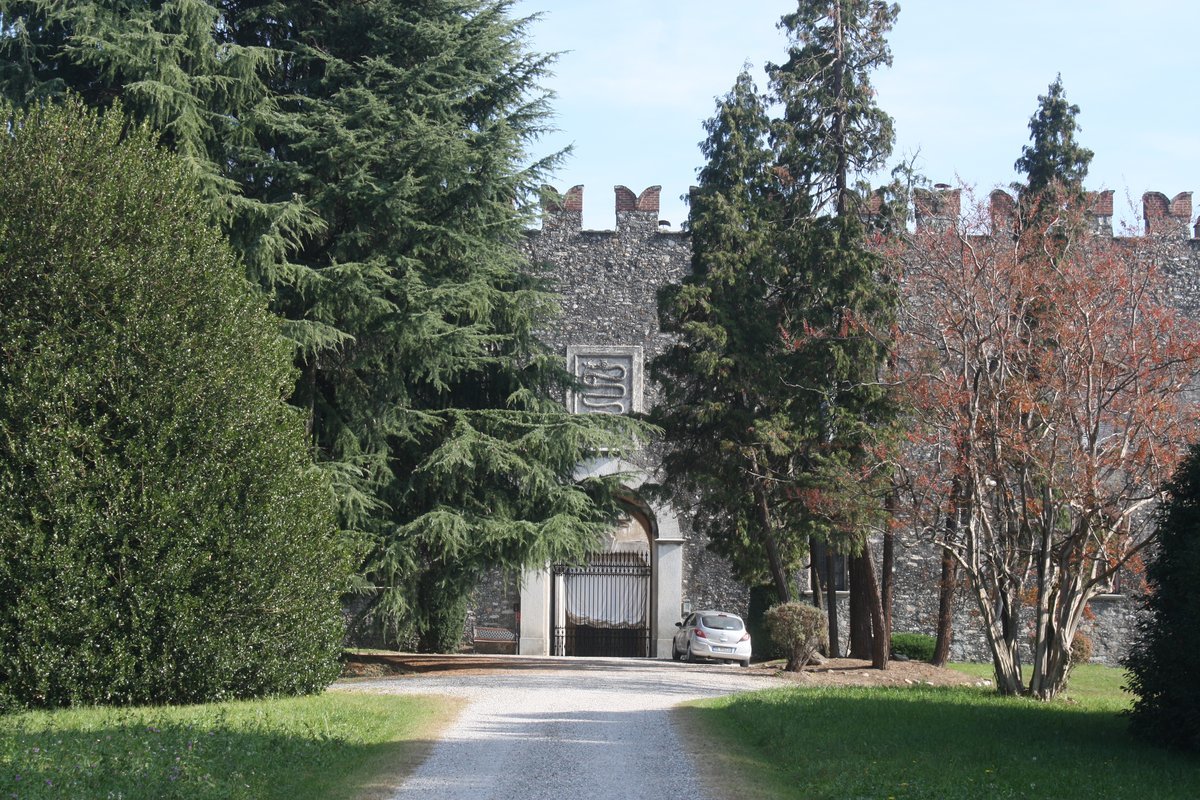 You wouldn’t expect to find such an imposing castle hidden among the hills of the Varesotto. Castello di Caidate, built in the 14th century by the Visconti as a hunting retreat, dominates the Arno valley with its quadrilateral mass and the imposing square tower of late Roman origin. Today it is privately owned by the Counts of Barbiano di Belgiojoso and cannot be visited inside, but it’s worth stopping to observe it from the outside. The main façade, rebuilt in the mid-19th century, features an elegant exposed stone facing, while the English-style park designed by Balzaretto offers suggestive views. For the more curious, a 7.5 km loop trail starts from Castronno and passes by the castle, offering views of the Monte Rosa chain on clear days. A place that smells of history and mystery, perfect for a contemplative break.
- Via Galileo Galilei, Caidate (VA)
- Open in Google Maps
- View on Google Images
You should go if…
Day 3 – Stop no. 1
Church of Santa Maria Foris Portas
 Leaving Castello di Caidate, the third day opens to the Archaeological Park of Castelseprio, where the Church of Santa Maria Foris Portas – ‘outside the gates’ – stands isolated on a wooded hill. It is the oldest monument on the site, having survived the destruction of the castrum thanks to Marian devotion. The true jewel is the apse: a cycle of frescoes dating from the 9th to 10th century, discovered by chance in 1944 while the church was used as storage. The scenes of Christ’s childhood, inspired by the apocryphal gospels, amaze for their vivid narration: from the very rare ‘Trial of the Bitter Water’ to the Adoration of the Magi, with a Christ Pantocrator at the center. A UNESCO World Heritage site since 2011, the church is visited by reservation (free entry, maximum 22 people for 20 minutes). The path through the park, among chestnut and hazel trees, offers an atmosphere suspended in time. An unmissable stop for lovers of early medieval art, authentic and little known.
- Via Castelvecchio, Castelseprio (VA)
- Open in Google Maps
- View on Google Images
You should go if…
Day 3 – Stop no. 2
Frascarolo Castle: The Medici’s Secret Residence
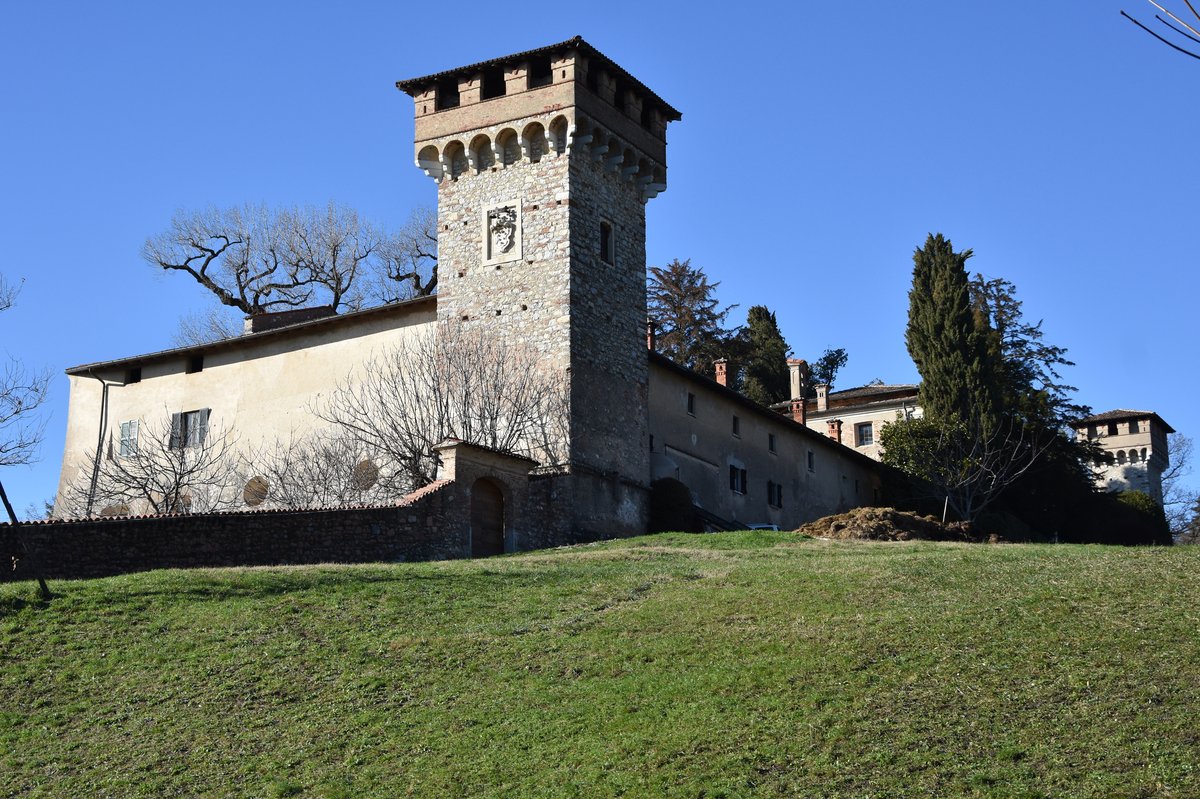 The Castle of Frascarolo, in Induno Olona, is reached by a winding road that climbs up to a hill between Valganna and Valceresio. Here, hidden among the woods, stands this manor of Lombard origins, which as early as 1160 was a defensive stronghold for the Archbishop of Milan. Today it is private property of the Medici di Marignano family, who transformed it into an elegant sixteenth-century residence. From the outside, one can glimpse the massive square tower and the rusticated portal, but to cross the threshold requires special permission. Those fortunate enough to enter tell of a frescoed loggia courtyard, an Italian garden with terraces and fountains, and rooms decorated with the Labors of Hercules. Gaetano Donizetti stayed here in 1837, and perhaps Saint Charles Borromeo spent his childhood here. It’s a shame not to be able to visit it: it remains a jealously guarded gem, to be admired at least from the outside, imagining the frescoes and stories it holds.
- Go to the page: Frascarolo Castle: Private Medieval Residence Overlooking Lake Varese
- Via Carolina Crivelli, Induno Olona (VA)
- Open in Google Maps
- View on Google Images
You should go if…
Day 3 – Stop no. 3
Baroffio Museum: A Jewel of Art on the Sacred Mountain
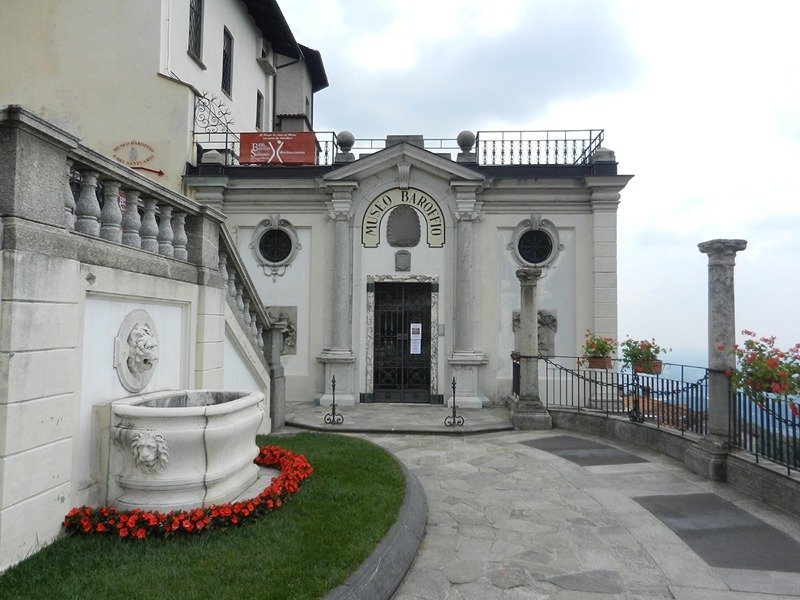 From Frascarolo Castle you ascend to the Sacro Monte of Varese, and here, in the little square in front of the sanctuary, stands the Baroffio Museum. It’s no ordinary museum: opened in 1936 thanks to a donation from Baron Giuseppe Baroffio Dall’Aglio, it’s the oldest museum in Varese still open to the public. The building was designed by Ludovico Pogliaghi – yes, the same genius who crafted the central door of Milan’s Duomo – and the itinerary unfolds over three floors, alternating bright halls with hidden rooms beneath the sanctuary featuring remnants of 15th-century frescoes. Among the highlights are two altarpieces: one in gold brocade donated by Ludovico il Moro and Beatrice d’Este, and another known as “Leonardesque” featuring the Virgin of the Rocks. But there’s also the Madonna and Child by Domenico and Lanfranco da Ligurno (1196), the museum’s symbol, along with works by Procaccini, Morazzone, and Sweerts. Then, on the third floor, a contemporary art room commissioned by Monsignor Macchi, featuring pieces by Guttuso, Matisse, and Rouault. The terrace, by reservation, offers a breathtaking view of the Campo dei Fiori Park and the lakes. The ticket also includes the Crypt, an ancient 9th-10th century church with 14th-century frescoes. Weekdays €7, holidays €10 with guided tour. Not to be missed.
- Piazzetta del Monastero, Varese (VA)
- http://www.museobaroffio.it/
- Open in Google Maps
- View on Google Images
You should go if…

