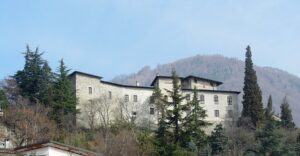
Cislago Castle, in the heart of the town, is an elegant Baroque palace with a fascinating history. Rebuilt in the 17th century by the Visconti, it retains period frescoes and furnishings. Although not always open to visitors, the exterior and municipal park offer interesting highlights. U-shaped architecture with crenellated towers and a French garden. History: destroyed in 1510 by the Swiss, rebuilt in 1620. Curiosity: kestrels and swifts nesting on the towers. Guided tours during the patron saint festival of Sant’Abbondanzio.
Introduction
In Cislago, in the province of Varese, there is a castle you wouldn’t expect. The Castello Visconti-Castelbarco is a seventeenth-century baroque gem, with a French garden visible through an elegant wrought-iron gate. It is private property, but can be admired from outside and from the nearby municipal park. And then there is a detail that makes it unique: on the north tower, kestrels and swifts nest, followed by a community of enthusiasts. A mix of history and nature that surprises.
Introduction
In Cislago, in the province of Varese, there is a castle you wouldn’t expect. The Castello Visconti-Castelbarco is a seventeenth-century baroque gem, with a French garden visible through an elegant wrought-iron gate. It is private property, but can be admired from outside and from the nearby municipal park. And then there is a detail that makes it unique: on the north tower, kestrels and swifts nest, followed by a community of enthusiasts. A mix of history and nature that surprises.
Historical Notes
The castle’s origins date back to the Middle Ages, but its current appearance is the result of a reconstruction begun in 1620 at the behest of Cesare II Visconti. In 1510, Swiss troops led by Matthew Schiner had destroyed it. After the Visconti family, it passed to the Castelbarco family in the 18th century, who added battlements and plasterwork. Today it is still inhabited by their descendants. Key milestones:
- 13th century: Visconti fief
- 1510: destruction by the Swiss
- 1620: start of Baroque reconstruction
- 18th century: transfer to the Castelbarco family
Historical Notes
The castle’s origins date back to the Middle Ages, but its current appearance is the result of a reconstruction begun in 1620 at the behest of Cesare II Visconti. In 1510, Swiss troops led by Matthew Schiner had destroyed it. After the Visconti family, it passed to the Castelbarco family in the 18th century, who added battlements and plasterwork. Today it is still inhabited by their descendants. Key milestones:
- 13th century: Visconti fief
- 1510: destruction by the Swiss
- 1620: start of Baroque reconstruction
- 18th century: transfer to the Castelbarco family
Architecture and Garden
The castle has a U-shaped plan, with two crenellated towers overlooking the park. The garden facade is coated in fake ashlar plaster, while the inner courtyard is arcaded with paired columns. The French garden, enclosed by an 18th-century wrought-iron gate, is a small masterpiece of symmetry. Beyond Via Cavour lies the municipal park of the Repubblica, once part of the castle grounds. From here, the best view of the building can be enjoyed.
Architecture and Garden
The castle has a U-shaped plan, with two crenellated towers overlooking the park. The garden facade is coated in fake ashlar plaster, while the inner courtyard is arcaded with paired columns. The French garden, enclosed by an 18th-century wrought-iron gate, is a small masterpiece of symmetry. Beyond Via Cavour lies the municipal park of the Repubblica, once part of the castle grounds. From here, the best view of the building can be enjoyed.
The Kestrels and Swifts of the Castle
For years, a pair of kestrels (Tini and Gae) has nested in the holes of the north tower. In 2024, they raised five chicks, followed by photographers and residents. Common swifts form one of the most important colonies in the province. Sometimes chicks fall from the nest, but they are rescued and cared for. It is a natural spectacle that adds charm to the place, with initiatives in local schools.
The Kestrels and Swifts of the Castle
For years, a pair of kestrels (Tini and Gae) has nested in the holes of the north tower. In 2024, they raised five chicks, followed by photographers and residents. Common swifts form one of the most important colonies in the province. Sometimes chicks fall from the nest, but they are rescued and cared for. It is a natural spectacle that adds charm to the place, with initiatives in local schools.
Why Visit It
Even if you cannot enter, it is worth walking through the municipal park to admire the baroque facade and the French-style garden. It is an ideal place for nature photography enthusiasts: the kestrels in flight are an unmissable subject. Finally, the village of Cislago preserves rural courtyards and the Visconti oratory with 14th-century frescoes (visitable by request).
Why Visit It
Even if you cannot enter, it is worth walking through the municipal park to admire the baroque facade and the French-style garden. It is an ideal place for nature photography enthusiasts: the kestrels in flight are an unmissable subject. Finally, the village of Cislago preserves rural courtyards and the Visconti oratory with 14th-century frescoes (visitable by request).
When to Visit
The best time is spring, when the kestrels are nesting and the garden is lush. Autumn also offers warm colors. For the best light, choose late afternoon: the low sun illuminates the castle façade and the park. Avoid weekends if you’re looking for tranquility.
When to Visit
The best time is spring, when the kestrels are nesting and the garden is lush. Autumn also offers warm colors. For the best light, choose late afternoon: the low sun illuminates the castle façade and the park. Avoid weekends if you’re looking for tranquility.
Nearby
Just a stone’s throw away, the PLIS of Bosco del Rugareto offers trails through woods and fields, perfect for a walk. If you’re in the area, don’t miss Lake Varese, just a few minutes by car, with cycling paths and the Torba monastery. Another stop is the village of Castelseprio with its UNESCO archaeological area.
Nearby
Just a stone’s throw away, the PLIS of Bosco del Rugareto offers trails through woods and fields, perfect for a walk. If you’re in the area, don’t miss Lake Varese, just a few minutes by car, with cycling paths and the Torba monastery. Another stop is the village of Castelseprio with its UNESCO archaeological area.