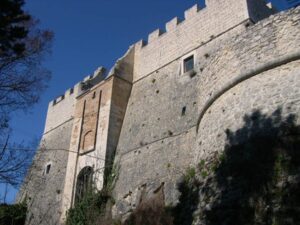
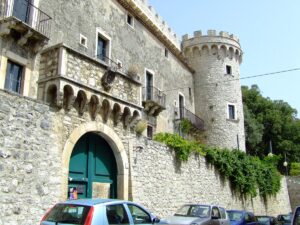
The Abbey of San Vincenzo al Volturno is one of the most important early medieval monastic complexes in Europe, founded in 703 by three noblemen from Benevento. Today, the site combines the ruins of the ancient Carolingian monastic city and the 12th-century abbey still inhabited by Benedictine nuns. A journey through history among frescoes, excavations, and nature.
4 must-see highlights:
– Crypt of Epifanio: 9th-century frescoes depicting the abbot among saints and angels.
– Basilica of San Vincenzo Maggiore: imposing three-apse church with a ring crypt.
– Archaeological Park: over 11,000 square meters of excavations including refectory, kitchens, and lavatorium.
– Augustan Aqueduct: a Roman engineering work stretching 30 km to bring water from the Volturno to Venafro.
Introduction
You are in the heart of Molise, between the Mainarde and Matese mountains, when suddenly the Abbey of San Vincenzo al Volturno appears. It’s not just a monastery: it’s an entire early medieval monastic city, with remains of churches, refectories, and workshops. The highlight? The Crypt of Epifanio, with 9th-century frescoes that leave you speechless. And then the archaeological park, one of the largest in Europe for the Carolingian period. A place that feels like true history, far from mass tourism.
Introduction
You are in the heart of Molise, between the Mainarde and Matese mountains, when suddenly the Abbey of San Vincenzo al Volturno appears. It’s not just a monastery: it’s an entire early medieval monastic city, with remains of churches, refectories, and workshops. The highlight? The Crypt of Epifanio, with 9th-century frescoes that leave you speechless. And then the archaeological park, one of the largest in Europe for the Carolingian period. A place that feels like true history, far from mass tourism.
Historical Notes
Founded in 703 by the Beneventan monks Paldo, Taso, and Tato, the abbey grew under Charlemagne, who granted it privileges in 787. It became a cultural and spiritual center with over 350 brethren. In 881 the Saracens destroyed it, but it was rebuilt. In the 12th century, for safety, the monks moved to the right bank of the Volturno (the current abbey). After centuries of decline, the frescoed crypt was rediscovered in 1832. Since 1990, a community of American Benedictine nuns has brought life back to the monastery. Here are the key moments:
Historical Notes
Founded in 703 by the Beneventan monks Paldo, Taso, and Tato, the abbey grew under Charlemagne, who granted it privileges in 787. It became a cultural and spiritual center with over 350 brethren. In 881 the Saracens destroyed it, but it was rebuilt. In the 12th century, for safety, the monks moved to the right bank of the Volturno (the current abbey). After centuries of decline, the frescoed crypt was rediscovered in 1832. Since 1990, a community of American Benedictine nuns has brought life back to the monastery. Here are the key moments:
The Frescoes of the Crypt of Epifanio
The Crypt of Epifanio is the jewel of the abbey. Built in 824-842 by Abbot Epifanio, it preserves Byzantine frescoes of rare beauty: scenes from the life of Mary, Jesus, saints, and the Apocalypse. The abbot himself is depicted with a square halo, a symbol of life. Visible only by reservation (at least 24 hours in advance, cost €10), but absolutely worth it. The colors are still vivid, despite the centuries.
The Frescoes of the Crypt of Epifanio
The Crypt of Epifanio is the jewel of the abbey. Built in 824-842 by Abbot Epifanio, it preserves Byzantine frescoes of rare beauty: scenes from the life of Mary, Jesus, saints, and the Apocalypse. The abbot himself is depicted with a square halo, a symbol of life. Visible only by reservation (at least 24 hours in advance, cost €10), but absolutely worth it. The colors are still vivid, despite the centuries.
The Archaeological Park
Just a few steps from the current abbey lies the Archaeological Park, the largest early medieval monastic complex in Europe. Here you can walk among the excavations of the Basilica of San Vincenzo Maggiore (30×110 meters), the refectory, the kitchens with remains of the last meal, and the lavatorium. Every corner tells the story of 9th-century monastic life. The entrance fee is €5 and also allows you to visit the Chapel of Santa Restituta with 12th-century frescoes.
The Archaeological Park
Just a few steps from the current abbey lies the Archaeological Park, the largest early medieval monastic complex in Europe. Here you can walk among the excavations of the Basilica of San Vincenzo Maggiore (30×110 meters), the refectory, the kitchens with remains of the last meal, and the lavatorium. Every corner tells the story of 9th-century monastic life. The entrance fee is €5 and also allows you to visit the Chapel of Santa Restituta with 12th-century frescoes.
Why Visit It
There are three good reasons to add San Vincenzo al Volturno to your list. First: the frescoes of the Crypt of Epiphanius, a masterpiece of early medieval art. Second: the archaeological park is vast and well-preserved, making you feel like you’ve stepped back 1,200 years. Third: it is still an active monastery, with Benedictine nuns welcoming pilgrims – you can attend Sunday mass at 10:00 AM and experience the atmosphere of prayer.
Why Visit It
There are three good reasons to add San Vincenzo al Volturno to your list. First: the frescoes of the Crypt of Epiphanius, a masterpiece of early medieval art. Second: the archaeological park is vast and well-preserved, making you feel like you’ve stepped back 1,200 years. Third: it is still an active monastery, with Benedictine nuns welcoming pilgrims – you can attend Sunday mass at 10:00 AM and experience the atmosphere of prayer.
When to go
The best time? Late spring or early autumn, when temperatures are mild and the light illuminates the crypt’s frescoes magically. If you can, choose early morning – the archaeological site opens at 9:00 AM and there are fewer people. Avoid Mondays, as it is closed. In winter it’s cold, but the crypt is heated… almost.
When to go
The best time? Late spring or early autumn, when temperatures are mild and the light illuminates the crypt’s frescoes magically. If you can, choose early morning – the archaeological site opens at 9:00 AM and there are fewer people. Avoid Mondays, as it is closed. In winter it’s cold, but the crypt is heated… almost.
Nearby
Don’t miss the Augustan Aqueduct, a short walk from the abbey. Built between 17 and 11 BC, it carried water from the Volturno to Venafro: 30 km long, mostly underground. Today, some sections are visible. Another place to visit is Castel San Vincenzo, the medieval village that overlooks the valley, with panoramic views and a tranquil atmosphere.
Nearby
Don’t miss the Augustan Aqueduct, a short walk from the abbey. Built between 17 and 11 BC, it carried water from the Volturno to Venafro: 30 km long, mostly underground. Today, some sections are visible. Another place to visit is Castel San Vincenzo, the medieval village that overlooks the valley, with panoramic views and a tranquil atmosphere.