Introduction
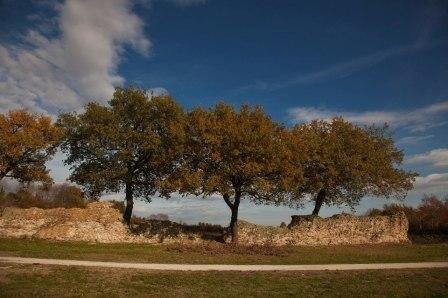
Walking among the ruins of Urbs Salvia is like flipping through the pages of a living history book. This archaeological park, nestled in the gentle hills of Macerata, catapults you directly into ancient Rome without the need for time machines. The impact is immediate: the perfectly preserved amphitheater dominates the scene with its majesty, while the large Roman cisterns speak of hydraulic engineering that still leaves you in awe today. It’s not just an archaeological site, but a sensory experience where the past breathes among the remains of baths, temples, and the theater that once hosted up to 3,000 spectators. The special feature? Here the atmosphere remains untouched, without the crowds of major tourist sites, allowing you to savor every detail in complete tranquility.
Historical Overview
Urbs Salvia was founded as a Roman colony in the 2nd century BC, becoming one of the most important centers in Picenum. The city reached its peak under Emperor Augustus, when it was completely rebuilt with monumental public buildings. Its decline began with the barbarian invasions, but it was the 1279 earthquake that dealt the final blow, prompting inhabitants to establish the medieval village of Urbisaglia on higher ground. Today the park preserves evidence from all eras, from the remains of the forum to medieval structures built atop Roman foundations.
- 2nd century BC: Founded as a Roman colony
- Augustan Age: Monumental restructuring of the city
- 1279: Earthquake leads to abandonment
- 14th century: Birth of the medieval village of Urbisaglia
The Amphitheatre That Speaks
The amphitheatre of Urbs Salvia is one of the best preserved in the Marche region, capable of seating up to 5,000 spectators. What strikes you isn’t just its size, but the perfect legibility of the structure: the vomitoria, service corridors, and seating tiers are clearly distinguishable. The unique feature? The acoustics are still exceptional – try whispering at the centre of the arena and you’ll hear the echo answer back. During excavations, unique artefacts emerged such as the fistulae aquariae, the lead pipes of the aqueduct that supplied public fountains, testifying to a cutting-edge water system for its time.
The Hidden Cisterns
The great Roman cisterns of Urbs Salvia are a masterpiece of hydraulic engineering often overlooked. These enormous underground reservoirs, built in opus reticulatum, ensured the city’s water supply even during droughts. The main cistern, over 40 meters long, is divided into three naves covered by perfectly preserved barrel vaults. The water filtration and distribution system is still visible in the construction details, demonstrating surprisingly advanced technology for its time. Visiting these underground spaces offers a unique atmosphere, far from conventional tourist routes.
Why You Should Visit
Three concrete reasons make Urbs Salvia unmissable. First: total accessibility – you can walk freely between the amphitheatre, theatre, and baths without barriers. Second: the complete absence of crowds allows you to photograph and observe at your leisure, unlike Pompeii or Ostia Antica. Third: the archaeological museum in the castle of Urbisaglia completes the visit with unique finds such as the statue of Germanicus and frescoes detached from Roman domus, creating a seamless journey between excavations and collections.
When to Go
The best time to visit Urbs Salvia is the early afternoon of a spring day, when the slanting light enhances the volumes of the ancient buildings and the long shadows create spectacular perspective plays. In summer, prefer the morning hours to avoid the heat, while in autumn the mist rising from the valley offers a magical and evocative atmosphere. Winter, with its clear skies, provides sharp views all the way to the Apennines.
In the Surroundings
Complete your Roman experience with a visit to the Abbey of Fiastra, just a few kilometers away, where Cistercian monks built a medieval complex of rare beauty nestled within the natural reserve. For enthusiasts of industrial archaeology, the Frasassi Caves offer a striking contrast between underground natural wonders and ancient surface history, creating a thematic itinerary on the transformation of the territory over time.