Introduction
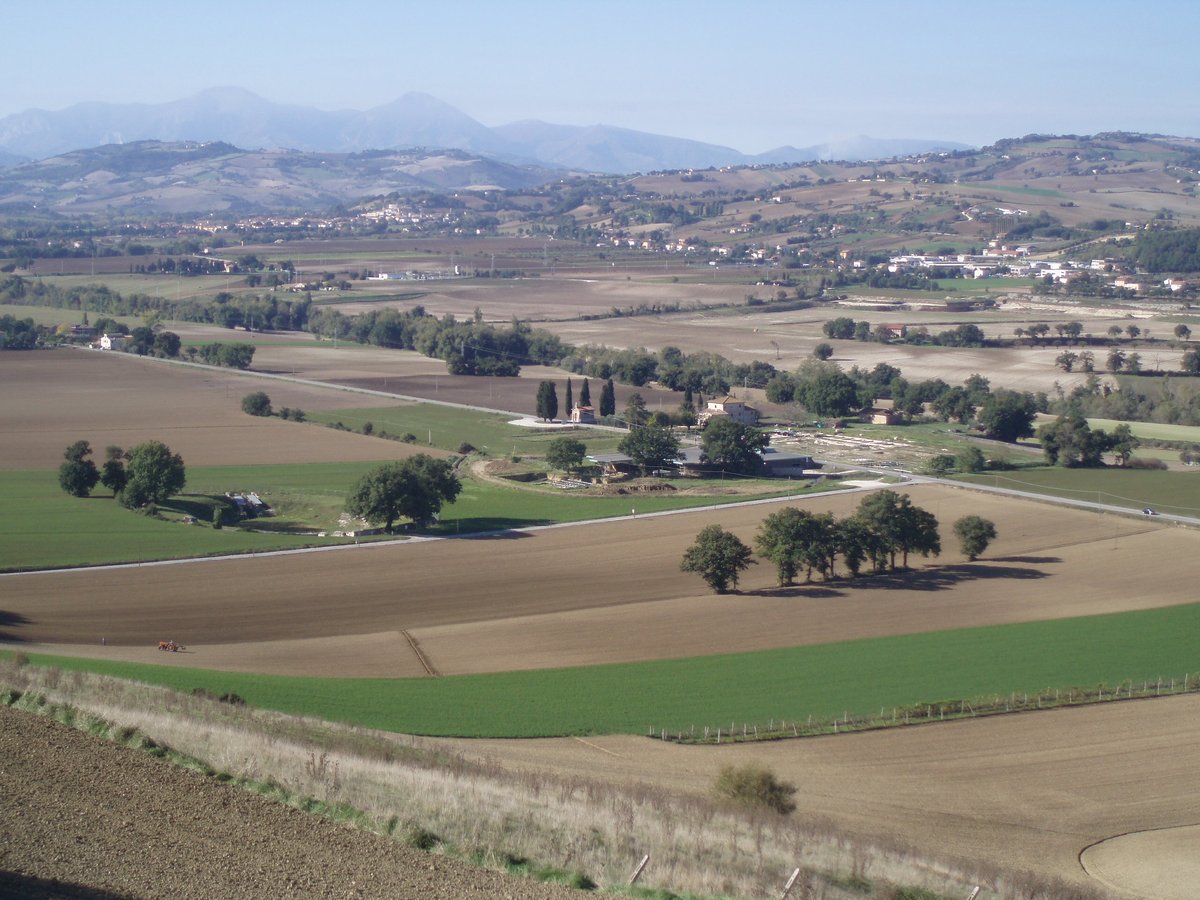
Have you ever walked down a street and wondered who trod the same path two thousand years ago? At the Suasa Archaeological Park, that’s exactly what happens. This isn’t just any site: here, among the Marche hills, lies a genuine Roman city, complete with its theatre, baths, and houses adorned with mosaics. The feeling is strange, almost surreal: you’re in an open field, surrounded by olive trees, and suddenly you see the foundations of an amphitheatre that once hosted spectacles. What strikes you most is its accessibility: there are no barriers, you can wander freely among the ruins, touch the stones, imagine the life that pulsed here. It’s not a closed museum, but a piece of history breathing in the open air. For me, visiting Suasa was like discovering a well-kept secret: less known compared to other Roman sites, but all the more authentic for it. If you love history without frills, this place is for you.
Historical Overview
Suasa wasn’t born by chance. It was a Roman city of considerable importance, founded in the 3rd century BC along the Via Flaminia, the road connecting Rome to the Adriatic Sea. Imagine: merchants, soldiers, and travelers passed through here. The city reached its peak between the 1st century BC and the 2nd century AD, when the monuments we see today were built, such as the theater and the baths. Then, as often happens, came decline: looting, perhaps earthquakes, and gradual abandonment. Interesting fact: the site has revealed remains of a noble domus, the House of the Coiedii, with beautiful mosaics that tell of a wealthy and cultured family. The timeline helps focus on key moments:
- 3rd century BC: foundation of the city along the Via Flaminia
- 1st century BC – 2nd century AD: period of maximum development, with construction of theater, baths, and domus
- 4th-5th century AD: beginning of decline and gradual abandonment
- 1980s: start of systematic archaeological excavations
- Today: the site is a visitable regional archaeological park
It’s not an epic history like Rome’s, but it has its own intimate charm, tied to the daily life of a province of the Empire.
The Theater and the Baths: Two Faces of the City
When you visit Suasa, two things leave a lasting impression: the theater and the baths. The theater is small and intimate, with a seating area that could accommodate a few hundred spectators. It’s not the Colosseum, and that’s precisely what makes it more human: you sit on the stone tiers and try to imagine the comedies, music, and laughter that echoed here. Just a few steps away are the baths. Here, the atmosphere changes: you see the remains of the pools, heating systems (the hypocaust), and changing rooms. It struck me to think that the Romans of Suasa, in this provincial town, already had their own wellness center, with hot and cold water, saunas, and places to socialize. The bath mosaics, though not all perfectly preserved, display elegant geometric patterns. Walking between these two sites, you understand how leisure and body care were important even in a small town far from the capital. It’s a detail that makes history less abstract and more tangible.
Walking Among Mosaics and the Ancient Road
Beyond the theater and the baths, what I enjoyed most about Suasa was the opportunity to take a true archaeological walk. The park isn’t huge, but it’s well-organized: gravel paths guide you among the remains of houses, shops, and the main street. The mosaics are the most delightful surprise: don’t expect immense masterpieces, but floors decorated with black and white tiles, sometimes with geometric patterns, sometimes with animal figures. One, in particular, depicts a dolphin and is surprisingly well-preserved. Then there’s the basalt-paved road, the ancient Roman street: walking on it, following the grooves left by carts, is a direct experience with the past. I noticed that many visitors, especially families with children, stop here to take photos or explain to the little ones how a city functioned. The site is flat and accessible, ideal for a visit without too much effort. Personally, I appreciated the silence, broken only by the wind through the olive trees: a perfect contrast with the noisy life that must have been here centuries ago.
Why Visit It
You might be wondering: why should I visit Suasa instead of another archaeological site? I’ll give you three concrete reasons. First, it’s a ‘living’ and open site: there are no display cases or mandatory routes, you can explore freely, touch the stones, sit in the theater. Second, it’s perfect for families: children can run among the ruins, discover mosaics like in a treasure hunt, without the boredom of a traditional museum. Third, it offers an authentic glimpse into provincial Roman life: these aren’t the imperial monuments of Rome, but the everyday reality of a city that lived on trade and agriculture. Plus, it’s rarely crowded: you’ll seldom find queues or noisy groups, so you can enjoy it at your own pace. Whether you’re a history enthusiast or simply curious, Suasa gives you a direct, unfiltered experience. I’ve been back twice, and each time I noticed a new detail.
When to Go
The best time to visit Suasa? It depends on what you’re looking for. I visited on a late September day, with warm but not muggy sunshine, and the atmosphere was perfect: the golden afternoon light illuminated the ancient stones, creating long shadows that accentuated the shapes of the theater. Autumn and spring are ideal: the climate is mild, the surrounding fields are green or golden, and you can stroll without suffering the summer heat. In summer, I recommend going early in the morning or late afternoon: the site is exposed to the sun, and it can get very hot during the midday hours. In winter, if it’s not raining, clear days offer sharp views of the hills, but bring a jacket because the wind can be cold. A personal opinion of mine: avoid days with heavy rain, as the gravel paths might get muddy. Overall, Suasa is beautiful in every season, but with the right light and temperature, it becomes magical.
In the Surroundings
A visit to Suasa can be the starting point for exploring this area of the Marche region, full of surprises. Just a few minutes’ drive away is Corinaldo, a perfectly preserved medieval village with imposing walls and charming alleyways. It’s worth a quick trip to experience its ancient atmosphere, so different from the Roman ruins. If you’d rather continue with the archaeological theme, I suggest the National Archaeological Museum of the Marche in Ancona: it’s not very close, but it houses important regional artifacts, including some from Suasa itself. For a more relaxing experience, you can head to the Adriatic coast: beaches like those in Senigallia or Marcelli are less than half an hour away, perfect for a swim after your cultural visit. Personally, I stopped at a local winery to taste Verdicchio, the typical white wine of these hills: a delicious way to end the day.