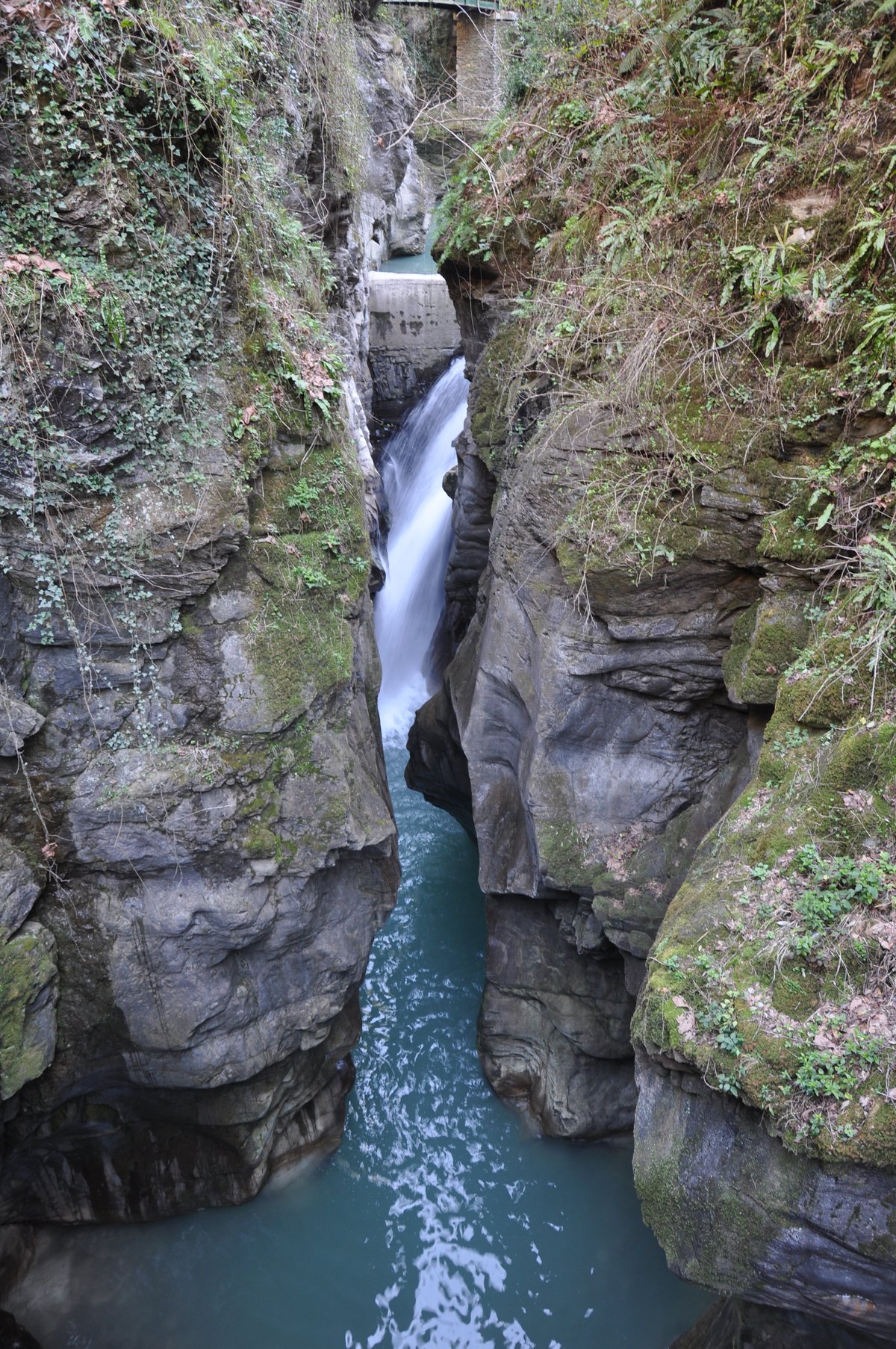
The Bellano Gorge is a natural canyon formed 15 million years ago by the erosion of the Pioverna stream. Visitors walk along walkways anchored to the rock walls, among waterfalls, giant potholes, and lush vegetation. At the entrance stands the Ca’ del Diavol, a pentagonal tower with legends and a multimedia museum. The path is easy but not suitable for strollers. The main waterfall drops 40 meters and has an average flow of 2.5 m³/s. Stendhal and Wetzel described the site, while poet Boldoni called it ‘horror of a horrible horrendousness’. Annual visitors: about 140,000. Here’s what not to miss:
– Suspended walkways crossing the gorge.
– Ca’ del Diavol: interactive museum on geology and legends.
– Giant potholes shaped by water.
– Legend of Taino, a warrior buried with a treasure.
Welcome to the Orrido di Bellano
Imagine walking on suspended walkways between sheer rock faces above the water, with the roar of a waterfall accompanying you. The Orrido di Bellano is a natural gorge carved by the Pioverna stream, a deep canyon that makes you feel small yet alive. The giant potholes, crevices, and lush vegetation create an almost tropical atmosphere. It’s not just a path; it’s an experience that engages all the senses. And if you have a bit of courage, look down: the water rushes fiercely, and the walls seem to close in on you. A place you won’t easily forget.
Historical Notes
The gorge formed about 15 million years ago through erosion by the Pioverna stream and the Adda glacier. As early as the 16th and 17th centuries, its waters were used for ironworking; later, in 1870, the Cantoni Cotton Mill opened a plant there. Local poet Sigismondo Boldoni called it ‘the horror of a horrendous horrendousness,’ while Stendhal mentioned it in his ‘Voyage en Italie.’ Modern visitation began in the mid-18th century with a pink marble staircase; today, walkways extend all the way to the large upstream waterfall. A blend of nature and history well worth discovering.
Ca’ del Diavol: Between Legend and Technology
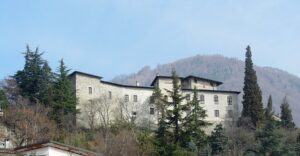
At the entrance to the gorge, you’ll find a pentagonal tower perched over the stream: Ca’ del Diavol. The name comes from demonic frescoes and legends of satanic rites, but according to some, it was a curfew shelter during the Austrian occupation. Today, after restoration, it’s a three-story museum with multimedia exhibits. On the ground floor, discover the geology; on the second, local legends (like the treasure of the Taino warrior); on the third, a VR journey that takes you from the canyon to Grigna and Lake Como. Not to be missed.
The Canyon Step by Step
The walk begins with a flight of steps, then winds along metal walkways anchored to the rock. Attention: there are stairs and narrow passages, no strollers or wheelchairs. Dogs are allowed only in the Orrido, not in Ca’ del Diavol. During the walk you can hear the sound of water growing louder until you reach the main waterfall. During flood periods it’s a deafening roar! The walls are damp and slippery, so non-slip shoes are recommended. The walkways are illuminated even in the evening, creating an even more evocative atmosphere. Allow about an hour for the visit, but if you stop to take pictures it may last longer.
Why Visit It
Here are three good reasons: 1. The only canyon you can visit on Lake Como – there’s nothing like it nearby. You can walk inside a gorge that drops straight into the water, a thrilling experience. 2. Suitable for (almost) everyone – the path is not too strenuous, but it’s not for those with mobility issues. Kids love it, with the proper precautions. 3. Ca’ del Diavol is a multimedia gem – the museum is modern and interactive, perfect for learning the area’s history while having fun. In short, a mix of nature, history, and technology that appeals to everyone.
When to Go
In my opinion, the best time is spring or autumn, when the stream is richer in water and the waterfalls are spectacular. In summer, crowds are heavy and it can get hot, but opening hours extend until 10 PM in July and August, allowing for an evening visit with artificial lights that create shadow plays. Avoid dry periods if you want to see the roaring water. In winter, it’s open only on Saturdays and Sundays, but the atmosphere is more intimate. In short, each season has its charm, but for the fullest experience, choose a day after a good thunderstorm.
In the Area
After visiting the Orrido, don’t miss the town of Bellano: take a stroll along the lakefront and visit the Church of San Giorgio, with its 17th-century frescoes. If you have time, head up to Valsassina for a hike or go to Lecco (25 km) for a city tour. Bellano also has a lido with heated pools, perfect for cooling off in summer. And if you love quaint villages, Varenna is just a stone’s throw away: reachable by boat or train, with its colorful houses and lake view. A great combination for a full day.