Discover the Taranto province itinerary rock-hewn villages castles in 3 days among Puglia's hidden treasures. Start from Massafra with its ravines and rock-hewn churches, explore the evocative villages carved into the rock and the majestic medieval castles dominating the landscape. A route that will take you through Manduria, among millennia-old history, ancient traditions, and breathtaking views. Ideal for those seeking authenticity away from the most beaten tourist paths, this journey will give you unique emotions among rock-hewn architectures and fortresses that tell centuries of history.
🗺️ Your trip at a glance
A 3-day journey through the rupestrian villages and medieval castles of Taranto Province, from the ravines of Massafra to the wineries of Manduria. Discover hypogeal architecture, Norman fortresses, and breathtaking landscapes along a path far from the most beaten tourist trails.
- Ideal for: travelers seeking historical authenticity and paths off the classic circuits, interested in rupestrian and medieval architecture.
- Highlights: includes 9 specific stops with interactive maps, from churches carved into rock to Norman castles and Messapian archaeological sites, with details on access and location.
- Perfect for those who: love exploring historical sites on foot, are curious about ancient civilizations, and appreciate natural landscapes integrated with history.
Itinerary stops
Day 1 - Stop no. 1
Medieval Castle of Massafra
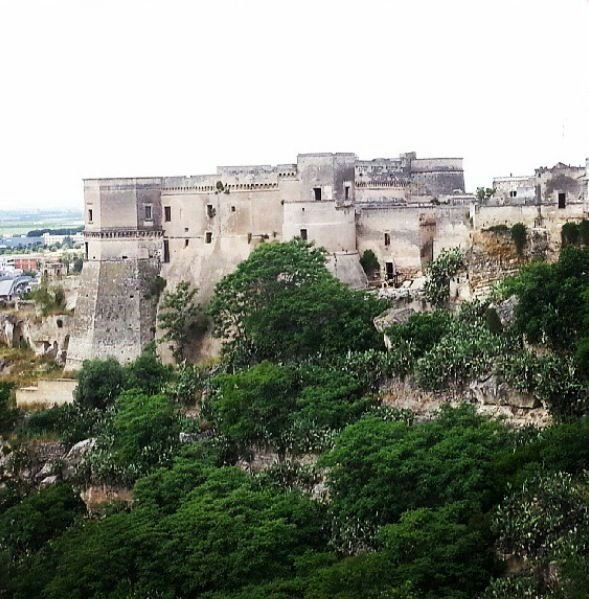 The first day of our "Villages and Castles of Taranto Province" itinerary begins with the Medieval Castle of Massafra on Via Lo Pizzo. This 11th-century Norman fortress rises majestically on the edge of the ravine, offering a strategic position that explains its historical importance. The structure features square and circular towers typical of Apulian military architecture, with inner courtyards that tell centuries of dominations. Particularly interesting is the palatine chapel, where traces of Byzantine frescoes can be admired. The castle overlooks the panorama of the cave dwellings carved into the underlying rock, creating a unique contrast between military architecture and rock settlements. The visit allows you to understand the defensive system that protected the ancient village and its communities.
- Via Lo Pizzo, Massafra (TA)
- Open in Google Maps
- View on Google Images

You should go if...
Day 1 - Stop no. 2
San Gregorio Rock Church
 The second stop on our itinerary takes us to discover one of the most significant rock-hewn treasures in the province of Taranto. The San Gregorio Rock Church in Mottola, located on Via Salvador Allende, represents an exceptional example of medieval hypogeal architecture. Carved directly into the limestone rock, this church preserves Byzantine frescoes from the 10th-11th centuries depicting scenes from the life of Christ and the Saints. The hypogeal environment maintains a constant temperature year-round, creating ideal conditions for the preservation of the paintings. The uniqueness of this site lies in its dual religious and residential function, with spaces that served both for worship and for the daily life of monastic communities. Access to the church is through a path winding through typical Mediterranean vegetation, offering panoramic views of the Taranto Murgia.
- Via Salvador Allende, Mottola (TA)
- Open in Google Maps
- View on Google Images
You should go if...
Day 1 - Stop no. 3
Petruscio Rock Village
 After visiting the Rock Church of San Gregorio, the route continues towards Petruscio Rock Village, located along State Road 100 of Gioia del Colle. This archaeological site represents a complete rock settlement, with dwellings, cisterns, and places of worship carved directly into the limestone rock. The structures date back to the medieval period, between the 9th and 13th centuries, and showcase the social and residential organization of local communities. The rooms are distributed across multiple levels, connected by internal staircases and passages, highlighting a clever use of space. The cisterns for rainwater collection demonstrate adaptation to the arid environment, while the niches and hearths reveal daily life. Access to the village offers a panoramic view of the ravine, enhancing the charm of a place where history and nature merge.
- Strada Statale 100 di Gioia del Colle, Mottola (TA)
- Open in Google Maps
- View on Google Images
You should go if...
Day 2 - Stop no. 1
Episcopio Castle
 Leaving behind the rock-hewn caves of Petruscio, the second day of the itinerary begins with the Episcopio Castle of Grottaglie, located on Via delle Torri. This fortified complex dates back to the 14th century and represents one of the few examples of episcopal military architecture in Apulia. The structure develops around a central courtyard with square towers and Guelph-style battlements, while the interior houses the Ceramics Museum. The exhibition halls document Grottaglie's centuries-old craft tradition through decorative maiolica and everyday artifacts from the 16th century to the present day. From the patrol walkway, visitors enjoy a privileged view of the characteristic ceramics workshop district, where master potters still work today. The building combines defensive function and artistic production, demonstrating how the art of ceramics has shaped the identity of the territory.
- Via delle Torri, Grottaglie (TA)
- Open in Google Maps
- View on Google Images
You should go if...
Day 2 - Stop no. 2
Tiger Man
 The Tiger Man of Grottaglie is a unique rock sculpture, located on Via Oberdan. This enigmatic humanoid face with feline features has been carved directly into the limestone rock, creating a work that defies traditional artistic conventions. The figure shows hybrid characteristics between human and animal, with deep eyes and marked lines that seem to tell ancient local legends. The isolated location of the work, far from the more beaten tourist paths, adds an aura of mystery to the visit. The carving technique demonstrates remarkable craftsmanship, probably dating back to historical periods different from those of the nearby Grottagliese ceramics. The absence of official documentation on the origin of the work stimulates visitors' imagination, making each interpretation personal and suggestive.
- Via Oberdan, Grottaglie (TA)
- Open in Google Maps
- View on Google Images
You should go if...
Day 2 - Stop no. 3
De Falconibus Castle
 De Falconibus Castle in Pulsano represents a well-preserved example of medieval defensive architecture in the province of Taranto. Located on Via Lunga degli Aborigeni, this 14th-century manor displays structural features typical of the Angevin period, with quadrangular towers and massive walls that have withstood the centuries. Its strategic hilltop position allows visitors to enjoy panoramic views stretching from Pulsano's historic center to the Ionian Sea, offering a unique perspective on the territory. Unlike previous rock-hewn stops, the focus here is on medieval military engineering, with details like archer slits and the protected access system still visible. The recently restored structure maintains the authentic atmosphere of the period, with inner courtyards that tell stories of feudal lords and local battles.
- Via Lunga degli Aborigeni, Pulsano (TA)
- Open in Google Maps
- View on Google Images
You should go if...
Day 3 - Stop no. 1
Archaeological Park of the Messapian Walls
 Day three of the 'Borghi e Castelli della Provincia di Taranto' itinerary begins in Manduria, where the Archaeological Park of the Messapian Walls on Via Scegnu offers a plunge into ancient history. This site preserves the imposing defensive walls built by the Messapians between the 5th and 3rd centuries BC, with blocks of local stone stretching for hundreds of meters. Unlike the Castello De Falconibus in Pulsano, here the focus shifts to pre-Roman engineering, with well-preserved access gates and wall sections up to 7 meters high that testify to their resistance against invasions. The park also includes necropolises with pit tombs, where ceramic artifacts have been unearthed and are now displayed in the National Museum of Taranto. The visit allows you to walk along the original paths, getting a tangible sense of how this civilization organized the defense of its territory—an experience that perfectly complements the journey through the province's historical sites.
- Via Scegnu, Manduria (TA)
- Open in Google Maps
- View on Google Images
You should go if...
Day 3 - Stop no. 2
Imperiali - Filotico Palace
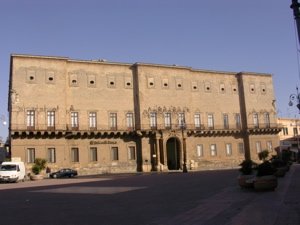 The Imperiali - Filotico Palace, located on Vico Imperiale in Manduria, represents an architectural jewel from the 18th century, commissioned by the noble Imperiali family. The Baroque facade, with its carved details and framed windows, immediately captures attention. Inside, visitors can admire original frescoes depicting scenes of aristocratic life, while the underground cellars, once used for wine storage, offer a direct connection to the local winemaking tradition. This palace is not just a monument, but an ideal starting point for exploring Manduria's historic center, famous for its Primitivo wine. Its strategic location makes it perfect for a quick yet intense visit, enriching the third day of the itinerary with a touch of culture and authenticity.
- Vico Imperiale, Manduria (TA)
- Open in Google Maps
- View on Google Images
You should go if...
Day 3 - Stop no. 3
Torre Colimena
 After exploring the historic center of Manduria, the final stop of the third day takes you to Torre Colimena, located along the Ionian Seafront. This 16th-century coastal tower, built to spot Saracen raids, stands majestically over a beach of fine sand and crystal-clear waters. The stone structure, with its cylindrical shape and arrow slits, tells centuries of defensive history, while the surroundings offer a preserved natural landscape, ideal for a relaxing walk. The free beach is perfect for those seeking tranquility away from the crowds, with sandy dunes and Mediterranean vegetation surrounding it. Here, you can conclude the itinerary by immersing yourself in the wild beauty of the Ionian coast, a pleasant contrast with the villages and castles visited in previous days.
- Lungomare Jonico, Manduria (TA)
- Open in Google Maps
- View on Google Images
You should go if...