Brindisi Cathedral: The Romanesque Duomo with Byzantine Mosaics and Roman Column

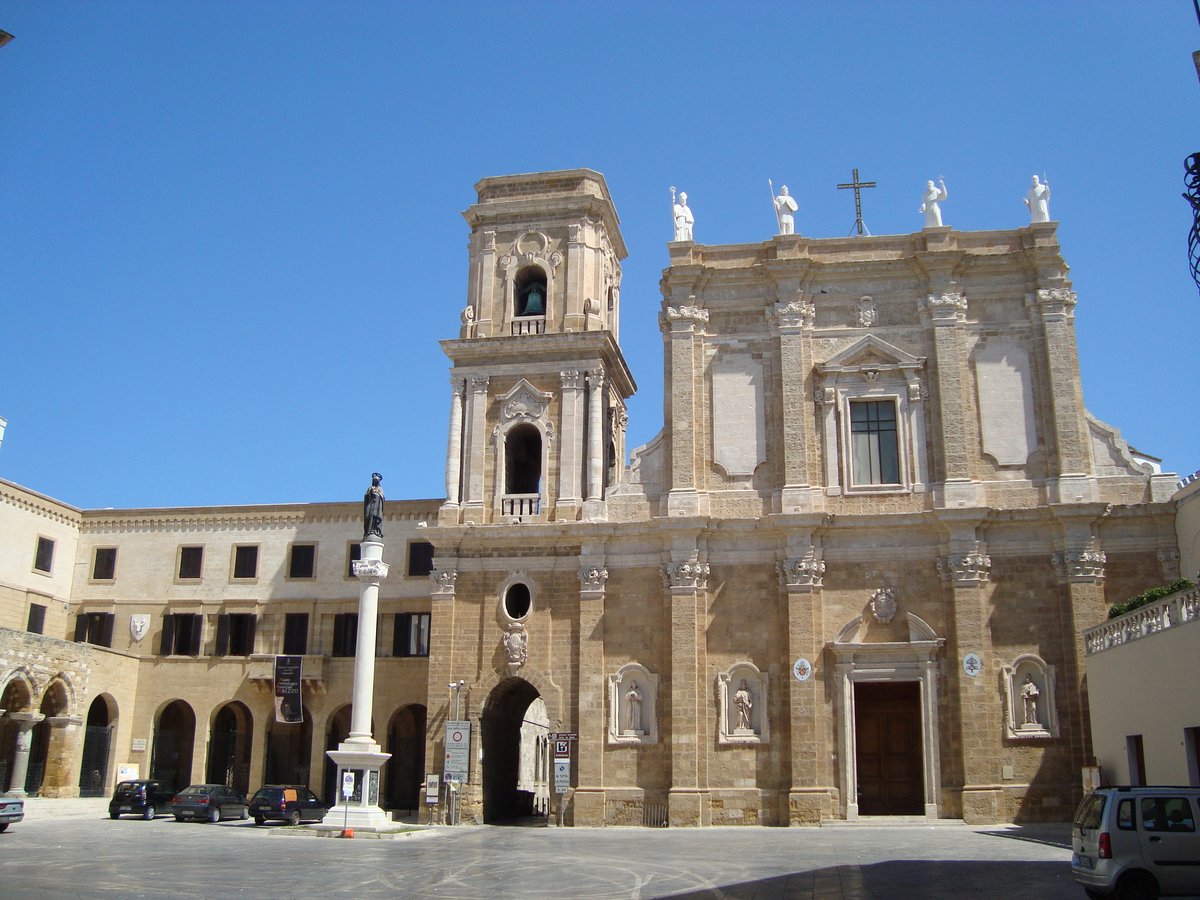
Brindisi Cathedral, or the Duomo, is the religious and historical heart of the city, rebuilt after the 1743 earthquake but with origins dating back to the 11th century. Its façade of local stone and bell tower overlook Piazza Duomo, while inside it houses treasures such as Byzantine mosaics and the Diocesan Museum. Romanesque façade in Lecce stone with a rose window and decorated portal. 12th-century Byzantine floor mosaics with geometric and animal motifs. Roman column from the port used as a reference point for crusaders. Diocesan Museum with archaeological finds and sacred artworks.
Copertina itinerario Brindisi Cathedral: The Romanesque Duomo with Byzantine Mosaics and Roman Column
Brindisi Cathedral, dedicated to Saint John the Baptist, is a symbol of the city with its Romanesque façade, 12th-century Byzantine floor mosaics, and the Roman column from the port. Discover visiting hours and what to see.

Good to know


Introduction

Brindisi Cathedral welcomes you with a Romanesque facade that seems to tell centuries of history. It’s not just a church, but a true symbol of the city, dedicated to Saint John the Baptist. What immediately strikes you is the contrast between the external simplicity and the treasures kept inside. Then there’s that Roman column, right next to it, reminding you that this place has been a crossroads of civilizations. Entering here means taking a leap back in time, among mosaics that shine with their own light and an atmosphere that makes you feel part of something greater. Personally, I got lost observing the details of the portal, each sculpture seems to have a story to whisper.

Historical Overview

The history of the Cathedral is a tapestry of destruction and rebirth. The original construction dates back to the 11th century, but it was almost completely razed by the 1743 earthquake. What you see today is the result of an 18th-century reconstruction that preserved remarkable original elements. The 12th-century Byzantine floor mosaics miraculously survived and represent one of the few examples of their kind in Apulia. The Roman column outside, on the other hand, is a 2nd-century AD artifact, once part of the ancient port. I sometimes wonder how they managed to save those mosaics during the reconstruction… it must have been an incredible challenge.

  • 11th century: initial construction of the Cathedral
  • 12th century: creation of the Byzantine mosaics
  • 1743: earthquake destroys most of the building
  • 18th century: Baroque-style reconstruction

Mosaics That Tell Stories

When you enter the Cathedral, you cannot help but stop to admire the Byzantine floor mosaics. Dating back to the 12th century, they cover much of the transept. These are not mere geometric decorations; they depict animal and symbolic figures with a precision that leaves you speechless. There are lions, griffins, and eagles that almost seem to move within the stone. The light filtering through the windows makes them shine differently at each hour of the day. I particularly noticed an interlaced pattern reminiscent of Eastern textiles from that era. Unfortunately, some pieces are worn by time, but this only adds to the overall charm. Remember to walk over them with respect—they are fragile after nine centuries of history.

The Roman Column and Its Mystery

Just outside the Cathedral, in the square, stands a majestic Roman marble column about 8 meters tall. It’s not just an ornament: it was part of the ancient port of Brindisi, likely supporting a monument or public building. What fascinates me is imagining all the ships that must have seen it arrive and depart over the centuries. The column was repurposed here in the Middle Ages, perhaps as a symbol of continuity between the Roman past and the Christian present. Its surface is smoothed by time, but traces of the original craftsmanship are still visible. Sometimes children run around it trying to count the grooves… it has become a spontaneous gathering point for the community.

Why Visit It

Visiting Brindisi Cathedral is worthwhile for at least three concrete reasons. First, the Byzantine mosaics are extremely rare in this region and are exceptionally well-preserved here. Second, the building visually tells the story of the city: from the Roman column to the Romanesque facade, all the way to the post-earthquake Baroque interiors. Third, it’s a living place: not just a museum, but an active church where you can attend services or simply breathe in the atmosphere of daily devotion. I’ve returned multiple times and each time discover a new detail, perhaps a different capital or an almost illegible inscription.

When to go

The best time to visit the Cathedral? The first winter afternoon, when the low-angle light streams through the windows and sets the mosaics aglow as if they were made of gold. In summer, aim for the cooler morning hours before the heat sets in. Avoid patron saint feast days if you want to skip the crowds, but if you happen to be there during a celebration, the atmosphere is still special. Personally, I have a soft spot for overcast days: the colors of the marble seem deeper, almost somber. A heartfelt tip: also visit in the evening, when the exterior lights illuminate the façade, creating spectacular plays of shadow.

In the Surroundings

After the Cathedral, take a short walk to the Swabian Castle of Brindisi, just a few minutes away on foot. This imposing fortress, commissioned by Frederick II, overlooks the port. Inside, it hosts temporary exhibitions and offers an incredible view of the sea. If you prefer to continue with the religious theme, head to the Church of Santa Maria del Casale, located just outside the city center. It features a unique facade with white and red stripes and well-preserved 14th-century frescoes. Both sites perfectly complement your visit, showcasing other aspects of Brindisi’s history.

💡 Did You Know…?

The Cathedral stands on an ancient 6th-century Paleochristian basilica, destroyed by the Saracens. During restoration work, remains of a Roman temple dedicated to Jupiter emerged, testifying to the historical layering of the site. The Roman column outside, one of the two that marked the end of the Appian Way, was used by medieval pilgrims as an orientation point to embark for the Holy Land.