
The Campi Flegrei are a must-see destination for anyone visiting Naples. Here you will find a landscape shaped by fire and water, with archaeological sites from the Roman era, active volcanic craters, and thermal springs.
- Solfatara: walk on the active crater with fumaroles at 160°C
- Flavian Amphitheater: third largest Roman amphitheater
- Baia Archaeological Park: imperial baths and sunken city
- Lake Avernus: the entrance to the Underworld according to Virgil
Events nearby

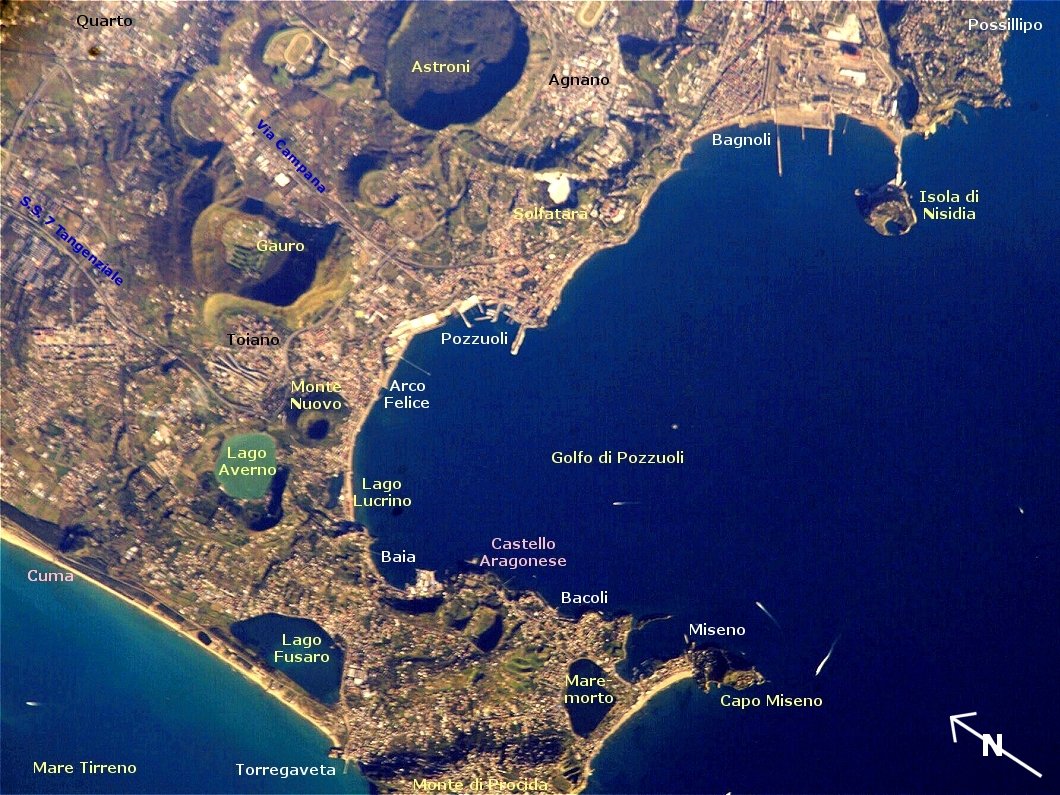
A volcanic area unique in the world between Pozzuoli and Baia, featuring the Solfatara, the Flavian Amphitheater, the Cumae Archaeological Park, and Roman baths. Perfect for a weekend of culture and relaxation.
Good to know
Introduction
The Phlegraean Fields are not like any other place. Here, between Pozzuoli and Baia, the ground smokes, the sea hides Roman cities, and the air smells of sulfur. It is a unique volcanic area, where Solfatara shows you the living earth, the Flavian Amphitheater takes you back to the gladiators, and the still-steaming Roman baths invite you to dive into the past. Perfect for an offbeat weekend, blending culture and relaxation. If you are looking for an experience that mixes nature, history, and wellness, you have come to the right place.
Historical Overview
Pozzuoli was founded as Dicearchia in 528 BC by the Greeks of Samos. It became Puteoli under the Romans in 228 BC, developing into a strategic port. Goods from across the Mediterranean were unloaded here, and Roman patricians built thermal villas. Bradyseism has always influenced life: even in Roman times, the ground rose and fell, forcing the port to be relocated. The eruption of Monte Nuovo in 1538 was the last in the area. Today, the area is a vast open-air archaeological park.
Brief Timeline
- 528 BC – Foundation of Dicearchia
- 228 BC – Becomes Roman colony Puteoli
- 1st-2nd cent. AD – Construction of Flavian Amphitheater and Macellum
- 1538 – Eruption of Monte Nuovo
- 1970-84 – Bradyseism crises with uplift up to 3 m
- 2012 – Yellow alert for volcanic risk
La Solfatara: The Volcano Under Your Feet
La Solfatara is the symbol of the Campi Flegrei. An elliptical crater measuring 770×580 meters, still active but dormant. Upon entering, you immediately smell sulfur and see fumaroles at over 160°C and jets of boiling mud. The ground is warm, almost surreal. A walk among the fumaroles makes you feel like you’re on the surface of another planet. It’s not just a spectacle: it’s an open-air geology laboratory. I recommend arriving early in the morning to avoid the crowds and enjoy the silence broken only by the hissing of gases. Wear closed-toe shoes, the terrain is rough.
A Walk Among Romans: Amphitheater and Rione Terra
Pozzuoli preserves an incredible Roman heritage. The Flavian Amphitheater is the third largest in Italy after the Colosseum and Capua, with a capacity of 40,000 spectators. Stroll through the underground corridors where cages with wild beasts were lifted. Nearby, the Macellum (so-called Temple of Serapis) was the Roman market, now partially submerged due to bradyseism. Don’t miss Rione Terra, the ancient core abandoned in the 1970s and now restored: beneath the modern streets lie excavations with remains of Roman roads and houses.
Why Visit
Three concrete reasons. One: it’s the only place in the world where you can see an active volcano, a Roman amphitheater, and natural hot springs in the same afternoon. Two: Roman baths like the Stufe di Nerone or the Agnano springs are still functioning – you can take a hot bath just like the ancients did. Three: the seafood cuisine in Pozzuoli is exceptional, with dishes based on octopus and anchovies. In short, a concentration of history, nature, and taste.
When to Go
The best time to visit is spring or autumn, when temperatures are mild and the sky is often clear. Avoid summer because it’s hot and more humid, but if you do go, choose early morning for Solfatara and late afternoon for the ruins, when the light is warmer. It can rain in winter, but the sites are less crowded. For the thermal baths, any season works: hot water is pleasant even in the cold.
In the Surroundings
A few kilometers away, the Archaeological Park of Cuma awaits you with the Cave of the Sibyl – a 130-meter-long corridor that legend says was the entrance to the Underworld. Also nearby is the Underwater Park of Baia: on a glass-bottom boat, you’ll see Roman statues and mosaics submerged by bradyseism. A unique experience, like sailing over a sunken ghost town.
Itineraries nearby


💡 Did You Know…?
Legend has it that Lake Avernus was the entrance to the Underworld, where Aeneas descended guided by the Sibyl. Even today, the dark waters and the fumes of the Solfatara create a mystical atmosphere. Moreover, bradyseism has repeatedly raised and submerged the Temple of Serapis, a silent witness to the earth’s breaths.