Introduction
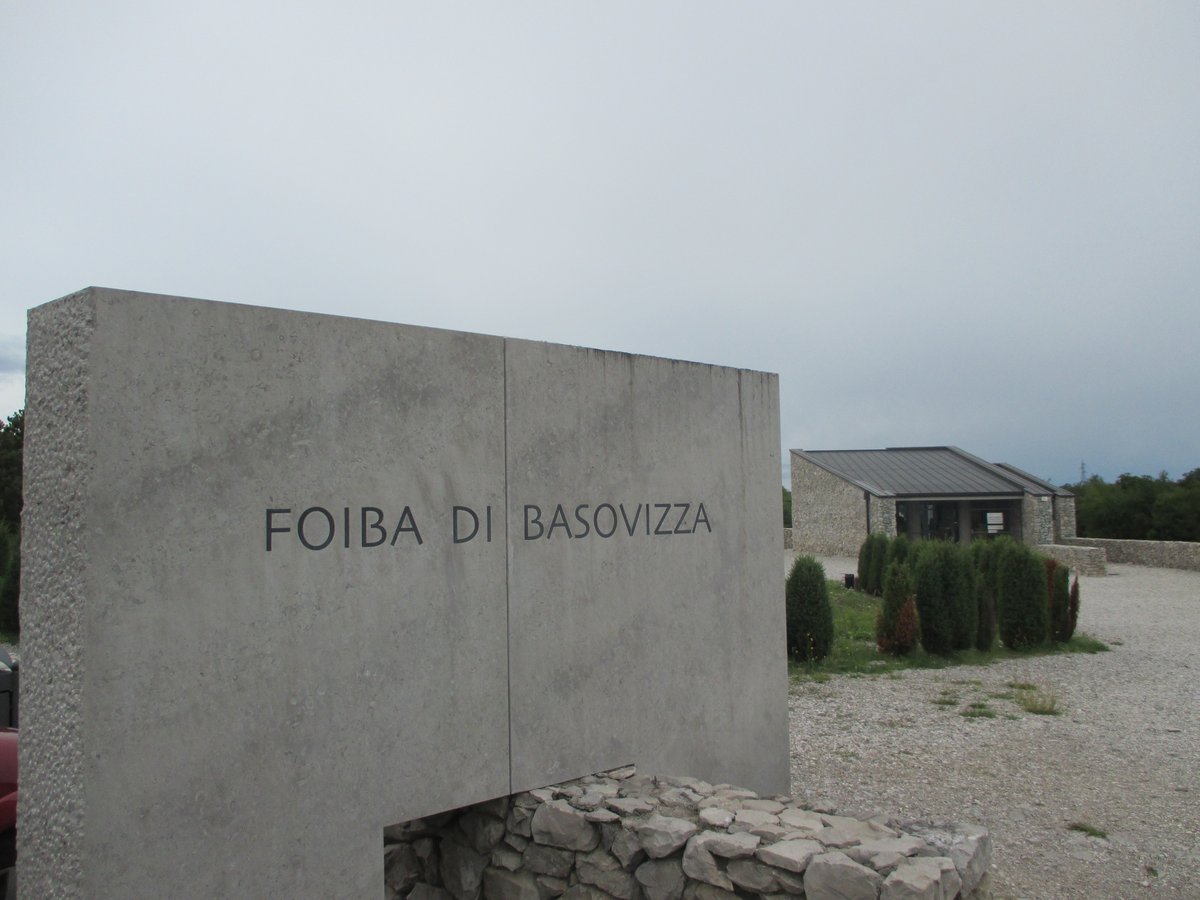
On the Karst plateau, at an altitude of 377 meters, lies the Foiba di Basovizza. A mining shaft over 200 meters deep, dug for coal, later became a symbol of one of the darkest chapters in Italian history. Today it is a national monument, a memorial that forces you to stop. The air is silent, the landscape barren. It’s not an easy place, but it is necessary. Here memory is an open wound, and visiting means understanding more about the eastern border.
Introduction
On the Karst plateau, at an altitude of 377 meters, lies the Foiba di Basovizza. A mining shaft over 200 meters deep, dug for coal, later became a symbol of one of the darkest chapters in Italian history. Today it is a national monument, a memorial that forces you to stop. The air is silent, the landscape barren. It’s not an easy place, but it is necessary. Here memory is an open wound, and visiting means understanding more about the eastern border.
Historical Background
Excavated in the early 1900s to extract coal, the shaft was soon abandoned. In September 1930, four Slovene anti-fascists, symbols of resistance, were executed there. But it is May 1945 that marks it forever: during the Yugoslav occupation of Trieste, the shaft became a foiba where the bodies of thousands of victims were thrown. The exact number is uncertain—estimates range up to 1,500—but the depth of the shaft decreased by 30 meters after those days. In 1992 it was declared a National Monument, and since 2007 it has housed a Shrine with a documentation center. Every February 10 the Day of Remembrance is observed.
Historical Background
Excavated in the early 1900s to extract coal, the shaft was soon abandoned. In September 1930, four Slovene anti-fascists, symbols of resistance, were executed there. But it is May 1945 that marks it forever: during the Yugoslav occupation of Trieste, the shaft became a foiba where the bodies of thousands of victims were thrown. The exact number is uncertain—estimates range up to 1,500—but the depth of the shaft decreased by 30 meters after those days. In 1992 it was declared a National Monument, and since 2007 it has housed a Shrine with a documentation center. Every February 10 the Day of Remembrance is observed.
The Well and the Shrine
As you walk toward the well, you see a stone structure protecting it. The edge is sealed with a grate, but you can sense the void below. Around it, the Shrine was designed to gather silence: a paved square, a stele, and a documentation center that tells the story through panels and artifacts. The well is 228 meters deep, but after 1945 it was filled with debris for tens of meters. It is a place that speaks to you without words.
The Well and the Shrine
As you walk toward the well, you see a stone structure protecting it. The edge is sealed with a grate, but you can sense the void below. Around it, the Shrine was designed to gather silence: a paved square, a stele, and a documentation center that tells the story through panels and artifacts. The well is 228 meters deep, but after 1945 it was filled with debris for tens of meters. It is a place that speaks to you without words.
Commemorations and Their Meaning
Every February 10, on Remembrance Day, authorities and citizens gather here. The ceremony is solemn, with laurel wreaths and speeches. But even on ordinary days, you always find someone: an elderly person bringing a flower, a group of students on a visit. In 2025, the monument was vandalized with provocative writings, but the paint was removed immediately. This place is not just a memory: it is a warning. Visiting it means confronting the wounds of the eastern border.
Commemorations and Their Meaning
Every February 10, on Remembrance Day, authorities and citizens gather here. The ceremony is solemn, with laurel wreaths and speeches. But even on ordinary days, you always find someone: an elderly person bringing a flower, a group of students on a visit. In 2025, the monument was vandalized with provocative writings, but the paint was removed immediately. This place is not just a memory: it is a warning. Visiting it means confronting the wounds of the eastern border.
Why Visit It
1. Understand the history of the foibe: there is no more symbolic place to grasp the tragedy of the eastern border. 2. A moment of reflection: far from the city chaos, the silence helps you reflect. 3. The documentation center: well-done, with maps and testimonies that clarify the events. It’s a place I recommend to those who truly want to understand, not just see.
Why Visit It
1. Understand the history of the foibe: there is no more symbolic place to grasp the tragedy of the eastern border. 2. A moment of reflection: far from the city chaos, the silence helps you reflect. 3. The documentation center: well-done, with maps and testimonies that clarify the events. It’s a place I recommend to those who truly want to understand, not just see.
When to Go
If you want to take part in the celebrations, February 10 is the most significant date, with official ceremonies. But if you prefer a more intimate moment, I suggest a weekday afternoon in autumn. The grey sky of the Karst amplifies the melancholy of the place. Or a spring morning, when the air is fresh and the low light illuminates the stele. Avoid weekends if you seek solitude.
When to Go
If you want to take part in the celebrations, February 10 is the most significant date, with official ceremonies. But if you prefer a more intimate moment, I suggest a weekday afternoon in autumn. The grey sky of the Karst amplifies the melancholy of the place. Or a spring morning, when the air is fresh and the low light illuminates the stele. Avoid weekends if you seek solitude.
Nearby
A few kilometers away is the Risiera di San Sabba, another place of remembrance: it was a Nazi concentration camp turned into a museum. Still in Trieste, the Civic Museum of National History has sections dedicated to the Julian-Dalmatian exodus. If you have time, visit Miramare Castle: the contrast between the beauty of the castle and the harshness of the memorial is striking, but it helps to understand the many facets of this region.
Nearby
A few kilometers away is the Risiera di San Sabba, another place of remembrance: it was a Nazi concentration camp turned into a museum. Still in Trieste, the Civic Museum of National History has sections dedicated to the Julian-Dalmatian exodus. If you have time, visit Miramare Castle: the contrast between the beauty of the castle and the harshness of the memorial is striking, but it helps to understand the many facets of this region.