Fröhlichsburg: Medieval Castle with Panoramic Views of the Vinschgau Valley and Dolomites

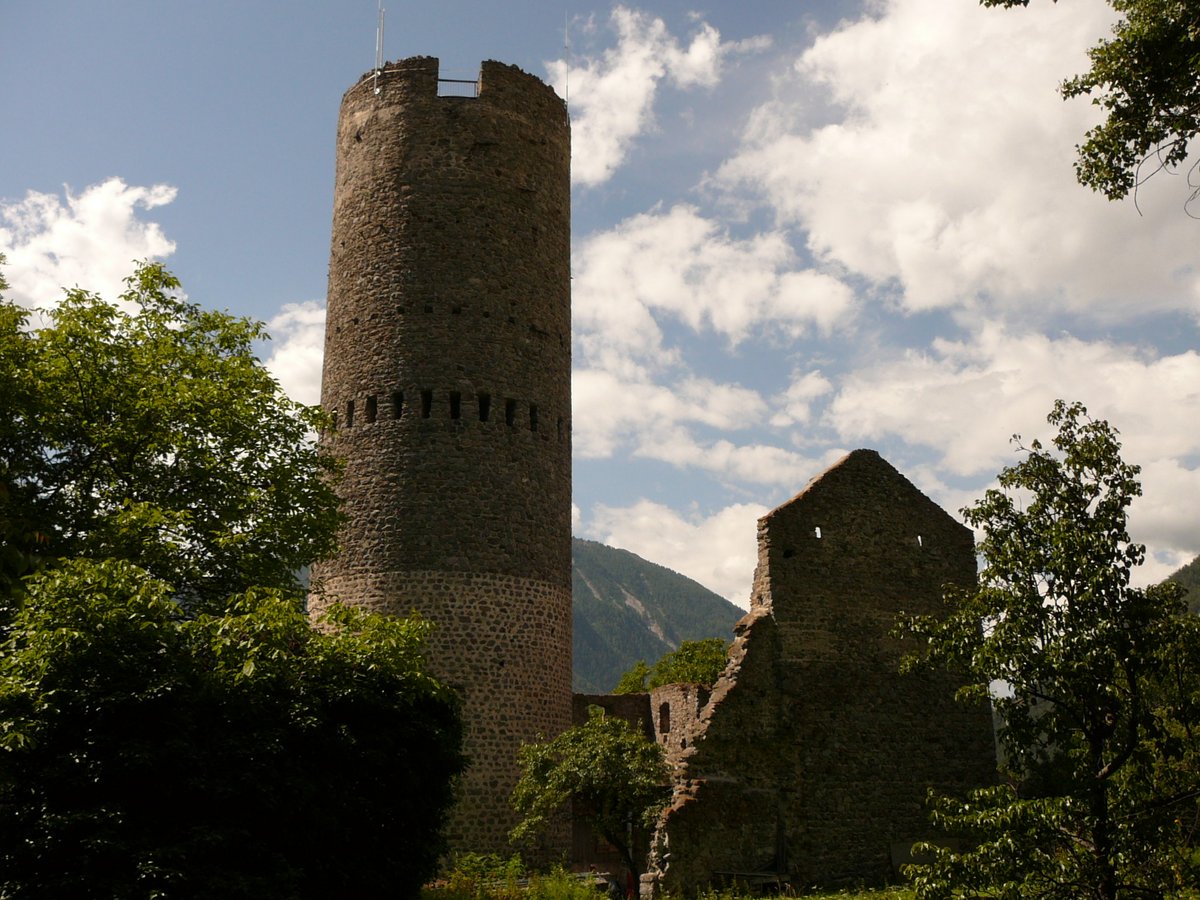
Fröhlichsburg is a 13th-century medieval castle hidden in the woods above Laatsch-Laudes in South Tyrol. Reachable via an easy hiking trail through spruce and larch trees, it offers an authentic experience away from mass tourism. The ruins preserve sturdy walls, towers, and Gothic windows, while the panoramic location provides breathtaking views of the Vinschgau Valley and the Dolomites.

  • 180° panoramic view over the Vinschgau Valley and surrounding Dolomite peaks
  • Easy hiking trail through spruce and larch forests, suitable for families
  • Authentic medieval architecture with sturdy walls, towers, and Gothic windows
  • Tranquil and intimate atmosphere away from crowded tourist routes


Events nearby
24/04/2026 - 03/05/2026
20/05/2026 - 24/05/2026

Copertina itinerario Fröhlichsburg: Medieval Castle with Panoramic Views of the Vinschgau Valley and Dolomites
Fröhlichsburg in Laatsch-Laudes is a 13th-century medieval castle accessible via a forest trail. Admire its sturdy walls, towers, and a 180° view over the Vinschgau Valley. Ideal for photography and tranquility.

Good to know


Introduction

Fröhlichsburg is not a castle that reveals itself to everyone. Hidden among the woods of Laatsch-Laudes, in South Tyrol, it can only be reached after a short walk that already promises adventure. Upon arrival, its position immediately strikes you: perched on a rocky spur, it overlooks the valley with an air of mystery. Its grey stone walls, partially covered in ivy, seem to have emerged from a fairy tale. It is not an imposing fortress like others in the area, but precisely this discreet elegance makes it special. From here, the view stretches over the red roofs of the houses in Laudes and, in the distance, the imposing peaks of the Dolomites. It is a place that speaks of silence, history, and a beauty that needs no fanfare to be remembered.

Historical Overview

The history of Fröhlichsburg is closely intertwined with that of the powerful Frohlich family, who built their residence here in the 13th century. It was not a castle of great battles, but rather a manorial estate from which they administered the extensive forest and agricultural holdings of the area. In the 16th century, it passed to the Khuen von Belasy family, who partially modified its structure, adding Renaissance elements to the solid medieval framework. Over time, it lost its residential function and fell into a state of abandonment, becoming a romantic ruin enveloped by vegetation. Today, thanks to consolidation efforts, it is safely visitable, allowing visitors to touch centuries of South Tyrolean history.

  • 13th century: Construction by the Frohlich family.
  • 16th century: Transfer to the Khuen von Belasy family and renovations.
  • Subsequent centuries: Progressive abandonment and decay.
  • Contemporary era: Consolidation and enhancement as a visitable historical site.

The Forest Path and the Breathtaking View

The true magic of Fröhlichsburg begins even before you pass through its portal. The access trail, starting from the village of Laudes, is an experience in itself. It winds through a dense forest of firs and larches, where light filters through the branches creating plays of shadow. The path is easy and suitable for everyone, and along the way, informative signs tell about the local flora. Then, suddenly, the forest thins out and the castle appears in all its majestic solitude. But the highlight is climbing up to the panoramic points next to the ruins. From there, you enjoy a 180-degree view of the Val Venosta: you can clearly distinguish the villages of Laatsch and Laudes below, the apple orchards, and in the background, the majestic Ortles-Cevedale mountain range. It’s a glimpse that alone is worth the trip.

The Ruins That Speak: Architecture and Details

Visiting Fröhlichsburg means exploring with care. It’s not a reconstructed museum, but an authentic place where the architecture tells its own story. You can still clearly recognize the remains of the keep, the main tower, and parts of the perimeter walls that outline the ancient courtyard. Walking among the ruins, look for the details: the pointed arch windows typical of Gothic style, the remains of a chapel, and traces of ancient fireplaces. The atmosphere is suspended in time. You’ll notice how nature has reclaimed the spaces, with moss and small plants growing between the stones. It’s a perfect place for history and photography enthusiasts, where every corner offers a different perspective. The absence of large crowds allows you to savor this tranquility and imagine the life that once pulsed within these walls.

Why Visit It

Why does Fröhlichsburg deserve a stop? First, it’s an off-the-beaten-path destination. Here you won’t find queues or crowds, but the genuine feeling of having discovered a secret corner of South Tyrol. Second, it offers a perfect blend of history and nature in one short hike: you walk through an enchanting forest to reach a historical site immersed in the landscape. Third, it’s an incredibly photogenic place in every season, whether it’s the bright green of summer, the fiery colors of autumn, or the blanket of snow in winter. It’s ideal for those seeking a tranquil, authentic, and evocative experience, away from the hustle and bustle.

When to Go

Fröhlichsburg has its charm at any time, but for a truly evocative experience, aim for the late afternoon hours, especially in autumn or on a clear spring day. The low-angle sunlight warmly illuminates the castle stones with warm, golden tones and long shadows, creating an almost magical atmosphere. During this time slot, the forest is particularly quiet, and the colors of the panorama over Val Venosta intensify. Avoid the midday hours on the hottest summer days, opting instead for the cool of the morning or, indeed, sunset.

In the Surroundings

A visit to Fröhlichsburg can easily be combined with other typical experiences in the Val Venosta. Just a few minutes’ drive away, in the center of Malles Venosta, the Civic Museum of Malles is worth a stop, housing local archaeological finds and telling the story of the valley. For an authentic food and wine experience, head to one of the local farmsteads (typical South Tyrolean farms) to taste alpine cheeses, speck, and a glass of Val Venosta wine, such as Riesling or Pinot Noir.

Itineraries nearby


💡 Did You Know…?

Fröhlichsburg is not just a castle, but a place of legends. It is said that in the Middle Ages, it was inhabited by a playful knight (from which the name “joyful” derives), known for playing tricks on guests. Today, attentive visitors might hear, on windy days, a faint sound of laughter among the walls. Another realistic detail: the trail to reach it partly follows an ancient connecting route between valleys, still visible in some paved sections. The tranquility of the place, far from noise, makes the visit an almost meditative experience, ideal for those seeking an authentic connection with the history and nature of South Tyrol.