Giuseppe Meazza Stadium: Behind-the-Scenes Tour with Changing Rooms, Tunnel, and Museum

The Giuseppe Meazza Stadium, known as San Siro, is Milan’s iconic venue hosting AC Milan and Inter, with over 90 years of football history. The guided tour offers a complete behind-the-scenes experience of Italy’s most famous sports arena.

• Visit the changing rooms where Milan and Inter players prepare
• Walk the tunnel leading to the pitch with views of the stands
• Explore the museum with trophies, historic jerseys, and football memorabilia
• Admire the unique architecture with spiral staircases and views from the third ring
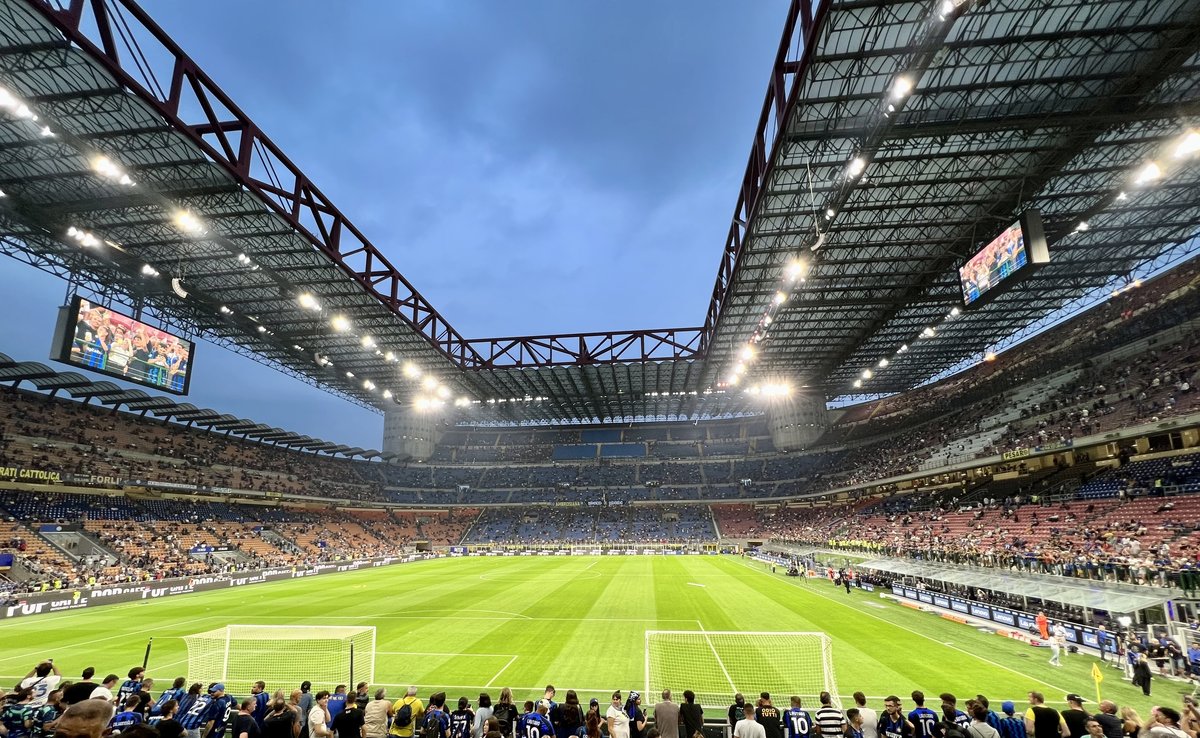
Copertina itinerario Giuseppe Meazza Stadium: Behind-the-Scenes Tour with Changing Rooms, Tunnel, and Museum
Guided tour of Milan’s Giuseppe Meazza Stadium (San Siro): visit AC Milan and Inter changing rooms, walk the tunnel to the pitch, explore the museum with trophies and historic jerseys. Accessible from Lilla metro station.

Good to know


Introduction

As you approach the Giuseppe Meazza Stadium, known to everyone as San Siro, you immediately feel the energy it radiates. It’s not just a sports facility: it’s a Milan icon, a place where passion for football is palpable in the air. Its imposing structure, with distinctive circular towers and external spiral staircases, strikes you visually even from a distance. Legends like Maldini, Baresi, Van Basten, and Ronaldo have played and scored here, and every corner tells a story. Whether you’re a die-hard fan or simply curious about architecture, entering this stadium is an experience that stays with you. Guided tours let you walk the same corridors as champions, touch the pitch grass, and imagine the roar of 80,000 spectators. It’s a living, breathing piece of Milanese history that goes beyond sport and becomes urban culture.

Historical Overview

The stadium’s history begins in 1926, when it was inaugurated with a capacity of 35,000 seats, primarily to host Inter’s matches. In 1935, it was named after Giuseppe Meazza, a legendary Milanese footballer. During the 1950s and 1980s, it underwent major renovations that increased its capacity and altered its appearance, adding the third tier and the famous towers. It has hosted epic events such as the 1990 World Cup final and numerous Champions League finals, becoming one of Europe’s most iconic stadiums. Today, despite renovation plans, it remains an undisputed symbol of the city.

  • 1926: Stadium inauguration
  • 1935: Dedication to Giuseppe Meazza
  • 1955: First major renovation
  • 1990: Hosts the World Cup final
  • 2000s: Further modernizations

Tour of the Stadium’s Hidden Secrets

One of the most thrilling moments of the tour is when you descend into the changing rooms, where Inter and Milan players still prepare for matches today. You can sit on the same benches used by the stars, see the showers, and imagine the pre-match talks. Then, you walk through the tunnel leading to the pitch: emerging onto the grass, with the view of the stands opening up before you, is a pure adrenaline rush. The tour also allows you to climb up to the press tribune and visit the conference room, where post-match interviews are held. Don’t miss the museum area, with historic jerseys, trophies, and an interactive section where you can relive the most beautiful goals. It’s a 360-degree journey into the world of football, making you feel part of the team for a day.

Architecture and Unique Details

San Siro’s architecture is a blend of styles reflecting its various expansions. The external spiral staircases, added in the 1980s, are not only functional but also a distinctive feature that makes the stadium recognizable among thousands. Inside, note the reinforced concrete pillars supporting the stands, designed to ensure a perfect view from every seat. The Teflon and glass roof, installed in 1990, protects spectators without obscuring the field. During the tour, look up: the away fan cages, separated for safety reasons, are a detail that also tells the story of modern football’s evolution. Even the strategically positioned floodlights are designed to minimize shadows during evening matches.

Why Visit It

Visiting San Siro is worth it for at least three concrete reasons. First, the guided tour is well-organized and available in multiple languages, with passionate guides sharing curious anecdotes, such as the story of the ghost said to wander the locker rooms. Second, the museum inside is incredibly rich: beyond trophies and jerseys, it displays vintage footballs and even Meazza’s shoes, offering a dive into Italian football history. Third, even if you don’t attend a match, you can experience the atmosphere by accessing the official store to buy authentic merchandise, or simply stopping for a coffee in the internal bar with a view of the field. It’s a complete experience that combines sport, history, and entertainment.

When to Visit

The most atmospheric time to visit San Siro is on a weekday afternoon, when the stadium is relatively quiet and you can enjoy the tour without crowds. During these hours, natural light filters through the roof openings, creating shadow plays on the field that make for spectacular photos. If you prefer a more electric atmosphere, the spring months are ideal, as they often coincide with decisive championship matches and the air is charged with anticipation. Avoid match days if you don’t have a ticket, as tour access is limited. In any case, dress in layers: it can be cool inside even in summer, especially in the underground areas.

In the Surroundings

After the stadium, if you want to continue with the sports theme, take a trip to the Coverciano Football Museum in Florence (reachable by train), where you can delve into the history of the Italian national team. Alternatively, for a more Milanese experience, head to the Fashion Quadrilateral, just a few minutes by metro: here, among streets like Via Montenapoleone, you can admire the elegance that characterizes the city, an interesting contrast with the stadium’s popular energy. If you have time, a stroll through Parco Sempione, with its relaxed atmosphere and view of the Sforza Castle, is the perfect way to end the day.

💡 Did You Know…?

The stadium was inaugurated in 1926 with a match between Inter and Milan (6-3 for the Nerazzurri) and has since hosted epic events, such as the 1990 World Cup final and numerous Champions League finals. A little-known detail: the pitch is slightly sloped (about 1 meter of elevation difference) to facilitate water drainage. During tours, stories from custodians are often heard about how, in the 1980s, the most daring fans would climb the supporting columns to watch matches without a ticket. The atmosphere during a derby is indescribable: 80,000 people singing in unison make the entire structure vibrate.