
🧭 What to Expect
- Ideal for motor enthusiasts and food and wine lovers.
- Highlights: Ferrari Museum in Maranello, Traditional DOP Balsamic Vinegar, and UNESCO historic center.
- Includes an interactive map with 15 locations and medieval villages like Vignola and Carpi.
- Unique experiences: Albinelli Market and Salse di Nirano Natural Reserve.
Events nearby
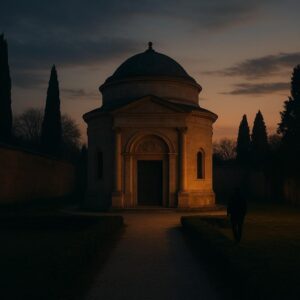
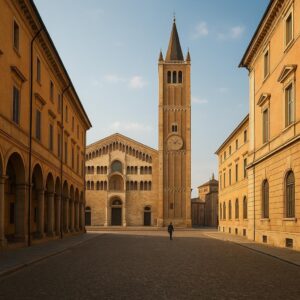
The Province of Modena is a territory that combines gastronomic excellence with luxury automotive heritage, all set against a backdrop of beautifully preserved medieval villages. Here, the Ferrari Gallery Museum in Maranello attracts enthusiasts from around the world, while the Traditional Balsamic Vinegar Museum in Spilamberto reveals the secrets of this unique product. Modena's historic center, with its UNESCO World Heritage sites—the Ghirlandina Tower and Piazza Grande—offers art and history, while castles like those in Formigine and Vignola tell the story of the Este dynasty. The Albinelli Covered Market is the perfect place to sample local delicacies, from Traditional DOP Balsamic Vinegar to Parmigiano Reggiano. Between hills and plains, the province offers authentic experiences away from the usual tourist trails.
Overview
Itineraries nearby

The Ghirlandina
- Go to the page: Ghirlandina of Modena: 89-Meter UNESCO Tower with Apennine Views
- Via Lanfranco, Modena (MO)
- Open in Google Maps
- View on Google Images
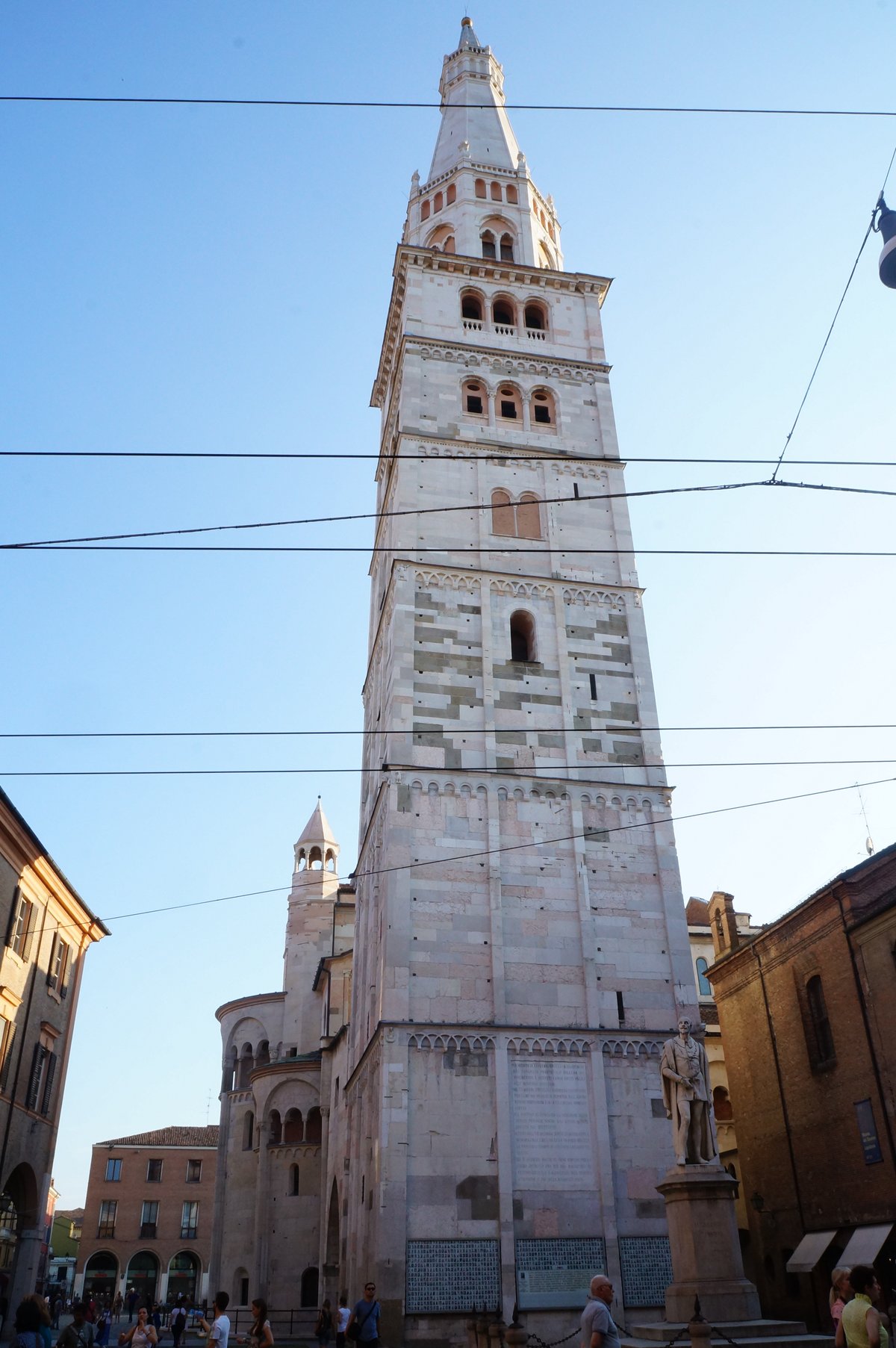 The Ghirlandina is the undisputed symbol of Modena, the bell tower that soars beside the Cathedral. Standing 89 meters tall, it was declared a UNESCO World Heritage Site along with the cathedral and Piazza Grande. Its construction began in 1099 and continued for centuries, with the characteristic octagonal spire added in the 13th century. The name comes from the two "ghirlande," marble railings that adorn the summit. Climbing the 200 steps of the internal spiral staircase is a rewarding experience: from the top, you'll enjoy a 360-degree view of Modena, including the Cathedral, the rooftops of the historic center, and on clear days, the first hills of the Apennines. Inside, you'll find the Secchia Rapita, a replica of the wooden bucket that, according to tradition, the Modenese stole from the Bolognese in 1325, becoming a symbol of the rivalry between the two cities. The tower also houses five bells, the oldest of which dates back to the 14th century. The visit is managed by the Civic Museums of Modena, with tickets available online or on-site. I recommend booking in advance, especially on weekends, to avoid queues. Access is allowed in limited groups to preserve the structure. Not suitable for those with mobility issues or claustrophobia, but for everyone else, it's a must-see.
Piazza Grande
- Go to the page: Piazza Grande Modena: Romanesque Cathedral and UNESCO Ghirlandina in the Historic Heart
- Piazza Grande, Modena (MO)
- Open in Google Maps
- View on Google Images
 Piazza Grande is Modena's elegant living room, the meeting point between history, art, and daily life. Here you can breathe in the essence of this Emilian city, with its symbolic monuments that tell centuries of history. At the center of the scene is the Ghirlandina, the 89-meter-high bell tower that towers over the urban landscape. Climbing to the top (there are 200 steps) offers a breathtaking view of Modena and, on clear days, you can even glimpse the Alps. Next to it stands the Modena Cathedral, a masterpiece of Italian Romanesque architecture with its façade sculpted by Wiligelmo and the famous Metopes. The square itself, paved in stone, is a stage for life: in the morning it's animated by the market under the arcades, while in the evening it fills with people gathering for an aperitivo. Don't miss the Preda Ringadora, the ancient stone for public announcements, and the Bonissima, the medieval statue that tradition says represents a benefactress. Piazza Grande is also the heart of city celebrations, such as the Feast of San Geminiano in January and the Palio di Modena in September. A tip: visit the square at sunset, when the golden light illuminates the Cathedral's façade and creates a magical atmosphere.
Ferrari Gallery Museum
- Go to the page: Ferrari Museum Maranello: Historic Cars, F1 Trophies, and Enzo Ferrari's Legacy
- Via Nicola Fabrizi, Maranello (MO)
- http://museo.ferrari.com
- Open in Google Maps
- View on Google Images
- museo@ferrari.com
- +39 0536 949713
 If you're in Maranello, the Ferrari Gallery Museum is an unmissable stop. It's not just a museum, but an experience that lets you live the essence of the world's most iconic automotive brand. As soon as you enter, you're greeted by historic cars that have marked racing history, from custom-built red racers to road models that have made generations dream. The collection is divided into thematic areas: one dedicated to Formula 1 victories, featuring single-seaters of legendary drivers like Schumacher and Lauda, and another that tells the story of engine technological evolution. Don't miss the interactive section, where you can try a driving simulator or admire the V12 engines displayed like works of art. The museum is well-organized, with clear explanatory panels and audio guides available in Italian and English. For the more curious, there's also the chance to see up close the trophies won in the world championship. The atmosphere is electrifying: the background roar of engines and the scent of oil and rubber transport you directly to the racetrack. I recommend booking online to avoid queues, especially on weekends. If you love engines, here you'll understand why Ferrari isn't just a car, but an emotion.
Ducal Palace
- Go to the page: Ducal Palace of Modena: Estense Gallery and Civic Museum in the Baroque Palace
- Corso Camillo Benso di Cavour, Modena (MO)
- Open in Google Maps
- View on Google Images
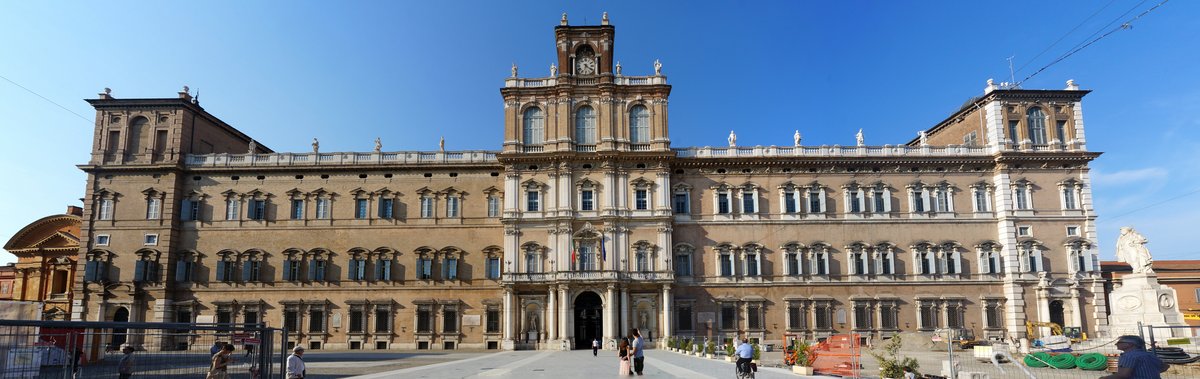 The Ducal Palace of Modena is a Baroque jewel that will leave you breathless. Built in the 17th century at the behest of Francesco I d'Este, this imposing building served as the official residence of the Este court until the unification of Italy. Today it houses the prestigious Military Academy, but some areas are accessible through guided tours. Upon entering, you'll be struck by the Staircase of Honour, a majestic staircase leading to the noble floors. The Representation Rooms preserve frescoes by artists such as Jean Boulanger and decorations that speak of the court's opulence. Don't miss the Gallery of Battles, where mural paintings celebrate Este victories. The palace overlooks Piazza Roma, with its characteristic cobblestone pavement and the statue of Ciro Menotti. Access is regulated by guided tours departing from the tourist office in Piazza Grande, just a few minutes' walk away. Remember to book in advance, especially on weekends. Inside, observe the details: from Bohemian crystal chandeliers to marble fireplaces, everything speaks of an era of splendour. The internal courtyard, with its portico, offers a corner of tranquility in the heart of the city. Perfect for those who love history and architecture, the Ducal Palace is an essential stop to understand Modena's identity.
Vignola Fortress
- Go to the page: Vignola Fortress: Medieval Stronghold with Renaissance Frescoes and Valley Views
- Piazza dei Contrari 4, Vignola (MO)
- https://www.roccadivignola.it/
- Open in Google Maps
- View on Google Images
 The Vignola Fortress is one of the best-preserved castles in Emilia-Romagna, a medieval gem that overlooks the historic center of Vignola. Built between the 10th and 15th centuries, this fortress welcomes you with its crenellated towers and moat, still visible today. Inside, climb the original wooden staircases to discover the frescoed halls of the noble floor, where the Renaissance pictorial cycles commissioned by the Contrari family stand out. The Hall of Lions and the Hall of Doves transport you to an era of splendor and power, with details that tell stories of battles and alliances. Don't miss the Clock Tower, from which you can enjoy a panoramic view of the Panaro Valley and the Modenese hills, dotted with cherry trees. The Fortress is also a venue for cultural events, such as exhibitions and concerts, which enliven its historic spaces. For a complete visit, join one of the expert guides who explain the history of the Contrari and Este families, closely linked to this manor. After the visit, head down to the village to taste the Vignola cherries, a typical product that makes this area famous throughout Italy. The Fortress is open year-round, with hours varying by season: always check the official website for updates. It's an experience that combines history, art, and tradition, perfect for those seeking authenticity without frills.
Castello di Spezzano
- Go to the page: Spezzano Castle: Medieval Fortress with Ceramics Museum and Historic Vinegar Cellar
- Sentiero del Castello di Spezzano, Fiorano Modenese (MO)
- Open in Google Maps
- View on Google Images
 The Castello di Spezzano in Fiorano Modenese is one of those places that immediately immerses you in the atmosphere of Emilia-Romagna: history, delicious food, and captivating landscapes. Built between the 10th and 11th centuries, this fortress was long owned by the Pio di Savoia, one of the most influential families in the area. Today, visiting it means discovering not only its imposing walls and inner courtyard but also the permanent ceramics collection, which tells centuries of local craftsmanship. The interior rooms, such as the Hall of Coats of Arms, preserve frescoes and decorations that transport you back in time. One of the highlights is the historic cellar, where you can taste traditional Modena balsamic vinegar, produced right here using ancient methods. The castle stands on a hill, offering a panoramic view of the vineyards and the gullies of the Salse di Nirano, a unique natural area. It's a perfect spot for a family outing or for those who love culture without sacrificing flavor. Throughout the year, it hosts events like tastings and temporary exhibitions, making every visit different. Admission is charged, with guided tours available to enrich the experience. A must for anyone wanting to touch Modenese history firsthand.
Castello di Formigine
- Go to the page: Formigine Castle: Medieval Tower, Archaeological Museum and Free Admission
- Via Antonio Gramsci, Formigine (MO)
- Open in Google Maps
- View on Google Images
 The Castello di Formigine is one of the most fascinating places to visit in the province of Modena, a perfect example of medieval architecture that tells centuries of Emilian history. Built in the 13th century as a defensive fortress, it has undergone various transformations over time, evolving into a noble residence. Today, it stands as a well-preserved complex with its main tower dominating the landscape, crenellated walls, and the moat that once protected it. Inside, you can explore the frescoed halls and the porticoed courtyard, where cultural events and temporary exhibitions are often held. A unique feature is the Chapel of San Bartolomeo, located within the castle, with 15th-century frescoes that absolutely deserve a close look. The castle is surrounded by a public park, perfect for a relaxing stroll after your visit. For those who want to delve deeper, the Archaeological Museum set up in the lower rooms offers artifacts that tell the story of the area, from Roman finds to medieval evidence. Admission is free, and the castle is open year-round, with hours varying by season. It's an ideal place for families, history enthusiasts, and anyone seeking a quiet corner away from the crowds. Don't forget to climb the tower to enjoy a breathtaking view of the Modena countryside and, if you get the chance, join one of the food and wine events that often enliven the courtyard.
Castle of the Pio
- Piazza dei Martiri, Carpi (MO)
- Open in Google Maps
- View on Google Images
 The Castle of the Pio dominates Carpi's historic center with its imposing structure, the result of centuries of transformations that have made it one of the most significant fortified complexes in Emilia-Romagna. The structure originated as a medieval fortress but reached its peak splendor under the rule of the Pio family, becoming an elegant Renaissance palace. Today you can explore its frescoed halls, the courtyard of honor with its columned portico, and the clock tower that rises above the city's rooftops. Inside, the Castle Museum houses local archaeological finds, Renaissance ceramics, and a section dedicated to the history of the Pio family, with documents and artworks that tell centuries of power and culture. Don't miss the palatine chapel, a jewel of sacred architecture with decorations blending Gothic and Renaissance styles. From the courtyard, you can also access the Gallery of Marbles, where sculptural fragments and Roman tombstones from the Carpi area are displayed. The visit offers unique glimpses of Piazza dei Martiri, the beating heart of the city, and the adjacent Cathedral, creating an ideal journey through art and history. The castle often hosts temporary exhibitions and cultural events, making each visit a different experience. For those traveling with children, the halls with armor and knight stories immediately capture attention, while architecture enthusiasts are struck by the fusion of styles that characterizes the entire complex.
Montecuccolo Castle
- Via Montecuccolo, Pavullo nel Frignano (MO)
- Open in Google Maps
- View on Google Images
 Montecuccolo Castle stands majestically on a rocky spur in Pavullo nel Frignano, offering a breathtaking panoramic view of the Modenese hills. This medieval manor, dating back to the 12th century, was the residence of the famous military commander Raimondo Montecuccoli, whose military exploits are recounted in the museum set up inside. The structure preserves its intact crenellated towers and powerful walls, which transport you back in time as soon as you cross the entrance. Inside, in addition to the museum dedicated to the commander, you'll find the gentlemen's chapel with original frescoes and rooms furnished with period furniture. The castle often hosts temporary exhibitions of contemporary art and photography, creating a fascinating contrast between ancient and modern. On summer weekends, the courtyard becomes a stage for concerts and theatrical performances. To reach it, follow the directions to Pavullo and then climb towards the village of Montecuccolo: the road is narrow but well-maintained. Parking is free a few minutes' walk away. Entrance to the castle costs a few euros and includes a visit to the museum. If you want a complete experience, combine your visit with a walk in the adjacent medieval village, where stone houses and cobbled alleys offer authentic glimpses of the Modenese Apennines.
Enzo Ferrari Museum
- Go to the page: Enzo Ferrari Museum Modena: Iconic Cars and Historical Memorabilia at the Birthplace
- Via Paolo Ferrari 85, Modena (MO)
- https://www.ferrari.com/museums/enzo-ferrari-modena
- Open in Google Maps
- View on Google Images
 If you're in Modena and love cars, the Enzo Ferrari Museum is a must-visit stop. It's not just a museum, but an experience that lets you breathe in the passion for engines from the moment you enter. The modern building, with its distinctive yellow roof reminiscent of a car bonnet, houses Enzo Ferrari's birthplace, restored and integrated into the tour. Inside, you'll find a collection of historic cars that tell the story of the brand's evolution, from the first models of the 1940s to the latest supercars. Temporary exhibitions enrich the offering, focusing on design and innovation. The museum isn't static: there are driving simulators and multimedia installations that make the visit interactive, perfect even for those who aren't experts. The bookshop offers unique souvenirs, while the café allows you to take a break in an environment inspired by racetracks. It's a place that blends tradition and future, ideal for understanding why Ferrari is a global legend. I recommend booking online to avoid queues, especially on weekends.
Traditional Balsamic Vinegar Museum
- Via Francesco Roncati 28, Spilamberto (MO)
- https://museodelbalsamicotradizionale.org
- Open in Google Maps
- View on Google Images
- info@museodelbalsamicotradizionale.org
- +39 059 781614
 If you think you know balsamic vinegar, prepare to reconsider all your certainties. The Traditional Balsamic Vinegar Museum in Spilamberto isn't just a museum, but a sensory journey into the very essence of Modenese tradition. Located in the historic Municipal Vinegar Cellar within the 18th-century Palazzo Rangoni, it welcomes you with that unmistakable aroma you can smell right from the entrance: a blend of cooked grape must and aged wood that will accompany you throughout your visit. Here we're not talking about industrial vinegar, but the product that carries the DOP designation and follows precise rules passed down through generations. The most fascinating part? The battery of barrels where the vinegar slowly ages, moving from one barrel to another according to the solera method. You'll see with your own eyes the differences between young vinegar and that which has decades of aging, discovering how time transforms the must into a unique delicacy. The visit often includes guided tastings that allow you to appreciate the flavor nuances, from sweet to tangy, and understand why this product is worth every drop. Perfect for foodies but also for those who want to discover an authentic piece of Emilia-Romagna, the museum is managed by the Consorteria of Traditional Balsamic Vinegar, which has preserved its secrets since 1967. A tip: don't miss the section dedicated to historical tools, like the copper ladles used to transfer the precious liquid. It's an experience that goes beyond taste, telling the story of the patience and passion of entire Modenese families.
Albinelli Covered Market
- Via Luigi Albinelli 13, Modena (MO)
- https://www.mercatoalbinelli.it/
- Open in Google Maps
- View on Google Images
 Stepping into the Albinelli Covered Market is like diving into the most genuine Modenese tradition. Opened in 1931, this historic market in the heart of Modena is a true temple of taste, where rationalist architecture blends with the aromas of Emilian cuisine. The structure, with its steel and glass roof, creates a bright and welcoming atmosphere, perfect for exploring the over 70 stalls that animate the space. Here you'll find top-quality products, from Parmigiano Reggiano DOP to Traditional Balsamic Vinegar of Modena, including cured meats like Modena ham and cotechino. The fruit and vegetable stalls are a feast for the eyes, with local specialties like Vignola cherries and campanine apples. Don't miss the fresh pasta workshops, where you can watch the preparation of tortellini and tagliatelle, or the fishmongers with Adriatic seafood. The market is also a place of sociality: stop for a coffee at the historic bar or enjoy a sandwich with crescentina directly from the stalls. The atmosphere is lively yet familiar, with vendors sharing stories about the products and suggesting pairings. It's the ideal place to shop like a local or to bring home an authentic taste of Emilia-Romagna. Remember: the market is open from Monday to Saturday, with hours ranging from early morning to early afternoon, but Saturday is the busiest day with the most offerings.
Former Fossoli Concentration Camp
- Go to the page: Fossoli Camp in Carpi: Former Concentration Camp with Original Barracks and Memorial Museum
- Via Remesina Esterna, Carpi (MO)
- https://www.fondazionefossoli.org/it/
- Open in Google Maps
- View on Google Images
 Visiting the former Fossoli concentration camp in Carpi is a deeply moving experience. This site, established in 1942 as a prisoner-of-war camp, later became a Nazi transit camp and, after the war, a refugee center. Today it is a national monument that preserves the original barracks, museum, and memorial. The tour route takes you through the remaining structures where over 5,000 deportees, including Jews and political opponents, were sorted for transport to Nazi concentration camps. The museum collects documents, photographs, and testimonies that make history tangible. The visit is free and accessible year-round, with guided tours available by reservation for groups. It is a place that invites reflection, ideal for those seeking historical depth beyond the usual tourist itineraries. I recommend combining the visit with the Deportation Memorial Museum in Carpi's city center for a complete picture.
Scale Museum
- Via Gioacchino Rossini 34, Campogalliano (MO)
- Open in Google Maps
- View on Google Images
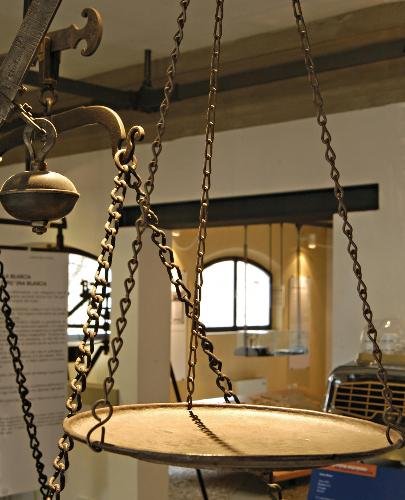 If you think a museum dedicated to scales could be boring, prepare to change your mind. The Scale Museum in Campogalliano is a unique gem of its kind, born in 1989 from the passion of a group of local enthusiasts. Housed in a renovated former elementary school, this space tells how weighing has influenced daily life, commerce, and even justice through the centuries. The collection, one of the most comprehensive in the world, ranges from Roman bronze scales to medieval ones, up to modern electronic instruments. There are also curious pieces like the scale for weighing souls, used in religious contexts, or those for customs duty control. The exhibition is interactive: you can personally try out some devices, making the visit suitable for children too. The captions are clear and rich with anecdotes, such as the one about the equal-arm scale that revolutionized local markets. The museum often organizes educational workshops and temporary exhibitions related to metrology or the history of the territory. Perfect for a cultural break during a tour of Emilia-Romagna, it offers an unusual look at how a seemingly mundane object has shaped society and economy. The bookshop offers reproductions of ancient scales and specialized publications.
Salse di Nirano
- Fiorano Modenese (MO)
- Open in Google Maps
- View on Google Images
 The Salse di Nirano are a unique natural spectacle in the Emilian landscape, a regional nature reserve that transports you to an almost lunar scenery. Here, just a few kilometers from Fiorano Modenese, small mud volcanoes continuously erupt, creating cones and flows that extend over about 5 hectares. The phenomenon is due to the rise of gaseous hydrocarbons from the subsurface, which, mixing with water and clay, give life to these cold emissions. There's no magma, but the result is equally fascinating: you'll notice a slight smell of sulfur and see bubbles slowly bursting. The visiting route is well-marked and accessible to everyone, with wooden walkways that allow you to approach safely. Wear comfortable shoes because the ground can be muddy, especially after rain. The reserve is managed by the Municipality of Fiorano and also offers a visitor center with detailed information about the geological phenomenon. It's a perfect spot for a day trip, away from the crowds, where nature shows its most surprising side. Remember that it's a protected area: respect the trails and don't get too close to the emissions.