
The Longobard Temple in Cividale del Friuli is an 8th-century UNESCO gem with polychrome stuccoes and frescoes among the best-preserved from the Lombard period. Located in the historic village overlooking the Natisone River gorges, it offers an intense cultural experience in a serene atmosphere.
- Early medieval stuccoes with figures of saints like Saint John the Baptist and Saint Elizabeth, among the best-preserved in the world
- 12th-13th century frescoes in the Romanesque apse with Christ in Majesty and evangelist symbols
- 8th-century architecture built as a palatine chapel for Lombard dukes Ratchis or Aistulf
- Serene and quiet atmosphere ideal for calmly admiring the details, away from the crowds
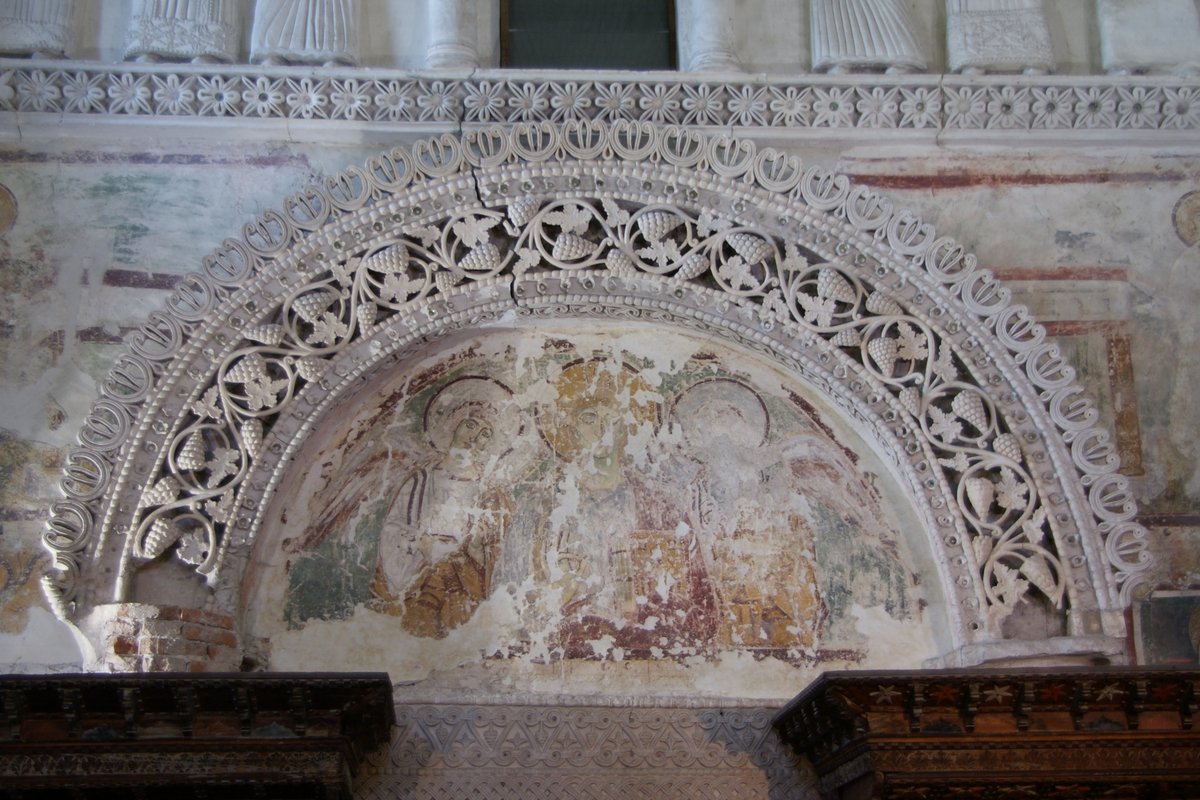
The Longobard Temple in Cividale del Friuli, a UNESCO World Heritage site, preserves some of the world’s best-preserved early medieval stuccoes and 12th-13th century frescoes in the apse. An 8th-century palatine chapel with stucco figures of saints.
- Piazzetta San Biagio, Udine (UD)
- +39 0432 700867
- Open in Google Maps
- View on Google Images Tempietto Longobardo a Udine
Good to know
Introduction
Historical Background
- Mid-8th century: construction as a Lombard palatine chapel.
- 12th century: addition of the Romanesque-style apse.
- 2011: inclusion in the UNESCO World Heritage List.
The Stuccoes: A Masterpiece of Delicacy
The Apse and the Hidden Frescoes
Why Visit It
When to Go
In the Surroundings
Itineraries nearby


💡 Did You Know…?
One of the most fascinating details is the veiled female figure among the stuccoes, likely a saint or a Longobard queen, who seems to have been observing visitors for centuries. The light filtering through the windows creates suggestive plays on the reliefs, especially in the early morning hours. According to some local sources, the temple was built on a previous Roman place of worship, adding historical layering. Its location above the Natisone Gorge is not accidental: it symbolized the Longobard power that dominated the territory.