
The Monza Cathedral Museum is a journey into Lombard history, with unique treasures displayed in a clear, modern layout. The visit focuses on absolute masterpieces in well-organized spaces, ideal for a high-level experience in a short time.
- The Iron Crown: the only medieval crown used to crown kings and emperors, from Charlemagne to Napoleon.
- Theodolinda’s Jewels: such as the Golden Hen with its chicks and Agilulf’s Cross, masterpieces of Lombard goldsmithing.
- Theodolinda’s Gospel Book: a 7th-century illuminated manuscript commissioned by the queen.
- The Cloister Architecture: the museum unfolds within the Cathedral’s 13th-century cloister, with cross vaults and carved capitals.
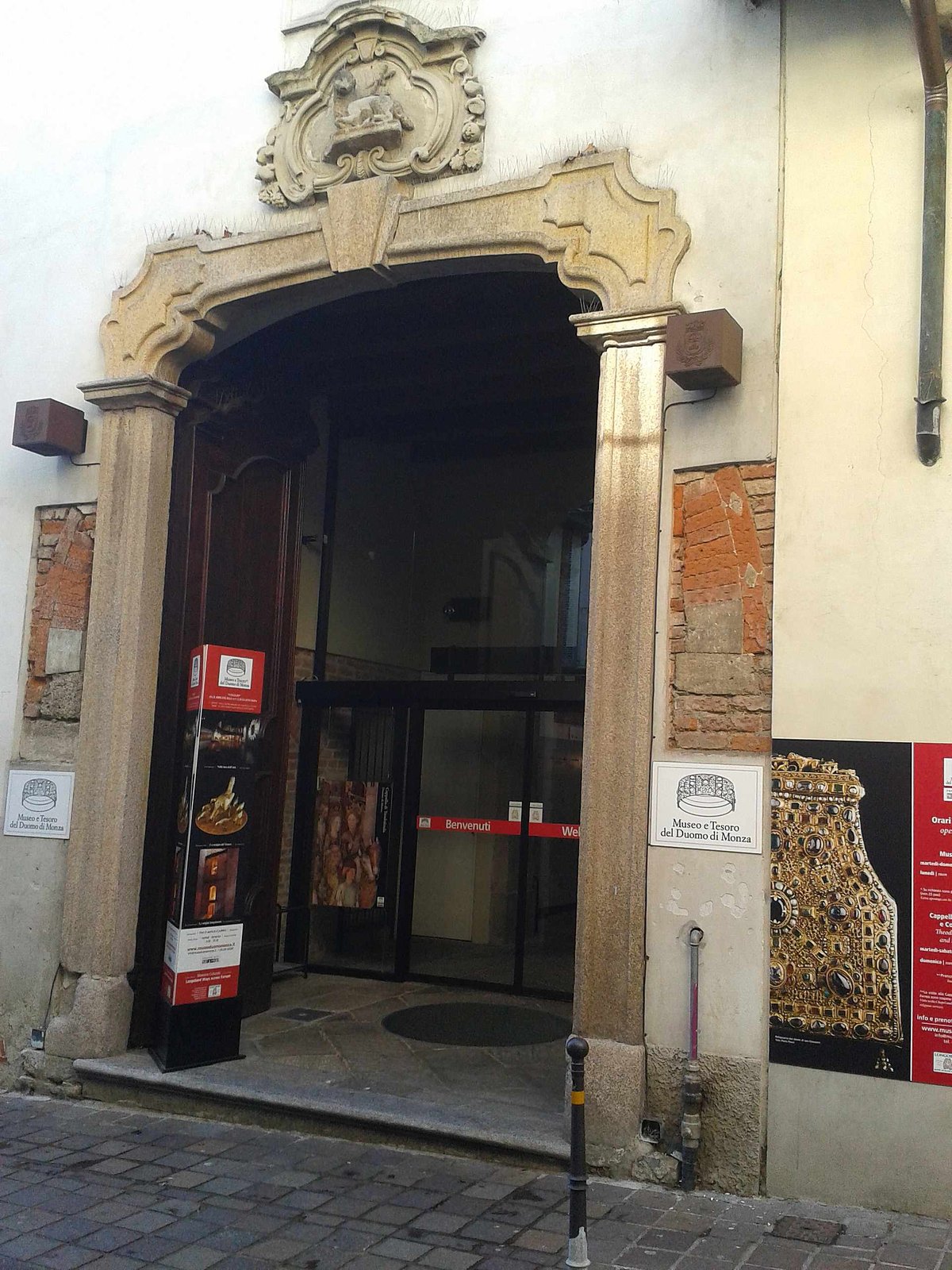
The Monza Cathedral Museum houses the Iron Crown, used to crown kings and emperors, and Queen Theodolinda’s treasures like the Golden Hen and Agilulf’s Cross, displayed in a modern setting within the 13th-century cloister.
- http://www.museoduomomonza.it/Pages/
- info@museoduomomonza.it
- Via Lambro 2, Monza (MB)
- +39 039 326383
- Open in Google Maps
- View on Google Images Museo del Duomo a Monza
Good to know
Introduction
Entering the Monza Cathedral Museum is like opening a treasure chest of Lombard history. You’re immediately greeted by the sight of the Iron Crown, which according to legend contains one of the nails from Christ’s Cross. It’s not just a museum, but a journey through time that takes you back to the 6th century, when Queen Theodelinda had the Cathedral built and began collecting these treasures. The atmosphere is solemn, almost sacred, and every displayed object tells a story of power, faith, and art. If you love history or simply want to see something unique in the world, this is the right place. The layout of the spaces is clear and naturally guides you through the centuries without making you feel overwhelmed.
Historical Overview
The Museum was officially established in 1963 to protect and showcase the treasures of the Duomo, but its origins trace back to 595 AD, when Queen Theodolinda, the Lombard sovereign, founded the original basilica. She commissioned many of the objects now on display, such as the Evangeliary of Theodolinda, a 7th-century illuminated manuscript. In the 14th century, the Iron Crown found its permanent home here, becoming a symbol of royal power in Italy. The museum’s premises, set within the ancient cloister of the Duomo, add another historical dimension, with arches and columns dating back to the 13th century.
- 595 AD: Theodolinda founds the basilica
- 7th century: Creation of the Evangeliary
- 14th century: Arrival of the Iron Crown
- 1963: Official opening of the museum
Unique Longobard Treasures
Beyond the Iron Crown, the museum houses the Golden Hen with Chicks, a gift from Pope Gregory the Great to Theodelinda that symbolizes the Church and its faithful. It’s a work in gold and enamels that impresses with its refined craftsmanship and profound meaning. Then there’s the Cross of Agilulf, a jewel in gold and precious stones that testifies to the high level of Longobard goldsmithing. These objects are not only beautiful to behold but tell the story of the fusion between Germanic culture and Roman-Christian tradition that characterized the Longobard kingdom. Their preservation is exceptional, considering their age, and allows you to appreciate details that would otherwise be lost elsewhere.
The Architecture That Frames It All
The museum is not just about its contents, but also its container: it unfolds within the 13th-century cloister of the Duomo, with cross-vaulted ceilings and carved capitals that alone are worth a visit. The rooms have been designed to showcase the objects without distractions, with carefully planned lighting that highlights the gold and colors of the enamels. Particularly evocative is the room dedicated to the Iron Crown, where the display case is positioned to create an atmosphere of reverence. Even the access from the Duomo, through a side door, adds an element of continuity between the sacred building and the museum space, emphasizing the inseparable bond between the treasures and their religious history.
Why Visit It
Three concrete reasons not to miss it: first, the Iron Crown is the only surviving medieval crown used to coronate kings and emperors, from Charlemagne to Napoleon. Second, the Lombard jewels preserved here are among the best preserved in the world and offer a unique glimpse into an often overlooked era. Third, the visit is concentrated and allows you to see absolute masterpieces without having to tackle long routes, ideal if you have little time but want a high-level experience. Additionally, the proximity to the Cathedral allows you to easily combine the visit with the basilica, enriching your day.
When to Visit
The best time is early afternoon, when natural light streaming through the cloister windows illuminates the objects spectacularly, especially the gold of the Crown and jewels. Avoid peak weekend hours if you prefer a quieter visit, but generally the visitor flow is well managed. During holidays related to Theodelinda, such as her feast day on January 22nd, the atmosphere is particularly evocative, with potential special events that delve deeper into the history of the place without creating excessive crowds.
In the Surroundings
After the museum, take a quick trip to Monza Park, one of the largest walled parks in Europe, where you can stroll along tree-lined avenues and visit the Royal Villa. If you’re interested in Lombard history, the Civic Museum of Monza expands the narrative with local archaeological finds, creating a perfect thematic continuity. Both places are just a few minutes’ walk away, allowing you to plan a full day without complicated transfers.
💡 Did You Know…?
Legend has it that the Iron Crown contains one of the nails used in Christ’s crucifixion, brought to Monza by Theodelinda. A detail that makes this object not only a symbol of power but also of devotion. The queen’s jewels, with precious stones and enamels, showcase the high Lombard goldsmithing mastery, a unique heritage that attracts scholars from all over the world.