
In the center of Brugherio, four historic palaces built between the 18th and 19th centuries showcase the noble past of the Brianza region with architecture ranging from Baroque to Neoclassical. These buildings, now partly repurposed for public and private functions, form an urban route of great historical interest, perfect for a cultural stroll without entrance fees.
- Bolagnos Palace: An 18th-century residence with an austere facade and inner courtyard, linked to one of the area’s most influential families
- Andreani Palace: Preserves original decorative elements and an imposing monumental staircase with a loggia courtyard
- Sormani Palace: Elegant lines and refined architectural details, originally an agricultural dwelling with an ancient dovecote
- Verri Palace: An example of 19th-century bourgeois architecture with stucco decorations and wrought-iron balconies
Events nearby


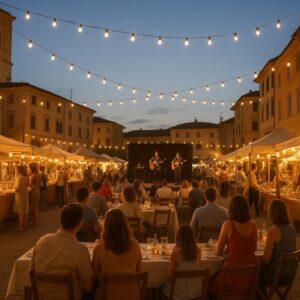

Bolagnos, Andreani, Sormani, and Verri Palaces offer a free neoclassical architecture itinerary in Brugherio’s center, featuring austere facades, monumental staircases, and 19th-century details.
- Via San Maurizio al Lambro, Monza (MB)
- Open in Google Maps
- View on Google Images Palazzo Bolagnos, Andreani, Sormani, Verri a Monza
Good to know
Introduction
Strolling through the center of Brugherio, you’ll come across a quartet of historic palaces that seem to have stepped right out of a nineteenth-century tale. Palazzo Bolagnos, Andreani, Sormani, and Verri are not just buildings: they are silent witnesses to an era when Neoclassical architecture shaped the face of Brianza. You’ll recognize them immediately by their understated yet elegant façades, majestic portals, and inner courtyards that preserve atmospheres of bygone times. Visiting these palaces means discovering a corner of Brugherio where history is palpable at every step, away from the city’s noise yet just a stone’s throw from daily life. It’s an experience that blends curiosity for the past with the pleasure of a peaceful stroll, perfect for those seeking a moment of culture without frills.
Historical Overview
The history of these palaces dates back to the 18th and 19th centuries, when noble and bourgeois families from Monza and Milan chose Brugherio to build their country residences. Palazzo Bolagnos, for example, takes its name from the family who commissioned its construction in the 18th century, while Palazzo Andreani is linked to the figure of Giuseppe Andreani, a prominent representative of local cultural life. Palazzo Sormani, on the other hand, was the home of a family engaged in agriculture and land management, and Palazzo Verri represents an example of Neoclassical architecture with Lombard influences. These buildings were not just houses: they were symbols of power, centers of agricultural activity, and meeting places for the elite of the time.
- Late 18th century: construction of Palazzo Bolagnos
- First half of the 19th century: development of Palazzo Andreani and Verri
- Late 19th century: Palazzo Sormani as an agricultural residence
- Subsequent centuries: transformations into public and private venues
Neoclassical Architecture in Brianza
What stands out about these palaces is the stylistic coherence within the Brianza neoclassical landscape. Palazzo Bolagnos displays a symmetrical facade with framed windows and an entrance portal that evokes the understated elegance of the era. Palazzo Andreani, on the other hand, is distinguished by its inner courtyard with a loggia, a typical feature of Lombard country villas, while Palazzo Verri preserves stucco decorations and wrought-iron balconies that speak to its prestige. Palazzo Sormani, simpler in form, maintains a rural imprint that harmonizes with the area’s agricultural context. These are not ostentatious monuments, but examples of how Neoclassicism also influenced minor architecture, creating a widespread heritage that still characterizes the center of Brugherio today.
Curiosities and Hidden Details
By observing carefully, you’ll notice details that tell small stories: at Palazzo Bolagnos, for example, some family coats of arms are still visible on the walls, while at Palazzo Andreani you can find traces of 19th-century frescoes on the ceilings. Palazzo Sormani preserves an ancient dovecote in the garden, a sign of its rural origins, and Palazzo Verri features stone staircases that seem unchanged by time. These elements, often overlooked, make the visit more authentic: these aren’t perfect museums, but lived-in places where history blends with everyday life. It’s an invitation to look beyond appearances, discovering that each palace has its own personality, made of small details that only a leisurely stroll can reveal.
Why Visit
These palaces are worth a stop for three concrete reasons. First, they offer a free taste of local history without tickets or reservations: just walk and observe. Second, they represent a rare example of neoclassical architecture integrated into a residential area, away from crowded tourist circuits. Third, their location in the heart of Brugherio makes them easy to combine with a visit to the weekly market or a break in one of the nearby historic cafés. In short, they’re ideal for those wanting to enrich a trip around Brianza with a quick but meaningful cultural stop.
When to Go
The best time to appreciate these palaces is in the early morning hours, when the low-angled sunlight enhances the textures of the facades and the courtyards are more peaceful. Alternatively, an autumn afternoon offers evocative atmospheres, with falling leaves and crisp air inviting leisurely strolls. Avoid market days if you prefer tranquility, but remember that even on those occasions the palaces maintain their charm, blending history and contemporary life.
In the Surroundings
Complete your visit with a stroll through Increa Park, a well-equipped green area nearby where you can relax among pathways and water features. If you love art, head to St. Bartholomew’s Church to admire the Renaissance frescoes that enrich Brugherio’s religious heritage. Both locations fit perfectly into a historical and nature-themed itinerary, without taking you far from the center.
Itineraries nearby
💡 Did You Know…?
A little-known curiosity: In 1859, Bolagnos Palace hosted Giuseppe Garibaldi’s headquarters during the Second War of Independence. The general spent several nights there while planning military operations, leaving traces of his passage that still fuel stories among the town’s older residents.