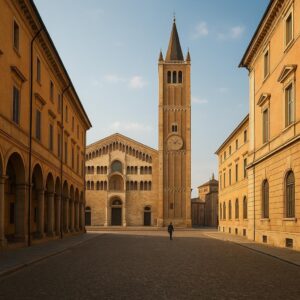
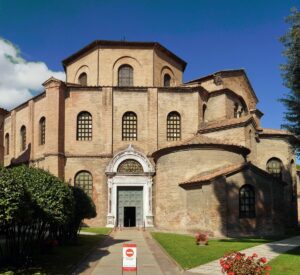
The Cathedral of Santa Maria Assunta, the beating heart of Parma, is a masterpiece of Emilian Romanesque architecture. Consecrated in 1106, it houses priceless works of art, from the famous dome frescoed by Correggio to Benedetto Antelami’s Deposition. Admission is free and the cathedral is open daily with split hours.
4 must-see highlights:
– The Assumption of the Virgin by Correggio on the dome, a whirlwind of light and figures that anticipates the Baroque.
– Antelami’s Deposition (1178), a marble high relief that marks the beginning of Gothic in Italy.
– The Romanesque crypt, nicknamed ‘stone garden’, with its 94 columns and frescoed chapels.
– The two stylophore lions at the entrance, symbols of Christ’s dual nature, by Giambono da Bissone.
Introduction
Entering the Cathedral of Santa Maria Assunta in Parma is like diving into art and faith. The Romanesque facade welcomes you, but inside is where the magic happens: Correggio’s dome seems to open up to the sky, with its Assumption of the Virgin that leaves you in awe. And then there are Antelami’s bas-reliefs, the evocative crypt… A place that makes you feel small, but in a good way.
Introduction
Entering the Cathedral of Santa Maria Assunta in Parma is like diving into art and faith. The Romanesque facade welcomes you, but inside is where the magic happens: Correggio’s dome seems to open up to the sky, with its Assumption of the Virgin that leaves you in awe. And then there are Antelami’s bas-reliefs, the evocative crypt… A place that makes you feel small, but in a good way.
Historical Notes
The cathedral stands on a paleo-Christian church from the 5th-6th century. After a fire in the 9th century, Bishop Guibodo rebuilt it, but another fire in 1055 led to a new construction, consecrated in
1106 by Pope Paschal II. The earthquake of 1117 caused damage, and reconstruction was completed by 1150, with interventions by
Benedetto Antelami towards the end of the 12th century. Here are the key moments:
- 5th-6th century: first paleo-Christian basilica
- 1074: start of the current construction at the behest of Bishop Guibodo
- 1106: consecration of the cathedral
- 1117: earthquake, damage to the vault
- 1178: Benedetto Antelami creates the Deposition
- 1530: Correggio frescoes the dome
Historical Notes
The cathedral stands on a paleo-Christian church from the 5th-6th century. After a fire in the 9th century, Bishop Guibodo rebuilt it, but another fire in 1055 led to a new construction, consecrated in
1106 by Pope Paschal II. The earthquake of 1117 caused damage, and reconstruction was completed by 1150, with interventions by
Benedetto Antelami towards the end of the 12th century. Here are the key moments:
- 5th-6th century: first paleo-Christian basilica
- 1074: start of the current construction at the behest of Bishop Guibodo
- 1106: consecration of the cathedral
- 1117: earthquake, damage to the vault
- 1178: Benedetto Antelami creates the Deposition
- 1530: Correggio frescoes the dome
Correggio’s Dome: A Renaissance Masterpiece
Looking up at the dome frescoed by Correggio is a dizzying experience. Painted between 1524 and 1530, the Assumption of the Virgin is a whirlwind of clouds, angels, and saints that seem to burst out of the painting. Correggio used a bold perspective, exploiting the natural light from the oculi to create an effect of opening up to Paradise. At the time, it caused a scandal for its innovations, but today it is considered one of the pinnacles of the Renaissance. I recommend sitting on a bench and looking up: you’ll feel as if you see Mary ascending among ranks of music-making angels.
Correggio’s Dome: A Renaissance Masterpiece
Looking up at the dome frescoed by Correggio is a dizzying experience. Painted between 1524 and 1530, the Assumption of the Virgin is a whirlwind of clouds, angels, and saints that seem to burst out of the painting. Correggio used a bold perspective, exploiting the natural light from the oculi to create an effect of opening up to Paradise. At the time, it caused a scandal for its innovations, but today it is considered one of the pinnacles of the Renaissance. I recommend sitting on a bench and looking up: you’ll feel as if you see Mary ascending among ranks of music-making angels.
Antelami’s Deposition and the Romanesque Treasures
In the south transept you will find the Deposition by Benedetto Antelami, dated 1178: a marble slab that tells the drama of the crucifixion with a precision that anticipates the Gothic style. In the center, the dead Christ supported by John, and on the sides the centurions casting dice for his garments. Also by Antelami is the bishop’s throne, with scenes of the conversion of Paul and St. George. Then don’t miss the medieval capitals: they are full of stories, animals, and symbols, once painted. Every corner of the cathedral tells a piece of history.
Antelami’s Deposition and the Romanesque Treasures
In the south transept you will find the Deposition by Benedetto Antelami, dated 1178: a marble slab that tells the drama of the crucifixion with a precision that anticipates the Gothic style. In the center, the dead Christ supported by John, and on the sides the centurions casting dice for his garments. Also by Antelami is the bishop’s throne, with scenes of the conversion of Paul and St. George. Then don’t miss the medieval capitals: they are full of stories, animals, and symbols, once painted. Every corner of the cathedral tells a piece of history.
Why Visit It
Three good reasons: first, entry is free, so you can walk in without a second thought. Second, here you’ll find two absolute masterpieces concentrated in one place: Correggio’s dome and Antelami’s Deposition, which alone are worth the trip. Third, the cathedral is in the heart of Parma, in Piazza Duomo, a corner of the city that will make you fall in love. If you only have an hour, step inside and let yourself be amazed.
Why Visit It
Three good reasons: first, entry is free, so you can walk in without a second thought. Second, here you’ll find two absolute masterpieces concentrated in one place: Correggio’s dome and Antelami’s Deposition, which alone are worth the trip. Third, the cathedral is in the heart of Parma, in Piazza Duomo, a corner of the city that will make you fall in love. If you only have an hour, step inside and let yourself be amazed.
When to Go
The best time? Early morning, around 9 a.m., when the light filters through the windows and illuminates Correggio’s dome in a magical way. Fewer crowds, more silence. If you want to see the Deposition against the light, late afternoon is perfect. Avoid the midday hours on weekends if you dislike queues, but even then the cathedral stirs emotions.
When to Go
The best time? Early morning, around 9 a.m., when the light filters through the windows and illuminates Correggio’s dome in a magical way. Fewer crowds, more silence. If you want to see the Deposition against the light, late afternoon is perfect. Avoid the midday hours on weekends if you dislike queues, but even then the cathedral stirs emotions.
In the Surroundings
A few steps away, on the same side of the square, you’ll find the Baptistery of San Giovanni Battista (1196), a Romanesque masterpiece by Antelami with pink Verona marble and frescoed interiors. Another gem. A two-minute walk away is Piazza Garibaldi, the beating heart of the city, with cafes and historic buildings. Perfect for a coffee after your visit.
In the Surroundings
A few steps away, on the same side of the square, you’ll find the Baptistery of San Giovanni Battista (1196), a Romanesque masterpiece by Antelami with pink Verona marble and frescoed interiors. Another gem. A two-minute walk away is Piazza Garibaldi, the beating heart of the city, with cafes and historic buildings. Perfect for a coffee after your visit.