Piacenza Cathedral: 14th-century frescoes, crypt with 108 columns, and panoramic view

Piacenza Cathedral, dedicated to the Assumption of Mary and Saint Justinus, is a Romanesque masterpiece with a 32-meter central nave and 14th-century frescoes attributed to Bolognese masters. The crypt preserves the relics of the first bishop and 108 repurposed Roman columns, while the 14th-century bell tower offers a unique view over the historic center.

  • 14th-century frescoes depicting stories of saints and martyrs in the left transept
  • Millennial crypt with 108 columns and relics of Saint Justinus
  • 14th-century bell tower with panoramic views over Piacenza’s rooftops
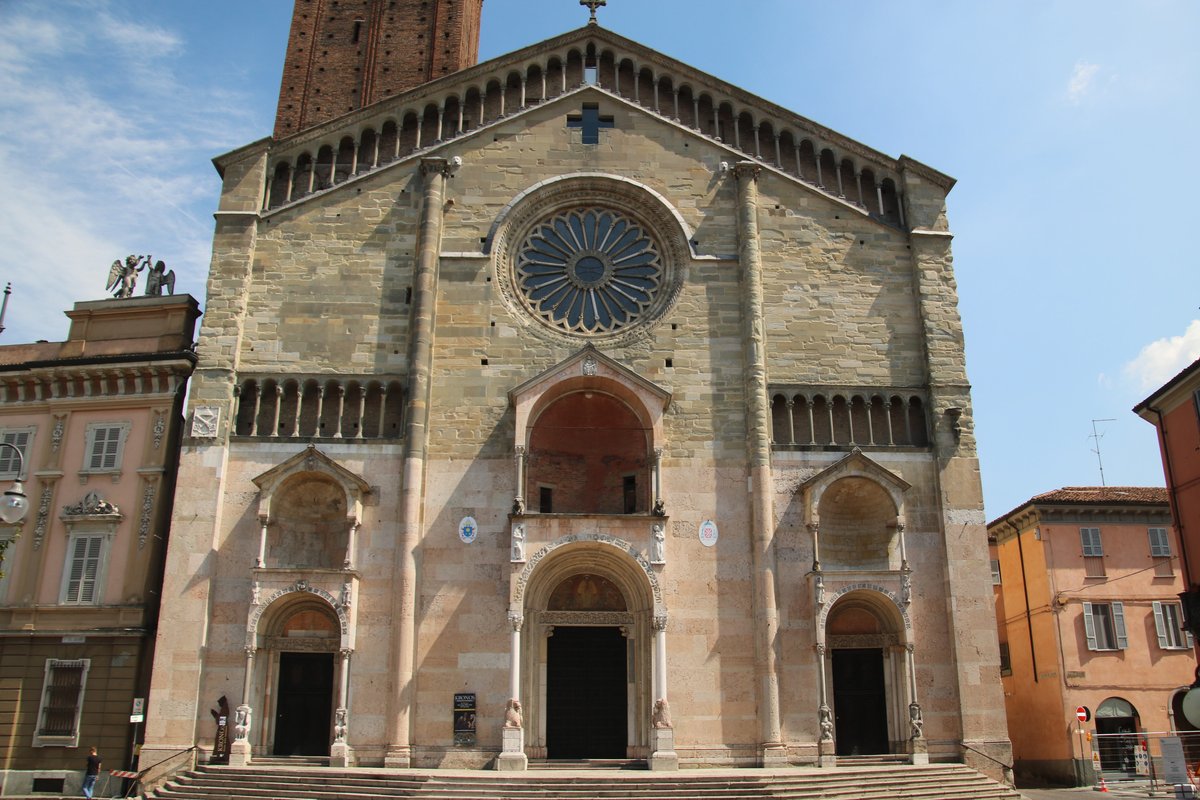
  • Romanesque sandstone facade with biblical bas-reliefs
Copertina itinerario Piacenza Cathedral: 14th-century frescoes, crypt with 108 columns, and panoramic view
The Romanesque Cathedral of Piacenza, built from 1122, houses medieval frescoes, a crypt with relics of Saint Justinus, and a bell tower with views over historic rooftops. Discover the sandstone facade and Roman columns.

Good to know


Introduction

As you approach Piazza Duomo, the Piacenza Cathedral immediately strikes you with its majestic sandstone facade. This Romanesque masterpiece, dedicated to Saint Mary of the Assumption and Saint Justina, dominates the historic center with its imposing presence. Upon entering, your gaze is captured by the 14th-century frescoes adorning the naves and the light filtering through the stained-glass windows, creating an almost mystical atmosphere. The crypt, with its ancient columns, preserves the relics of the patron saints. It’s not just a church, but the spiritual and artistic heart of Piacenza, a place where history and faith merge into an unforgettable experience.

Historical Overview

The construction of the Cathedral began in 1122 at the behest of Bishop Aldo, on an area already occupied by a Paleochristian basilica. It was consecrated in 1233 and underwent modifications over the centuries, such as the addition of the dome during the Renaissance. The interior frescoes, created between the 14th and 15th centuries, depict biblical stories and lives of saints. During the restoration of 1894-1902, many of these paintings were rediscovered, hidden beneath layers of plaster. The crypt, with its 108 columns, houses the remains of Saint Giustino, the first bishop of Piacenza.

  • 1122: Construction begins
  • 1233: Consecration
  • 14th-15th cent.: Frescoes created
  • 1894-1902: Restoration and rediscovery of frescoes

The Hidden Frescoes

One of the Cathedral’s lesser-known treasures are the 14th-century frescoes in the central nave, attributed to local masters such as the Master of San Giustino. They depict episodes from the Life of Christ and the Saints, with vibrant colors despite the centuries. Particularly evocative is the cycle on the vault, where angelic figures and Marian symbols stand out. During 19th-century restorations, many of these paintings reemerged from oblivion, revealing details such as the faces of contemporary worshippers. Observing them up close is like leafing through a medieval art history book, an experience that enriches the visit beyond the architecture.

The Millennial Crypt

Descending into the Cathedral crypt is a plunge into Piacenza’s most remote past. Here, 108 marble and stone columns support the vaults, creating a sacred labyrinth where the relics of Saint Giustino rest. The environment, illuminated by soft lighting, preserves an atmosphere of silent devotion. The columns, all different in shape and material, come from Roman and early medieval buildings, testifying to the site’s historical stratification. It’s a corner of tranquility ideal for a reflective pause, away from the noise of the square.

Why Visit It

Visit the Cathedral to admire the recently restored 14th-century frescoes, a rare example of medieval painting in Emilia. Then, descend into the crypt to see the 108 millenary columns and the relics of the patron saints. Finally, don’t miss the Romanesque facade with its bas-reliefs, which tell biblical stories in a way accessible to everyone. These elements make the Cathedral a unique place where art, history, and spirituality come together in just a few square meters.

When to Go

The best time to visit the Cathedral is early in the morning, when the sunlight illuminates the frescoes in the central nave, enhancing their colors. Additionally, you’ll avoid the tourist crowds and can enjoy the tranquility of the crypt in solitude. If you prefer a more evocative atmosphere, try late afternoon, when the long shadows highlight the details of the sandstone facade.

In the Surroundings

Just steps from the Cathedral, visit Palazzo Farnese, which houses museums with Roman and medieval artifacts linked to the city’s history. Then, pop over to Piazza Cavalli to admire the equestrian statues of the Farnese dukes, perfect for a selfie with a Renaissance backdrop. Both locations complete the experience of Piacenza’s historic center, adding art and power to the Cathedral’s spirituality.

💡 Did You Know…?

The ‘Stone of Fools’ outside the Cathedral is a curious slab with medieval engravings: it is said that insolvent debtors were forced to sit on it naked, becoming objects of ridicule. Additionally, the statue of the Angel on the facade, with a finger pointing to the sky, is a symbol of protection for the city, linked to legends of miracles during plagues. In the transept, a fresco depicts a devil tempting a saint, hidden among the details: attentive visitors search for it like a treasure hunt.