
St. Stephen’s Cathedral is the historic heart of Biella Piazzo, featuring a dark stone facade and medieval architecture. Inside, 14th-15th century frescoes and the 10th-century Romanesque bell tower offer an authentic experience away from the crowds.
- Unique medieval frescoes: 14th-century painting cycles in the Chapel of St. Sebastian depicting stories of saints
- Oldest Romanesque bell tower: 10th-century structure, an example of Piedmontese medieval architecture
- Preserved original architecture: Central nave with architectural elements from the 11th-12th centuries
- Panoramic location: In Biella Piazzo with views over the city and Biella Pre-Alps
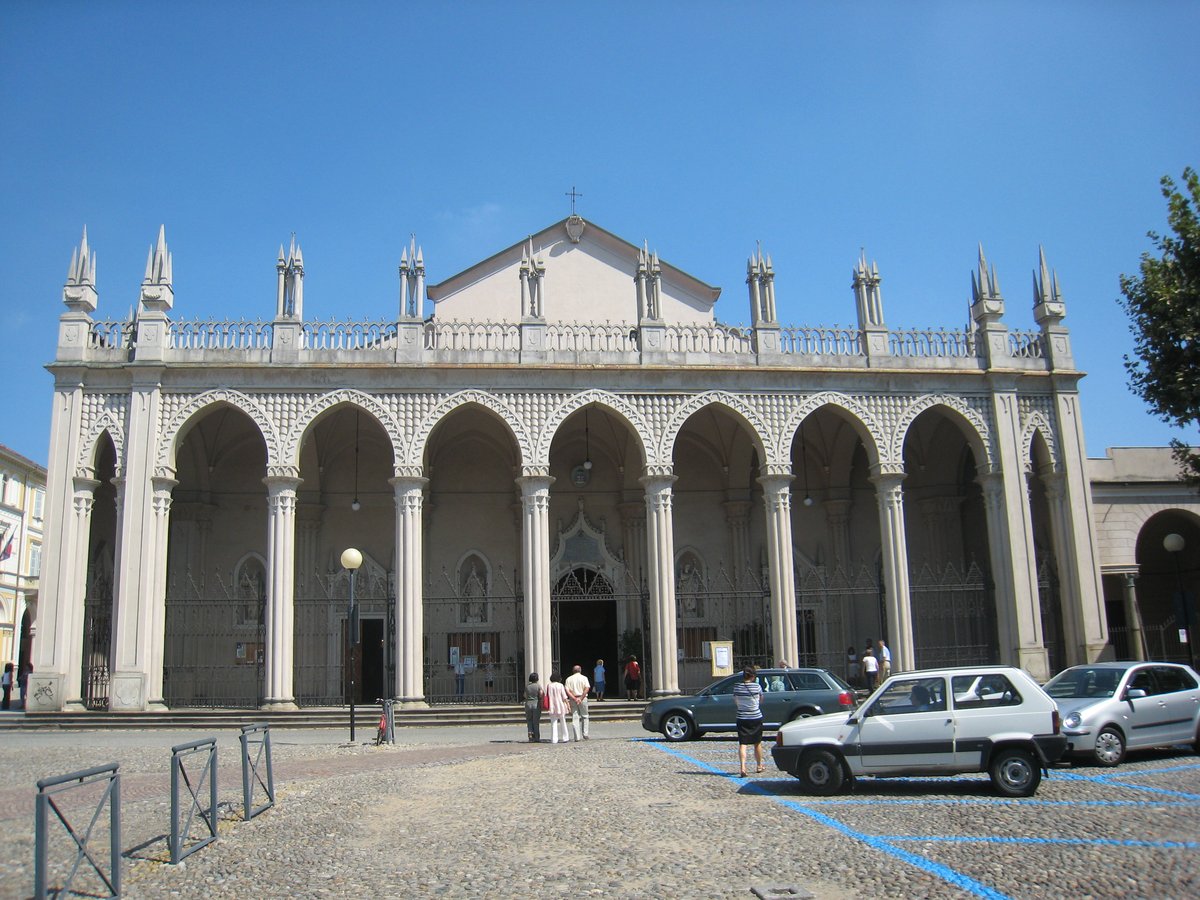
St. Stephen’s Cathedral in Biella Piazzo houses 14th-century frescoes in the Chapel of St. Sebastian and the city’s oldest Romanesque bell tower. Free admission with panoramic views of the Pre-Alps.
- Piazza Monsignor Carlo Rossi, Biella (BI)
- Open in Google Maps
- View on Google Images Cattedrale di Santo Stefano a Biella
Good to know
Introduction
As you ascend towards Biella Piazzo, the Cathedral of Santo Stefano suddenly appears, dominating the landscape with its austere bulk. It is not just a church, but the historical and spiritual heart of the city, a landmark visible from afar that invites you to discover its stories. The stone facade and Romanesque bell tower welcome you with an atmosphere of times gone by, while the medieval frescoes inside recount centuries of devotion and art. Visiting it means immersing yourself in a place where every detail, from the stained glass windows to the capitals, speaks of an ancient and authentic Biella, far from the modern chaos. It is an experience that combines architectural beauty and spirituality, perfect for those seeking a corner of tranquility and culture.
Historical Overview
The Cathedral of Santo Stefano has ancient origins, with the first structure built in the 10th century, although the current building mainly dates back to the 15th century. It was elevated to cathedral status in 1772, replacing the previous church of San Sebastiano. Over time, it has undergone various modifications, such as the renovation of the façade in the 18th century, but it retains Romanesque elements in the bell tower and medieval frescoes inside. Figures such as local bishops have contributed to its evolution, making it a symbol of religious and artistic continuity for Biella.
- 10th century: construction of the first building and the Romanesque bell tower
- 15th century: main restructuring of the church
- 1772: elevation to diocesan cathedral
- Subsequent centuries: restorations and additions to the frescoes
Frescoes and Sacred Art
Inside, the cathedral houses medieval frescoes of significant value, such as those in the side chapel depicting episodes from the life of Saint Stephen and other saints. These works, dating from the 14th to the 15th century, show influences from the Piedmontese and Lombard schools, with vibrant colors and narrative details that capture the attention. The stained glass windows and sacred furnishings, such as the carved wooden pulpit, also stand out, enriching the space with a devotional atmosphere. Observing these elements up close allows one to appreciate the skill of local artisans and the church’s role as a center of artistic production in medieval Biella.
Bell Tower and Architecture
The Romanesque bell tower is one of the most distinctive features: tall and slender, it dates back to the 10th century and is considered the oldest in Biella. Its structure made of local stone, with arrow slits and a spire added in later periods, represents a well-preserved example of Piedmontese medieval architecture. Climbing nearby allows you to admire the construction techniques of the era, while the cathedral’s main nave, with cross vaults and decorated capitals, completes a picture of balance between robustness and elegance. This bell tower is not just a visual landmark, but a silent witness to the urban history of Biella Piazzo.
Why Visit It
Visiting St. Stephen’s Cathedral is worthwhile for three practical reasons: first, the unique medieval frescoes offer a rare example of sacred art in Piedmont, perfect for history enthusiasts; second, the Romanesque bell tower is the oldest in the city, an opportunity to see thousand-year-old architecture up close; third, the location in Biella Piazzo provides panoramic views of the city and the Prealps, ideal for photos and moments of relaxation. Plus, admission is free, making it accessible to everyone without additional costs.
When to Visit
The most enchanting time for a visit is in the early morning hours, when the sunlight illuminates the frescoes inside, creating intense plays of color. Alternatively, autumn afternoons are ideal for enjoying the tranquil atmosphere and the warm colors of the leaves surrounding the square, without the summer crowds. Avoid peak hours to fully appreciate the spirituality of the place.
In the Surroundings
Just a short walk away, explore the Ricetto di Candelo, a perfectly preserved fortified medieval village with narrow alleys and courtyards where you can immerse yourself in an atmosphere of bygone times. For a thematic experience, visit the Fondazione Pistoletto at Cittadellarte, a contemporary art center that engages in dialogue with local tradition, offering exhibitions and creative workshops.
💡 Did You Know…?
The Cathedral houses a still-functioning 18th-century organ, used during celebrations and concerts. It is said that the bell tower, with its original bell chamber, inspired the tower of the nearby Church of St. James. During restoration work, traces of hidden frescoes emerged beneath the plaster, evidence of centuries of devotion.