Tapparelli D’Azeglio Castles: Renaissance Frescoes and Centuries-Old Gardens in Lagnasco

The Tapparelli D’Azeglio Castles in Lagnasco offer a journey through time across three distinct historical buildings. The 12th-century Old Castle displays medieval crenellated towers, while the 16th-century New Castle showcases elegant Renaissance frescoes. The Palazzina completes the complex with 18th-century elements, surrounded by gardens with centuries-old trees.

  • 16th-century Renaissance frescoes with well-preserved pictorial cycles in the Sala delle Grottesche
  • Medieval and Renaissance architecture in the same complex with crenellated towers and defensive structures
  • Historic centuries-old gardens with linden and horse chestnut trees planted over two hundred years ago and antique roses
  • Connection to the Risorgimento through the Tapparelli family and Massimo d’Azeglio
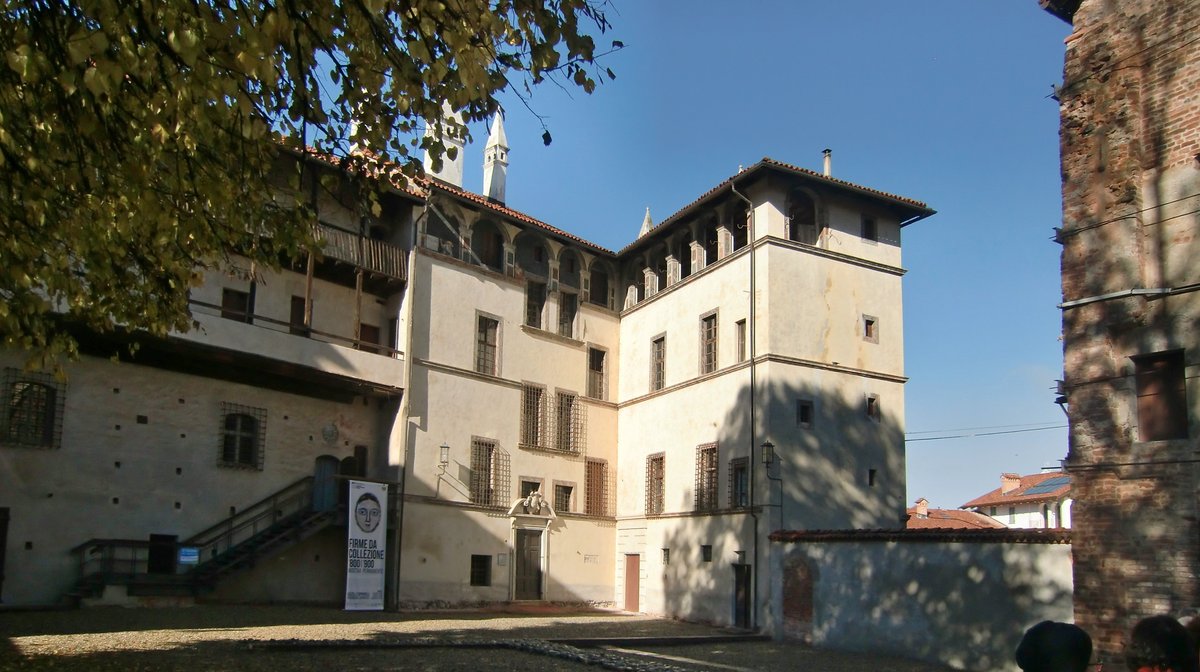
Copertina itinerario Tapparelli D'Azeglio Castles: Renaissance Frescoes and Centuries-Old Gardens in Lagnasco
Unique complex featuring the medieval Old Castle and Renaissance New Castle, 16th-century frescoes, historic gardens with centuries-old trees, and connection to Massimo d’Azeglio.

Good to know


Introduction

As soon as you pass through the gate of the Tapparelli D’Azeglio Castles in Lagnasco, you immediately understand you’re in a special place. It’s not just a complex of historic buildings, but a true journey through time that envelops you with its unique atmosphere. The sight of the two castles side by side – one medieval and one Renaissance – creates an architectural contrast that strikes you immediately. The centuries-old gardens surrounding them add a touch of natural elegance, while the interior frescoes transport you directly to 16th-century Piedmont. This isn’t your typical picture-postcard castle: here you breathe real history, the kind made of battles, family alliances, and art that has withstood the centuries.

Historical Overview

The history of the Tapparelli D’Azeglio Castles begins in the 13th century with the construction of the first fortified nucleus by the Marquises of Saluzzo. In the 16th century, the Tapparelli family radically transformed the complex, adding the Renaissance castle and commissioning the famous fresco cycles that can still be admired in the halls today. Figures such as Massimo d’Azeglio, a 19th-century statesman and painter, have linked their names to this residence, contributing to its fame. The castles have experienced centuries of changing fortunes, from noble residence to agricultural center, up to the recent restoration that has returned them to the public.

  • 13th century: First fortified settlement
  • 16th century: Renaissance transformation and frescoes
  • 19th century: Massimo d’Azeglio and the Risorgimento
  • 21st century: Restoration and opening to the public

The Renaissance Frescoes

As you step into the halls of the Renaissance castle, you’ll be left breathless before the 16th-century painting cycles that cover entire walls. These are not mere decorations: they narrate chivalric tales, moral allegories, and scenes of courtly life with astonishing color vibrancy. Particularly breathtaking is the Hall of Grotesques, where floral motifs and fantastical figures intertwine in a play of perspectives that foreshadows the Baroque. The artists, likely from the school of Macrino d’Alba, worked with a mastery that still amazes today. Every detail – from the characters’ faces to the drapery of their garments – speaks of an era when art was considered the ultimate instrument of communication and prestige.

The Historical Gardens

The gardens surrounding the castles are not mere green spaces, but true botanical monuments that have endured through the centuries. Here you’ll find specimens of linden and horse chestnut trees planted over two hundred years ago, whose canopies shade perfectly preserved pathways. The original design still respects Renaissance symmetry, with geometric flowerbeds alternating with wilder areas. In spring, the blooming of heritage roses creates fragrant splashes of color, while in autumn the leaves of ancient trees paint everything in warm hues. Walking here means immersing yourself in a timeless atmosphere, where nature and history blend harmoniously.

Why Visit It

Three concrete reasons not to miss this visit: first, the Renaissance frescoes are among the best preserved in Piedmont and offer a rare example of 16th-century secular painting. Second, the opportunity to see two different architectural styles in the same complex – medieval and Renaissance – allows you to understand the evolution of castle art in a single stop. Third, the historic gardens represent a case study of ancient botany still thriving, with tree specimens that tell centuries of cultivation. No other castle in the area offers this unique combination of art, architecture, and nature perfectly integrated.

When to Go

The best time to fully appreciate the castles is in the late afternoon hours, when the raking light enhances the architectural volumes and creates evocative shadow plays on the ancient bricks. As for the season, late spring offers a special spectacle: the gardens in full bloom frame the castles, creating chromatic contrasts that seem straight out of a painting. Under these conditions of light and vegetation, every photograph becomes an unforgettable memory of your visit.

In the Surroundings

Complete your experience with a visit to the Civic Museum of Saluzzo, which houses artworks and documents related to the history of the Marquises who once ruled here. For an interesting contrast, head to the Barolo Wine Cellars in the nearby Langhe region: here you can taste the iconic local wine and discover how high-quality food and wine represent the other side of this area of Piedmont’s cultural richness.

💡 Did You Know…?

A local legend tells of a secret passage hidden in the cellars of the Old Castle that once connected the residence to the nearby church, used by the lords to escape sieges. Furthermore, the castle was the residence of Massimo d’Azeglio, a Risorgimento politician and painter, who hosted intellectuals of the era here. The frescoes in the Festival Hall depict hunting scenes and courtly life, recently restored to preserve their original details.