Introduction
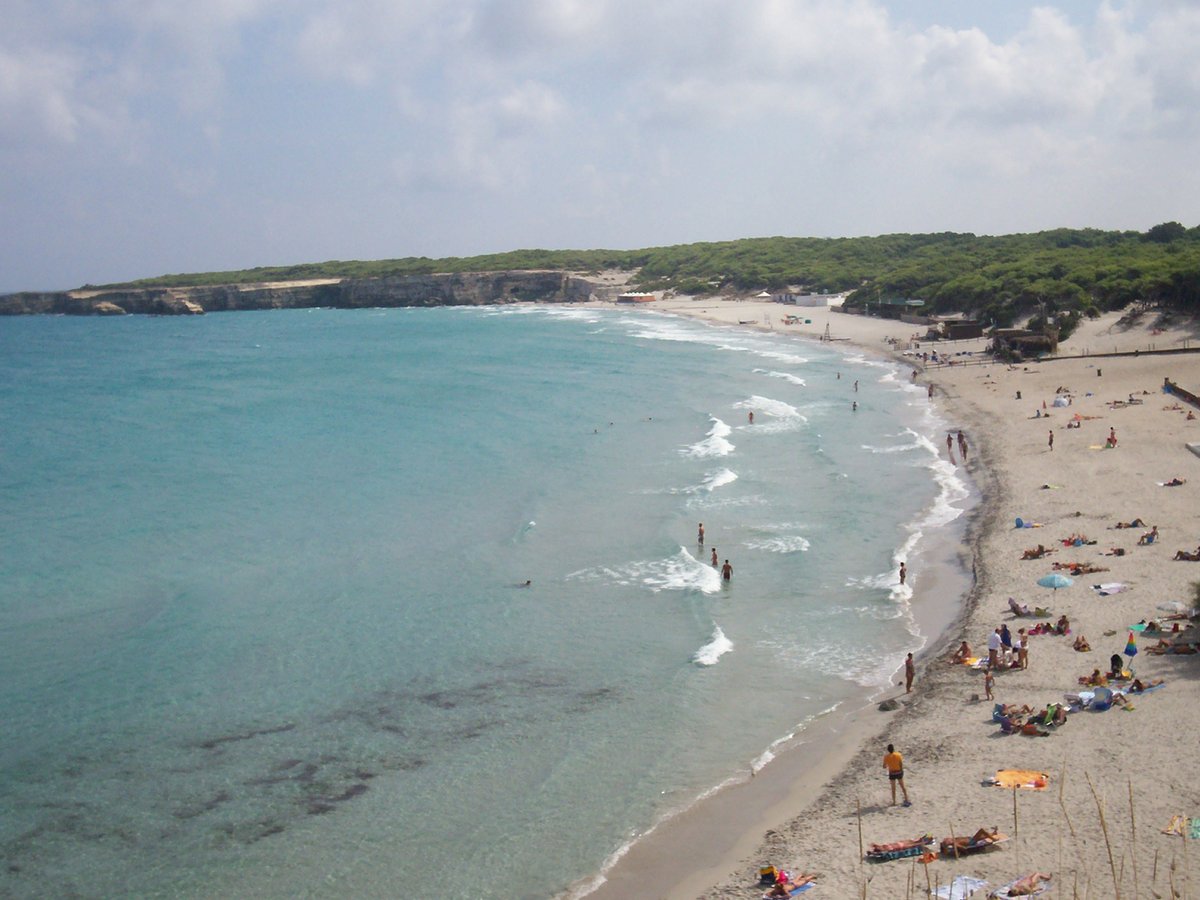
If there is one beach that embodies the most authentic Salento, it is Torre dell’Orso. An 800-meter-long bay of fine sand, framed by cliffs and Mediterranean scrub, with water so clear it looks unreal. The Blue Flag has flown here for years, and as soon as you arrive, you understand why. The twin sea stacks called Le Due Sorelle emerge from the water like silent guardians, while the 16th-century tower watches from above. It’s not just a beach: it’s a place where time slows down, between a swim and a dive from the cliffs.
Introduction
If there is one beach that embodies the most authentic Salento, it is Torre dell’Orso. An 800-meter-long bay of fine sand, framed by cliffs and Mediterranean scrub, with water so clear it looks unreal. The Blue Flag has flown here for years, and as soon as you arrive, you understand why. The twin sea stacks called Le Due Sorelle emerge from the water like silent guardians, while the 16th-century tower watches from above. It’s not just a beach: it’s a place where time slows down, between a swim and a dive from the cliffs.
Historical Notes
The history here begins long before tourism. The bay was the
natural port of the ancient Messapian city of Roca, a stopover on the shortest route between Italy and Albania (80 km). It is said that in 44 BC Octavian Augustus landed here to reach Lupiae after Caesar’s assassination, and that Virgil was inspired by these shores for Aeneas’s landing. The tower that gives the location its name was built starting in
1568 by Giovanni Tommaso Garrapa, completed by his brother Angelo after his death. It was part of the Spanish defensive system against the Turks. As for the name ‘Orso’, no one knows for certain: perhaps from the monk seal, or from an ancient owner with the surname Urso.
- 44 BC – possible landing of Augustus
- 1568 – start of tower construction
- 1580 – tower completion
- 1990 – establishment of quasi-parish
Historical Notes
The history here begins long before tourism. The bay was the
natural port of the ancient Messapian city of Roca, a stopover on the shortest route between Italy and Albania (80 km). It is said that in 44 BC Octavian Augustus landed here to reach Lupiae after Caesar’s assassination, and that Virgil was inspired by these shores for Aeneas’s landing. The tower that gives the location its name was built starting in
1568 by Giovanni Tommaso Garrapa, completed by his brother Angelo after his death. It was part of the Spanish defensive system against the Turks. As for the name ‘Orso’, no one knows for certain: perhaps from the monk seal, or from an ancient owner with the surname Urso.
- 44 BC – possible landing of Augustus
- 1568 – start of tower construction
- 1580 – tower completion
- 1990 – establishment of quasi-parish
Beach and Sea
The beach is a semicircle of fine, golden sand, 30-60 meters wide, with a sandy seabed that becomes rocky after the first 20 meters. The water is crystal clear thanks to the currents of the Strait of Otranto, with temperatures reaching 27°C in July-August. The bay is sheltered from the winds, perfect for families. 60% is occupied by equipped beach clubs (umbrella + sunbeds €15-30), the rest is free beach at the ends. The rocky seabeds around the stacks are a paradise for snorkeling: octopus, bream, and wrasse. If you arrive after 9 a.m. in high season, forget about free parking—better to aim for the guarded lot at €4-6 or take the shuttle from Melendugno.
Beach and Sea
The beach is a semicircle of fine, golden sand, 30-60 meters wide, with a sandy seabed that becomes rocky after the first 20 meters. The water is crystal clear thanks to the currents of the Strait of Otranto, with temperatures reaching 27°C in July-August. The bay is sheltered from the winds, perfect for families. 60% is occupied by equipped beach clubs (umbrella + sunbeds €15-30), the rest is free beach at the ends. The rocky seabeds around the stacks are a paradise for snorkeling: octopus, bream, and wrasse. If you arrive after 9 a.m. in high season, forget about free parking—better to aim for the guarded lot at €4-6 or take the shuttle from Melendugno.
The Faraglioni and the Cave
The two twin rocks called Le Due Sorelle are the symbol of Torre dell’Orso. According to legend, two sisters jumped into the sea to escape a cruel fate and were turned to stone by the gods. They can be reached by swimming in 5-7 minutes (80 meters away) and the rocky seabed at 3-5 meters depth is ideal for snorkeling. On the northern promontory, a 10-minute walk from the beach, is the Grotta di San Cristoforo, a cave with Byzantine frescoes from the 13th-14th centuries. Bring a flashlight. The path is unpaved but well-trodden, and the view of the bay from above is postcard-perfect.
The Faraglioni and the Cave
The two twin rocks called Le Due Sorelle are the symbol of Torre dell’Orso. According to legend, two sisters jumped into the sea to escape a cruel fate and were turned to stone by the gods. They can be reached by swimming in 5-7 minutes (80 meters away) and the rocky seabed at 3-5 meters depth is ideal for snorkeling. On the northern promontory, a 10-minute walk from the beach, is the Grotta di San Cristoforo, a cave with Byzantine frescoes from the 13th-14th centuries. Bring a flashlight. The path is unpaved but well-trodden, and the view of the bay from above is postcard-perfect.
Why Visit It
Three concrete reasons. First: the 16th-century tower is free and offers an amazing view of the coast – hike up a 400-meter path and you’re there in 45 minutes. Second: the snorkeling at the faraglioni is among the best in Salento, crystal-clear water and lots of fish. Third: the evening stroll along the seafront between bars and gelaterias, with the sun setting behind the tower. And besides, the Blue Flag isn’t just a formality: the water here is truly clean, you’ll see it as soon as you take your first dive.
Why Visit It
Three concrete reasons. First: the 16th-century tower is free and offers an amazing view of the coast – hike up a 400-meter path and you’re there in 45 minutes. Second: the snorkeling at the faraglioni is among the best in Salento, crystal-clear water and lots of fish. Third: the evening stroll along the seafront between bars and gelaterias, with the sun setting behind the tower. And besides, the Blue Flag isn’t just a formality: the water here is truly clean, you’ll see it as soon as you take your first dive.
When to Go
If you want to enjoy the beach without crowds, June and September are the best. The water is already warm (22-25°C), the beach clubs are open, and prices are lower. July and August are extremely crowded, with parking spots impossible to find after 9:30 AM. May is quiet but the water is still cool (19-21°C) and many beach clubs are closed. For an evening stroll along the shore, any time works – but the magic hour is sunset, when the tower turns golden and the sea stacks seem to glow.
When to Go
If you want to enjoy the beach without crowds, June and September are the best. The water is already warm (22-25°C), the beach clubs are open, and prices are lower. July and August are extremely crowded, with parking spots impossible to find after 9:30 AM. May is quiet but the water is still cool (19-21°C) and many beach clubs are closed. For an evening stroll along the shore, any time works – but the magic hour is sunset, when the tower turns golden and the sea stacks seem to glow.
Nearby
Just a short distance away is the Grotta della Poesia (5 km), a natural rock pool perfect for diving and snorkeling – arrive early or after 6 PM to avoid the crowds. Also 3 km away is Roca Vecchia, a Messapian archaeological site with remnants of a city and coastal towers (entry €3). If you have more time, Otranto is 15 km away and worth visiting for its Romanesque cathedral and castle. For a day in nature, the Alimini Lakes (8 km) offer trails through the pine forest and birdwatching.
Nearby
Just a short distance away is the Grotta della Poesia (5 km), a natural rock pool perfect for diving and snorkeling – arrive early or after 6 PM to avoid the crowds. Also 3 km away is Roca Vecchia, a Messapian archaeological site with remnants of a city and coastal towers (entry €3). If you have more time, Otranto is 15 km away and worth visiting for its Romanesque cathedral and castle. For a day in nature, the Alimini Lakes (8 km) offer trails through the pine forest and birdwatching.