
🧭 What to Expect
- Ideal for history and archaeology enthusiasts, with Messapian and Greek sites.
- Discover Byzantine rock-hewn churches carved into the rock in Mottola, with preserved frescoes.
- Explore medieval and Renaissance castles scattered inland, such as the Aragonese and Muscettola.
- Includes an interactive map with all locations to plan your route.
- Find sandy beaches and coastal towers like Colimena, in the Marine Protected Area.
- Visit the Ceramics Museum in Grottaglie, famous for local craftsmanship.
Events nearby
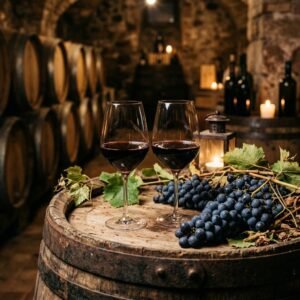
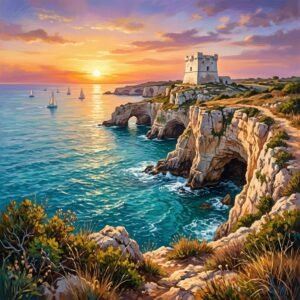
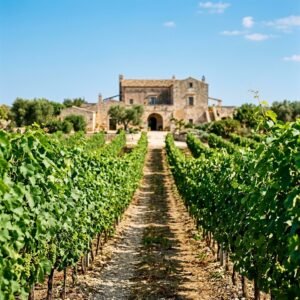
The Province of Taranto is a territory rich in history and culture, extending far beyond the capital city. Here you'll find Messapian archaeological sites like the walls of Manduria, medieval castles scattered throughout the inland towns, and rock-hewn churches carved into the stone in Mottola. The Ionian coast offers sandy beaches and coves, while Grottaglie's ceramic craftsmanship is renowned worldwide. A journey through this province means discovering an authentic heritage, blending ancient traditions with pristine Mediterranean landscapes.
Overview
- MAR.TA National Archaeological Museum of Taranto
- Archaeological Park of the Messapian Walls
- San Gregorio Rock Church
- Aragonese Castle
- Medieval Castle of Massafra
- Bishop's Castle of Grottaglie
- San Nicola Rock Church
- Sant'Angelo Rock Church
- Norman-Swabian Castle of Ginosa
- De Falconibus Castle
- Muscettola Castle of Leporano
- Petruscio Rupestrian Village
- Doric Temple
- Torre Colimena
- Cacace Tower
Itineraries nearby


MAR.TA National Archaeological Museum of Taranto
- Go to the page: MAR.TA Taranto: Gold of Taras and Magna Graecia Artifacts in Former Convent
- Via Cavour 10, Taranto (TA)
- https://museotaranto.cultura.gov.it/
- Open in Google Maps
- View on Google Images
- man-ta@beniculturali.it
- +39 099 4532112
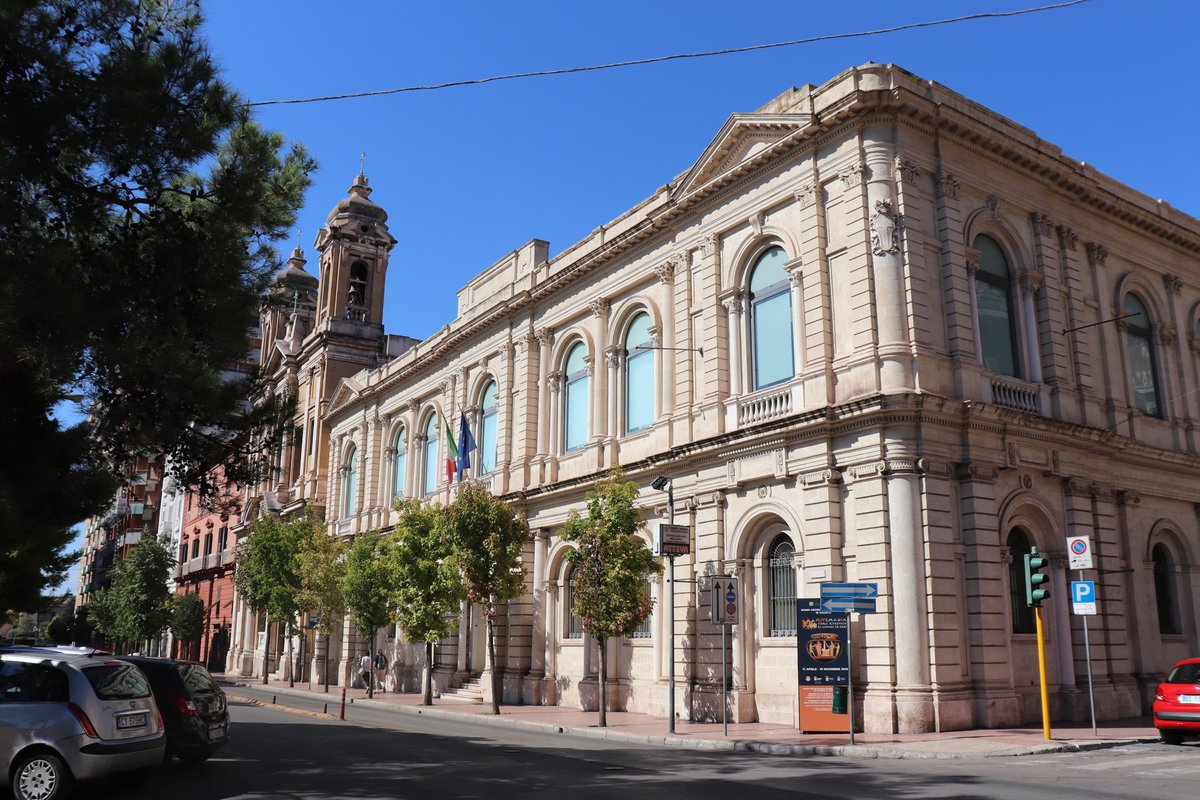 The MAR.TA National Archaeological Museum of Taranto is an essential stop for anyone wanting to discover the city's most ancient roots. Located in the heart of the old town, it occupies the former convent of the Alcantarine Friars and welcomes you with collections spanning from prehistory to the Roman era. The true star of the museum is the section dedicated to Tarantine goldsmithing, featuring exquisitely crafted gold jewelry that testifies to the city's wealth during the Magna Graecia period. Don't miss the artifacts from the Temple of Poseidon and the red-figure pottery, which narrate the daily life and rituals of ancient Taras. The rooms are clearly organized, with explanatory panels that guide visitors without overwhelming the experience. On the ground floor, the chronological journey takes you through the centuries, while the first floor focuses on specific themes like religion and craftsmanship. Special attention deserves the funerary goods, which reveal the customs and beliefs of the time. The museum is well-lit and accessible, with spaces that make even a prolonged visit enjoyable. If you love history, you'll find plenty to feast on here: every display case hides fascinating stories, like that of the athletes of Taranto, celebrated with statues and inscriptions. Conclude your visit with a stop in the cloister, a peaceful corner to reflect on what you've seen.
MAR.TA National Archaeological Museum of Taranto
Archaeological Park of the Messapian Walls
- Via Scegnu, Manduria (TA)
- Open in Google Maps
- View on Google Images
 The Archaeological Park of the Messapian Walls in Manduria transports you directly into the heart of Apulia's ancient history. Here you can walk along the remains of the mighty walls that protected the ancient Messapian city, a people who dominated these lands before the Romans. The walls, built with large blocks of local stone, stretch for about three kilometers and in some places still reach five meters in height. Observe up close the monumental gates that allowed access to the city, such as the Lecce Gate and the Taranto Gate, still well-preserved. The park also includes a necropolis with pit and chamber tombs that tell the story of the funeral rites of the era. Strolling among the centuries-old olive trees surrounding the area, you'll notice the remains of the towers that reinforced the defenses. The elevated position offers a panoramic view of the surrounding countryside, helping you understand why the Messapians chose precisely this spot to build their stronghold. Entrance to the park is free and informative panels guide you through the site's history. It's a perfect place for those seeking an authentic archaeological experience, away from the crowds of more famous sites.
Archaeological Park of the Messapian Walls
San Gregorio Rock Church
- Via Salvador Allende, Mottola (TA)
- Open in Google Maps
- View on Google Images
 The San Gregorio Rock Church is one of the most fascinating treasures of Apulia's rock-cut heritage. Carved directly into the limestone rock of Mottola's ravines, this hypogean church likely dates back to the Byzantine period, between the 9th and 11th centuries. What immediately strikes visitors is its essential yet evocative architecture, with the apse oriented eastward according to Eastern tradition. Inside, you can admire traces of frescoes that, despite the passage of time, still retain their original beauty. The sacred figures depict scenes from the life of Christ and the saints, with particular attention to Saint Gregory, to whom the church is dedicated. The isolated location, immersed in the rural landscape of the ravines, creates an atmosphere of profound spirituality. The visit requires a short walk along a dirt path that winds through ancient olive trees and Mediterranean scrub. The silence enveloping this place, broken only by birdsong and the rustle of wind through the rocks, makes the experience particularly evocative. I recommend bringing a torch to better appreciate the details of the frescoes and wearing comfortable shoes for the access path.
San Gregorio Rock Church
Aragonese Castle
- Piazza Castello, Taranto (TA)
- Open in Google Maps
- View on Google Images
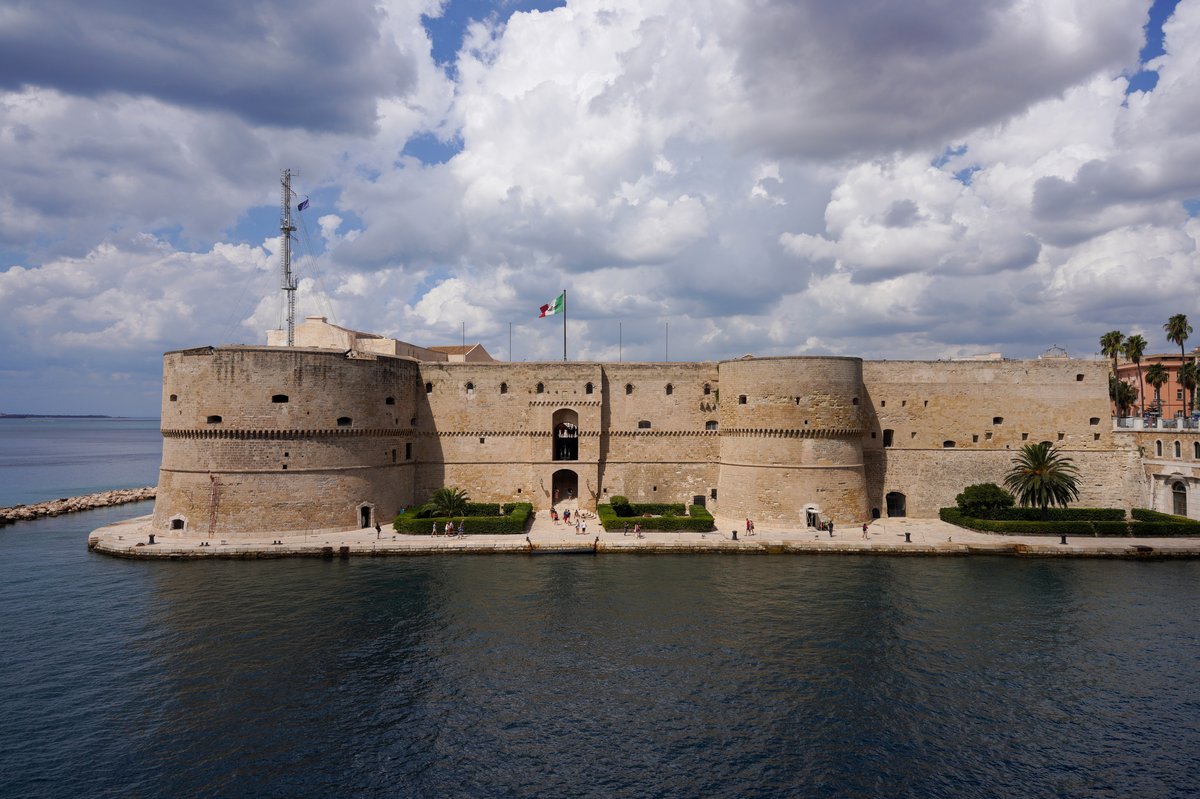 The Aragonese Castle of Taranto stands imposingly at the entrance to the old town, directly overlooking the Mar Piccolo. Built between 1486 and 1492 by order of Ferdinand II of Aragon, this fortress represents one of the city's most recognizable symbols. Its strategic position is evident: it controls access to the swing bridge and protected the ancient urban core. Today the castle houses the Italian Navy, but it's visitable through guided tours that reveal its secrets. Inside, you can admire the cylindrical towers characteristic of Aragonese military architecture, the inner courtyards, and the patrol walkways. Particularly interesting is the Chapel of San Leonardo, a small architectural jewel preserved within the walls. During the visit, you'll also discover the underground prisons and defensive systems that withstood numerous sieges. The castle has undergone several modifications over the centuries, from the original Norman structures to subsequent Angevin and Aragonese fortifications. Today it also hosts temporary exhibitions and cultural events, maintaining a living connection with the Taranto community. The view from the drawbridge over the navigable channel is one of the city's most photographed scenes.
Aragonese Castle
Medieval Castle of Massafra
- Via Lo Pizzo, Massafra (TA)
- Open in Google Maps
- View on Google Images
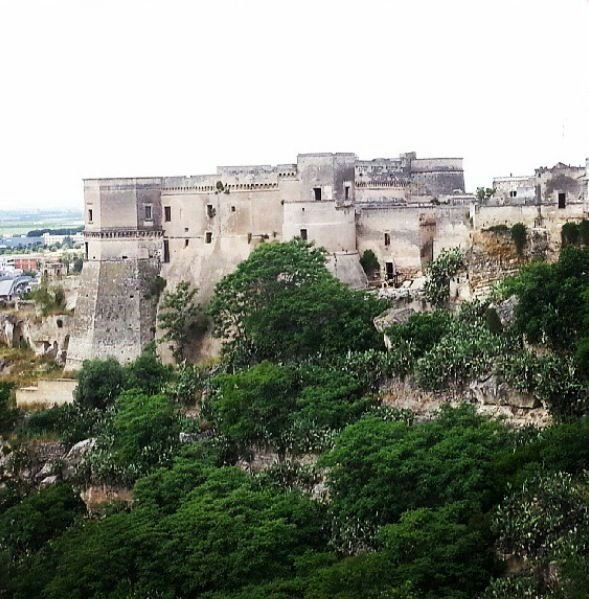 The Medieval Castle of Massafra dominates the historic center with its imposing structure that tells centuries of history. Built probably between the 11th and 12th centuries, it represents one of the most recognizable symbols of the city. Its strategic position overlooking the San Marco ravine is no coincidence: it served to control communication routes and defend the territory. Today it appears as an articulated complex, the result of subsequent transformations that have modified its original appearance. The oldest part, from the Norman era, is recognizable in the square towers and massive walls. Over the centuries, the castle underwent numerous interventions, especially during the Angevin and Aragonese dominations, when more modern defensive elements were added. Access is through a bridge that crosses the deep moat, once an essential protective element. Inside, the various spaces are distributed over multiple levels: from the underground prisons to the noble halls, up to the patrol walkways that offer an extraordinary panoramic view of the town and the surrounding ravines. Particularly interesting is the castle chapel, dedicated to Saint Lawrence, which preserves traces of medieval frescoes. The castle is not just a monument to visit, but the beating heart of Massafra, around which the entire ancient village developed. Its history intertwines with that of the numerous rock-hewn churches that dot the ravines, creating a unique discovery route.
Medieval Castle
Bishop's Castle of Grottaglie
- Via delle Torri, Grottaglie (TA)
- Open in Google Maps
- View on Google Images
 The Bishop's Castle of Grottaglie is one of the most representative monuments in the province of Taranto. Built in the 14th century as a fortified bishop's residence, it overlooks the characteristic Ceramics Quarter, the beating heart of local craftsmanship. The structure stands as an imposing architectural complex that combines medieval defensive elements with later Renaissance transformations. Its crenellated towers and mighty walls tell centuries of history, when the bishops of Taranto held temporal power over this territory. Today, the castle houses the Ceramics Museum, a unique collection documenting the evolution of Grottagliese ceramic production from the Middle Ages to the present day. Climbing the stairs leads to the noble halls with vaulted ceilings and monumental fireplaces, while from the inner courtyard, visitors enjoy a breathtaking panoramic view of the white houses of the historic center and the olive groves surrounding the city. Particularly evocative is the path leading to the ancient prisons, where graffiti left by prisoners can still be seen. A visit to the castle offers not only a dive into history but also the opportunity to understand the deep bond between Grottaglie and its ceramic tradition, recognized internationally.
Bishop's Castle
San Nicola Rock Church
- Autostrada Adriatica, Mottola (TA)
- Open in Google Maps
- View on Google Images
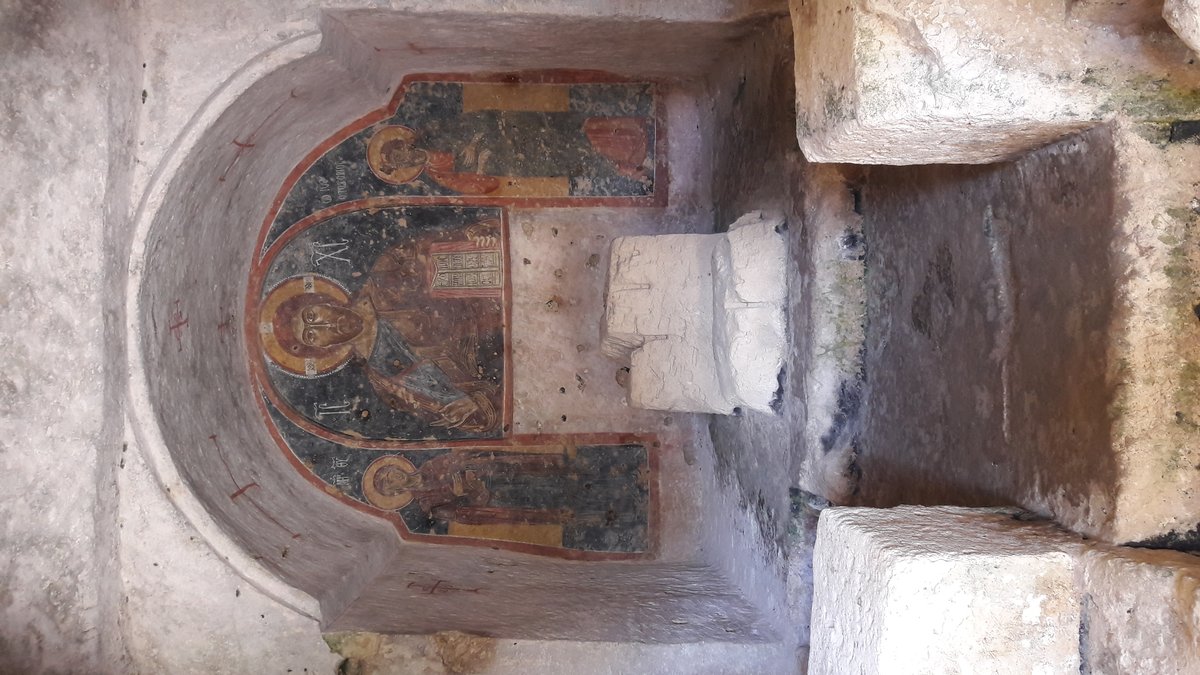 The San Nicola Rock Church in Mottola is a place that takes you back in time. Carved directly into the tufa stone, it dates back to the Byzantine period and is part of the rich rock-cut heritage of the Taranto Murgia. As soon as you enter, you are struck by the intimate atmosphere and the silence that envelops the spaces. The frescoes, although partially preserved, display sacred scenes of rare beauty, with figures of essential features and muted colors. Look closely at the back wall: here you can glimpse a Christ Pantocrator surrounded by saints, a typical iconography of Eastern art. The church is small, but every corner tells a story. Light filters through natural openings, creating plays of shadow that enhance the carved forms. It is not just a religious site: it is a testament to how local communities lived and prayed in these environments for centuries. Access is easy, but remember to check the opening hours – often managed by local associations. Bring a torch to better appreciate the details of the frescoes in the dim light. If you love art and history, this is a place you cannot miss.
San Nicola Rock Church
Sant'Angelo Rock Church
- SP27, Mottola (TA)
- Open in Google Maps
- View on Google Images
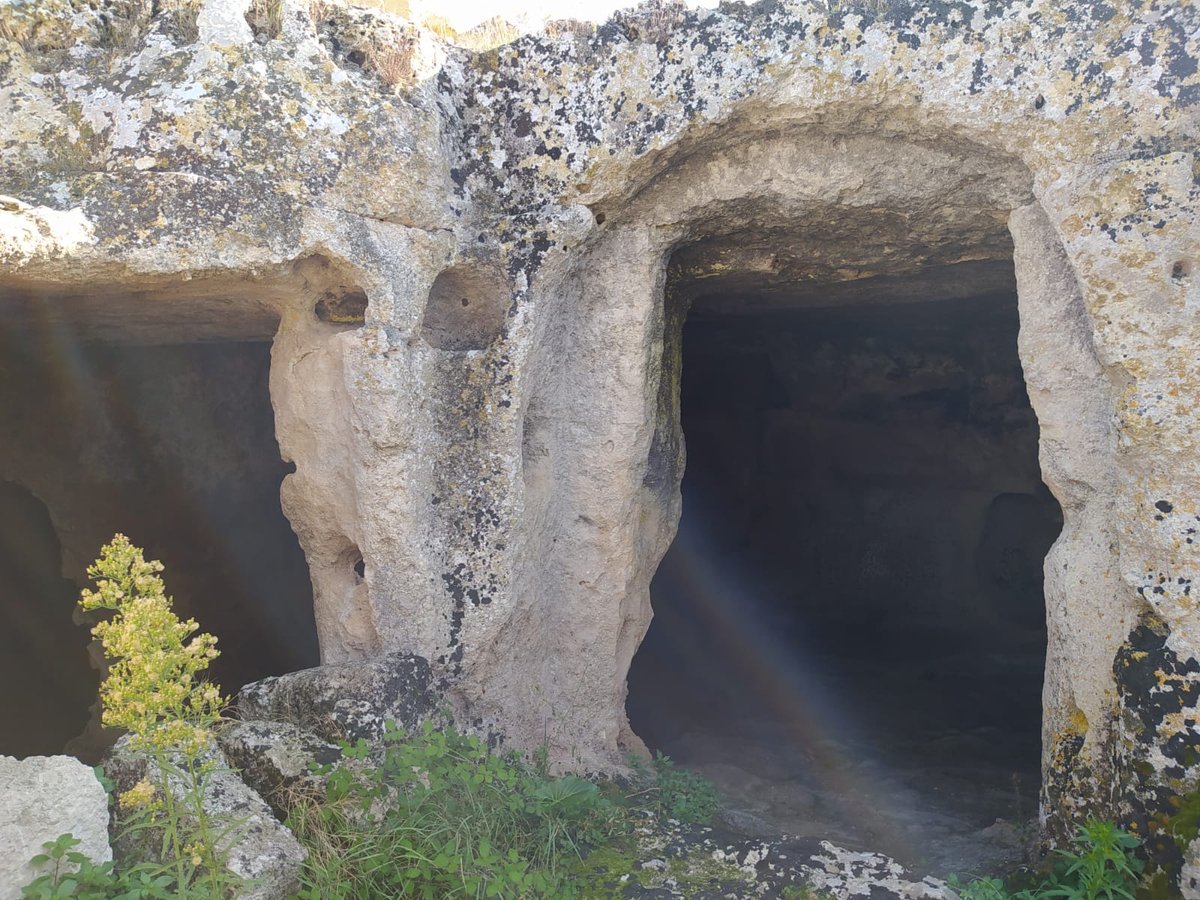 The Sant'Angelo Rock Church is one of the most fascinating gems of Apulia's rock-cut heritage. Carved directly into the soft tuff stone of Mottola's ravines, this church likely dates back to the Byzantine period, between the 9th and 11th centuries. What makes it special are its well-preserved frescoes that tell sacred stories through vivid images and ancient symbols. The entrance itself is an experience: you descend along a path winding through Mediterranean vegetation until you reach this cavity that seems to emerge from the rock. Inside, the atmosphere is deeply evocative. Light filters through natural openings, illuminating the figures of saints painted on the walls. You can clearly recognize Saint Michael the Archangel, from whom the church takes its name, and other Marian representations. The structure is simple yet effective: a single nave with an apse, typical of the area's rock churches. The location is not accidental: these churches were often prayer places for monastic communities seeking isolation and contemplation. Today, visiting Sant'Angelo means taking a leap back in time and touching the spirituality of a distant era. The site is part of the broader circuit of Mottola's rock churches, a system of about 150 rock-cut settlements that make this area an open-air museum. Preservation is excellent, thanks to recent restoration interventions that have protected the frescoes from humidity and decay. To access it, you need to book your visit through the official channels of the Municipality of Mottola or rely on specialized local guides. The path doesn't present particular difficulties, but it's advisable to wear comfortable shoes and bring a torch to better appreciate the details of the frescoes in less illuminated areas.
Sant'Angelo Rock Church
Norman-Swabian Castle of Ginosa
- Vico Castello, Ginosa (TA)
- Open in Google Maps
- View on Google Images
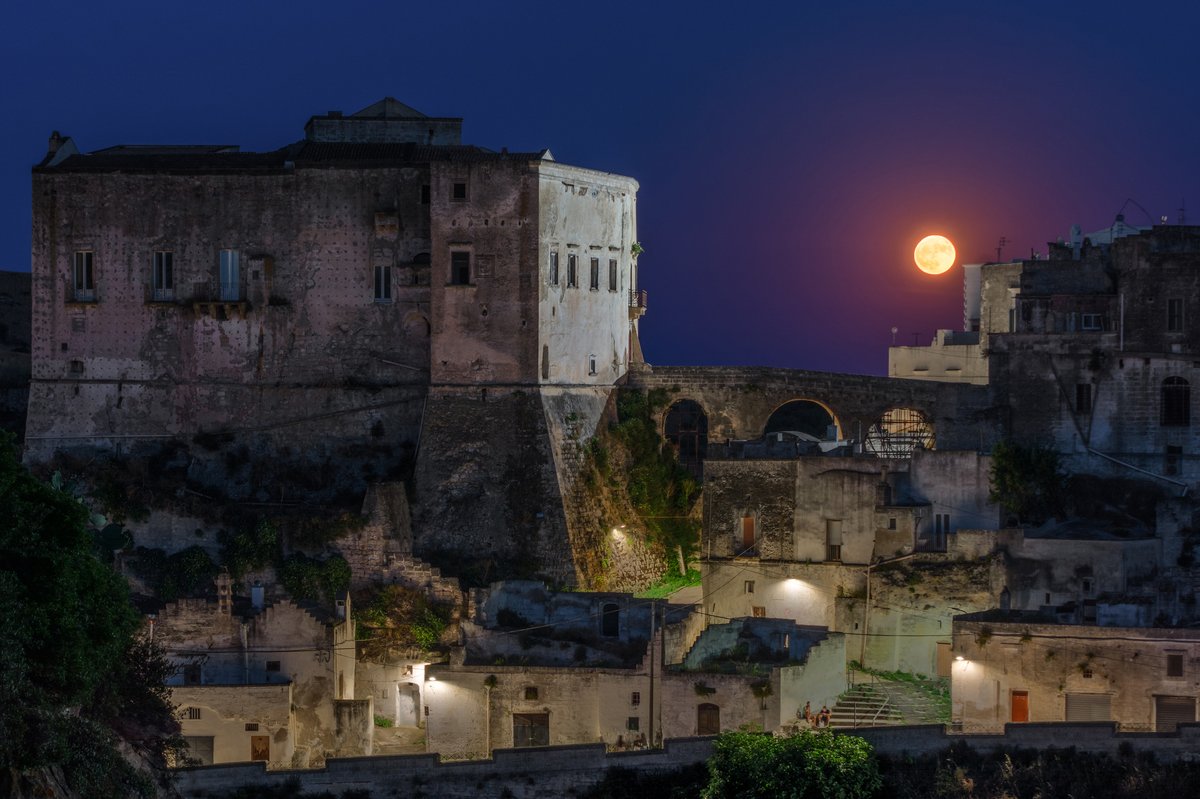 The Norman-Swabian Castle of Ginosa dominates the historic center from atop a rocky spur, offering a spectacular view of the ravine below. Built in the 11th century by the Normans and later expanded by the Swabians, this fortress represents one of the most important examples of medieval military architecture in Apulia. Its strategic position was no coincidence: it controlled the communication routes between the inland areas and the Ionian coast. Today, the castle is accessed via a stone bridge spanning the gorge—an entrance that alone is worth the visit. Inside, visitors can admire the square Norman towers and subsequent Swabian modifications, including the central keep. The rooms, though bare, preserve traces of frescoes and structures that tell centuries of history. Particularly evocative is the patrol walkway, which offers a 360-degree panorama of the town and surrounding countryside. The castle frequently hosts cultural events and exhibitions, adding contemporary value to its thousand-year presence. The visit is a plunge into the past that will not disappoint history and architecture enthusiasts.
Norman-Swabian Castle
De Falconibus Castle
- Via Lunga degli Aborigeni, Pulsano (TA)
- Open in Google Maps
- View on Google Images
 The De Falconibus Castle is one of the most fascinating landmarks of Pulsano, an imposing medieval structure that rises in the heart of the historic center. Built in the 15th century by the noble De Falconibus family, the castle represents a perfect example of fortified Apulian architecture, with its massive walls and towers that still tell centuries of history. The strategic hilltop location offers a breathtaking panoramic view over the Gulf of Taranto and the surrounding countryside, making the visit an unforgettable experience for both history enthusiasts and those seeking picturesque views. Inside, you can admire the original spaces, including the noble halls, prisons, and patrol walkways, which retain the charm of the era intact. Particularly interesting is the main tower, from which you can overlook the entire village of Pulsano and glimpse the Salento coast in the distance. The castle often hosts cultural events, exhibitions, and historical reenactments that bring the spaces to life with a lively and engaging atmosphere. Its proximity to the Mother Church and the alleys of the center makes it easy to combine the visit with a stroll among the typical white houses and local craft shops. For those who want to discover an authentic corner of the Taranto province, away from the more beaten paths, De Falconibus Castle is an unmissable stop that combines history, art, and landscape in a single, thrilling experience.
De Falconibus Castle
Muscettola Castle of Leporano
- Via Oberdan, Leporano (TA)
- Open in Google Maps
- View on Google Images
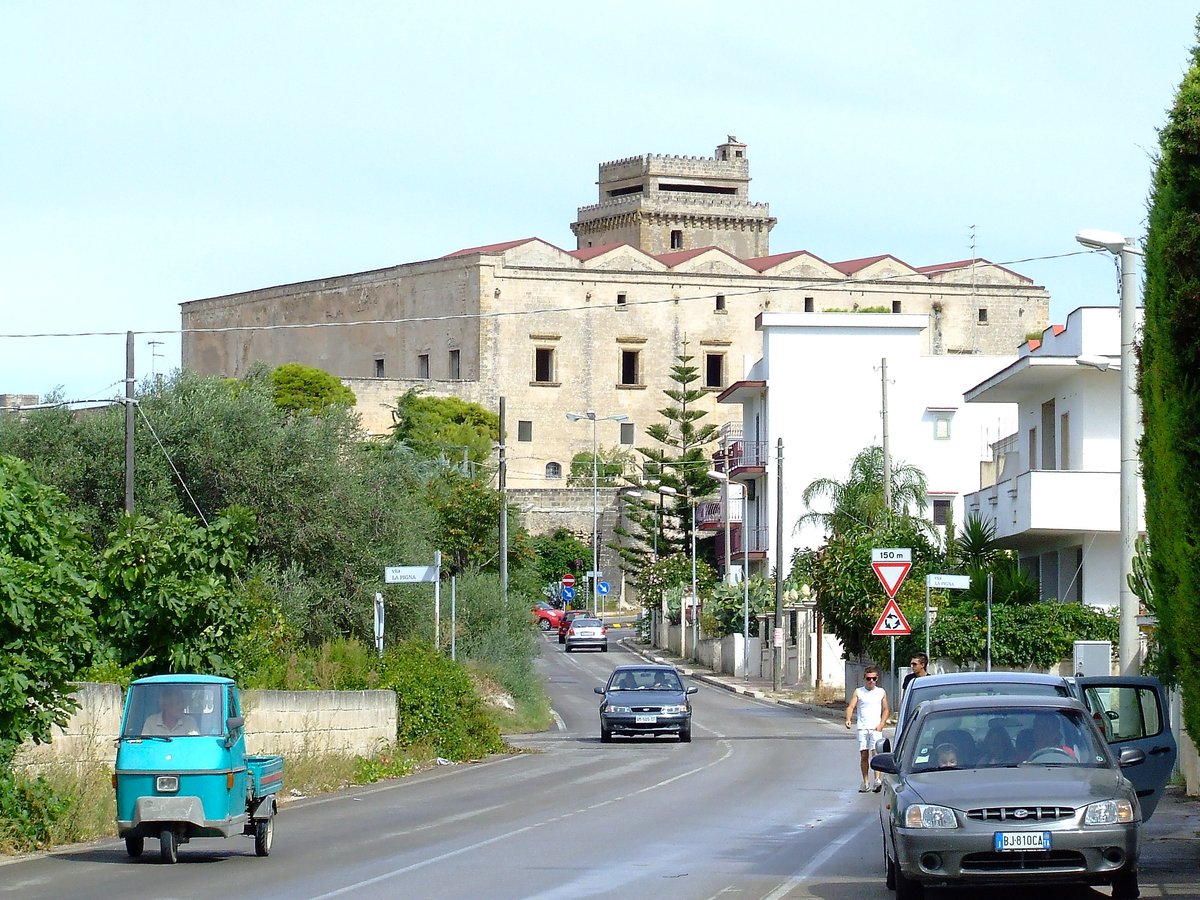 The Muscettola Castle dominates the historic center of Leporano with its imposing 16th-century structure. Built at the behest of the Muscettola family, this manor represents one of the best-preserved examples of Renaissance fortified architecture in the province of Taranto. Its strategic location, just steps from the sea, offers breathtaking views of the Gulf of Taranto and the Cheradi Islands. Look closely at the main facade: you'll notice the family coat of arms carved in stone and the arrow slits that recall its original defensive function. Inside, the noble halls preserve traces of the original frescoes, and walking through the corridors will make you feel like an honored guest from the 16th century. Today the castle hosts cultural events and weddings but remains open for visits on heritage days. Don't miss the view from the highest tower: on clear days, you can even spot the silhouette of the Aragonese Castle of Taranto on the horizon. Remember that access is often only possible by reservation or on special occasions, so check before you go.
Muscettola Castle
Petruscio Rupestrian Village
- Strada Statale 100 di Gioia del Colle, Mottola (TA)
- Open in Google Maps
- View on Google Images
 The Petruscio Rupestrian Village in Mottola is one of the most fascinating rock-cut complexes in Apulia. This ancient settlement, abandoned in the 15th century, unfolds along the walls of a ravine and preserves the atmosphere of times past intact. The dwellings carved into the limestone rock follow one another on multiple levels, connected by staircases and pathways. Many caves still bear traces of daily life: niches for storing food, water channels, and hearths. The rupestrian church of San Nicola, with its Byzantine frescoes, is the spiritual heart of the village. The frescoes, though partially deteriorated, display sacred scenes of rare beauty. The site is perfect for those who love archaeology and history, but also for those seeking places off the beaten tourist track. The visit requires comfortable shoes and a torch to explore the innermost areas. The best time to visit is spring, when the surrounding vegetation is lush and the climate is ideal for excursions.
Petruscio Rupestrian Village
Doric Temple
- Piazza Castello, Taranto (TA)
- Open in Google Maps
- View on Google Images
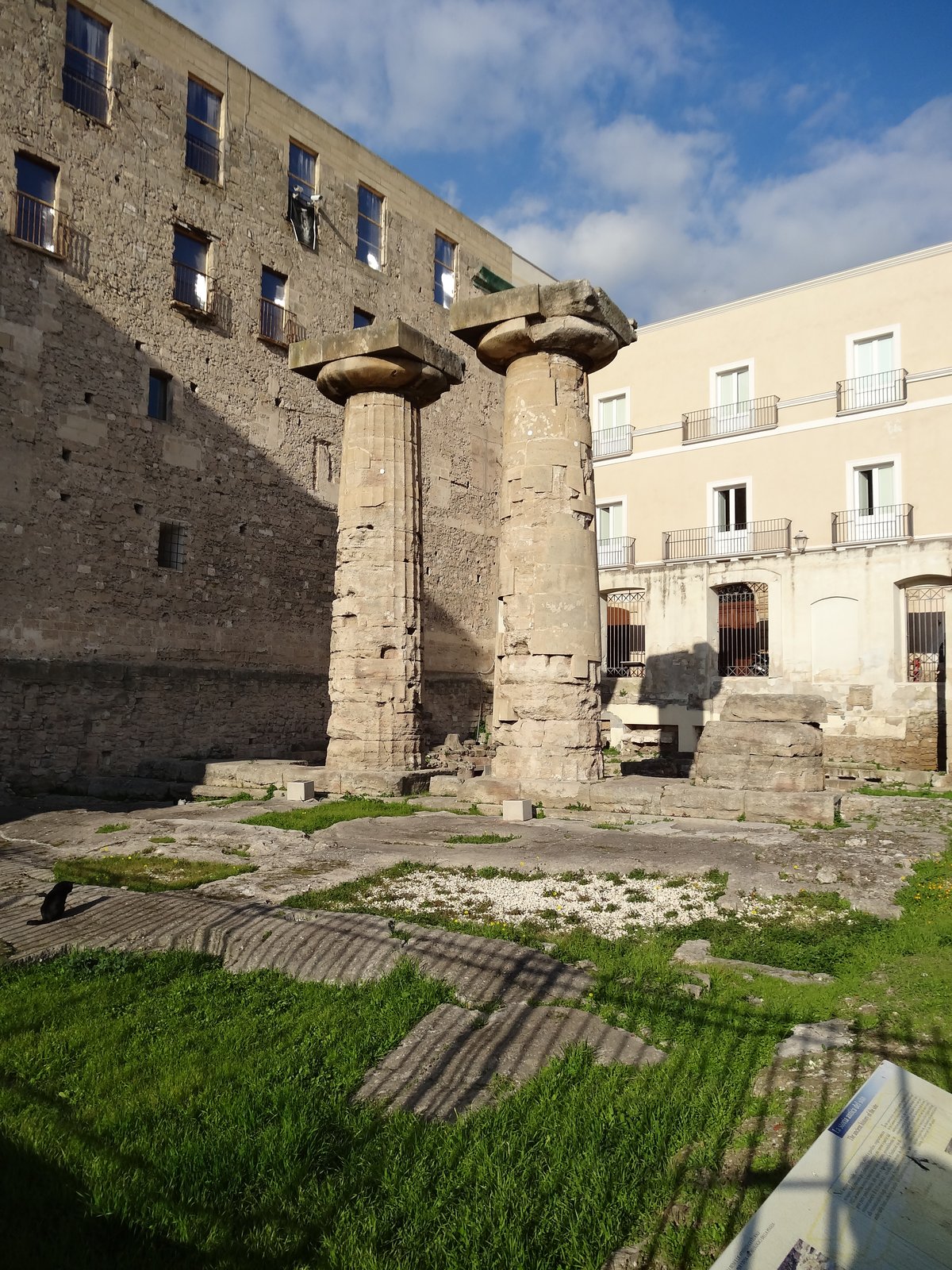 The Doric Temple is one of the few visible remains of ancient Taras, a Greek colony founded in 706 BC. Located in the historic center, between Via Duomo and the seafront, this temple dates back to the 6th century BC and was part of the city's acropolis. Today, only two Doric-style columns and part of the crepidoma remain, but their grandeur tells a thousand-year-old story. The columns, made of local limestone, are about 8 meters high and still show the vertical grooves typical of the Doric order. The temple was probably dedicated to Poseidon, god of the sea—a fitting choice for a city that thrived on maritime trade. Its location is strategic: it overlooked the Mar Piccolo, the economic and military heart of Taranto. Visiting it means walking on the same stones trodden by Spartan colonists. The site is always accessible and free, perfect for a stop while exploring the ancient district. Nearby, the MAR.TA museum preserves artifacts found in the area. I recommend visiting at sunset, when the golden light enhances the columns' shapes. A practical tip: wear comfortable shoes, as the paving is uneven. If you love history, don't miss this gem: it's a direct plunge into Greek Taranto, with no need for tickets or reservations.
Doric Temple
Torre Colimena
- Lungomare Jonico, Manduria (TA)
- Open in Google Maps
- View on Google Images
 Torre Colimena stands proudly on the Ionian coast of Salento, just a few kilometres from Manduria. Built in the 16th century as a defensive outpost against Saracen raids, this coastal tower dominates a stretch of coastline that remains largely undeveloped. The structure, made of local stone, has a quadrangular base and rises about 12 metres, retaining its historic charm intact. Today, the tower is part of the Porto Cesareo Marine Protected Area, but it's freely accessible. Surrounding it stretches a beach of fine sand and low dunes, where Mediterranean scrub grows wild. The water is crystal clear, with shallow seabeds making it ideal for families and snorkelling. There are no beach facilities, just a few private umbrellas and the chance to enjoy the sea in complete relaxation. The area is known for the presence of pink flamingos in the nearby Salina dei Monaci, a natural spectacle that attracts photographers and birdwatchers. For visitors, I recommend bringing everything you need for the day: there are no services in the immediate vicinity. The tower is reachable via a well-maintained dirt road, with free parking a short distance away. It's a perfect spot for those seeking an authentic atmosphere, away from the crowds.
Torre Colimena
Cacace Tower
- Via Pietro De Felice, Crispiano (TA)
- Open in Google Maps
- View on Google Images
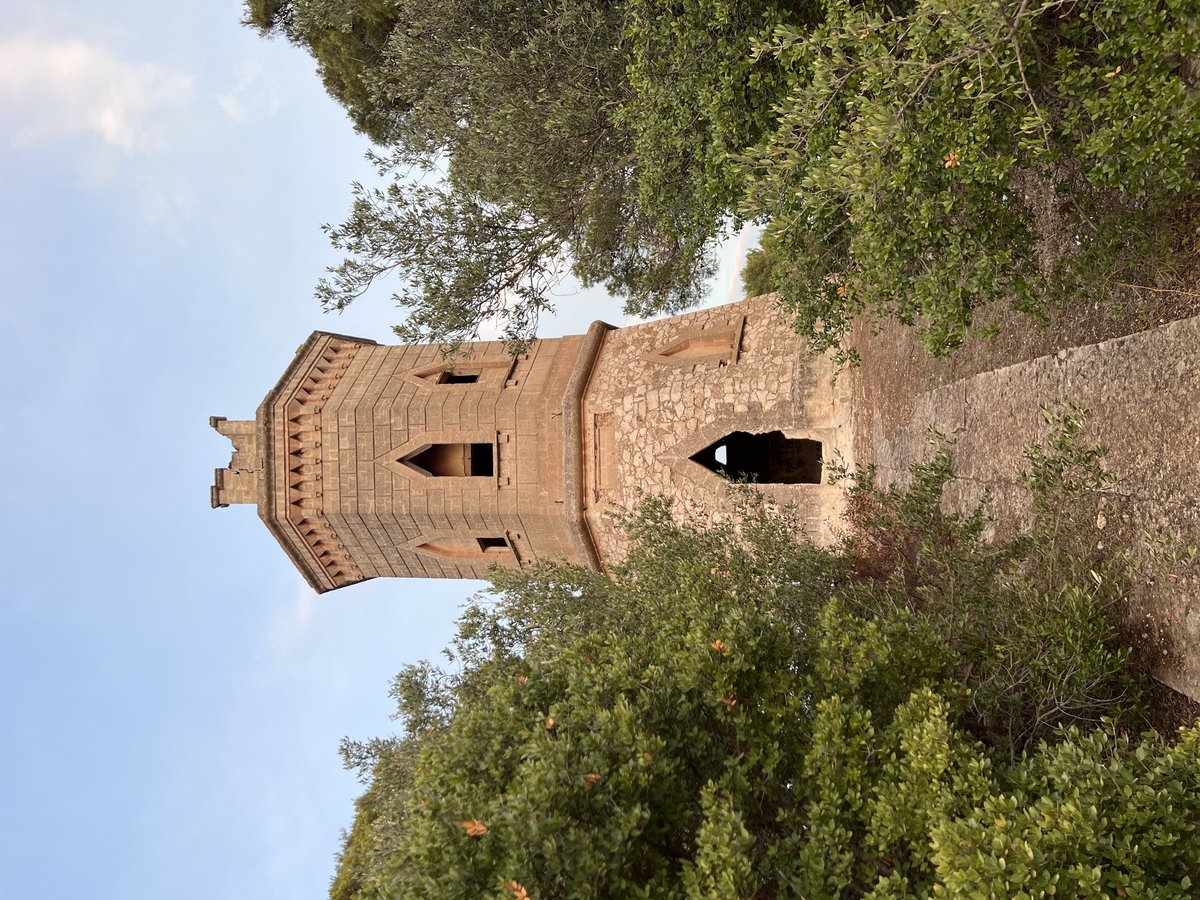 The Cacace Tower stands solitary in the countryside of Crispiano, just a few kilometers from Taranto. Built in the 16th century as a watchtower against Saracen raids, it now represents one of the most authentic symbols of the territory. Its massive structure of local stone, approximately 15 meters high, dominates a landscape characterized by centuries-old olive groves and dry-stone walls. Access is free and open to the public, but the tower cannot be visited internally for safety reasons. The true value of this place lies in its landscape context: here, you can breathe the rural atmosphere of the Taranto Murgia, far from the more beaten tourist trails. The isolated location, reachable via a well-maintained dirt road, offers moments of absolute tranquility. The best time to visit is at sunset, when the warm light enhances the colors of the stone and surrounding vegetation. In the immediate vicinity, there are several historic farmhouses, some of which are still active in the production of extra virgin olive oil. The tower is particularly appreciated by photographers and enthusiasts of local history, who find here an authentic and little-known corner of Apulia.
Cacace Tower