
🧭 What to Expect
- Ideal for enthusiasts of history, art, and archaeology.
- Combines medieval monuments like the Abbey of Montecassino and Rocca Janula with Roman sites such as Fregellae and the amphitheater.
- Includes fortified villages with castles (Cantelmo, Fumone) and local museums (Alatri, Media Valle del Liri).
- Offers breathtaking views from the Tower of Campolato and the fortresses, with an interactive map to plan your tour.
The Province of Frosinone is a land full of surprises, where history blends with nature in a unique way. Montecassino Abbey dominates the valley with its grandeur, while Fregellae in Arce tells the story of ancient Rome through its excavations. Medieval villages like Alatri with its Badia of San Sebastiano and the Civic Museum preserve authentic atmospheres. Rocca Janula in Cassino and Fumone Castle offer breathtaking views. The Roman amphitheatre of Frosinone testifies to the glorious past of this land. Among green hills and ancient castles, every corner tells a different story, from traditional cuisine to nature trails along the Liri Valley.
Overview
- Montecassino Abbey
- Fregellae
- Rocca Janula
- Roman Amphitheatre of Frosinone
- San Sebastiano Abbey
- Cantelmo Castle
- Fumone Castle
- Civic Museum of Alatri
- Rocca Guglielma Castle
- Mausoleum of Ummidia Quadratilla
- Media Valle del Liri Museum
- Villa Magna in Anagni
- Montecassino Abbey Cathedral
- Boniface VIII Museum
- Campolato Tower
Montecassino Abbey
- Go to the page: Montecassino Abbey: Cradle of Monasticism with Mosaics and Manuscripts
- Chiostro dei Benefattori, Cassino (FR)
- https://abbaziamontecassino.it/
- Open in Google Maps
- View on Google Images
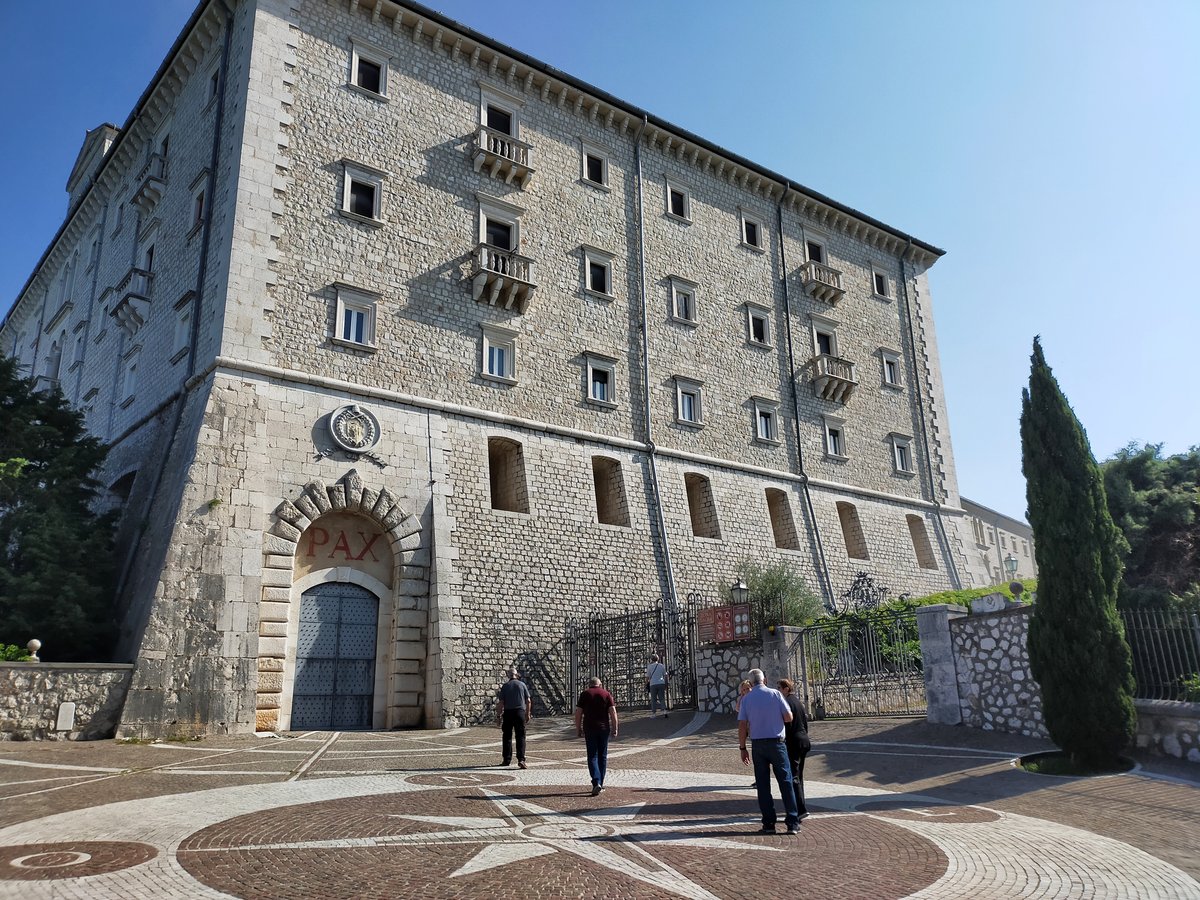 The Montecassino Abbey dominates the valley from its 516-meter height, a place where history is breathed in every stone. Founded by Saint Benedict of Nursia in 529 AD, it is considered the cradle of Western monasticism. Its strategic position made it the protagonist of crucial events, such as the Battle of Montecassino during World War II, which caused its near-total destruction. The post-war reconstruction returned to the community an architectural jewel that blends different styles, from Romanesque to Baroque. Inside, you can admire the Cloisters, including Bramante's Cloister, and the Basilica with its mosaics and frescoes. The Library houses ancient manuscripts and illuminated codices of inestimable value, while the Crypts offer a unique atmosphere of contemplation. From the panoramic square, you can enjoy a breathtaking view of the Liri Valley and the Aurunci Mountains. The abbey is still an active Benedictine monastery today, where monks follow the Rule of Saint Benedict. Visiting this site means immersing yourself in a journey through the centuries, among faith, art, and resilience. I recommend checking the opening hours, as they may vary based on liturgical celebrations. Admission is free, but donations are welcome to support the preservation of this heritage.
Montecassino Abbey
Fregellae
- Go to the page: Fregellae: Ancient Roman City with Amphitheater, Baths, and Forum in the Liri Valley
- SR82, Arce (FR)
- Open in Google Maps
- View on Google Images
 Fregellae stands as one of the most fascinating archaeological sites in the province of Frosinone, a place where history comes alive among the remains of an ancient Roman colony founded in 328 BC. Located in the territory of Arce, along the Via Latina, this city was an important strategic and commercial center before being destroyed in 125 BC. Today, wandering through the ruins, visitors can admire the remains of the forum, the baths, and some domus, which testify to the ancient splendor of Fregellae. The site is particularly appreciated for its evocative atmosphere, far from the tourist crowds, where one can immerse themselves in a journey through time at a leisurely pace. Excavation campaigns have uncovered highly valuable artifacts, now partly preserved in the nearby Archaeological Museum of Ceprano. For those visiting Fregellae, I recommend paying attention to the details of the mosaics and wall structures, which tell stories of daily life in Roman times. The place is ideal for history and archaeology enthusiasts, but also for those seeking an authentic and reflective experience. Access is easy and well-marked, with informative panels guiding visitors through the main points of interest. Don't forget to bring a bottle of water and a camera: the sunsets over Fregellae offer unforgettable scenes.
Fregellae
Rocca Janula
- Go to the page: Rocca Janula: 10th-Century Medieval Fortress Overlooking Montecassino Abbey
- Via Montecassino, Cassino (FR)
- https://www.roccajanula.com/
- Open in Google Maps
- View on Google Images
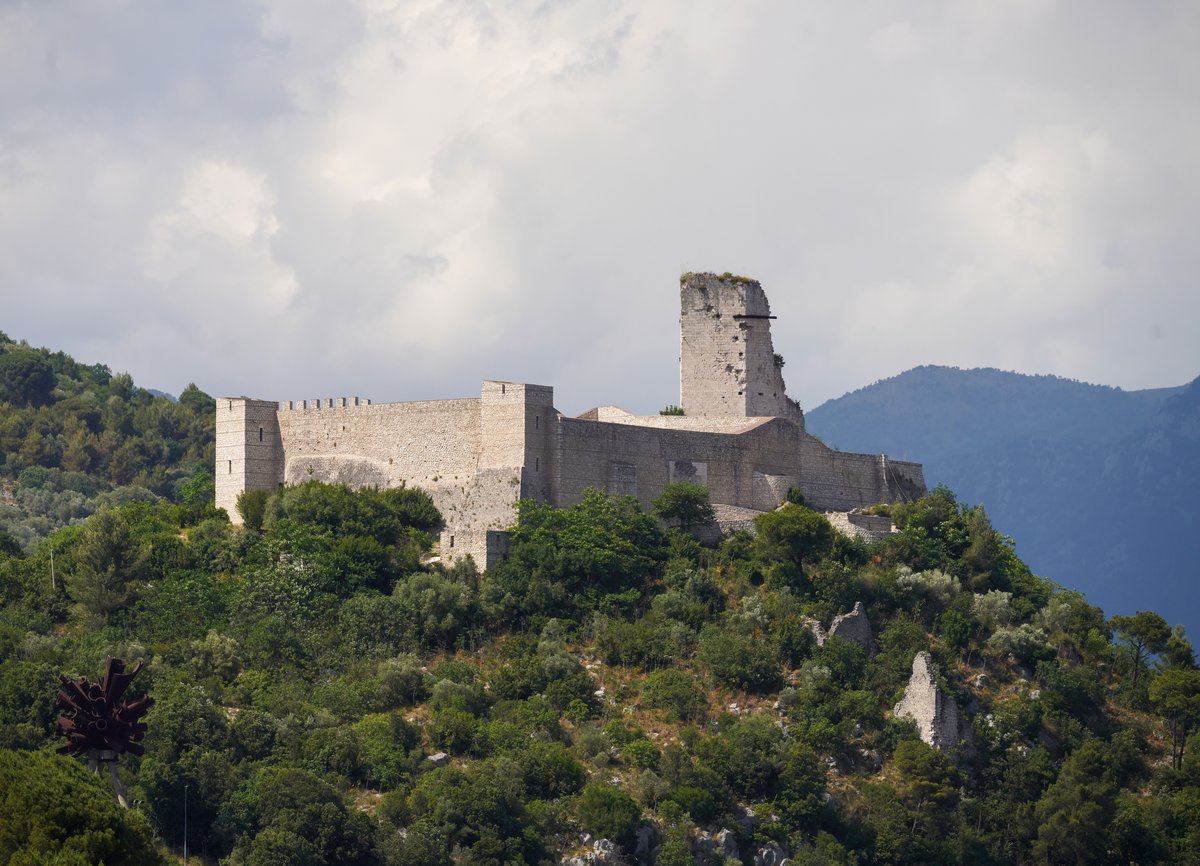 Rocca Janula is a medieval fortress that dominates Cassino from atop a hill, offering a breathtaking panoramic view of the city and Montecassino Abbey. Built in the 10th century at the behest of Abbot Aligerno, the fortress served as a defensive outpost for the Benedictine monastery. The name Janula, meaning 'little gate,' comes from its strategic position controlling access to the Liri Valley. The structure, made of local limestone, features square towers and crenellated walls that showcase the military architecture of the era. During World War II, Rocca Janula suffered severe damage in the Battle of Montecassino but was later restored. Today, visiting the fortress means immersing yourself in centuries of history, from its medieval origins to modern conflicts. The climb to the fortress, though challenging, rewards with picturesque glimpses of Cassino and the surrounding countryside. Inside, you can admire the remains of the original structures and imagine the lives of the soldiers who stood guard here for centuries. Rocca Janula is not just a monument but a privileged vantage point for understanding the history of Cassino and its inseparable bond with Montecassino.
Rocca Janula
Roman Amphitheatre of Frosinone
- Go to the page: Roman Amphitheater Frosinone: 1st Century AD Arena with Free Access in the Historic Center
- Viale Roma, Frosinone (FR)
- Open in Google Maps
- View on Google Images
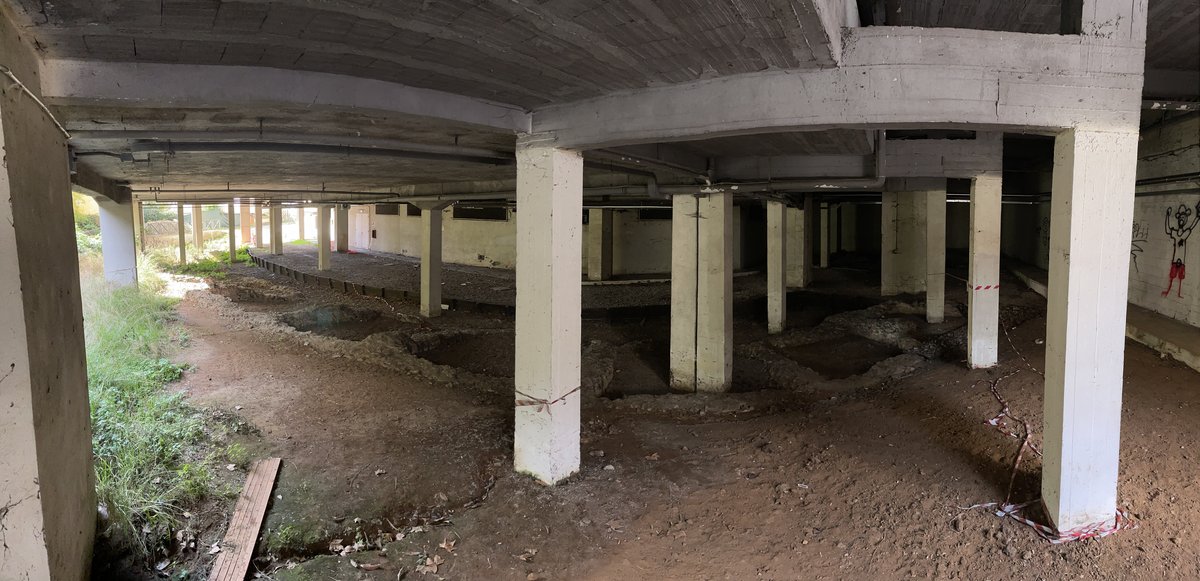 The Roman amphitheatre of Frosinone is an archaeological gem that tells the ancient history of the city, located in the urban centre and easily accessible on foot. Built between the 1st and 2nd centuries AD, this site was originally used for gladiator shows and animal hunts, with an estimated capacity of around 10,000 spectators. Today, the visible remains include parts of the perimeter walls and vomitoria, showcasing Roman architectural ingenuity. The structures in opus reticulatum and brickwork are well preserved, offering an authentic glimpse into the past. The amphitheatre's elevated position provides a panoramic view of the Sacco Valley, adding charm to the visit. It's an ideal place for history enthusiasts, with informative panels explaining details such as the organisation of shows and daily life in ancient Frusino. The surrounding area is equipped with benches, perfect for a relaxing break. Admission is free and the site is open all year round, making it an unmissable stop for those exploring Frosinone. I recommend visiting in the morning to enjoy the best light and tranquillity, avoiding peak hours.
roman amphitheatre
San Sebastiano Abbey
- Go to the page: Badia di San Sebastiano: 10th-century Benedictine monastery with 15th-century frescoes
- Via dell'Abbadia, Alatri (FR)
- http://www.badiasansebastiano.it/
- Open in Google Maps
- View on Google Images
 The San Sebastiano Abbey is a Benedictine monastic complex dating back to the 10th century, situated on the slopes of the hill where Alatri stands. This place of worship, dedicated to the martyr saint Sebastian, represents one of the most significant examples of Romanesque architecture in the province of Frosinone. The church, built with local stone, still preserves its original structure with the characteristic gabled façade and the entrance portal surmounted by a monolithic lintel. Inside, visitors can admire 14th-century frescoes depicting scenes from the life of Saint Sebastian and other saints, along with traces of later pictorial decorations. The complex also includes the remains of the cloister and monastic quarters, which bear witness to the community life of the Benedictine monks. The abbey's location, slightly isolated from the town center, contributes to creating an atmosphere of peace and contemplation, enhanced by the silence that envelops the place and the panoramic view of the valley below. The San Sebastiano Abbey has undergone several restoration interventions over the centuries, the most recent of which has allowed for the consolidation of the structures and the enhancement of the most important artistic elements. Today, in addition to religious functions, the site is visitable by appointment and occasionally hosts cultural events and sacred music concerts. Its proximity to the cyclopean walls of Alatri makes it a must-see stop for those wishing to deepen their knowledge of the historical and artistic heritage of Ciociaria.
San Sebastiano Abbey
Cantelmo Castle
- Strada Grande, Alvito (FR)
- Open in Google Maps
- View on Google Images
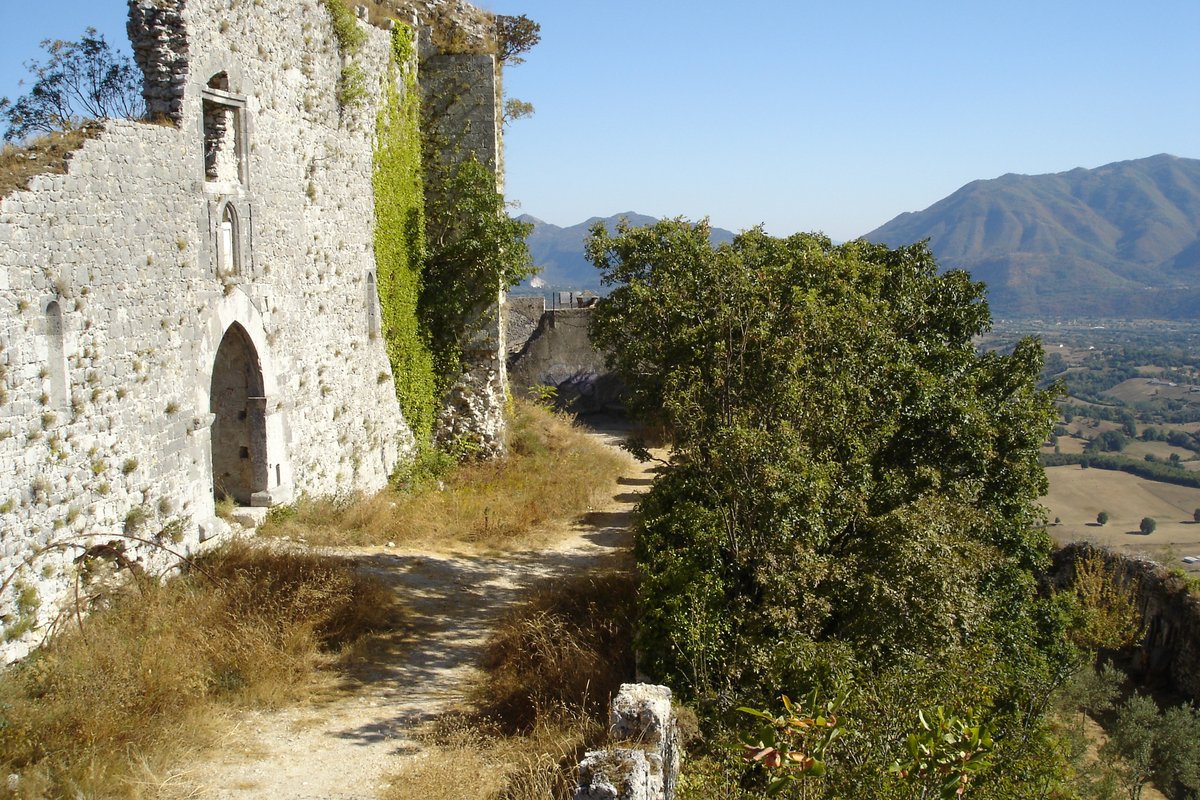 The Cantelmo Castle in Alvito stands majestically on a rocky spur, offering a breathtaking panoramic view over the Comino Valley. Built between the 11th and 12th centuries, this fortress represents one of the best-preserved examples of medieval military architecture in southern Lazio. The structure, with its square towers and powerful walls, tells centuries of history through its worked stones and architectural details. Originally a fief of the Counts of Aquino, it later passed to the powerful Cantelmo family, who made it the center of their territorial domain. Today, visiting the castle, you can admire the inner courtyards, the patrol walkways, and the halls that preserve traces of medieval frescoes. Particularly evocative is the noble chapel, where heraldic symbols of the families who lived there can still be seen. The castle has undergone recent restorations that have enhanced its accessibility, allowing visitors to freely explore the main spaces. During your visit, don't miss the opportunity to climb the towers: from up there, your gaze stretches from the Meta Mountains to the Cassino plain, a panorama that alone is worth the trip. The atmosphere you breathe within these ancient walls is unique, filled with history and local legends that make the experience unforgettable.
Cantelmo Castle
Fumone Castle
- Via Regina Margherita, Fumone (FR)
- https://www.castellodifumone.it/
- Open in Google Maps
- View on Google Images
- +39 0775 49023
 Perched at 783 meters above sea level, Fumone Castle dominates the village below - an imposing medieval fortress that for centuries played a strategic role in controlling the territory. Its fame is primarily linked to having been the prison of Pope Celestine V, the pontiff of the 'great refusal' who spent his final months here after abdicating in 1294. Visiting the castle takes you through rooms rich with history: from the Armory Hall with its collection of ancient armor to the Pope's Room, where personal belongings of Celestine V are preserved. Particularly evocative is the Watchtower, offering breathtaking panoramic views stretching from the Sacco Valley to the Ernici Mountains. But what makes this place unique are its hanging gardens, among the oldest in Europe, created on the roof of the keep and filled with rare plants. In the inner courtyard, you can still see the ancient cistern for rainwater collection, evidence of the ingenious water supply system. Today, the perfectly preserved castle, still inhabited by descendants of the Longhi de Paolis counts, offers visitors a journey through time with rooms furnished with period furniture and objects that tell eight centuries of history.
Fumone Castle
Civic Museum of Alatri
- Corso Cavour, Alatri (FR)
- Open in Google Maps
- View on Google Images
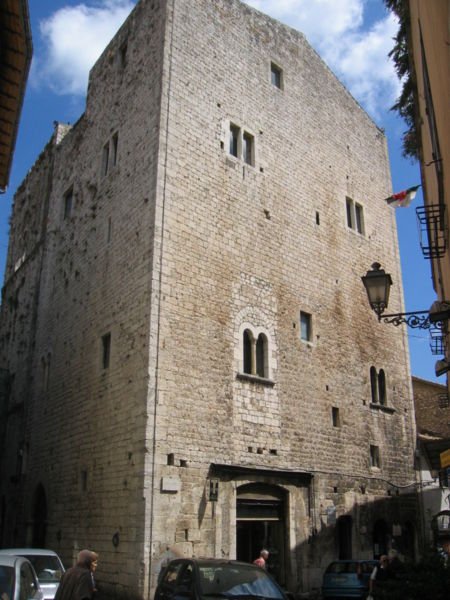 The Civic Museum of Alatri is located in the heart of the historic center, within Palazzo Gottifredo, a medieval building that is worth visiting in its own right. The permanent collection is organized into thematic sections that tell the story of the area from prehistory to the medieval period. Among the most significant artifacts are materials from the acropolis of Alatri, with its imposing cyclopean walls that represent one of the finest examples of megalithic architecture in Italy. The archaeological section houses ceramics, bronzes, and everyday tools that document life in ancient Aletrium, an important center of the Hernici people. Of particular interest are the funerary goods from local necropolises, which offer a glimpse into the customs and society of the time. The visit continues with the medieval section, where documents and artifacts related to the city's development during the communal period stand out. The museum periodically organizes temporary exhibitions and educational activities, making each visit a constantly new experience. The layout is modern and well-maintained, with clear explanatory panels that guide visitors through the centuries of Alatri's history.
Civic Museum
Rocca Guglielma Castle
- Via Degli Olivi, Esperia (FR)
- Open in Google Maps
- View on Google Images
 The Rocca Guglielma Castle rises majestically on a rocky spur at 560 meters above sea level, dominating with its imposing structure the landscape of Esperia and the entire Liri Valley. Built in the 12th century by order of Guglielmo di Blosseville, this fortress represents one of the best-preserved examples of medieval military architecture in southern Lazio. Its strategic position was no coincidence: it controlled the important communication route between the Kingdom of Naples and the Papal States. Today, visiting the castle, one can admire the perfectly intact cylindrical towers, the crenellated walls and the central keep that rises over 25 meters. Access is through a reconstructed drawbridge, which leads directly to the inner courtyard where the remains of ancient rainwater collection cisterns are located. Particularly evocative is the weapons hall, with its narrow arrow slits that allowed archers to strike unseen. From the upper terrace, the panorama spans from the Aurunci Mountains to the sea of Gaeta, offering one of the most spectacular viewpoints in the province. The castle is visitable year-round and represents an essential stop for enthusiasts of medieval history and military architecture.
Rocca Guglielma Castle
Mausoleum of Ummidia Quadratilla
- Via Crocifisso, Cassino (FR)
- Open in Google Maps
- View on Google Images
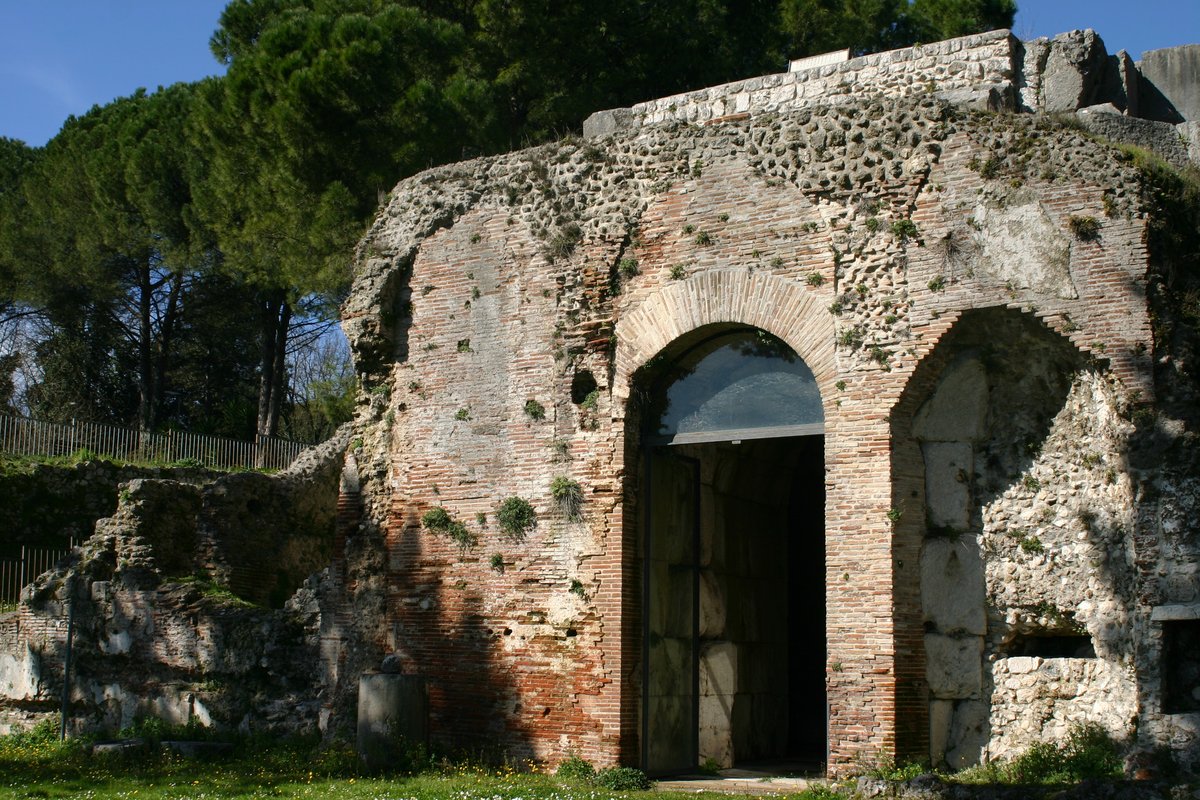 The Mausoleum of Ummidia Quadratilla represents one of the most fascinating archaeological testimonies in Cassino, a funerary monument that tells the story of a woman of great influence in Imperial Rome. Located along the ancient Via Latina, this tomb dates back to the 1st century AD and belonged to Ummidia Quadratilla, a wealthy Roman matron known for financing the construction of Cassino's amphitheatre. The structure stands as an imposing building in opus reticulatum, with a circular plan reminiscent of the mausoleums of the most important families of the era. What makes this site particularly captivating is its exceptional preservation, despite the damage it sustained during World War II. Recent restoration work has allowed visitors to fully appreciate the original architecture, with its blocks of local travertine and characteristic tholos roof. Visiting this mausoleum means immersing yourself in the life of ancient Casinum, discovering how a woman could play a leading role in Roman society through patronage and public works. The strategic location along the consular road makes the site easily accessible and perfectly integrated into the city's archaeological itinerary, offering an authentic glimpse into daily life and Roman funerary traditions.
Mausoleum of Ummidia Quadratilla
Media Valle del Liri Museum
- Piazza Mayer Ross 1, Sora (FR)
- https://www.comune.sora.fr.it/contenuti/669545/museo-media-valle-liri
- Open in Google Maps
- View on Google Images
- museo.sora@comune.sora.fr.it
- +39 0776 828657
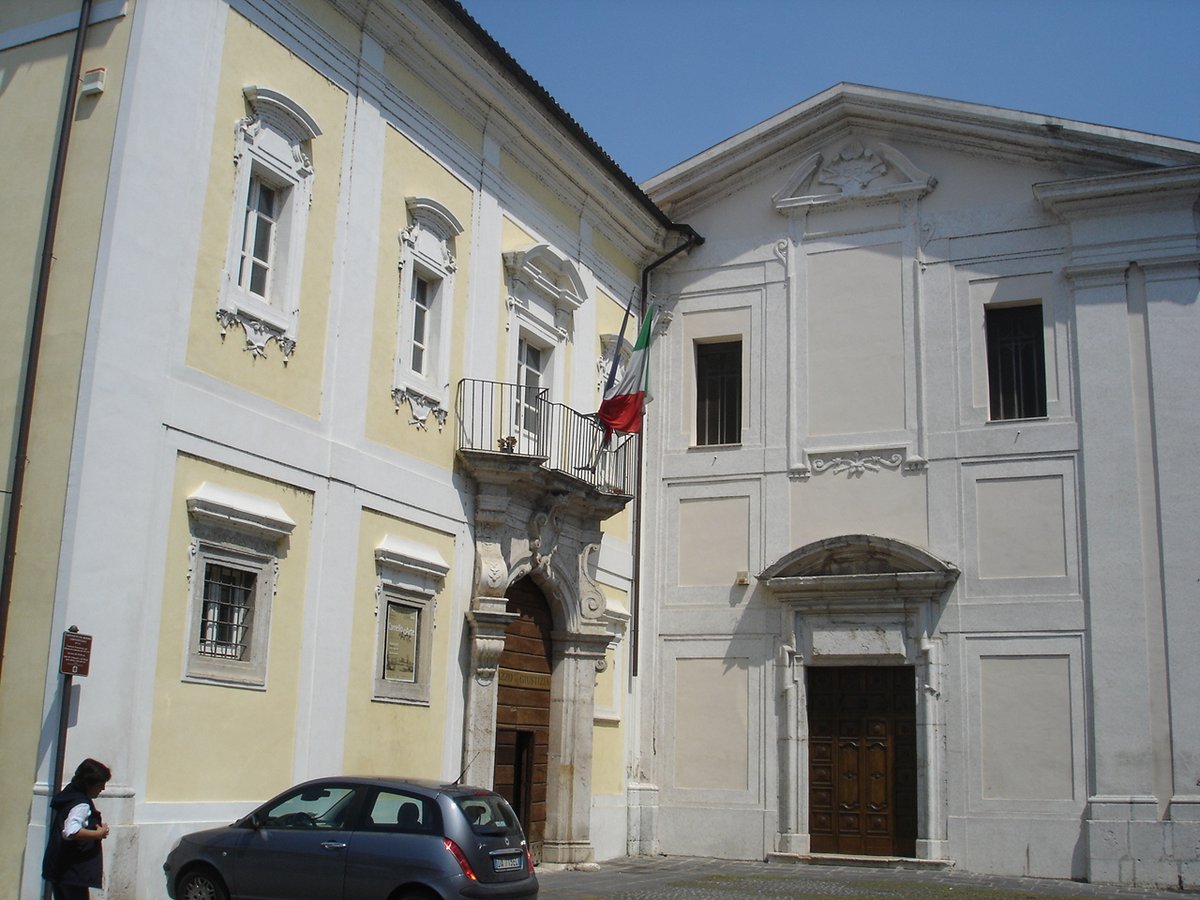 The Media Valle del Liri Museum in Sora is a true gem for those wanting to delve into the history of this territory. Located in the historic center, it occupies the spaces of the former San Francesco convent, a building that's worth visiting in its own right. The permanent collection is organized into thematic sections covering an extensive time span: from prehistoric artifacts found in the Ernici Mountains caves to evidence from the industrial era. The archaeological section is particularly rich, with Volscian and Roman artifacts that tell the ancient origins of Sora, a Roman colony since 303 BC. Black-glazed pottery and funerary sets from local necropolises stand out. The art gallery houses works by Ciociaria artists from the 17th to 19th centuries, with paintings depicting landscapes and figures from the valley. There's also a section dedicated to the papier-mâché tradition, for which Sora is famous, with examples of processional statues and traditional masks. The museum frequently organizes temporary exhibitions and educational workshops, especially for schools and families. The setup is modern and accessible, with clear explanatory panels that make the visit enjoyable even for non-experts. The internal cloister, with its central well, offers a moment of quiet between one room and another. The entrance ticket is affordable and includes access to all collections. I recommend dedicating at least an hour and a half to fully appreciate the treasures housed in this museum, often underestimated but essential for understanding the cultural identity of the Media Valle del Liri.
Media Valle del Liri Museum
Villa Magna in Anagni
- SP Villa Magna, Anagni (FR)
- Open in Google Maps
- View on Google Images
 Villa Magna in Anagni represents one of the most significant archaeological sites in the province of Frosinone, a tangible testament to the Roman imperial past that characterizes this area of Ciociaria. The villa's remains, located just a few kilometers from Anagni's historic center, reveal a structure of considerable importance, likely connected to Emperor Marcus Aurelius's family. Excavations have uncovered luxurious residential quarters, private baths, and a sophisticated water supply system that showcase the architectural refinement of the period. The uniqueness of Villa Magna lies in its dual historical identity: from a Roman imperial residence to a papal possession in the Middle Ages, when it became property of the powerful Caetani family. Today, visitors can admire the partially preserved floor mosaics, the thermal structures, and the remains of the representative rooms. The panoramic location overlooking the Sacco Valley offers a suggestive setting that blends history and landscape. Access to the site is free and allows immersion in a unique atmosphere, far from the more beaten tourist paths. For archaeology enthusiasts, it represents a fundamental stop to understand the territory's evolution from Roman times to the Middle Ages, with continuous settlement documented by artifacts ranging from the 2nd century AD to the 14th century.
Villa Magna
Montecassino Abbey Cathedral
- Chiostro dei Benefattori, Cassino (FR)
- Open in Google Maps
- View on Google Images
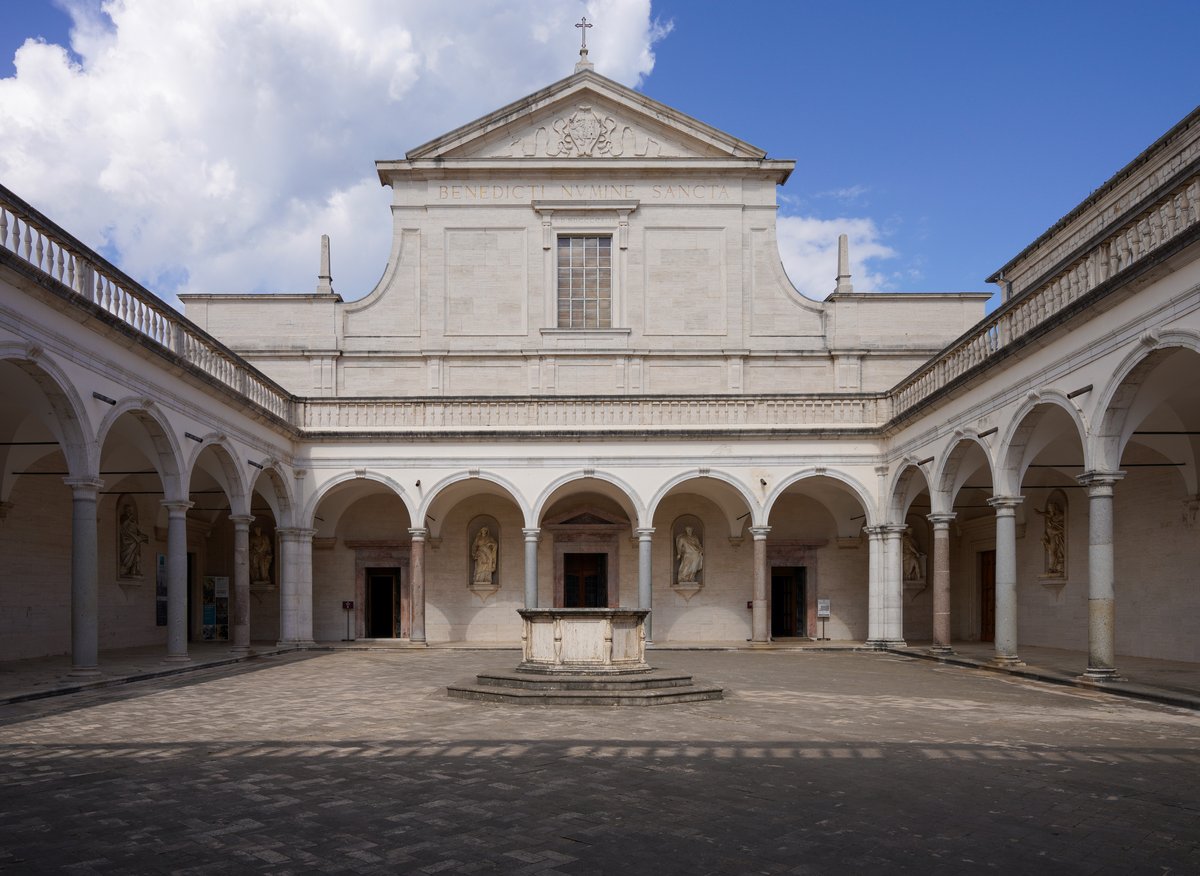 The Montecassino Abbey Cathedral is not just a place of worship, but a symbol of rebirth that dominates the valley from its 516-meter height. Founded by Saint Benedict of Nursia in 529 AD, this abbey has witnessed centuries of history, destruction, and reconstruction, culminating in the post-war reconstruction following the 1944 bombings. Today, ascending to the basilica means walking the same path as pilgrims of old, passing through the Bramante Cloisters and admiring the Neobaroque façade that conceals a majestic interior. Inside, the relics of Saint Benedict and Saint Scholastica stand out, preserved in the crypt adorned with Byzantine mosaics, along with the Benefactors' Cloister featuring statues of popes and sovereigns who protected the abbey. The panoramic view over the Cassino plain and the Rapido River offers unique emotions, especially at dawn or dusk. For a complete visit, don't miss the Abbey Museum, which houses illuminated manuscripts, archaeological finds, and sacred artworks. Remember to dress appropriately to access the sacred spaces and check the Mass schedules to attend Gregorian chants.
Montecassino Abbey Cathedral
Boniface VIII Museum
- Vicolo San Michele, Anagni (FR)
- https://www.archeoares.it/palazzo-bonifacio-anagni/
- Open in Google Maps
- View on Google Images
- +390775727053
 The Boniface VIII Museum is located in the heart of Anagni, a city that boasts the title of 'City of Popes' for being the birthplace of four pontiffs. Housed within the Boniface VIII Palace, the museum is dedicated to the figure of Benedetto Caetani, Pope Boniface VIII, known for the 'Slap of Anagni' in 1303. The exhibition halls preserve original documents, papal bulls, and artifacts that illustrate the life and papacy of Boniface VIII, with a focus on his controversial election and conflicts with King Philip the Fair of France. Among the most significant pieces are sacred furnishings, illuminated manuscripts, and a collection of coins from the era. The museum route winds through historic rooms, such as the Hall of Shields, where heraldic coats of arms of papal families are displayed, and the Throne Room, which recreates the atmosphere of a papal audience. The museum also offers a multimedia section with videos recounting key events of the period, making the visit accessible to all. The building itself, with its medieval architecture and vaulted ceilings, is an attraction, offering glimpses of the square below and the alleys of Anagni. For history enthusiasts, it's a plunge into the 14th century, with detailed information on papal power and its political repercussions. Admission is affordable and often includes access to other areas of the palace, such as the panoramic loggias. Recommended for those who wish to delve into ecclesiastical history in an authentic and well-preserved context.
Boniface VIII Museum
Campolato Tower
- Via Campostefano, Arce (FR)
- Open in Google Maps
- View on Google Images
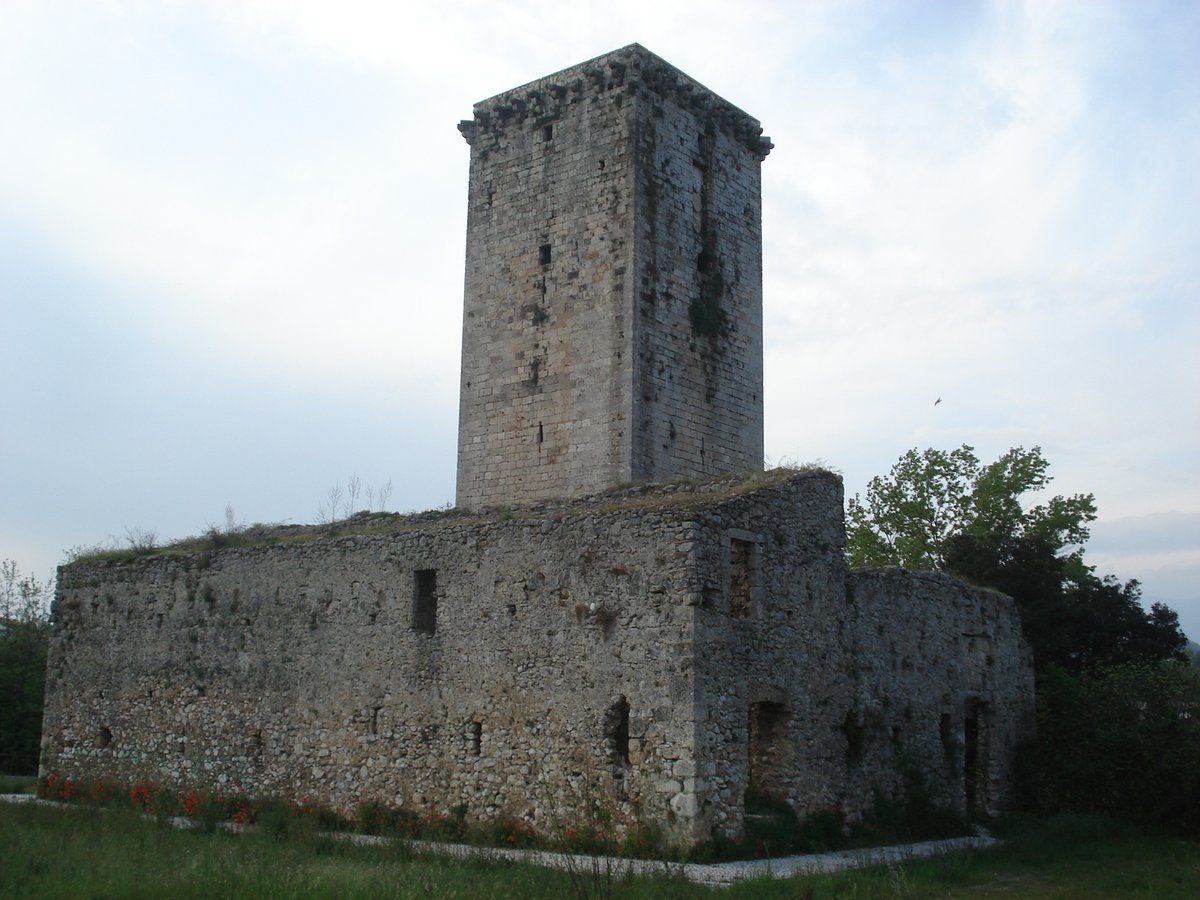 The Campolato Tower stands majestically on a hill in Arce, offering an extraordinary panoramic view over the Liri Valley. Built in medieval times, this watchtower was part of a defensive system that controlled communication routes between the Kingdom of Naples and the Papal States. Its strategic position allowed for surveillance of the entire valley, once traversed by the Via Latina. The structure, made of local stone, still features the characteristic battlements and arrow slits that testify to its military function. Climbing up to the tower is an experience that offers unique emotions: the path winds through olive groves and dirt trails, immersed in pristine rural landscapes. Once you reach the top, your gaze spans from the Ernici Mountains to the first foothills of the Aurunci Mountains, with the Liri River meandering through the valley below. The tower is accessible year-round, but the best time to visit is spring, when vegetation is lush and temperatures are mild. There are no entrance tickets or opening hours, as it's an outdoor monument always open to visitors. To reach it, simply follow the signs for Campolato from the center of Arce and park in the equipped area just before the final climb on foot. Remember to bring a bottle of water and comfortable shoes, as the last stretch is a slightly inclined trail. The Campolato Tower represents a little-known gem in the province of Frosinone, perfect for those seeking authentic places away from mass tourism.
Campolato Tower