Introduction
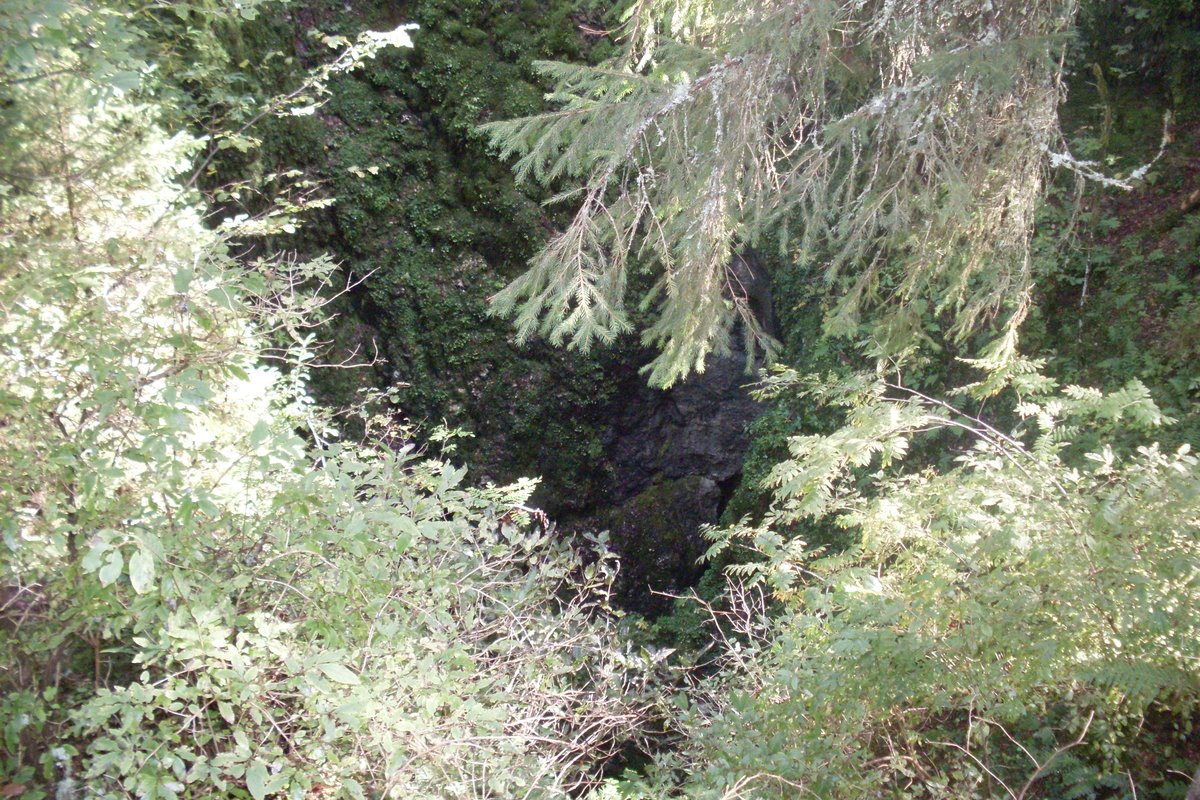
Imagine walking along a trail through the greenery of Friuli-Venezia Giulia and coming across an opening in the rock that looks like an eye on the earth. This is the Bus De La Lum, a karst cave that opens in the heart of the Livenza River Park in Polcenigo. It’s not just a natural cavity: it’s a place where light filters from above creating suggestive plays, where water flows clear, and where legends of ancient spirits and hidden treasures linger. Visiting it means immersing yourself in an almost magical atmosphere, far from the chaos, surrounded only by the sound of the wind through the rocks and the murmur of the stream. It’s an experience that strikes for its simplicity and power, perfect for those seeking an authentic connection with the wildest nature of the province of Pordenone.
Historical Notes
The Bus De La Lum has been known for centuries to the inhabitants of Polcenigo, who called it ‘Busa della Lume’ due to the unique light effect that occurs inside. The cave formed naturally through water erosion on limestone, but its history intertwines with human events: it is said to have been used as a temporary shelter during World War I, and local legends speak of hidden treasure left by bandits or mysterious lights spotted at night, from which its name derives. Today, it is an integral part of the Livenza River Park, a protected area established to safeguard this precious ecosystem.
- Natural formation: millennia of karst erosion.
- Popular legends: stories of treasure and mysterious lights passed down orally.
- Historical use: possible shelter during the Great War.
- Current protection: included in the Livenza River Park.
The Magic of Light and Water
What makes Bus De La Lum unique is the way nature plays with the elements. The cave is not as deep as other karst cavities, but it features an upper opening through which, at certain times of day, a beam of light penetrates, illuminating the interior and creating a theatrical, almost sacred effect. Below flows the Gorgazzo stream, whose spring waters are of a crystalline blue and extremely cold, fed by a complex underground system. In spring, when rainfall is abundant, you can witness a small waterfall at the entrance. The environment is humid and cool, covered in mosses and ferns, and the air carries a scent of damp earth and stone. There are no showy stalactites, but the beauty lies in the purity of the place and the contrast between the dark rock, the golden light, and the transparent water.
An Experience for All the Senses
Visiting Bus De La Lum is not just a visual stroll. It’s a multisensory experience. Hearing is captured by the constant gurgle of water flowing and echoing in the cavity, a relaxing sound that covers all other noise. Smell perceives the fresh, pungent scent of damp rock and lush vegetation surrounding the entrance. Touch feels the humidity in the air and the coolness emanating from the cave, a natural refreshment on hot days. Even the sense of taste can be involved: nearby, drinkable water springs allow you to drink directly from the source. It’s a place that invites slowness, to stop, listen, and observe the details, like dragonflies flying over the water or wild animal footprints on the muddy trail.
Why Visit It
Three concrete reasons to put Bus De La Lum on your itinerary. First: it’s a perfect example of accessible karst nature, requiring no speleological equipment, ideal for a first approach to this world. Second: it offers spectacular photographs, especially when the sun is high and light filters from above, creating backlight effects and reflections on the water that look like paintings. Third: it’s a place of silence and regeneration, away from the crowds of more popular destinations; here you can connect with nature’s slow rhythm, breathe clean air, and completely disconnect, even just for an hour. Plus, the satisfaction of reaching such a special place by following a well-marked trail through the woods adds a touch of adventure to the day.
When to Go
The most enchanting time to visit the cave is around midday on sunny days, when the sun’s rays hit the upper opening perpendicularly, flooding the interior with a golden light that enhances the colors of the rock and water. Avoid days of heavy rain, as the trail can become slippery and the stream more turbulent. In terms of seasons, late spring and early autumn are ideal: the vegetation is lush, temperatures are mild, and there’s no summer heat. In winter, if it doesn’t freeze, the cave has a more austere and solitary charm, but always check the weather conditions and the state of the trail before setting out.
In the Surroundings
A visit to Bus De La Lum can be perfectly combined with other experiences in the area. Just a few minutes’ drive away is the village of Polcenigo itself, a medieval gem with its stone houses, the Castle (of which ruins remain), and the Church of San Giacomo. It’s worth stopping for a coffee in the square and a stroll through the cobblestone alleys. For a complementary nature experience, head to the Gorgazzo Springs, located nearby: here, water gushes from a depth of over 50 meters into a pool of intense blue, a true spectacle of nature. It’s a sacred place for cave diving enthusiasts, but even from the surface, it’s mesmerizing to observe.