Caroline Aqueduct: 22m Bourbon arches and nature trail in Samnium

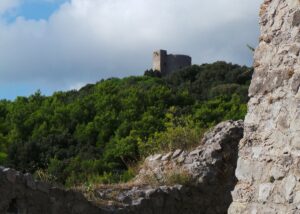
The Caroline Aqueduct, designed by Luigi Vanvitelli for Charles of Bourbon in 1753, offers a scenic route between majestic 22-meter-high arches and spontaneous vegetation. The trail runs alongside the structure, providing breathtaking views of the Caudina Valley and the medieval village of Sant’Agata de’ Goti, with a microclimate that fosters rich biodiversity.

  • Bourbon tuff arches: 44 eighteenth-century arches, 22 meters high, spanning the Isclero River valley
  • Accessible natural path: easy trail among holm oaks, downy oaks, and aromatic plants with benches for panoramic stops
  • Unique views: glimpses of the medieval village of Sant’Agata de’ Goti and the Caudina Valley
  • Protected biodiversity: humid microclimate with ferns, mosses, crested newts, and bat colonies

Copertina itinerario Caroline Aqueduct: 22m Bourbon arches and nature trail in Samnium
Caroline Aqueduct Natural Area in Sant’Agata de’ Goti: a walk among 44 eighteenth-century tuff arches, views of the medieval village, and unique biodiversity. Free access year-round.

Good to know


Introduction

The Caroline Aqueduct Natural Area in Sant’Agata de’ Goti welcomes you with a unique blend of Bourbon engineering and lush nature. Walking among the majestic tuff arches that rise 22 meters high, surrounded by the spontaneous vegetation of Sannio, you breathe an atmosphere suspended between history and wilderness. The site, included in the FAI’s Places of the Heart circuit, offers breathtaking views of the Caudina Valley and the medieval village of Sant’Agata, perched on a tuff spur. Here, the waters of the Isclero River, once channeled to supply the Royal Palace of Caserta, still flow among the ancient stones, creating an ecosystem rich in biodiversity. It’s a place where architecture becomes landscape, ideal for those seeking tranquility and unforgettable photographic scenes.

Historical Notes

The Carolino Aqueduct was commissioned by Charles of Bourbon in 1753 to bring water to the fountains of the Royal Palace of Caserta, based on a design by architect Luigi Vanvitelli. With its 529 meters in length and 44 arches, it represents one of the most ambitious hydraulic works in Sannio, entirely constructed from local tufa blocks. During World War II, some arches were damaged but later restored, preserving their original charm. Today, the area is protected as a landscape heritage site, with visitor trails that highlight its historical and environmental value.

  • 1753: Construction begins at the behest of Charles of Bourbon
  • 1762: Completion of the work under Vanvitelli’s direction
  • 1943: War damage during the Allied advance
  • 2000: Inclusion in the Protected Natural Area

Path Among Arches and Nature

The trail running alongside the aqueduct winds between majestic arches and the lush vegetation typical of the Mediterranean scrub. Here, holm oaks, downy oaks, and aromatic plants like thyme grow wild, while birds of prey such as the kestrel nest in the crevices of the stones. The easy and accessible path allows you to admire up close the perfection of the tuff vaults and the play of light filtering through the arches. Along the way, wooden benches invite you to pause and contemplate the panorama of the Caudina Valley, with its olive groves and vineyards. It’s a complete sensory experience, where the sound of water flowing through the original conduits blends with the scents of the Samnium countryside.

Biodiversity and Microclimate

The aqueduct creates a unique microclimate thanks to the constant humidity from its conduits, fostering the growth of ferns, mosses, and lichens that cover the tuff walls. This humidity also attracts rich wildlife: it’s not uncommon to spot crested newts in seasonal water pools or hear the nightingale’s song among the brambles. The area is a true biodiversity hotspot, with over 50 recorded plant species and a bat colony that finds refuge in the most hidden cavities. Educational panels along the path explain this ecosystem, making the visit an opportunity to discover how human works can harmoniously integrate with nature.

Why Visit It

Three concrete reasons not to miss this gem: first, free year-round accessibility makes it a democratic destination; second, the opportunity to combine culture and nature in a single walk without moving around; third, the unique panoramic viewpoints over the Caudina Valley and the village of Sant’Agata offer postcard-perfect photos. Plus, its proximity to the town center allows you to end your visit with an enogastronomic stop to sample local wines like Aglianico.

When to Go

The most magical moment is the autumn sunset, when the slanting light enhances the warm hues of the tuff stone and the tree leaves turn red and gold. In this season, the crisp air and clear skies offer perfect visibility over the valley, without the summer heat. The early morning hours are also ideal for experiencing the tranquility of the place, with the mist gently enveloping the arches.

In the Surroundings

Complete your experience with a visit to the historic center of Sant’Agata de’ Goti, declared one of the Most Beautiful Villages in Italy, with its cobblestone alleys and Romanesque Cathedral. Not far away, the Sannio Caudino Museum in Montesarchio delves into the ancient history of the territory through unique archaeological finds.

Itineraries nearby


💡 Did You Know…?

The aqueduct was built between 1753 and 1762 to supply water to the Royal Palace of Caserta, carrying water from the Fizzo springs to the royal palace. Legend has it that during construction, local farmers called the arches ‘the devil’s bridges’ because of their imposing size. Even today, on windy days, it’s said that you can hear the moans of the workers who lost their lives during construction echoing through the arches.