
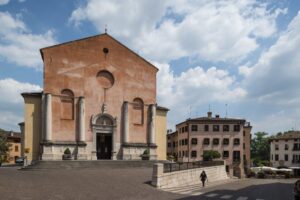
Valvasone, or Voleson in the Friulian language, is a perfectly preserved medieval village in the Friulian plain, featuring ancient walls, stone houses, and an authentic atmosphere. The Castle of Valvasone dominates the landscape and hosts cultural exhibitions, while the Church of Saints Peter and Paul houses a precious monumental organ from the 16th century. The village is famous for its autumn Pumpkin Festival and offers typical products such as San Daniele ham and Friulian wines.
- Medieval castle with towers, an inner courtyard, and frequent cultural exhibitions and events
- Monumental 16th-century organ in the Church of Saints Peter and Paul, one of the oldest in Friuli Venezia Giulia
- Autumn Pumpkin Festival with traditional dishes and a festive atmosphere
- Local typical products such as San Daniele ham and Friulian wines in artisan shops

Valvasone Arzene in the province of Pordenone offers a perfectly preserved medieval historic center with a castle, a church featuring a 16th-century organ, and culinary traditions like the autumn Pumpkin Festival.
Good to know
Introduction
Historical Overview
- 12th century: Construction of Valvasone Castle as a fortress.
- 14th century: Development as a strategic commercial center.
- 18th century: Flourishing under Venetian rule.
- Today: Preservation of medieval and Renaissance heritage.
The Castle and Its Monumental Organ
The Pumpkin Festival and Culinary Traditions
Why Visit It
When to Go
In the Surroundings
Itineraries nearby


💡 Did You Know…?
A curiosity that makes a visit to Valvasone unique is linked to its ancient name, Voleson, which means ‘place of foxes’. According to legend, the village was founded by a group of hunters chasing a fox, considered a sacred animal. Another peculiarity is the church’s monumental organ, built in 1532 by Vincenzo Colombi: it is one of the few still-functioning Renaissance organs in Italy and is played during concerts and celebrations, offering a unique auditory experience. Additionally, the castle preserves traces of 15th-century frescoes, discovered during recent restorations, depicting scenes of courtly life and heraldic symbols of the families who lived there.