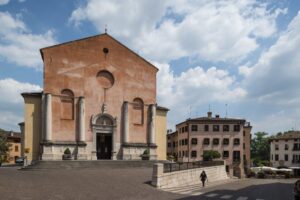
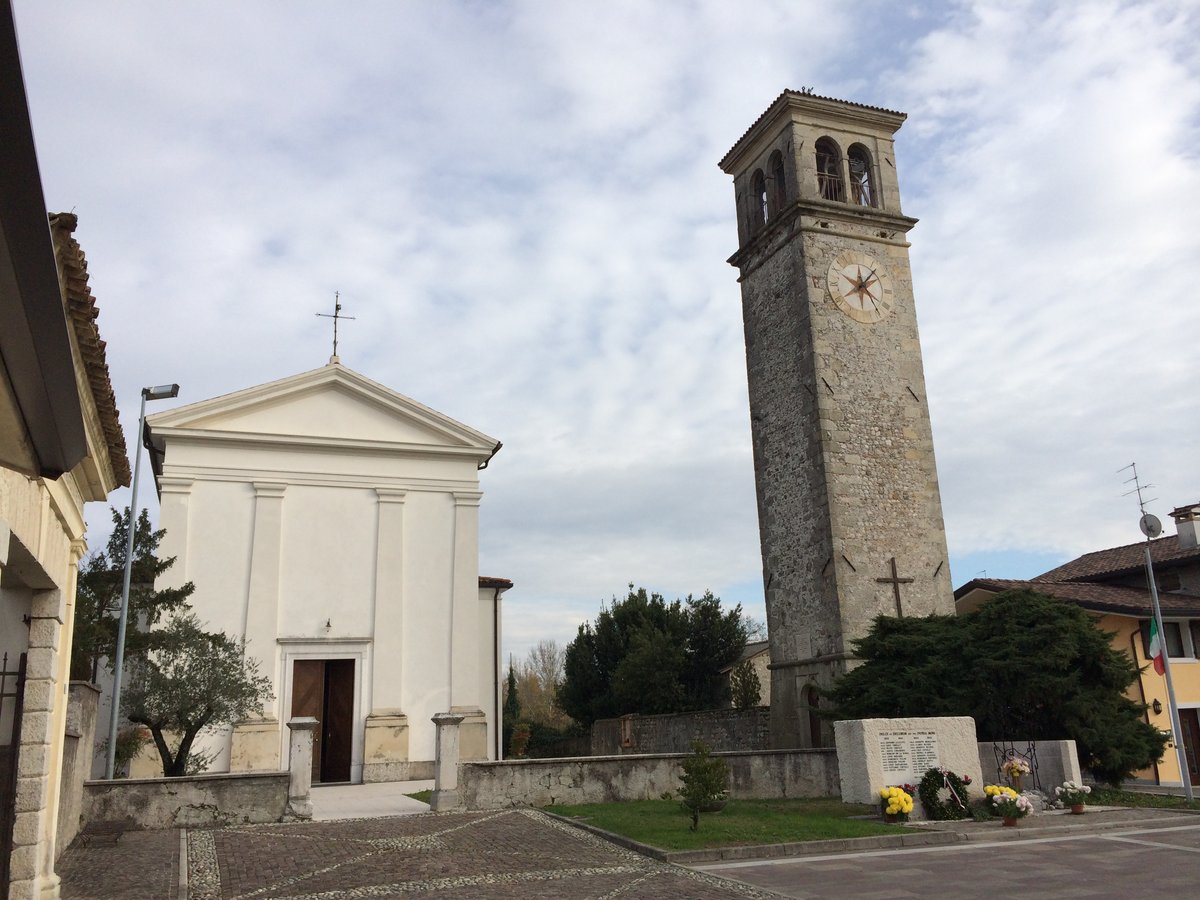
Church of San Leonardo in Provesano: 15th-century frescoes and Romanesque bell tower

The Church of San Leonardo in Provesano is a 12th-century Romanesque gem housing a cycle of 15th-century frescoes with colors still vivid. The local stone structure features a characteristic bell gable and is dedicated to Saint Leonard of Noblac, patron saint of prisoners and farmers. Ideal for a cultural stop outside main tourist circuits, it offers a moment of quiet immersed in Friulian history.

  • 15th-century frescoes with sacred scenes and saint figures, attributed to workshops close to Gianfrancesco da Tolmezzo
  • Rural Romanesque architecture in local stone with a slender bell gable, typical of western Friuli
  • Peaceful and intimate atmosphere away from tourist flows, perfect for a quick and intense visit
  • Tranquil location in the hamlet of Provesano, municipality of San Quirino, with ideal light in the early afternoon
Copertina itinerario Church of San Leonardo in Provesano: 15th-century frescoes and Romanesque bell tower
12th-century Romanesque church with 15th-century frescoes from the Friulian school, a slender bell gable, and a peaceful atmosphere in the Pordenone plain. A quick visit with well-preserved sacred art.

Good to know


Introduction

Just outside the center of Provesano, the Church of San Leonardo stands out with its slender bell tower against the sky of the Pordenone plain. It’s not just a visual landmark: upon approaching, you discover an authentic Romanesque jewel that houses, inside, a cycle of fifteenth-century frescoes of rare beauty. The feeling is that of finding an unexpected treasure, a place of silence and art away from the main tourist flows, perfect for a stop that combines spirituality and history.

Historical Background

The origins of the church date back to the 12th century, as evidenced by its Romanesque structure. The place of worship was likely built on a pre-existing site of devotion. Its artistic peak occurred in the 15th century, when the interior walls were decorated with an important cycle of frescoes, attributed to the workshop of Gianfrancesco da Tolmezzo or to craftsmen close to him. These works, depicting saints and sacred scenes, form the pictorial heart of the building and tell of its vitality in the late Gothic period.

  • 12th century: Probable construction of the church in Romanesque style.
  • 15th century (1400s): Creation of the interior fresco cycle.
  • Subsequent centuries: The church maintained its function, preserving the original structure and frescoes.

The 15th-Century Frescoes

Upon entering, your gaze is drawn to the frescoed walls, transforming the austere Romanesque interior into a book of sacred images. The colors, though softened by time, retain remarkable vibrancy. You can recognize figures of saints, such as Saint Leonard himself, often depicted with chains, and a majestic Crucifixion dominating one of the walls. The technique and style clearly reflect the Friulian artistic production of the fifteenth century, offering a concrete glimpse into the devotion and painting skills of that era in this rural area.

Architecture and Bell Tower

The external structure is a fine example of Friulian rural Romanesque architecture, with its simple gabled façade and exposed local stone. The most striking feature, however, is the double-sail bell tower, slender and distinctive. This type of bell tower, common in the area, is not only a distinctive landmark but represents a typical and functional architectural solution for country churches. Observing it up close allows one to appreciate the construction skill of the era.

Why Visit It

Visiting the Church of San Leonardo is worthwhile for three concrete reasons. First, to admire up close a well-preserved 15th-century fresco cycle of great historical-artistic value, away from the busier tourist circuits. Second, to photograph and study the elegance of its slender bell tower, a true icon of local Romanesque architecture. Third, to experience a moment of authentic tranquility: here, silence is broken only by the wind and the sound of bells, offering a rejuvenating pause immersed in history.

When to go

The best time to visit is the early afternoon, when natural light filters through the windows and illuminates the frescoes, enhancing their colors without the harsh glare of midday. As for the season, late spring or early autumn are perfect: the weather is mild, and the surrounding fields or vineyards are at their peak, creating a particularly picturesque landscape setting for your souvenir photos.

In the Surroundings

The visit to the church can be perfectly combined with an exploration of the rural village of Provesano, with its typical Friulian houses. For a thematic itinerary on sacred art, just a few minutes’ drive away is the Pieve of San Martino di Porcia, another important religious building with frescoes and a thousand-year history, which completes the picture of ancient devotion in this area of the plain.

💡 Did You Know…?

Inside, look for the fresco depicting Saint Leonard with broken chains, a symbol of his protection. Local tradition tells that the church was a stopping point for pilgrims heading to important Friulian sanctuaries. Also observe the traces of ancient restorations visible on the walls, testimony to the continuous care the community has dedicated to this place over the centuries. The bell tower, slender and well-proportioned, is a visual landmark for the entire area.