Churburg Coira Castle: Europe’s Largest Private Collection of Medieval Armor

Churburg Coira Castle in Sluderno houses Europe’s largest private collection of medieval armor, with over 50 perfectly preserved complete specimens. The 1253 castle, still inhabited by the Trapp family, offers guided tours through frescoed halls and a Gothic chapel. Convenient access with nearby parking.

  • Over 50 complete medieval armors, Europe’s largest private collection
  • Perfectly preserved 1253 castle, still inhabited by the Trapp family
  • Mandatory guided tour through frescoed halls and Gothic chapel
  • Ample nearby parking and authentic village of Sluderno

Copertina itinerario Churburg Coira Castle: Europe's Largest Private Collection of Medieval Armor
Perfectly preserved castle in Val Venosta with over 50 complete 15th-16th century armors, frescoed halls, and a Gothic chapel. Guided tour required, ample parking available.

Good to know


Introduction

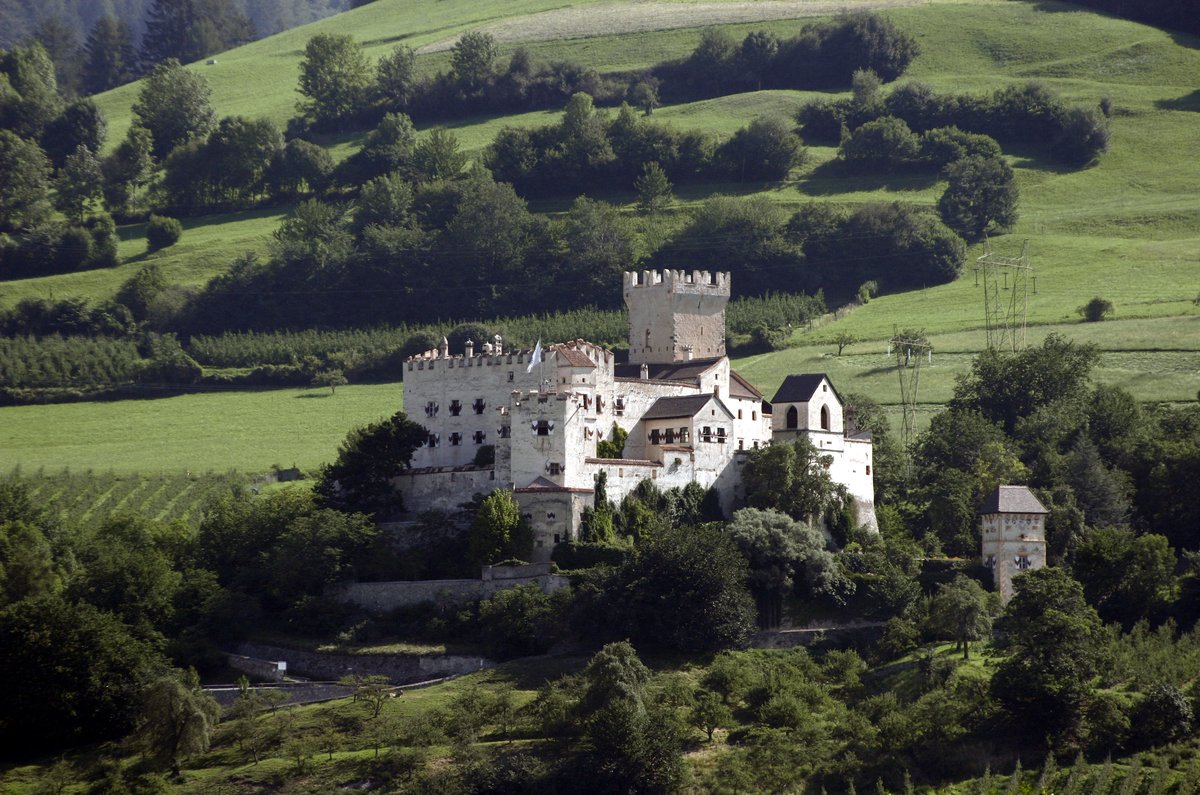
As soon as you arrive at Churburg – Castel Coira, you immediately understand you’re in a special place. Perched on a hill in Sluderno, in the Val Venosta, this castle welcomes you with its imposing, perfectly preserved medieval structure. It’s not just a beautiful view: inside lies the largest private collection of medieval armor in Europe. Walking through its halls is like stepping back in time, with an atmosphere that captivates you right away. If you love history or are looking for something unique to see in South Tyrol, this is the place for you. Entry is straightforward and well-organized, and even children are fascinated by those armors that look ready for battle.

Historical Overview

The history of Churburg begins in 1253, when the Bishop of Chur had it built as a defensive fortress. It then passed to the Trapp family in 1504, who still own and maintain it impeccably today. In the sixteenth century, the castle was expanded and transformed into a noble residence, losing its military function. It was during this period that it began to enrich itself with the famous suits of armor, many of which were commissioned for tournaments and parades. Today, the collection includes over 50 complete suits of armor, some belonging to historical figures such as Archduke Sigismund of Austria. The attention to detail, from the frescoes to the furnished rooms, tells centuries of noble life in the Vinschgau Valley.

  • 1253: Foundation of the castle by the Bishop of Chur.
  • 1504: Transfer to the Trapp family, still the owners.
  • 16th century: Transformation into a residence and beginning of the armor collection.
  • Today: Open to the public as a private museum, with guided tours.

The Armor Collection: A Unique Treasure

The true star of Churburg is its armor collection, which leaves you in awe. These are not scattered pieces, but complete full suits of armor, some weighing over 30 kilograms, arranged in halls that still seem inhabited. The armor of Gaudenz von Matsch, a 16th-century knight, stands out with intricate decorations showcasing the high craftsmanship of the era. Walking among these metal giants, you notice the details: helmets with movable visors, knee protections, swords hanging on the walls. The guides explain how they were worn and used, making the visit engaging even for non-experts. It’s rare to see so many specimens so well preserved in one place, making Churburg an unmissable stop for enthusiasts.

The Interiors: Between Frescoes and Original Furnishings

Beyond the armor, Churburg surprises with its authentic interiors. The halls are furnished with period furniture, tapestries, and everyday objects that transport you to the Renaissance. The frescoes on the walls, some dating back to the 14th century, tell religious and chivalric stories with still-vivid colors. The castle chapel, dedicated to Saint George, is a jewel of simplicity, with a wooden altar and stained glass windows that filter the light. An intimate atmosphere is felt here, far from crowded museums. Every corner speaks of the Trapp family and their dedication to keeping this heritage alive. The guided tour, which is mandatory, lasts about an hour and reveals anecdotes that history books often don’t tell.

Why Visit It

Visiting Churburg is worthwhile for three concrete reasons. First, the armor collection is unparalleled: you won’t find so many original pieces in such a well-preserved setting anywhere else in Europe. Second, the castle is easily accessible: it can be reached by car or with a short walk from Sluderno, and entry is organized with guided tours in Italian and German, without endless queues. Third, it’s an experience suitable for everyone: adults appreciate the history, children enjoy the armor, and the view over the Val Venosta offers memorable photos. Plus, tickets are reasonably priced, making it a smart choice for a half-day trip.

When to go

The best time to visit Churburg is on a spring or autumn morning, when the light is soft and the cool weather makes the walk up to the castle pleasant. During these seasons, the Val Venosta is less crowded, allowing you to enjoy the visit at a leisurely pace, perhaps combined with a stroll in the surrounding area. Avoid the hottest summer afternoons, as the interior rooms can become a bit stuffy. If you go in winter, the castle closed under the snow has a particular charm, but check the opening hours as they may be reduced. In general, any time is fine, but a clear day will reward you with spectacular views of the surrounding mountains.

In the Surroundings

After Churburg, it’s worth exploring Sluderno, the village below, with its traditional houses and tranquil atmosphere. For a similar thematic experience, head to Castel Juval, also in Val Venosta, known as the summer residence of mountaineer Reinhold Messner and home to a collection of masks from around the world. Both places tell stories of passion and preservation, ideal for those who love delving into local culture. If you have time, a stop at one of the area’s mountain huts to sample typical cheeses perfectly rounds out the day.

💡 Did You Know…?

The most famous legend is that of the headless knight who, it is said, still wanders the halls on full moon nights. But the true history is equally fascinating: the most famous armor, that of Gaudenz von Matsch from around 1470, is so well preserved that you can still see the bullet holes from the arquebus tests it underwent. A detail that tells the story of the transition between the era of chivalry and that of firearms. Additionally, in the chapel, you’ll find the tomb of Ulrich von Matsch, the castle’s commissioner, with a precious alabaster relief. The guide often recounts how some armor has been worn in modern times to test its mobility: surprisingly, an experienced knight could even mount a horse without assistance.