
Santa Maria delle Grazie in Milan is home to Leonardo da Vinci’s Last Supper, a Renaissance masterpiece declared a UNESCO World Heritage Site. The complex combines Gothic and Renaissance architecture with Bramante’s dome, offering a profound cultural experience in the Magenta district.
- Leonardo da Vinci’s Last Supper: 1498 fresco of the Last Supper with emotional expressions of the disciples
- Gothic-Renaissance architecture: red brick facade, Bramante’s dome, and colorful stained glass windows
- UNESCO World Heritage Site since 1980: historic site that survived the 1943 bombings
- Advance booking: essential to visit the refectory housing the Last Supper
Events nearby

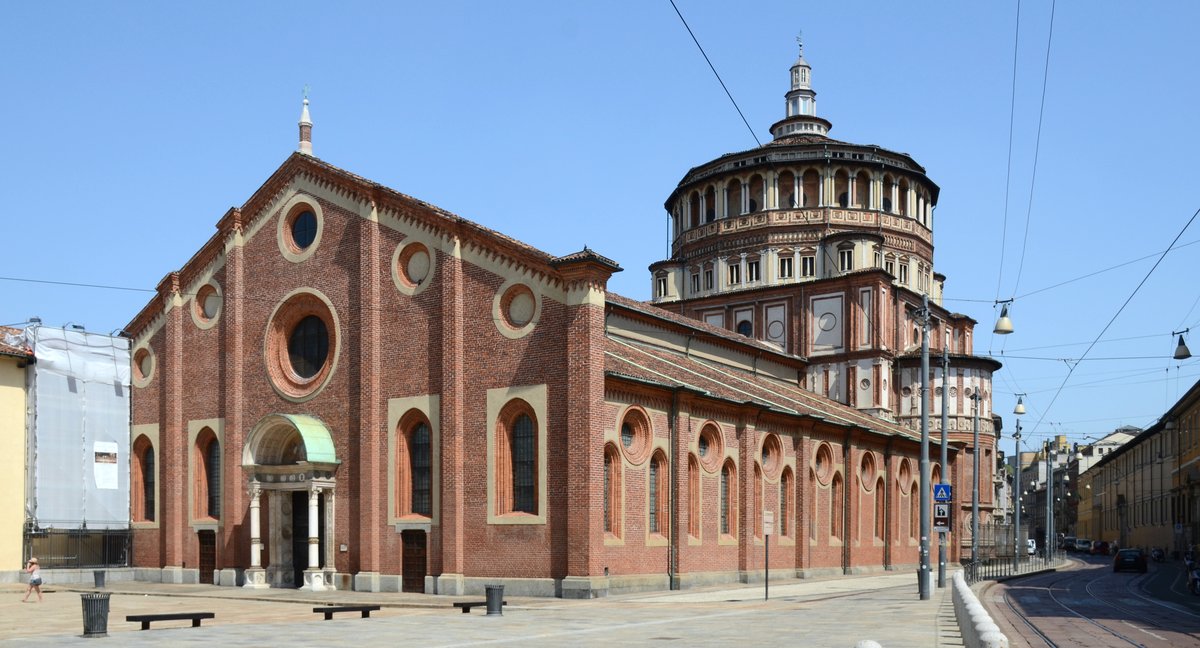
Santa Maria delle Grazie in Milan houses Leonardo da Vinci’s Last Supper, a UNESCO World Heritage Site since 1980. Admire the fresco of the Last Supper, Bramante’s dome, and the colorful stained glass windows. Advance booking is recommended.
- https://legraziemilano.it/
- info.legrazie@gmail.com
- Piazza Santa Maria delle Grazie, Milano (MI)
- +39 02 467 6111
- Open in Google Maps
- View on Google Images Santa Maria delle Grazie a Milano
Good to know
Introduction
Entering the complex of Santa Maria delle Grazie in Milan is an experience that immediately strikes you. It’s not just a church, but a place where art and history uniquely blend. The heart of the visit is the Last Supper by Leonardo da Vinci, a fresco that leaves you breathless with its beauty and significance. Declared a UNESCO World Heritage site, this Renaissance masterpiece attracts visitors from all over the world. The church itself, with its Gothic-Renaissance architecture and Bramante’s dome, creates a solemn atmosphere. Prepare to immerse yourself in a piece of Milanese history that continues to inspire.
Historical Overview
The history of Santa Maria delle Grazie begins in 1463, when it was founded as a Dominican church by the will of the Duke of Milan, Francesco Sforza. In 1495, Ludovico il Moro commissioned Leonardo da Vinci to paint the fresco of the Last Supper in the refectory, completed in 1498. The church suffered damage during the bombings of World War II in 1943, but the Cenacolo survived thanks to a protective barrier of sandbags. Today, it stands as a symbol of Milanese resilience and a global artistic treasure, having been restored multiple times to preserve its details.
- 1463: Foundation of the Dominican church
- 1495-1498: Leonardo da Vinci paints the Cenacolo
- 1943: Bombings damage the church, the Cenacolo is saved
- 1980: Inclusion in the UNESCO World Heritage list
The Hidden Architecture
Beyond The Last Supper, Santa Maria delle Grazie conceals architectural details worthy of attention. The red brick façade, typical of Lombard Gothic, contrasts with the luminous interior, where the stained glass windows stand out, filtering light in a suggestive manner. Don’t miss the Bramante’s dome, added in the late fifteenth century, which dominates the transept with its Renaissance elegance. Walking through the naves, you’ll also notice minor frescoes and side chapels, such as the one dedicated to Saint Catherine, which tell stories of local devotion. It’s a place where every corner reveals something special, perfect for those who love discovering lesser-known details.
The Last Supper: A Living Masterpiece
Seeing The Last Supper in person is different from any reproduction. The fresco, measuring approximately 4.6 x 8.8 meters, captures the dramatic moment when Jesus announces Judas’s betrayal. Leonardo used an experimental dry technique, which has made the work fragile over time, but recent restorations have brought the original colors back to light. Observe closely the expressions of the disciples, each unique and full of emotion, and the perspective that makes you feel part of the scene. Visits are limited to small groups to preserve the environment, so enjoy every minute in this sacred space of art.
Why Visit It
Visiting Santa Maria delle Grazie is worthwhile for three concrete reasons. First, the Last Supper is a unique work of its kind: Leonardo revolutionized art with his technique and emotional depth. Second, the site is a perfect example of how Milan combines history and innovation, being easily accessible by public transport. Third, it offers a concentrated cultural experience: in about an hour, you can admire both the fresco and the church, ideal for a tight itinerary. It’s a must for those who want to understand the city’s Renaissance soul.
When to Go
To fully experience Santa Maria delle Grazie, choose weekday mornings, when natural light streams through the windows and magically illuminates The Last Supper, without the weekend crowds. Avoid peak tourist seasons like mid-summer, opting instead for spring or autumn, when Milan is quieter and the pleasant weather allows you to enjoy the outdoor area as well. If possible, book for a clear day: light plays a key role in appreciating the details of the fresco and architecture.
In the Surroundings
After your visit, explore the surroundings to enrich your Milanese experience. Just a short walk away, you’ll find the Basilica of Sant’Ambrogio, one of the city’s oldest symbols, with its Romanesque architecture and relics of the patron saint. For a thematic art experience, head to the Leonardo da Vinci National Museum of Science and Technology, which houses models of the Tuscan genius’s inventions, perfect for deepening your understanding of his connection to Milan. Both locations are easily accessible on foot or with a short metro ride.
Itineraries nearby
💡 Did You Know…?
A little-known detail: during the bombings of World War II in 1943, a bomb destroyed part of the refectory, but miraculously the wall with the Last Supper remained standing, protected by sandbags. Today, you can still see the damage in the structure, a vivid reminder of Milan’s troubled history. Additionally, Leonardo used an experimental technique for the fresco, which has made the work fragile over time, requiring continuous restoration to preserve it.