Sforza Castle is a 15th-century fortress in the heart of Milan, with Renaissance courtyards accessible free of charge and museums housing masterpieces like Michelangelo’s Rondanini Pietà. Its strategic location allows visitors to combine the tour with nearby Sempione Park and the Brera district.
• Renaissance courtyards such as the Courtyard of Arms and the Rocchetta, accessible without a ticket
• Museums featuring Michelangelo’s Rondanini Pietà and works by Leonardo da Vinci
• Central location within walking distance from the Duomo and Galleria Vittorio Emanuele
• Sempione Park behind the castle for relaxing strolls
Introduction
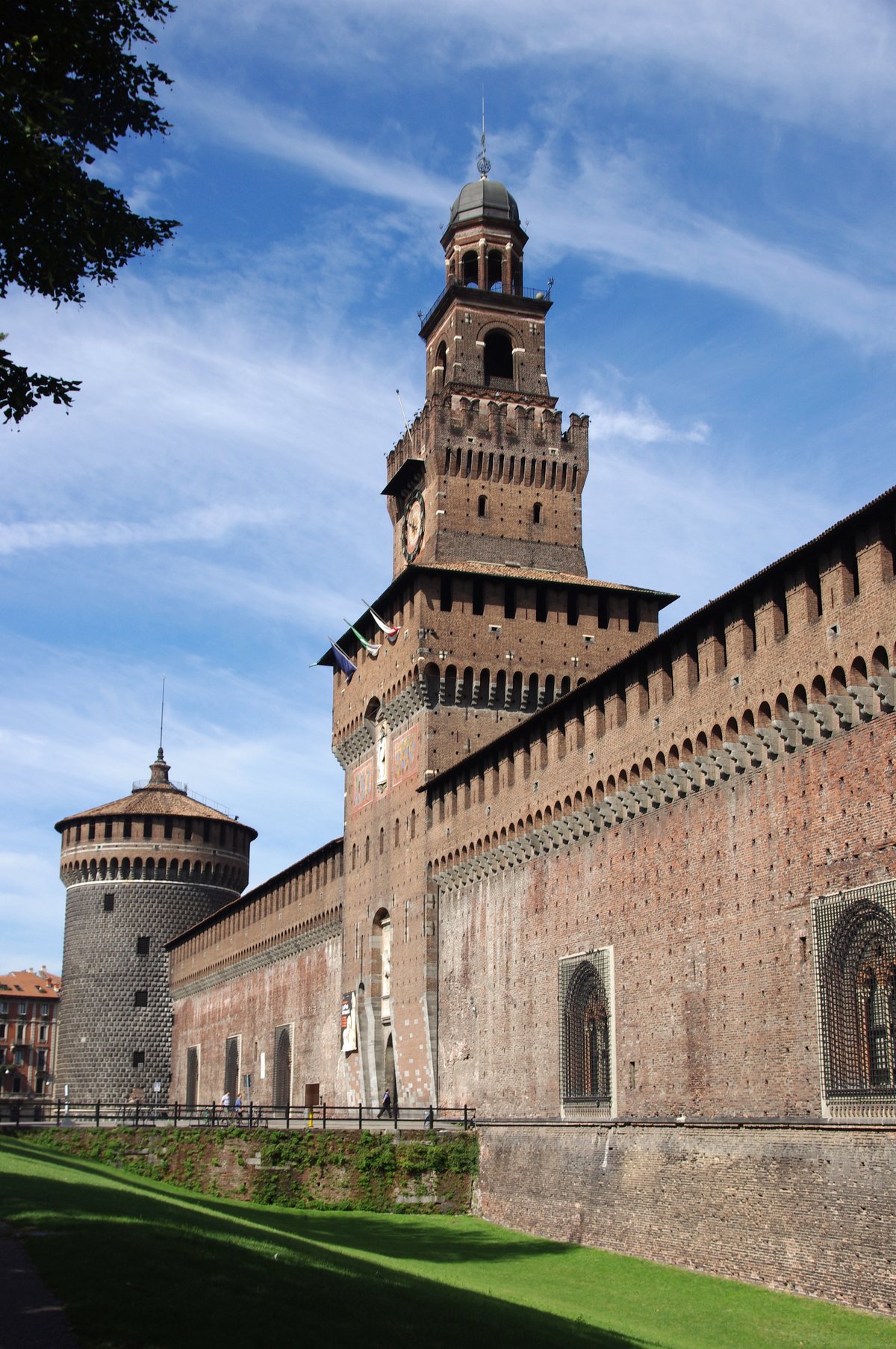
As soon as you step out of the metro, the Sforza Castle appears like a dramatic reveal in the heart of Milan. It’s not just a monument, but a true fortified quarter that dominates Piazza Castello with its red towers and dry moats. Walking under the arch of the Filarete Tower, you enter a world apart: immense courtyards, Renaissance porticoes, and an atmosphere blending medieval power with Renaissance refinement. Here, you breathe in Milan’s history, but also its present vitality, with locals and tourists mingling within the ancient walls. It’s the perfect starting point to understand the city, a place not merely to be visited, but to be experienced.
Historical Overview
The history of Sforza Castle is a tale of power, destruction, and rebirth. Originally built in the 14th century as a Visconti fortress, it was partially destroyed by the Ambrosian Republic after the death of Filippo Maria Visconti. The turning point came with
Francesco Sforza, who in 1450 made it the ducal residence, transforming it into a symbol of Milanese Renaissance. Leonardo da Vinci worked here under Ludovico il Moro, leaving traces in the design of the Sala delle Asse. After centuries of changing fortunes, including its use as a barracks under Austrian rule, architect Luca Beltrami led an extensive restoration between the 19th and 20th centuries, restoring it to its current appearance. Today it is a vibrant cultural hub, home to museums and exhibitions.
- 1360-1447: Construction as a Visconti fortress
- 1450: Francesco Sforza transforms it into a ducal residence
- Late 15th century: Embellished by Ludovico il Moro and Leonardo da Vinci
- 19th century: Restoration by Luca Beltrami after years of decay
The Courtyards: The Beating Heart of the Castle
The courtyards of Sforza Castle are not merely open spaces, but true open-air rooms that tell stories from different eras. The Courtyard of Arms, the largest, was the area for military parades and today hosts events and relaxing strolls. Crossing through the Renaissance portico, you enter the Courtyard of the Rocchetta, the oldest and most defensive core, with massive walls that make you feel like you’re in a medieval fortress. Here you’ll find the museum halls, but the atmosphere alone is an experience. Nearby, the Ducal Courtyard, more elegant and residential, shows the “courtly” side of the castle, with loggias and decorations reminiscent of the Sforza period. Walking from one courtyard to another is like flipping through an architecture book, without needing tickets.
The Museums: A Treasure Within the Walls
Within the walls of the Sforza Castle lies a surprising museum complex, often overlooked. The single ticket grants access to diverse collections, but two stand out. The Pinacoteca features masterpieces by Lombard artists like Bergognone and Foppa, with a room dedicated to Michelangelo and his final sculpture, the Rondanini Pietà. This unfinished, poignant work alone is worth the visit. Then there’s the Museum of Ancient Art, displaying sculptures and artifacts from the Middle Ages to the Renaissance, including the funerary monument of Gaston de Foix. But don’t miss the Museum of Musical Instruments, with over 700 pieces, or the collection of historic furniture. It’s a journey into Lombard culture, without the crowds of the city’s major museums.
Why Visit It
Visiting Sforzesco Castle is worthwhile for very practical reasons. First, it’s largely a free experience: access to the courtyards and gardens costs nothing, allowing you to enjoy the architecture and atmosphere without spending. Second, it’s a concentration of culture and relaxation: in just a few minutes, you can go from the museum halls to the tree-lined paths of Sempione Park, ideal for a break. Third, the location is strategic: on foot, you can reach the Duomo, the Galleria Vittorio Emanuele, and Brera, making it the hub of a walking itinerary in the historic center. In short, it’s versatile: perfect for a quick exploration or a day between art and nature.
When to go
The best time to visit Sforza Castle is the early afternoon, when the warm sunlight illuminates the red brick facades, creating spectacular shadow plays in the courtyards. Avoid the midday hours, especially in summer, when the heat can make the walk less pleasant. In autumn and spring, the colors of Sempione Park behind the castle provide a particularly enchanting atmosphere. If you prefer tranquility, weekday mornings are less crowded, while weekends are lively and full of spontaneous events.
In the Surroundings
Just outside the Sforzesco Castle, Sempione Park awaits right behind the walls: a green oasis with pathways, ponds, and the iconic Arch of Peace, perfect for a relaxing stroll or a picnic. A few minutes’ walk away, in the Brera district, you can explore cobblestone streets filled with art galleries, historic shops, and the Brera Botanical Garden, a hidden corner of tranquility. Both spots complete your visit with a blend of nature, art, and authentic Milanese charm, all within walking distance.