Brescia Castle: Fortress with Arms Museums, Visconti Towers and Prealps Views

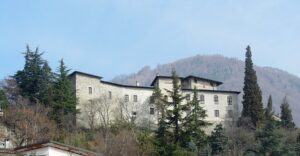
Brescia Castle, known as the ‘Falcon of Italy’, is a medieval fortress on Cidneo Hill with spectacular views over the city and the Prealps. Access to the park area and walls is completely free, and it’s reachable on foot in 10 minutes from the historic center. Inside, it houses two significant museums and visitable towers.

  • Luigi Marzoli Arms Museum with one of Europe’s richest collections of armor
  • French Tower and wall ramparts for 360-degree panoramas
  • Free access to the park and external walls
  • Convenient location 10 minutes’ walk from Brescia’s historic center


Events nearby


Copertina itinerario Brescia Castle: Fortress with Arms Museums, Visconti Towers and Prealps Views
Brescia Castle offers free access to the park and walls, with the Luigi Marzoli Arms Museum and the Risorgimento Museum. Climb the French Tower for 360° views and walk the medieval ramparts just steps from the historic center.

Good to know


Introduction

The Castello di Brescia is not just a fortress; it’s a balcony overlooking the city. When you reach the top, perhaps on foot along the path starting from Piazzale Arnaldo, the view takes your breath away. You see all of Brescia spread out at your feet, with its towers and red roofs, and beyond, the Prealps forming the backdrop. It’s not a museum closed in on itself, but a living place where history blends with the present. You notice it right away: families with children running on the lawns, photography enthusiasts seeking the perfect angle, couples sitting on benches enjoying the sun. The atmosphere is relaxed, almost like an urban park, but with that extra something given by the ancient walls and soaring towers. For me, it’s one of those places that captures you immediately, without too much ceremony. You enter and instantly feel part of something special.

Historical Overview

The history of the Castle is a true layering of epochs. It wasn’t built all at once, but grew over time, like a living organism. The first fortifications date back to the Roman era, but it was in the Middle Ages that it took on the form we partly see today, with the Visconti family of Milan strengthening it. Then came the Republic of Venice, which from the 15th to the 18th century transformed it into a proper military citadel, adding bastions and the majestic Visconti Keep. It’s interesting to think that, after losing its defensive function, it first became a prison and then, fortunately, a place of culture. Today it houses the Luigi Marzoli Arms Museum and the Museum of the Risorgimento, two collections that tell different but equally fascinating stories. The timeline below gives you an idea of this journey through time:

  • Roman era: first fortifications on Cidneo Hill.
  • 13th-14th century: strengthening under the Visconti of Milan.
  • 1426-1797: Venetian rule, transformation into a citadel.
  • 19th century: use as a prison.
  • 20th century-present: conversion into a museum hub and public area.

The Tower Tour and Hidden Panoramas

One of the things I enjoy most here is exploring the different towers. They are not all the same, and each offers a unique perspective. Climbing the Tower of the French, for example, is an experience. The spiral staircase is narrow and a bit dark, but when you emerge at the top, the 360-degree view rewards every step. You see the city in a different way, almost from the height of an eagle’s nest. Then there are quieter spots, like the meadow behind the Weapons Museum, where you can sit in the shade of a tree and watch the comings and goings of people without being in the chaos. Another point that few know about? The walkway along the walls to the east, from which you can glimpse a beautiful stretch of the plain. It is not signposted everywhere, but just follow the main path and keep your eyes open. This is what makes the visit always new: you can return multiple times and always discover a different detail.

Museums Inside the Fortress: More Than Just Weapons

Inside the castle, there are two museums that are absolutely worth a visit. The Luigi Marzoli Arms Museum features an impressive collection: armor, swords, arquebuses, all displayed in rooms that once served as military storerooms. The setup is modern and engaging—far from the typical dusty display case. Even as someone who’s not an arms expert, I found myself reading all the captions, intrigued by the stories they tell. Then there’s the Risorgimento Museum, smaller but intense. It recounts Brescia’s role in the struggles for Italian unification, with documents, flags, and memorabilia. It’s a dive into a crucial historical period, seen through the city’s eyes. Both museums are well integrated into the castle’s architecture, and stepping out of a room to find yourself among ancient walls is a contrast that makes you reflect. I recommend dedicating at least an hour to each, without rushing.

Why Visit It

Visiting Brescia Castle is worthwhile for at least three concrete reasons. First, it’s a completely free experience to access the park area and walls. You can spend half a day walking, discovering corners, and enjoying the views without spending a euro. Second, it’s extremely easy to reach on foot from the historic center. In ten minutes from Piazza della Loggia, you’re already at the foot of the hill, and the climb, if taken calmly, is manageable for everyone. Third, it offers a unique combination of nature, history, and relaxation. It’s not just a monument to look at, but a place where you can have a picnic on the grass, read a book in the sun, or simply observe city life from above. It’s versatile, suitable for a family outing, a romantic date, or a refreshing break during a cultural tour.

When to go

The best time? Without a doubt late summer afternoons, when the sun begins to set and the light turns golden. The walls take on shades of pink and orange, and the view over the city becomes even more magical. In summer, it’s also common to find events or small concerts in the courtyard, bringing the atmosphere to life. In spring and autumn, clear days offer sharp views all the way to the mountains, and the weather is perfect for a stroll without excessive heat or cold. In winter, sunny days can be pleasant, but beware of the wind that sometimes blows strongly on the hill. In short, every season has its charm, but for a truly enchanting experience, aim for that magical hour before sunset. Bring a bottle of water, as drinking fountains aren’t everywhere.

In the Surroundings

Once you descend from the castle, Brescia’s historic center awaits just steps away. It’s worth dedicating some time to the Santa Giulia complex, which is an extraordinary museum. It’s not just a church, but a true journey through the city’s history, from Roman times to the Renaissance, with artifacts like the Winged Victory. It’s a complementary experience to the castle, as it delves deeper into what you’ve seen from above. If you’re in the mood for something lighter, take a stroll to Piazza della Loggia, the Renaissance heart of the city. Here you can admire the Loggia Palace, enjoy a coffee at one of the cafes under the porticoes, and immerse yourself in the lively atmosphere. Both are just a few minutes’ walk away, ideal for continuing your day without needing transportation.

Itineraries nearby


💡 Did You Know…?

Did you know that secret tunnels and galleries are hidden beneath the castle? During Venetian rule, these passages were used for military movements and as escape routes. Today, some sections are visitable with specialized guides, offering an explorer-like atmosphere. Another fascinating detail: the “Pusterla del Soccorso”, a small gate on the north side, was the emergency access for supplies during sieges. Look closely: it’s still intact and tells centuries of defensive strategy.