
Ready to discover the Coast and Villages of Vibonia? In this 2-day itinerary, I'll take you through the treasures of Vibo Valentia province, starting from the Capo Vaticano lighthouse with its crystal-clear waters, then venturing inland between history and nature. We'll explore the mysterious Zungri caves, a medieval rock-hewn village carved into the stone, and the majestic Galluppi Castle in Pizzo Calabro, overlooking the sea. A perfect route for those seeking a mix of seaside relaxation and culture, with stops in authentic villages and breathtaking views. Ideal for a weekend getaway, I'll show you how to best experience this land full of surprises.
🗺️ Your trip at a glance
A 2-day journey that combines the crystal-clear sea of Capo Vaticano with the medieval history of the inland villages in the province of Vibo Valentia. Ideal for a complete weekend immersed in nature and culture, away from the busiest tourist routes.
- Ideal for: travelers looking for a refreshing weekend off the main tourist circuits, enthusiasts of medieval history and seascapes.
- Highlights: a comprehensive and balanced itinerary between coast and hinterland, with 8 stops including lighthouses, Norman castles, and a unique cave village (Zungri Caves). Features interactive maps for each location.
- Perfect for those who: enjoy exploring at their own pace, appreciating both iconic sites like Murat Castle and lesser-known spots such as Rocca Angitola.
Itinerary stops
Day 1 - Stop no. 1
Capo Vaticano Lighthouse
 Our Vibonia Coast and Villages itinerary begins at Capo Vaticano Lighthouse, located in Ricadi along the Panoramic Route. This lighthouse, active since 1885, is not just a navigational landmark but a true natural viewpoint overlooking the Tyrrhenian Sea. Its strategic position, perched above the sea, offers spectacular views of the crystal-clear waters of the Costa degli Dei (Coast of the Gods), with Sicily and the Aeolian Islands visible on the horizon on the clearest days. The structure, with its white tower standing out against the sky, is surrounded by Mediterranean vegetation where ancient olive trees stand out. It's the perfect spot for taking memorable photos and starting your exploration of the Vibo Valentia province with a sweeping view that encompasses both the sea and the inland areas. Its accessibility and tranquil atmosphere make it an ideal stop to immediately immerse yourself in the essence of this land.
- Go to the page: Capo Vaticano Lighthouse: 360° View of Costa degli Dei and Aeolian Islands Since 1885
- Percorso Panoramico, Ricadi (VV)
- Open in Google Maps
- View on Google Images

You should go if...
Day 1 - Stop no. 2
La Rocchetta di Briatico
 Leaving behind the Capo Vaticano lighthouse, the second stop on the itinerary leads to La Rocchetta, a complex of limestone cliffs that jut into the Tyrrhenian Sea with shapes carved by wind and water. Located along Via Marina in Briatico, this rock formation is characterized by an isolated sea stack emerging from the crystal-clear waters, creating a spectacular contrast with the deep blue sea. The site, accessible via a scenic trail, offers breathtaking views of the Costa degli Dei, with the possibility of spotting the Aeolian Islands on the horizon on clear days. La Rocchetta is not just a privileged viewpoint, but also a nesting site for seabirds like herring gulls, adding an element of biodiversity to the landscape. Its strategic position along the Vibo coast makes it an ideal crossroads for those wanting to combine nature exploration with moments of relaxation, with sandy beaches like Vibo Marina just a short distance away.
- Via Marina, Briatico (VV)
- Open in Google Maps
- View on Google Images
You should go if...
Day 1 - Stop no. 3
Piedigrotta Chapel
 After admiring the cliffs of La Rocchetta in Briatico, the third stop of the first day takes us to Pizzo, where along Via Riviera Prangi lies the surprising Piedigrotta Chapel. This unique place of worship is entirely carved into tuff stone, creating a hypogeal environment that tells centuries of devotion and folk art. Its origins date back to the 17th century, when according to tradition shipwrecked Neapolitan sailors carved the first sacred images into the rock as ex-votos. Today the chapel preserves a rich heritage of sandstone sculptures depicting saints, angels, and biblical scenes, all shaped directly into the tuff stone. The particularity of this site is its dual nature: on one hand an active place of prayer, on the other a spontaneous museum of naïve art that continues to enrich itself with new works created by local devotees. The location perched above the sea adds a special charm, with light filtering through the main entrance illuminating the sculptures in a suggestive play of light and shadow.
- Via Riviera Prangi, Pizzo (VV)
- Open in Google Maps
- View on Google Images
You should go if...
Day 1 - Stop no. 4
Murat Castle
 Leaving behind the evocative Chiesetta di Piedigrotta carved into tuff stone, the fourth stop of the first day leads us to Murat Castle, perched on the rocky spur overlooking the fishing village of Pizzo. This 15th-century Aragonese fortress owes its fame to a crucial event: it was here that Joachim Murat, Napoleon's brother-in-law and the last King of Naples, was imprisoned and executed in October 1815. Its mighty walls enclose the cell where he spent his final hours before the execution, now visitable along with the spaces hosting temporary exhibitions and historical artifacts. Climbing to the terraces offers a breathtaking panorama of the Gulf of Sant'Eufemia, while the military architecture tells centuries of dominations that have shaped this Calabrian coast. The castle is not just a monument, but a place where grand History meets local stories, preserving intact the charm of a past that still speaks through its stones.
- Go to the page: Murat Castle in Pizzo: Aragonese fortress with Murattian Museum and Tyrrhenian Sea views
- Scesa Castello, Pizzo (VV)
- https://www.castellomurat.it/
- Open in Google Maps
- View on Google Images
You should go if...
Day 1 - Stop no. 5
Ruffo Castle
 After leaving Murat Castle with its Napoleonic memories, the journey continues towards the Ruffo Castle in Nicotera, an imposing 11th-century Norman fortress that rises dramatically from the cliffside overlooking the Tyrrhenian Sea. This fully restored castle, now home to the Archaeological Museum, preserves its cylindrical towers and crenellated walls intact, telling centuries of stories from Norman to Aragonese rule. Climbing to the terraces reveals a 360-degree view stretching from the Coast of the Gods to the Aeolian Islands, while the interiors house artifacts documenting the history of Hipponion and local populations. The castle is not just a monument, but a privileged observatory of the Tyrrhenian Calabria, where military architecture blends seamlessly with landscape beauty.
- Go to the page: Ruffo Castle of Nicotera: Norman Fortress with Archaeological Museum and Gulf View
- Via Castello, Nicotera (VV)
- Open in Google Maps
- View on Google Images
You should go if...
Day 2 - Stop no. 1
Zungri Caves
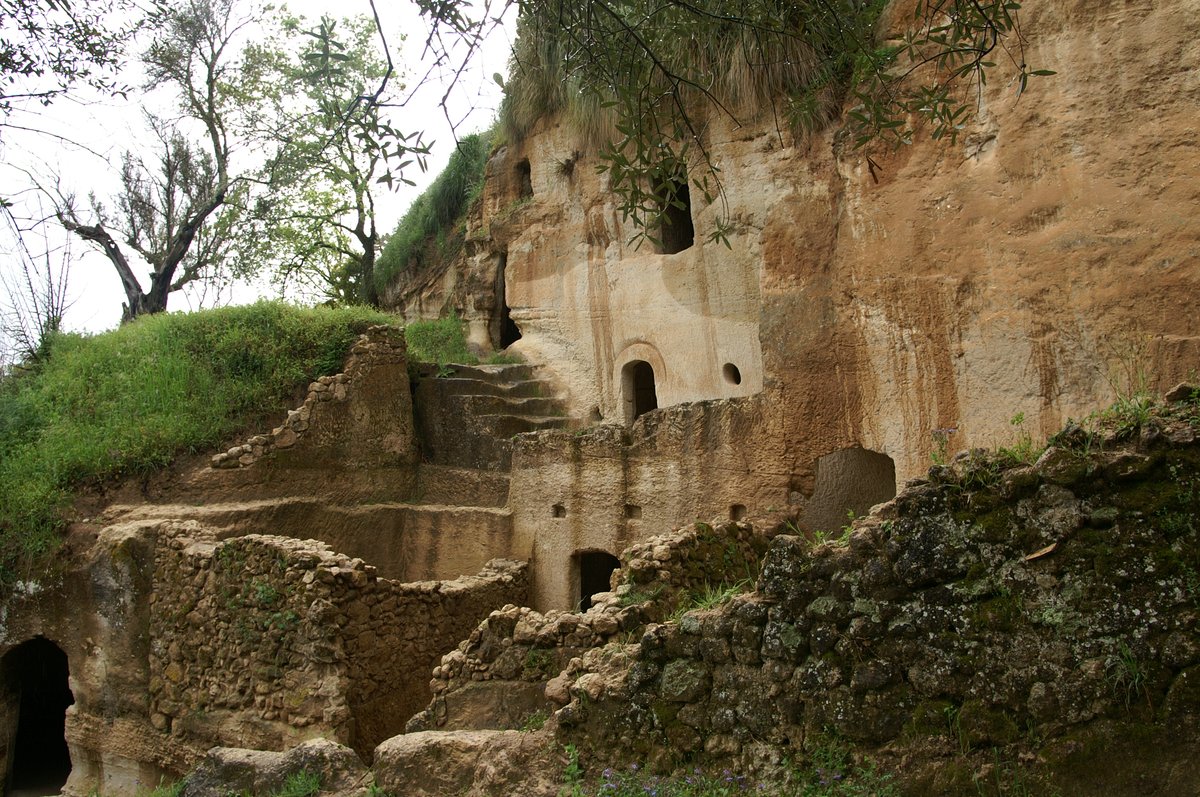 The second day of our itinerary begins with a leap back in time to the Zungri Caves, a unique rock settlement in Calabria. This complex of about one hundred artificial caves, carved directly into the limestone rock between the 8th and 12th centuries, represents one of the best-preserved examples of hypogeal architecture in the region. The dwellings, connected by an intricate system of tunnels and staircases, still bear traces of medieval daily life: niches for storing food, channels for rainwater, and spaces dedicated to craft activities. Walking through these environments, you immediately sense the ingenuity of the local populations who adapted to the terrain, creating a habitat perfectly integrated with the natural environment. The site, recently enhanced with an open-air museum trail, offers tangible evidence of how humans have shaped the Vibo landscape over the centuries.
- SP85, Zungri (VV)
- https://www.grottezungri.it/
- Open in Google Maps
- View on Google Images
You should go if...
Day 2 - Stop no. 2
Galluppi Castle
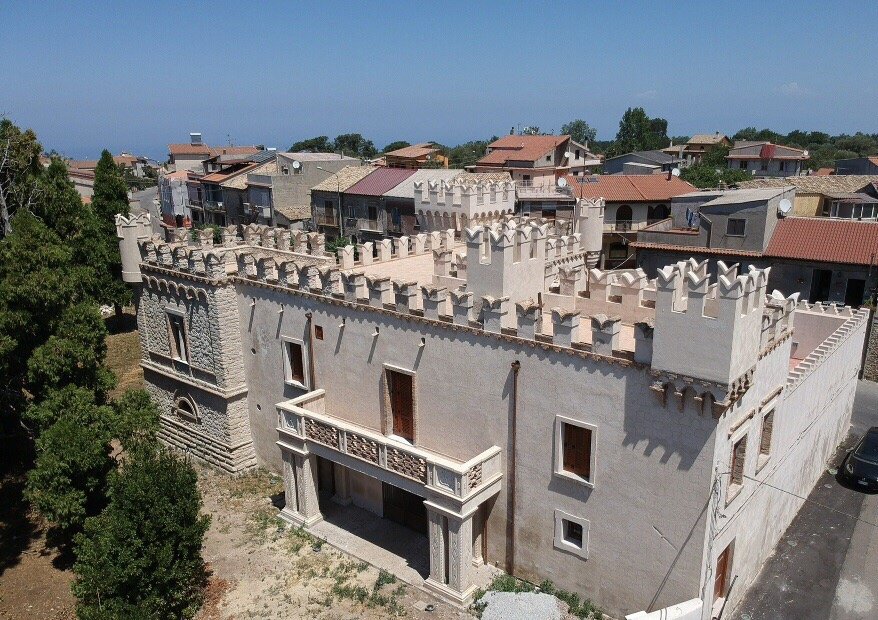 Galluppi Castle in Caria, located on Via Regina Elena, represents a medieval architectural jewel perfectly integrated into the hilly landscape of Vibonia. Built between the 12th and 13th centuries, this manor preserves its perimeter walls and main tower intact, offering a journey through time across Norman and Aragonese dominions. From its elevated position, visitors enjoy a breathtaking panoramic view stretching from the surrounding countryside to the Tyrrhenian Sea, making it a privileged spot for watching Calabrian sunsets. The building, recently restored, occasionally hosts exhibitions and cultural events that enhance its history linked to the Galluppi family, the ancient local nobility. The visit allows discovery of authentic defensive architecture and understanding of the strategic importance of these locations in controlling the territory during the Middle Ages.
- Via Regina Elena, Caria (VV)
- Open in Google Maps
- View on Google Images
You should go if...
Day 2 - Stop no. 3
Rocca Angitola
 Leaving behind the Castello Galluppi of Caria, Rocca Angitola reveals itself as a highly evocative medieval ruin standing isolated on the hill of Maierato. Built by the Normans in the 11th century as a strategic control point over the valley below, this fortress retains sections of its perimeter walls and main tower, although time has eroded many of its structures. Its elevated position offers exceptional panoramic views of Lake Angitola and the entire surrounding plain, allowing visitors to understand the military importance it held during the feudal period. The architectural remains clearly display Norman construction techniques, with local stone blocks expertly crafted. The visit provides direct contact with the history of medieval Vibonia, far from the more beaten tourist paths.
- Località Angitola, Maierato (VV)
- Open in Google Maps
- View on Google Images
You should go if...


