Pinacoteca di Brera: Hayez’s The Kiss and Raphael’s Masterpieces in Milan

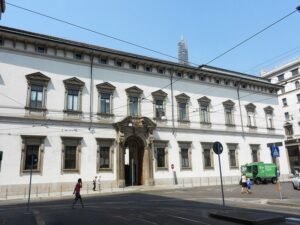
The Pinacoteca di Brera, in the heart of the Brera district, hosts one of Italy’s most important art collections in a historic palace with an inner courtyard dominated by Napoleon’s statue. The elegant rooms feature carefully selected works, from the Middle Ages to the 19th century, in a well-organized itinerary that highlights each masterpiece.

  • The Kiss by Francesco Hayez, a symbol of Italian Romanticism.
  • The Montefeltro Altarpiece by Piero della Francesca and works by Raphael.
  • Paintings by Caravaggio, such as Supper at Emmaus, and by Mantegna.
  • The intimate atmosphere of the rooms and the inner courtyard for a suggestive break.


Events nearby


Copertina itinerario Pinacoteca di Brera: Hayez's The Kiss and Raphael's Masterpieces in Milan
The Pinacoteca di Brera in Milan houses masterpieces like Hayez’s The Kiss, works by Raphael, Caravaggio, and Mantegna in a 17th-century palace. A guide to the main artworks and the atmosphere of the rooms.

Good to know


Introduction

Stepping into the Pinacoteca di Brera is like traveling through time, within the walls of an ancient palace that houses some of the greatest masterpieces of Italian art. It’s not just a museum, but an experience that envelops you from the very first glance, with its majestic halls and the light filtering through the windows, creating a unique atmosphere. Here, works like Hayez’s The Kiss look directly at you, telling stories of love and patriotism that marked an era. The feeling is that of walking through a living gallery, where every painting has a voice and every detail deserves attention. For those visiting Milan, it’s a must-see stop, a place that unites beauty and history in an unforgettable way.

Historical Background

The Pinacoteca di Brera was founded in 1809, established by Napoleon Bonaparte as a museum to house artworks requisitioned during military campaigns. Initially part of the Academy of Fine Arts, it gradually evolved into one of Italy’s most significant collections, featuring masterpieces spanning from the Renaissance to the 19th century. Artists such as Raphael, with his Brera Altarpiece, and Caravaggio have left essential works here, while the building itself, a former Jesuit convent, adds charm with its courtyards and architecture. The museum’s history is linked to events like Napoleonic spoliations and subsequent acquisitions, which have enriched its heritage.

  • 1776: Foundation of the Brera Academy of Fine Arts.
  • 1809: Official opening of the Pinacoteca under Napoleon.
  • 1882: Separation of the Pinacoteca from the Academy, becoming an autonomous museum.
  • 20th century: Expansion of the collections through acquisitions and donations.

Masterpieces Not to Be Missed

Beyond the famous Hayez’s Kiss, the Pinacoteca di Brera offers a selection of works worth discovering at a leisurely pace. Don’t miss Caravaggio’s Supper at Emmaus, a painting that captures emotional intensity through the play of light and shadow, typical of the master’s style. Then, there’s Mantegna’s Madonna and Child, a refined example of Renaissance art, with meticulous details showcasing the artist’s technical mastery. Walking through the halls, you’ll also notice works by Tintoretto and Bellini, which complete a varied artistic journey. I recommend dedicating time to these canvases, as each tells a different story, from spirituality to daily life in the past.

The Atmosphere of the Rooms

One of the most striking aspects of the Pinacoteca di Brera is the atmosphere of its rooms, designed to enhance the artworks. The spaces are spacious and well-lit, with colored walls that highlight the paintings, such as the deep red in the room dedicated to Hayez. The visit flows smoothly, guiding you through thematic sections ranging from the fifteenth to the nineteenth century, without making you feel overwhelmed. Additionally, the courtyard of honor, with the statue of Napoleon, offers a suggestive break between one work and another. It is a place where you can immerse yourself in art without haste, enjoying every detail in silence, away from the city’s chaos.

Why Visit It

Visiting the Pinacoteca di Brera is an experience that goes beyond simply admiring famous paintings. First, it allows you to see up close masterpieces like Hayez’s The Kiss and Raphael’s Brera Altarpiece, works that have marked art history and are difficult to find elsewhere in such high concentration. Second, the museum offers a unique context, with its historic palace and intimate atmosphere, ideal for those seeking a cultural moment without the crowds of more touristy places. Finally, it’s an opportunity to deepen your knowledge of Italian art, thanks to well-curated collections and clear labels that make the visit accessible to everyone.

When to Go

To make the most of your visit to the Pinacoteca di Brera, I recommend going early in the morning, when the crowds are thinner and you can admire the artworks in peace. This way, you’ll avoid long lines and have the space to linger over details without distractions. If you prefer a particular season, autumn or spring months are ideal, as the mild weather invites you to explore the surrounding area without summer heat or winter chill. In any case, always check the opening hours on the official website, as there may be changes due to special events or temporary exhibitions.

In the Surroundings

After visiting the Pinacoteca di Brera, you can explore the Brera district, one of Milan’s most characteristic areas, with its cobblestone streets, art galleries, and historic cafés. Nearby, you’ll find the Sforza Castle, which houses museums and art collections, perfect for continuing your cultural journey. Alternatively, if you’re looking for a more relaxing experience, take a stroll in the Brera Botanical Garden, a hidden green oasis in the heart of the city, ideal for a refreshing break between museums.

Itineraries nearby


💡 Did You Know…?

Not everyone knows that the Pinacoteca di Brera was born as a teaching collection for students of the Academy of Fine Arts. Many works arrived here after the Napoleonic suppressions of religious orders, saved from dispersal. An interesting detail: look closely at Mantegna’s Lamentation over the Dead Christ. The foreshortening is so bold that, standing in front of the painting, you have the impression that Christ’s feet are closer to you than his head. A brilliant visual trick that the Paduan painter used to create immediate empathy with the viewer, involving them in the drama of the scene.