Santa Colomba: An Authentic Medieval Village with Views over the UNESCO Val d’Orcia

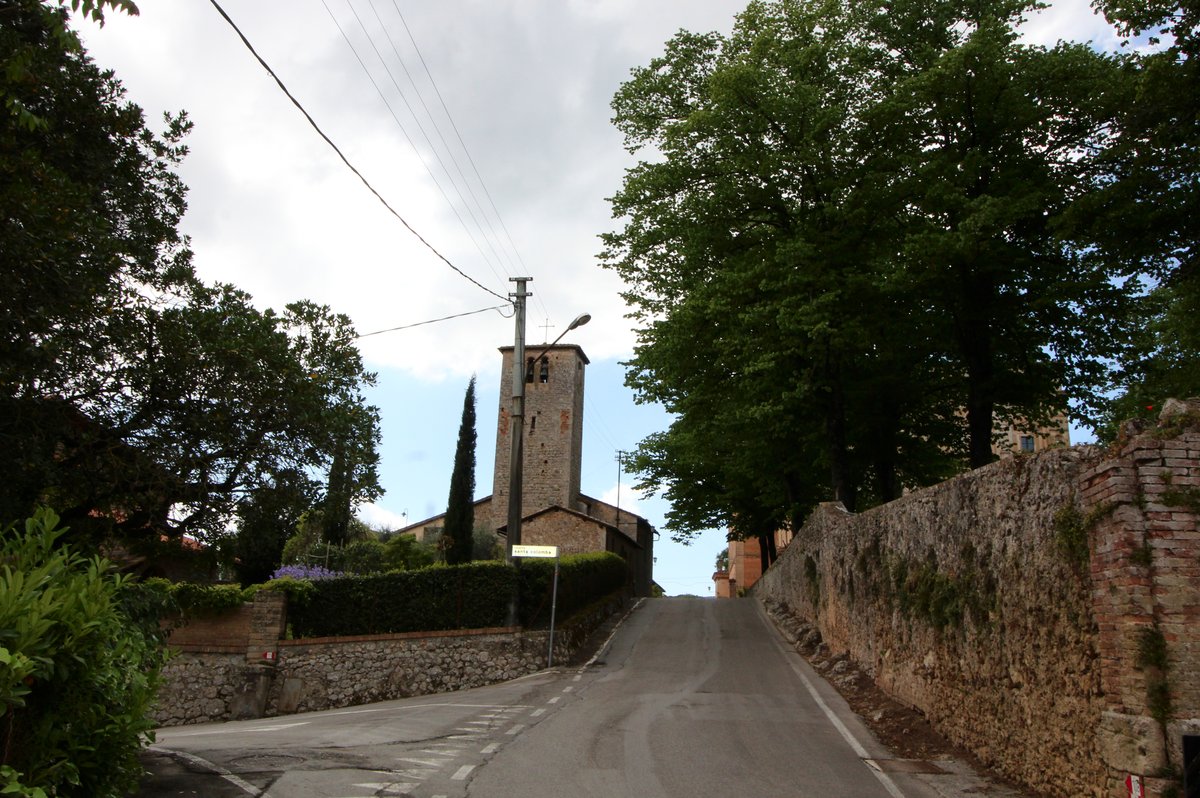
Santa Colomba is an authentic medieval village in the UNESCO World Heritage Val d’Orcia, away from tourist crowds. Its narrow streets of pietra serena stone, houses of brick and travertine, and the parish church with artworks create a timeless atmosphere. The village is ideal for a stop during car itineraries among Sienese villages, for panoramic photography, or moments of absolute quiet.

  • Quiet streets of pietra serena stone surrounded by houses of brick and travertine
  • Parish church dedicated to Santa Colomba with valuable artworks
  • Views over the sculpted hills, cypress rows, and clay gullies of the Val d’Orcia
  • Authentic atmosphere away from main tourist flows

Copertina itinerario Santa Colomba: An Authentic Medieval Village with Views over the UNESCO Val d'Orcia
Santa Colomba, a hamlet of Castiglione d’Orcia, offers quiet streets of pietra serena stone, a parish church with artworks, and views over the sculpted hills, cypress rows, and clay gullies of Tuscany.

Good to know


Introduction

Santa Colomba is one of those villages that makes you forget about time. It’s not on the map of major tourist flows, and perhaps that’s precisely its charm. As soon as you arrive, you’re greeted by a silence broken only by the wind through the cypress trees and the sound of your footsteps on the ancient cobblestones. The stone houses seem to have stepped out of a Renaissance painting, with their warm tones that change with the daylight. It’s a place for those seeking authenticity, not glossy postcards. I discovered it almost by chance, veering off the main road toward Castiglione d’Orcia, and fell in love instantly. There are no souvenir shops, just a few homes with geraniums at the windows and an atmosphere that feels like home. If you want to escape the crowds and immerse yourself in a more intimate Tuscany, Santa Colomba is the answer.

Historical Notes

The history of Santa Colomba is closely intertwined with that of the Val d’Orcia. The first traces date back to the Middle Ages, when it was a small fortified settlement under the control of the powerful Aldobrandeschi family. In the 12th century, it came under Sienese rule, which strengthened its defenses. There are no major battles to recount, but rather a life centered on agriculture and pastoralism. The Church of Santa Colomba, dedicated to the martyred saint, still retains Romanesque traces, although it has been modified over the centuries. Its strategic location, on a hill overlooking the valley, explains why it has been inhabited for so long. Today it remains a sleepy village, but every stone tells a simple and resilient story.

  • 12th century: first documented evidence as a possession of the Aldobrandeschi family.
  • 13th century: comes under the control of the Republic of Siena.
  • 16th century: incorporated into the Grand Duchy of Tuscany, losing military importance.
  • Today: a hamlet of Castiglione d’Orcia, it retains its medieval appearance.

The Charm of Narrow Streets

Walking through Santa Colomba means getting lost in a labyrinth of alleys so narrow that sometimes you touch the walls with both hands. These are not tourist paths, but streets that follow the natural shape of the hill, with irregular steps and low arches that seem to embrace you. Every corner offers a different perspective: here a wooden door worn by time, there a stone fountain still working. I noticed that many houses still have rings for tying animals, a sign of a rural past that isn’t so distant. The beautiful thing is that there’s no set itinerary: you can wander randomly and always discover something new, perhaps a sudden view of wheat fields or a cat dozing in the sun. It’s a tactile experience, before a visual one.

The Light of Val d’Orcia

If you love photography, Santa Colomba is paradise. It’s no coincidence that the entire Val d’Orcia is a UNESCO World Heritage site. The light here has a special quality, especially at dawn and dusk, when golden rays caress the hills and create long, dramatic shadows. From the village, you can see the typical Tuscan cypress trees lined up like soldiers, the Sienese clay hills that look painted, and in the distance, Mount Amiata. I took a photo from the small square facing south that became one of my favorites: no filters, just the purity of natural colors. In winter, with fog enveloping the valley, the atmosphere becomes almost mystical. It’s a place that invites you to stop, breathe, and absorb the beauty without haste.

Why Visit It

First: it’s authentic. You won’t find crowds or tourist shops, but the daily life of a village that withstands the test of time. Second: the views. From here, the panorama over Val d’Orcia is breathtaking, especially towards Pienza and Monticchiello. Third: the peace. You can sit on a bench and listen to the silence, broken only by birdsong or the church bell tower. It’s the ideal place for a refreshing break during a Tuscan tour, away from queues and chaos. Personally, I return here when I need to disconnect and remind myself that beauty often lies in simple things.

When to Go

I recommend visiting Santa Colomba in late spring or early autumn. During these periods, the light is magnificent, temperatures are mild, and the countryside colors burst forth: the intense green of the meadows in April-May, the golden and red hues of October. Summer can be very hot, although evenings are pleasant. In winter, if fog rolls in, the village becomes surreal, but some days are grey. Avoid August weekends if you don’t want to encounter other curious travelers like yourself. Early morning is always the best time to enjoy solitude and soft light.

In the Surroundings

Santa Colomba is perfect as a stop on an itinerary through the Val d’Orcia. Just a few minutes’ drive away is Castiglione d’Orcia, with its pentagonal fortress offering an even broader panoramic view. A bit farther, Pienza is unmissable for lovers of Renaissance urban planning and pecorino cheese. If you want a thermal experience, the Bagno Vignoni hot springs are a classic, with the monumental pool at the center of the village. All these places share the same timeless atmosphere, yet each has its own strong identity.

💡 Did You Know…?

Santa Colomba is closely linked to the nearby Rocca di Tentennano in Castiglione d’Orcia. According to a local legend, the saint from whom the village takes its name found refuge in these lands during persecutions, contributing to the spread of Christianity in Val d’Orcia. Even today, during some holidays, you can notice particular traditional floral decorations placed on the doors of the oldest houses, a custom that few know about and that speaks of a deep-rooted devotion.